
Cloud Computing, RiM and ECM product guy, system builder. CTO and President, Digital Solutions at Access. https://teapawt.net/t.co/wCc7mRpTJV
Boston
Joined August 2008
- Tweets346
- Following133
- Followers144
- Likes61




matt hillery retweeted

Grok @Bot can call restaurants by phone and book you a table

“HUNNY MY GROK BOT CALLED OUR FAVORITE ITALIAN RESTAURANT AND MADE US RESERVATIONS”
I built a Grok Bot whose only job is to pick up the phone and book you a table at restaurant. Literally make the call in a beautiful Grok voice. It is absolutely amazing! And it’s free.
Try it: x.ai/bot/TIMrxLJHbEEpdr25yYg…
Yesterday I told it "book Gourmet Italia in Temecula, 4 people, tonight, around 7." It found the restaurant's number on its own, asked how flexible we were on time, what name to book under, and what callback number to give. Then it read everything back and waited for my OK before it dialed. One call covers every time that works for us, so there's no back and forth.
When the call ends, it tells me what happened in plain English, quotes what the restaurant actually said, and offers to put the reservation on my calendar. If I don't have a calendar connected, it hands me a file that opens right in Apple Calendar.
A Proposal: Grok Phone
Grok Bot needs its own phone number to make and receive calls. I connected a calling service called ClawCall, and the free tier gave me 30 calls or 30 minutes to start. I have no connection to that company. It's just what I used. Once Grok Bot has a number, it stops being something you type to and becomes something that can actually get things done in the real world. @Grok you need an old tyme phone service, buddy.
I built some guardrails. It never hands over a credit card or deposit info, never leaves voicemails unless you ask, makes one call at a time, and never calls on its own.
And this isn't really about restaurants. Change a few words and the same bot can:
- Book a haircut, a massage, or a dentist cleaning
- Get a tee time or a court reservation
- Check if a hotel has a room or will let you check in early
- Schedule a car service or an oil change
- Call around for quotes from a plumber, an electrician, or a caterer
This is one of many ways I use Grok Bot to build businesses and make life easier. The calls I used to put off for days now take me 30 seconds.
I made it shareable, so you can grab "Call A Restaurant Reservation" and use it yourself.
LINK: x.ai/bot/TIMrxLJHbEEpdr25yYg…


matt hillery retweeted

Another absolutely insane thing AI can do is create a shareable report on any subject, with just a few words. For example, a friend mentioned the topic of "silver tsunami". With just those two words, the following detailed report was created.
web.xavior.ai/delta-orbit-si…






matt hillery retweeted

Customer testimonial from the PLTR earnings call. “Every other software must justify its existence. And so far, they haven’t been able to. 97% of our employees use Foundry every day. Foundry is our operating system. And not only are we getting rid of third-party software, we’ve replaced their functionality and then beaten them to new features all within the year because of the ontology.”
matt hillery retweeted

BREAKING 🚨 TESLA HAS PATENTED A "MATHEMATICAL CHEAT CODE" THAT FORCES CHEAP 8-BIT CHIPS TO RUN ELITE 32-BIT AI MODELS AND REWRITES THE RULES OF SILICON 🐳
How does a Tesla remember a stop sign it hasn’t seen for 30 seconds, or a humanoid robot maintain perfect balance while carrying a heavy, shifting box?
It comes down to Rotary Positional Encoding (RoPE)—the "GPS of the mind" that allows AI to understand its place in space and time by assigning a unique rotational angle to every piece of data.
Usually, this math is a hardware killer. To keep these angles from "drifting" into chaos, you need power-hungry, high-heat 32-bit processors (chips that calculate with extreme decimal-point precision).
But Tesla has engineered a way to cheat the laws of physics. Freshly revealed in patent US20260017019A1, Tesla’s "MIXED-PRECISION BRIDGE" is a mathematical translator that allows inexpensive, power-sipping 8-bit hardware (which usually handles only simple, rounded numbers) to perform elite 32-bit rotations without dropping a single coordinate.
This breakthrough is the secret "Silicon Bridge" that gives Optimus and FSD high-end intelligence without sacrificing a mile of range or melting their internal circuits. It effectively turns Tesla’s efficient "budget" hardware into a high-fidelity supercomputer on wheels.
📉 The problem: the high cost of precision
In the world of self-driving cars and humanoid robots, we are constantly fighting a war between precision and power. Modern AI models like Transformers rely on RoPE to help the AI understand where objects are in a sequence or a 3D space.
The catch is that these trigonometric functions (sines and cosines) usually require 32-bit floating-point math—imagine trying to calculate a flight path using 10 decimal places of accuracy.
If you try to cram that into the standard 8-bit multipliers (INT8) used for speed (which is like rounding everything to the nearest whole number), the errors pile up fast. The car effectively goes blind to fine details.
For a robot like Optimus, a tiny math error means losing its balance or miscalculating the distance to a fragile object. To bridge this gap without simply adding more expensive chips, Tesla had to fundamentally rethink how data travels through the silicon.
🛠️ Tesla's solution: the logarithmic shortcut & pre-computation
Tesla’s engineers realized they didn't need to force the whole pipeline to be high-precision. Instead, they designed the Mixed-Precision Bridge.
They take the crucial angles used for positioning and convert them into logarithms. Because the "dynamic range" of a logarithm is much smaller than the original number, it’s much easier to move that data through narrow 8-bit hardware without losing the "soul" of the information.
It’s a bit like dehydrating food for transport; it takes up less space and is easier to handle, but you can perfectly reconstitute it later.
Crucially, the patent reveals that the system doesn't calculate these logarithms on the fly every time. Instead, it retrieves pre-computed logarithmic values from a specialized "cheat sheet" (look-up storage) to save cycles.
By keeping the data in this "dehydrated" log-state, Tesla ensures that the precision doesn't "leak out" during the journey from the memory chips to the actual compute cores. However, keeping data in a log-state is only half the battle; the chip eventually needs to understand the real numbers again.
🏗️ The recovery architecture: rotation matrices & Horner’s method
When the 8-bit multiplier (the Multiplier-Accumulator or MAC) finishes its job, the data is still in a "dehydrated" logarithmic state. To bring it back to a real angle theta without a massive computational cost, Tesla’s high-precision ALU uses a Taylor-series expansion optimized via Horner’s Method.
This is a classic computer science trick where a complex equation (like an exponent) is broken down into a simple chain of multiplications and additions.
By running this in three specific stages—multiplying by constants like 1/3 and 1/2 at each step—Tesla can approximate the exact value of an angle with 32-bit accuracy while using a fraction of the clock cycles.
Once the angle is recovered, the high-precision logic generates a Rotation Matrix (a grid of sine and cosine values) that locks the data points into their correct 3D coordinates.
This computational efficiency is impressive, but Tesla didn't stop at just calculating faster; they also found a way to double the "highway speed" of the data itself.
🧩 The data concatenation: 8-bit inputs to 16-bit outputs
One of the most clever hardware "hacks" detailed in the patent is how Tesla manages to move 16-bit precision through an 8-bit bus. They use the MAC as a high-speed interleaver—effectively a "traffic cop" that merges two lanes of data.
It takes two 8-bit values (say, an X-coordinate and the first half of a logarithm) and multiplies one of them by a power of two to "left-shift" it.
This effectively glues them together into a single 16-bit word in the output register, allowing the low-precision domain to act as a high-speed packer for the high-precision ALU to "unpack".
This trick effectively doubles the bandwidth of the existing wiring on the chip without requiring a physical hardware redesign. With this high-speed data highway in place, the system can finally tackle one of the biggest challenges in autonomous AI: object permanence.
🧠 Long-context memory: remembering the stop sign
The ultimate goal of this high-precision math is to solve the "forgetting" problem. In previous versions of FSD, a car might see a stop sign, but if a truck blocked its view for 5 seconds, it might "forget" the sign existed.
Tesla uses a "long-context" window, allowing the AI to look back at data from 30 seconds ago or more.
However, as the "distance" in time increases, standard positional math usually drifts. Tesla's mixed-precision pipeline fixes this by maintaining high positional resolution, ensuring the AI knows exactly where that occluded stop sign is even after a long period of movement.
The RoPE rotations are so precise that the sign stays "pinned" to its 3D coordinate in the car's mental map. But remembering 30 seconds of high-fidelity video creates a massive storage bottleneck.
⚡ KV-cache optimization & paged attention: scaling memory
To make these 30-second memories usable in real-time without running out of RAM, Tesla optimizes the KV-cache (Key-Value Cache)—the AI's "working memory" scratchpad.
Tesla’s hardware handles this by storing the logarithm of the positions directly in the cache. This reduces the memory footprint by 50% or more, allowing Tesla to store twice as much "history" (up to 128k tokens) in the same amount of RAM.
Furthermore, Tesla utilizes Paged Attention—a trick borrowed from operating systems. Instead of reserving one massive, continuous block of memory (which is inefficient), it breaks memory into small "pages".
This allows the AI5 chip to dynamically allocate space only where it's needed, drastically increasing the number of objects (pedestrians, cars, signs) the car can track simultaneously without the system lagging.
Yet, even with infinite storage efficiency, the AI's attention mechanism has a flaw: it tends to crash when pushed beyond its training limits.
🔒 Pipeline integrity: the "read-only" safety lock
A subtle but critical detail in the patent is how Tesla protects this data. Once the transformed coordinates are generated, they are stored in a specific location that is read-accessible to downstream components but not write-accessible by them.
Furthermore, the high-precision ALU itself cannot read back from this location.
This one-way "airlock" prevents the system from accidentally overwriting its own past memories or creating feedback loops that could cause the AI to hallucinate. It ensures that the "truth" of the car's position flows in only one direction: forward, toward the decision-making engine.
🌀 Attention sinks: preventing memory overflow
Even with a lean KV-cache, a robot operating for hours can't remember everything forever. Tesla manages this using Attention Sink tokens.
Transformers tend to dump "excess" attention math onto the very first tokens of a sequence, so if Tesla simply used a "sliding window" that deleted old memories, the AI would lose these "sink" tokens and its brain would effectively crash.
Tesla's hardware is designed to "pin" these attention sinks permanently in the KV-cache. By keeping these mathematical anchors stable while the rest of the memory window slides forward, Tesla prevents the robot’s neural network from destabilizing during long, multi-hour work shifts.
While attention sinks stabilize the "memory", the "compute" side has its own inefficiencies—specifically, wasting power on empty space.
🌫️ Sparse tensors: cutting the compute fat
Tesla’s custom silicon doesn't just cheat with precision; it cheats with volume. In the real world, most of what a car or robot sees is "empty" space (like clear sky).
In AI math, these are represented as "zeros" in a Sparse Tensor (a data structure that ignores empty space). Standard chips waste power multiplying all those zeros, but Tesla’s newest architecture incorporates Native Sparse Acceleration.
The hardware uses a "coordinate-based" system where it only stores the non-zero values and their specific locations. The chip can then skip the "dead space" entirely and focus only on the data that matters—the actual cars and obstacles.
This hardware-level sparsity support effectively doubles the throughput of the AI5 chip while significantly lowering the energy consumed per operation.
🔊 The audio edge: Log-Sum-Exp for sirens
Tesla’s "Silicon Bridge" isn't just for vision—it's also why your Tesla is becoming a world-class listener. To navigate safely, an autonomous vehicle needs to identify emergency sirens and the sound of nearby collisions using a Log-Mel Spectrogram approach (a visual "heat map" of sound frequencies).
The patent details a specific Log-Sum-Exp (LSE) approximation technique to handle this. By staying in the logarithm domain, the system can handle the massive "dynamic range" of sound—from a faint hum to a piercing fire truck—using only 8-bit hardware without "clipping" the loud sounds or losing the quiet ones.
This allows the car to "hear" and categorize environmental sounds with 32-bit clarity. Of course, all this high-tech hardware is only as good as the brain that runs on it, which is why Tesla's training process is just as specialized.
🎓 Quantization-aware training: pre-adapting the brain
Finally, to make sure this "Mixed-Precision Bridge" works flawlessly, Tesla uses Quantization-Aware Training (QAT).
Instead of training the AI in a perfect 32-bit world and then "shrinking" it later—which typically causes the AI to become "drunk" and inaccurate—Tesla trains the model from day one to expect 8-bit limitations.
They simulate the rounding errors and "noise" of the hardware during the training phase, creating a neural network that is "pre-hardened". It’s like a pilot training in a flight simulator that perfectly mimics a storm; when they actually hit the real weather in the real world, the AI doesn’t "drift" or become inaccurate because it was born in that environment.
This extreme optimization opens the door to running Tesla's AI on devices far smaller than a car.
🚀 The strategic roadmap: from AI5 to ubiquitous edge AI
This patent is not just a "nice-to-have" optimization; it is the mathematical prerequisite for Tesla’s entire hardware roadmap. Without this "Mixed-Precision Bridge", the thermal and power equations for next-generation autonomy simply do not work.
It starts by unlocking the AI5 chip, which is projected to be 40x more powerful than current hardware. Raw power is useless if memory bandwidth acts as a bottleneck.
By compressing 32-bit rotational data into dense, log-space 8-bit packets, this patent effectively quadruples the effective bandwidth, allowing the chip to utilize its massive matrix-compute arrays without stalling.
This efficiency is critical for the chip's "half-reticle" design, which reduces silicon size to maximize manufacturing yield while maintaining supercomputer-level throughput.
This efficiency is even more critical for Tesla Optimus, where it is a matter of operational survival. The robot runs on a 2.3 kWh battery (roughly 1/30th of a Model 3 pack).
Standard 32-bit GPU compute would drain this capacity in under 4 hours, consuming 500W+ just for "thinking".
By offloading complex RoPE math to this hybrid logic, Tesla slashes the compute power budget to under 100W. This solves the "thermal wall", ensuring the robot can maintain balance and awareness for a full 8-hour work shift without overheating.
This stability directly enables the shift to End-to-End Neural Networks. The "Rotation Matrix" correction described in the patent prevents the mathematical "drift" that usually plagues long-context tracking.
This ensures that a stop sign seen 30 seconds ago remains "pinned" to its correct 3D coordinate in the World Model, rather than floating away due to rounding errors.
Finally, baking this math into the silicon secures Tesla's strategic independence. It decouples the company from NVIDIA’s CUDA ecosystem and enables a Dual-Foundry Strategy with both Samsung and TSMC to mitigate supply chain risks.
This creates a deliberate "oversupply" of compute, potentially turning its idle fleet and unsold chips into a distributed inference cloud that rivals AWS in efficiency.
But the roadmap goes further. Because this mixed-precision architecture slashes power consumption by orders of magnitude, it creates a blueprint for "Tesla AI on everything".
It opens the door to porting world-class vision models to hardware as small as a smart home hub or smartphone. This would allow tiny, cool-running chips to calculate 3D spatial positioning with zero latency—bringing supercomputer-level intelligence to the edge without ever sending private data to a massive cloud server.

matt hillery retweeted

An autonomous @rivr_tech delivery robot being tested in Pittsburgh. Snow, ice, hills and stairs everywhere: it was genuinely feeling dangerous as a human to go outside at times. Really a great stress test for the robots.
matt hillery retweeted

Exports are only 20% of China's GDP.
The U.S. is 15% of that (3%).
The Chinese domestic market is way bigger than people realize.

matt hillery retweeted

Peoples from across Pakistan come to Sindh for healthcare treatments
Be it
🏥NICVD
🏥SIUT
🏥JPMC
🏥GAMBAT
🏥TRAMA CENTER
We talk with facts thanks to @BBhuttoZardari we dont take credit for what we haven’t done already !!!
@AseefaBZ
@mediapppdigital
#NICVDForEveryone

matt hillery retweeted

Sabemos lo importante que es para ti estar conectado en todo momento 💙 Y gracias a Starlink y Entel ahora podrás comunicarte incluso en situaciones extremas. Ingresa a entel.cl/starlink para conocer más 🤩

matt hillery retweeted
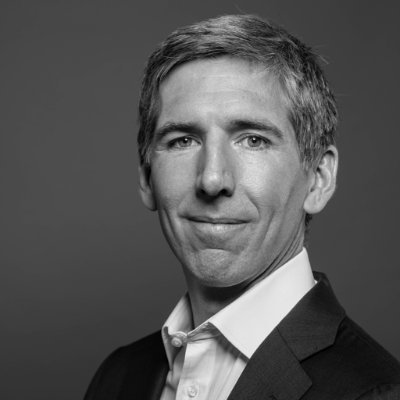
I asked @saifedean: "You wrote The Bitcoin Standard seven years ago. Are you more confident or less confident that we're moving toward that standard today?"
His response: "More confident. About 360k blocks more confident."

Discussing all things The Bitcoin Standard with @Matt_Hougan and @saifedean.
80 publicly traded companies own Bitcoin today.
What will that number be at next year’s Bitwise Bitcoin Standard Corporations Investor Day?

matt hillery retweeted

A three-time winner of the “Best in KLAS” Data Archiving title by KLAS Research, Triyam is a well-respected, innovative data management provider with a dynamic, experienced leadership team. #BestinKLASAwards #BIK2024
matt hillery retweeted

Excited to be at the Toronto International Film Festival for the premier of DALI LAND, directed by Mary Harron and starring Oscar-winning actor Ben Kingsley as the surrealist painter Salvador Dali. We produced along with Pressman Film. #TIFF22


With dazzling performances from Sir Ben Kingsley and Barbara Sukowa, director Mary Harron pulls back the curtain on the eccentric and fascinating marriage between Salvador Dalí and his wife, in DALÍLAND — the Closing Night Gala Presentation of #TIFF22. https://teapawt.net/t.co/drNPY2J7H1

ALT Christopher Briney helps Ben Kingsley with his coat in Dalíland. Kingsley has shoulder-length hair and is wearing a gold vest over a white dress shirt with a ruffled collar. Briney wears a simple green button-up. There are just a few pieces of art on the high white walls behind them.
matt hillery retweeted

I've seen a lot of people asking "why does everyone think Twitter is doomed?"
As an SRE and sysadmin with 10+ years of industry experience, I wanted to write up a few scenarios that are real threats to the integrity of the bird site over the coming weeks.
matt hillery retweeted

imagine how fun it would be to write the offering memo for the twitter debt syndication. morgan stanley, call me, i will do this for you for free. teapawt.net/ZoeSchiff…

Wow. Elon Musk just told Twitter employees he’s not sure how much run rate the company has and “bankruptcy isn’t out of the question.”
Readers added context they thought people might want to know
This tweet inaccurately portrays what Elon Musk said in the meeting. While he did make reference to Twitter facing bankruptcy, it was in reference to long term spending while scaling the platform. Additionally, he did not state that he didn’t know how much run rate Twitter had. theverge.com/2022/11/10/234…