

Making sure no one is ever bald again / Founder of @doctours_co / Ex-PLTR
San Francisco, CA
Joined February 2023
- Tweets1.3K
- Following345
- Followers160
- Likes26.5K



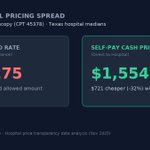
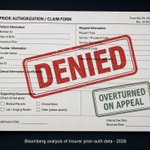


If you've already met your deductible this year, December might be the cheapest month to get care.
On most plans, the deductible and out-of-pocket max reset on January 1. The physical therapy, the scan your doctor mentioned, the follow-up you keep pushing, all of it costs you less now than it will in February.
But it only works if you're close. If you're nowhere near your deductible, a non-urgent visit costs about the same in December or January.
So this weekend, open your insurer's app and find two numbers: how much of your deductible you've met, and how much of your out-of-pocket max. If either one is close, call Monday about anything you've been putting off.
One catch: some plans don't run on the calendar year, so check your plan year first.
19
"No interest if paid in full in 12 months." You'll see that line everywhere this Black Friday. You'll also see it at the dentist's front desk.
It isn't the same as 0% interest.
On a deferred-interest card, interest builds from day one, often at 26.99%. Pay off every dollar before the promo ends and it disappears. Miss by one dollar and the whole year of interest lands at once.
In 2013 the CFPB found patients were being signed up for CareCredit cards in doctors' and dentists' offices, many believing they were interest free. GE Capital and CareCredit were ordered to refund up to $34.1 million to more than 1 million people.
But the product didn't go away. From 2018 to 2020, patients paid $1 billion in deferred interest on medical cards and loans.
So before you sign at the front desk, ask two questions first: "Do you have a financial assistance policy?" and "Can I set up an interest-free payment plan directly with you?"
12
Something feels wrong on Thanksgiving night and your doctor's office is closed until Monday. Where you go next can change the bill more than what's wrong.
An ER bills like an ER: the doctor's fee plus a facility fee for the visit itself.
Urgent care and telehealth usually don't charge an ER facility fee. Just make sure they're in your network.
And watch for freestanding ERs. Some sit in strip malls and look like urgent care, but they bill like a hospital ER.
So if it isn't an emergency, check your insurer's app for in-network urgent care before you leave, or call the nurse line on the back of your card if your plan has one. Uninsured or still in your deductible? Call ahead and ask for the self-pay price.
Chest pain, trouble breathing or signs of a stroke? Skip all of this and go to the ER.
23
Your mom falls over the holiday weekend. She spends three nights in a hospital bed. Then Medicare says she was never admitted.
It isn't a glitch. It goes back to 1965.
When Congress created Medicare, it said it would pay for nursing home rehab only after at least 3 days as a hospital inpatient. In 1972 the average hospital stay was about 12 days, so almost everyone qualified.
But stays got shorter, and hospitals unsure Medicare would pay for short admissions kept more patients under "observation." It feels like a hospital stay. On paper, it's outpatient care.
In 2012 alone, the Inspector General counted 617,702 Medicare stays of 3 nights or more that still didn't qualify.
So in 2015 Congress passed the NOTICE Act. Hospitals now have to tell you in writing if you've been under observation for more than 24 hours.
If a parent lands in the hospital this weekend, ask every day: "Is she an inpatient, or under observation?" That answer decides whether traditional Medicare pays for rehab after.
12
Driving somewhere for Thanksgiving? One insurance rule is worth knowing before you go.
Before 2022, an ER visit away from home could come with two bills: what your plan paid, and a "balance bill" for the rest, because the hospital or the ER doctor was out of network.
Then the No Surprises Act took effect on January 1, 2022. For most emergency care, an out-of-network ER can only charge you your in-network copay, coinsurance and deductible.
But it has a hole. Ground ambulances aren't covered.
So if a holiday ER bill shows out-of-network charges, don't pay it yet. Call the No Surprises Help Desk at 1-800-985-3059. And if you ride in an ambulance, ask for an itemized bill and a cash or payment-plan price.
5
Tomorrow is National Family History Day. Almost nobody knows it exists.
In 2004, Surgeon General Richard Carmona picked Thanksgiving for it, because it's the one day the whole family is at the same table.
The ask was simple: find out who had heart disease, cancer or diabetes, and at what age.
But people had a reason to stay quiet. A family history could follow you into an insurance application.
So in 2008 Congress passed GINA, 95-0 in the Senate and 414-1 in the House. Health insurers can't use your genetic information, family history included, to deny you or set your price. Employers with 15 or more workers can't use it to hire or fire you.
But the law stops there. Life, disability and long-term care insurance were left out.
So ask the questions tomorrow and tell your doctor. Your health plan and your boss can't hold the answers against you. Just know that a life or disability insurer still can ask.
12
Everyone compares the deductible during open enrollment. If you're worried about a bad year, it's the wrong number.
The deductible is where your plan starts sharing the cost. The out-of-pocket maximum is where it stops charging you for covered in-network care.
So a plan with a low deductible but a high out-of-pocket max can cost you more in the year you need surgery or a hospital stay.
Before you pick, do this for each plan: 12 months of premiums plus the out-of-pocket max. That's your worst-case year.
Pick the plan whose worst case you could actually survive.
10
Why does your health plan at work come with an FSA that expires and an HSA that never does?
Because they were built 25 years apart, for opposite reasons.
The FSA grew out of the 1978 cafeteria-plan law. The IRS made it use-it-or-lose-it so it couldn't turn into a tax-free savings account.
But in 1996, Congress tried the opposite. HIPAA created Medical Savings Accounts: tax-free money that rolled over, paired with a high deductible. It was capped at 750,000 accounts and limited to the self-employed and small employers. Few people signed up.
So in December 2003, the Medicare drug law opened the idea to anyone on a qualifying high-deductible plan. Those became HSAs.
That's why the HSA is the one account where unspent medical money stays yours, even when you change jobs.
If you pick the HSA plan this year, save every medical receipt. You can pay yourself back tax-free years later, as long as the expense came after you opened the account.
10
Comparing health plans at work? Most people skip the line that can flip the answer: the employer HSA deposit.
A lot of employers put money into your HSA if you pick the high-deductible plan. Once it's deposited, it's yours, even if you leave the job.
So don't compare paycheck deductions alone. For each plan, take the premium times 12, add the deductible, then subtract whatever your employer puts in your HSA.
That's what a year with a real medical bill actually costs you.
And if you pick the HSA plan, remember your employer's deposit counts toward your annual HSA limit, so set your own contribution with that in mind.
20
Why can you only change your health plan at work once a year?
Not because of your insurer. Because of a tax rule.
In 1978, Congress let employers offer a menu: take cash, or take benefits like health coverage tax-free. That's Section 125, the "cafeteria plan."
But in May 1984, the IRS proposed rules so the menu couldn't work like a tax-free savings account. You had to pick before the year started. The pick was locked. And money set aside for medical bills had to be spent by year-end, or it was gone.
Those rules stuck. That's where open enrollment's lock-in and the FSA's "use it or lose it" come from.
So the choice you make in the next few weeks is locked for the whole plan year, unless you marry, have a baby, lose other coverage or hit another qualifying event.
Before you click submit, check one line in your plan documents: does your FSA allow a carryover (up to $680 of 2026 money) or a grace period? Then elect only what you're sure you'll spend.
1
13
The most underrated sentence in American healthcare: "Can you send me the itemized bill?"
The summary bill gives you one big number. The itemized bill shows every line: each medication, each supply, each billing code.
That's where the mistakes hide. Duplicate charges. A drug you never took. A full day billed for a few hours.
But most hospitals won't send it unless you ask.
So ask. Then line it up against your explanation of benefits, circle anything you don't recognize, and ask billing to explain or remove it before you pay.
1
2
22
In 2009, two anesthesiologists in Oklahoma City did something almost no surgery center in America would do.
They put their prices on a website.
Not ranges. All-inclusive cash prices, with the surgeon, the anesthesia and the facility fee rolled into one number. By 2013, a tonsillectomy was listed at $3,600. An ACL reconstruction, $6,990.
The first patients to respond weren't from Oklahoma. They were Canadians, tired of waiting.
Then patients in other states started using that page to haggle with their own hospitals. Co-founder Keith Smith later testified about a tonsillectomy his center did for $3,875 that a Dallas hospital had quoted at $72,000.
But most of us still walk into a procedure without a number.
So before anything scheduled, ask two questions: "What's the all-inclusive cash price?" and "Can I get that in writing?" If you're paying yourself, you're owed a Good Faith Estimate, and a bill that comes in $400 or more over it can be disputed.
24
Maurice Landers III retweeted

Just paid cash for an MRI. It was about 15% of what my insurer would have had me pay, and I left with a disc in my hand for me to review my own images, something a hospital MRI dept never does for you.
Cash pay is the way forward.
For years, your pharmacist could watch you pay a copay that was higher than the drug's cash price, and say nothing.
Not because they didn't care. Because some pharmacy benefit manager contracts had "gag clauses" that barred them from telling you.
So using your insurance could cost you more than skipping it.
In October 2018, Congress banned those clauses, for employer plans, ACA plans and Medicare drug plans.
But the law lets the pharmacist tell you. It doesn't make them.
So at the counter, ask one question: "What's the cash price?" If it's lower than your copay, pay cash. Just know that payment may not count toward your deductible.
11
81 years ago today, a president asked Congress to make health insurance work like fire insurance.
On November 19, 1945, Harry Truman sent Congress a national health plan. Everyone, sick and well, would pay about 4% of earnings up to $3,600 into one fund. In return, doctor, hospital, nursing and lab bills would be covered, and you'd keep your own doctor.
His reason fit in one line: only about 3% or 4% of Americans had insurance covering comprehensive medical care.
He even wrote it down: "This is not socialized medicine."
But that's the label that stuck. When he pushed again after winning in 1948, the AMA charged every member $25 and built a war chest of more than $2 million to fight it. Therefore it never got through Congress.
So coverage grew job by job instead. In 1965, Lyndon Johnson flew to Truman's hometown of Independence, Missouri, signed Medicare there, and handed Truman card No. 1.
He waited 20 years for that card. You don't have to wait for yours. Your Medicare window opens 3 months before the month you turn 65, and unless you have coverage from a current job, signing up late for Part B costs 10% more for every year you waited, for life.
1
15
If you're paying cash for a scan or a procedure, you have a right most people never use: a written Good Faith Estimate.
Since 2022, the No Surprises Act has required providers to give uninsured and self-pay patients an estimate before scheduled care. Ask for it when you book.
But it isn't just paperwork. If the final bill comes in $400 or more above the estimate, you can dispute it through a federal process.
You get 120 days from the bill date to file, and it costs $25.
So ask for the estimate in writing before you book. When the bill comes, put the two side by side. If the gap is $400 or more, file the dispute.
9
In 2021, an Atlanta hospital was told to post its prices online. Its answer: call or email us for an estimate.
Then it took down the pricing files it had already posted.
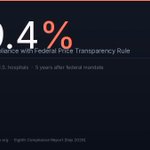
A federal rule had required every U.S. hospital to publish its cash prices and the rates it negotiated with each insurer, starting January 1, 2021. But the fine for ignoring it was $300 a day. For a big hospital, that's a rounding error.
So in 2022 the penalty jumped to $10 per bed per day. That June, CMS handed out its first fines, both to the same Georgia system: $883,180 for Northside Hospital Atlanta and $214,320 for its sister hospital in Cherokee County.
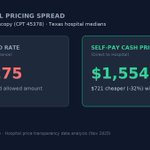
The files are public now. Before a scheduled scan or surgery, search your hospital's name plus "price transparency," find the cash price, and ask billing to honor it. Sometimes it's less than your deductible.
4
The No Surprises Act protects you from a surprise bill from the ER doctor, and even from an air ambulance. It doesn't cover the ground ambulance that got you there.
Ground ambulances were left out of the 2022 law. And nobody picks their ambulance when they call 911, so a lot of rides end up out of network.
24 states have passed their own protections. But those only reach state-regulated plans. If your employer self-insures, which a lot of big employers do, state law usually can't help you.
So if an ambulance bill shows up:
1. Don't pay it yet. Pull your insurer's EOB and see what they allowed.
2. Ask your plan to reprocess it at the in-network rate because it was an emergency.
3. Ask the ambulance company for an itemized bill and whether it has a hardship or self-pay discount.
4. Check your state insurance department's rules on ambulance billing.
2
18
Doctors at Chicago's Cook County Hospital had a name for how some hospitals decided who got treated: the "wallet biopsy."
They tracked 467 patients sent over from other ERs. 87% were transferred because they lacked adequate insurance. Only 6% had given written consent. 24% were unstable when they were put in the ambulance.
And transferred medical patients died at more than twice the rate of those who weren't moved, 9.4% vs 3.8%.
The study came out in February 1986. That April, Congress tucked a four-page fix into a budget bill. EMTALA said any hospital that takes Medicare and runs an ER has to screen and stabilize anyone who comes in, whether or not they can pay.
But the law guaranteed the care, not the price. Therefore the bill still comes.
So after an ER visit, don't pay the first statement. Ask for the itemized bill, match it to your insurer's EOB, and ask for the hospital's financial assistance application. If you were uninsured, ask for the self-pay rate too.
21
For its first 19 years, Medicare drug coverage had no limit on what you could pay out of pocket.
Then the cap arrived: $2,000 in 2025, $2,100 this year. Hit it, and covered drugs cost you $0 for the rest of the year.
But the cap moves. In 2027 it rises to $2,400, and the standard deductible goes from $615 to $700.
Therefore the plan that was cheapest for you this year may not be next year.
Medicare open enrollment ends December 7. Put your actual prescriptions into Medicare's Plan Finder and compare the total yearly cost, premium plus what you'd pay at the pharmacy, not just the premium.
And if a big fill lands in January, ask your plan about the Medicare Prescription Payment Plan. It spreads that cost into monthly payments.
12