Very Interesting, If you have any interest in early American history read the entire tweet.
I knew there were Black Continental soldiers from Rhode Island but never heard before that many (most?) were State purchased or authorized “enslaved” men, promised freedom
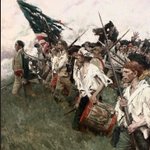
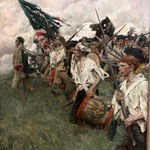
Pine’s Bridge is located in the modern town of Yorktown Heights, but was then was known as “Hanover” in 1780. The Croton River marked the new lines of American fortifications constructed after the defeat at White Plains and controlled access to supply depots in the Hudson Highlands. Besides some basic fords, it was the only bridge to cross the Croton at the time. Pine’s Bridge became the main focus of the American fortifications, after a secondary position on Route 202 was raided and burned in late 1780. Washington decided to reinforce the garrison with some of the best troops he had on hand. Lieutenant Christopher Greene was assigned by Washington to the post at Pine’s Bridge, with 130 men of 1st Rhode Island Infantry Bridge. Though woefully understrength, these battle tested veterans had showed themselves steady under fire at Newport two years before. The 1st Rhode Island regiment was made up of State purchased or authorized “enslaved” men, who were given the promise of freedom after their term of service. While the regiment was majority African descent, a sizable Narragansett Native population was present. Their ancestors had been enslaved 100 years prior during “King Philip’s War.”
By early April 1781, Greene had set up entrenched fortications above the bridge and strung out a series of watch posts, centered around local farm steads hugging the ridge controlling access to other local fords. On the night of of May 13, 1781, American forces secured Pine’s Bridge by removing the planks and switching out pickets, like they did at every dawn and dusk. Lieutenant Green was posted several hundred yards away from the bridge at the Davenport House, which he choose to make his headquarters. During the early morning hours of May 14th, 300 British loyalist militia, called “Refugees” by the Americans, left from what is now The Bronx and made their way north with the help of local guides. They aimed to not attack the bridge directly but take advantage of the change of pickets at dawn and launch an attack across the unprotected ford on the Croton River. The ford they choose just so happened to be protected by the outpost at the Davenport House, which was occupied by a sleeping Lt. Greene. Greene had around 40 men stationed with him at the Davenport outpost, but the troops were not forewarned by the absent pickets. Delancey used his mounted advantage to rapidly fall upon Greene’s still sleeping unprepared force.
Lieutenant Greene was killed as he stumbled from the Davenport House, in response to the shouts and clash of steel. In vicious close quarters fighting, British forces inflicted upon the Continentals 8 dead, 6 wounded, and 24 captured. Loyalists Militia quickly bundled the captured 1st Rhode Islanders back across the Croton and south to their base in the Bronx, with many being sold back into slavery to planters in the West Indies. Lt. Greene is buried at the same Yorktown Presbyterian church on Route 202 that served as a prior American outpost. Now a memorial stands to those valiant Patriot defenders in a beautiful park located in the modern town of Yorktown Heights.