


menga retweeted

A Muslim family holds the key to the church that marks the tomb of Jesus. Albert Kahn's cameraman Camille Sauvageot filmed these crowds on the Via Dolorosa and outside the Church of the Holy Sepulchre in Jerusalem between 10 and 12 April 1925, Good Friday to Easter Sunday on the Western calendar, at the church that a tradition dating to the fourth century holds contains both Calvary and the empty tomb. Built on Constantine's orders around 326, destroyed on the order of the Fatimid caliph al-Hakim in 1009 and rebuilt by 1048, it is shared today by Catholic, Greek Orthodox, Armenian, Coptic, Syriac and Ethiopian Christians under the Status Quo, which requires consensus for even minor changes. Saladin made the Muslim Joudeh family custodians of its keys in 1187 and gave the Nuseibeh family the door in 1192, and when the church closed for the pandemic in 2020, the key-keepers said it was the first such closure since 1349.
#HolySepulchre #Jerusalem #ChurchHistory #HolyWeek #HistoryShorts
menga retweeted

BREAKING: A mathematician at Anthropic claims to have used the company's AI to solve the Riemann hypothesis, the most notorious open problem in all of math
sciam.com/article/anthropic-…

menga retweeted

Most modern city water travels through miles of hidden PVC pipes and chemical treatment plants before coming out of a generic chrome tap, so the thought of drinking from the exact same mountain spring that fed a Roman fountain 1,800 years ago feels almost mythical.
Perched 5,200 feet above sea level in the rugged Taurus Mountains of Sagalassos, Türkiye, the Antonine Fountain was built between 160 and 180 CE as a breathtaking display of imperial engineering and civic pride. Even though its original glory met a violent end when a massive earthquake shattered the city centuries later, the ancient spring itself never stopped flowing. Archaeologists eventually pieced the fallen marble blocks back together and reconnected the original hydraulic channels bringing the monumental fountain roaring back to life.
Look at the weathered texture of that ancient stone up close, still glistening with cold alpine water just as it did when Roman citizens gathered in the Upper Agora nearly two millennia ago. Engineers back then didn't have electric pumps or computerized pressure gauges; they relied entirely on gravity, carefully graded stone conduits, and a deep understanding of mountain hydrology to guide fresh spring water straight through carved marble facades.
Today, we buy purified water in single-use plastic bottles that sit in landfills for centuries, yet high in the Turkish mountains, an 1,800-year-old Roman fountain still pours crystal-clear spring water straight from the living rock.
menga retweeted

Over the past week, I’ve been overwhelmed by the love and support of friends, industry colleagues, and people I've never met. Thank you to everyone who has shown kindness to my family and me. It means the world to me.
I came to the United States 53 years ago, and becoming an American citizen is one of the greatest gifts and proudest moments of my life. NVIDIA has been my life’s work. Building it into the company it is today alongside my colleagues has been a privilege and an honor. Nowhere but in America could a company like NVIDIA be possible. I love our country, and I love NVIDIA.
I did not live up to the standards expected of everyone at NVIDIA, and I have made serious mistakes in my personal life. I created problems for the Board that I deeply regret. I own my mistakes completely, and I am committed to cooperating with the Board’s independent investigation.
Since my departure, I’ve seen an outpouring of calls from NVIDIA’s employees, investors, business partners, and customers for me to return as CEO. Many continue to reach out to me directly as the company navigates complex technology, market, competitive, and geopolitical dynamics. NVIDIA is a once-in-a-generation company. If the Board of Directors decides that my return is in the best interest of our shareholders, our employees, the company, and America, I would be honored to answer these calls and return as CEO.
Thank you again to everyone who has shared their good wishes. I am profoundly humbled by your support. To my family: I love you, and I will spend the rest of my life being worthy of yours.
Jensen
menga retweeted

Here's a quickly drawn map of current plan, but it changes daily, and so far I've taken basically every random detour & side quest I've come across 😂 Advice appreciated. I'm staying southern US for the winter. I'm hoping to end up in California by February. And then maybe switch over to Europe & Asia until August, and then switch back to finish US. But all such silly plans change on the daily, including for big podcasts, so who knows... I might film some or none of it.
As an introvert, I've been hiding from world too much, taking in too much internet & AI, and I think it's important to just go, get out there into the full beautiful mess of the real world, in rural America & other countries, and get to know all kinds of people... But who knows I might get stuck somewhere in the best way, fall in love, get married, and laugh at this post in retrospect 😂 Life awaits...

menga retweeted

Hobbes believed that without rules, people turn on each other almost instantly.
Strip away law and consequence, and life becomes “nasty, brutish and short.” Not because people are evil, but because fear runs deeper than morality.
Hobbes, in 5 minutes on Deepstash.

menga retweeted

Who lived in the Americas before the Native Americans? It turns out that earlier historians wrote about an older civilization.
This book was found in York County in 1885; it contains everything shown in the video. It states that fortresses, cities, and churches in the Americas were built by an ancient, advanced civilization.
The book shown in the video is titled "History of Toronto and County of York, Ontario" (Volume 1) and was published in 1885 by C. Blackett Robinson in Toronto (Canada). This two-volume work was authored by Charles Pelham Mulvany and Graeme Mercer Adam.
fadedpage.com/showbook.php?p…
A BRIEF HISTORY
OF
CANADA AND THE CANADIAN PEOPLE.CHAPTER I.
PRE-HISTORIC CANADA.The history of Canada encompasses three main groups: the Indigenous peoples, the French, and English-speaking immigrants from the British Isles or the neighboring United States. Indigenous tribes inhabited the dense forests of modern-day Canada for ages known only through expert estimates, lacking written records of their own past but showing potential Asiatic origins through physical traits. While they may have superseded a more advanced civilization in regions further south, by the time French and English explorers arrived in the sixteenth century, the Indigenous populations in Canada remained at a Stone Age level of civilization, utilizing flint-pointed weapons and clam-shell tools.
👇
archive.org/details/historyo…



menga retweeted

Hace unos 50,000 años probablemente ya existían neandertales pelirrojos. Lo sorprendente es que su cabello rojo surgió por una mutación genética diferente a la de los humanos actuales.
menga retweeted

This is f*cking insane. Nvidia CEO Jensen Huang on what he expects from an engineer he pays $500,000 a year:
"If that $500,000 engineer did not consume at least $250,000 worth of tokens"
He'd be deeply alarmed. If they spent $5,000, he says he'd go ape
In under 2.5 minutes, he explains why every engineer will soon run 100 agents
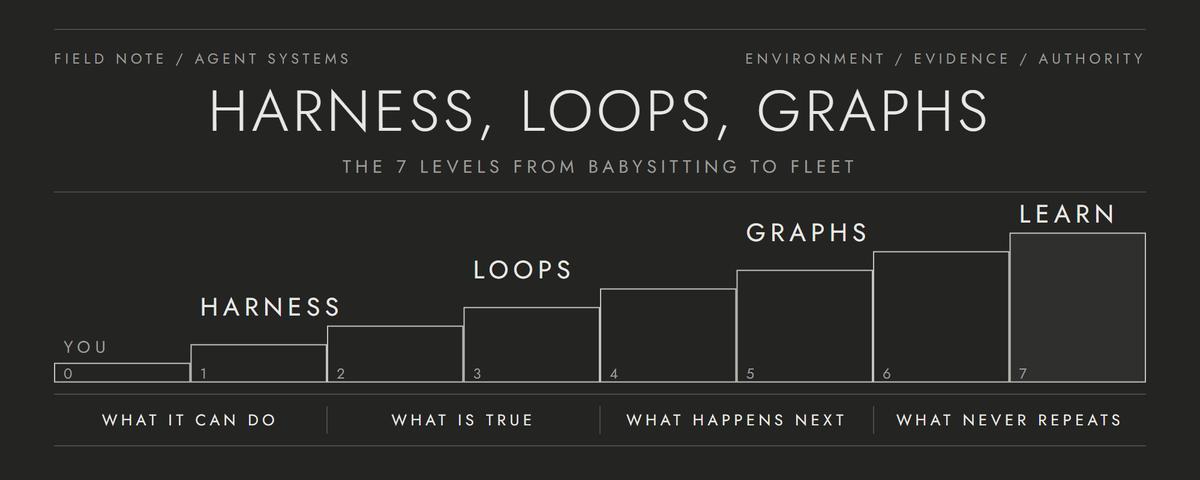
Writing Code → Burning Tokens → Harness → 100 Agents Per Engineer
The job becomes writing specs, defining good versus bad and letting the agents iterate. That's a harness
Most people still use AI one prompt at a time, almost nobody is building the harness to run a hundred
Bookmark and watch it today
Then read how to build that harness in the guide below ↓

menga retweeted

You can find a copy in the waaaay back machine 👇👇👇
archive.org/details/acompend…




menga retweeted

The rare ocean sightings continue in Southern California.
Read more: ktla.com/news/orange-county/…

