

Cofounder of @hey_ario - Linking the context that for AI Agents has been missing to be truly useful https://teapawt.net/t.co/kBnYKOGDtw
Palo Alto
Joined January 2011
- Tweets411
- Following677
- Followers259
- Likes144





Mengmeng Chen retweeted

Introducing Muse, the personal agent that understands your goals and works 24/7 to get things done for you.
It took me about 20 minutes to port over my skills, tasks, and memory to Codex. Within minutes, the AI tool I couldn't imagine working without had been replaced because I just needed to keep moving. Brutal!

1
89
Using this to collect my claude code to Google Drive so that it can actually create google docs!

Introducing the Google Workspace CLI: github.com/googleworkspace/c… - built for humans and agents.
Google Drive, Gmail, Calendar, and every Workspace API. 40+ agent skills included.

253
Mengmeng Chen retweeted

Claude 现在起草保密协议、自由职业协议和有限责任公司文件等法律合同的能力,已超越了时薪800美元的公司律师。


I've gone full Claude Code maximalist for slide making for a while now. HTML output, not PowerPoint. The results are consistently better.
Two things bothered me though: HTML files don't go fullscreen easily, and connecting to a projector throws the zoom off mid-presentation.
So I spent a few minutes and built a fix. Drop in any HTML file, zoom to fit, go fullscreen. That's it.
It's free, nothing leaves your machine.
→ mengmengchen32.github.io/pre…
133


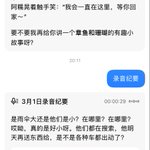
I've been studying Doubao, ByteDance's answer to ChatGPT.
Yes, it has the familiar chat interface. But open it up and you'll find meeting transcription (Otter/Granola), AI podcasts (Notebook LM), PowerPoint creation (Gamma), Homework help (Khanmigo) all in the same app. It's a super app approach to AI.
Meanwhile in the US, every function gets its own startup, its own interface, its own login.
I think this traces back to user behavior. Chinese users are already trained by WeChat and other super apps to do everything in one place. They don't want to switch contexts. The concentrated tech ecosystem shaped the behavior, and now that behavior is shaping how AI products get built.

ALT Meeting notes function built in
114
Why 80% of apps WILL disappear.
Ever since I set up my Kaiser skill on @openclaw, I've conversed with the nurse about Ryder's fever, checked in on the baby's four-month checkup, and looked up a health metric from a year ago — all from my phone, using voice input through WhatsApp. No logging in. No navigating. No opening the app at all.
I no longer deal with the horrible design that buries the Messaging Center in a place I can never find. Or the tiny text box where I can't see what I've typed. Or the fact that Kaiser buries my health metric inside each "After Visit Summary" — a separate PDF I'd have to download one by one. Not saved anywhere in my profile. No single place to see it.
It feels like bliss.
"80% of apps are going away" sounded outrageous at first. After this week, I really felt it. Healthcare apps are a particularly extreme example because they're so terribly designed — but the deeper reason is: we were forced to interact with these apps out of pure necessity. Now I don't have to.
@steipete

38
This is wild — @openclaw is now my baby's pediatrician liaison:
→ Nurse messages on Kaiser asking for an update on Ryder's fever
→ I just say "check what the new Kaiser message is"
→ Claude Code opens Kaiser via OpenClaw's browser, logs in, switches to baby's profile, reads it back to me → I describe the update in plain English: "milk is back to 700ml, no fever since Friday, sleep regression but we're fine"
→ Claude Code turns that into a proper reply, I review it, it clicks Send No logging into Kaiser. No navigating that clunky portal. No typing on a tiny phone keyboard. I just talked about my baby like I would to a friend, and a clean medical update went out. thanks
@steipete
!!

45
The smartest AI model doesn't make the best AI assistant. The one that writes things down and can accurately apply it when it matters does.
I gave both ChatGPT's agent mode and my OpenClaw setup the exact same instruction: "Remember that both Ryder (my three-month-old son) and I use Kaiser as our healthcare provider. When I ask you to message his doctor, go there directly."
Both confirmed they understood. ChatGPT said "Yes, I will remember that in the future." OpenClaw said nothing special — it just wrote my instruction to a local Memory.md file.
Next day. Fresh ChatGPT session. "Can you message Ryder's doctor?" Generic response. No memory of Kaiser. No memory of Ryder's pediatrician. The instruction was gone.
OpenClaw loaded that Memory.md file at session start, navigated to Kaiser, found the pediatrician by name, drafted a message, and asked me to confirm before sending. Zero clarification needed.
The gap isn't intelligence. ChatGPT's agent runs GPT-5.2 — OpenAI's flagship, one of the most powerful models available. My OpenClaw setup runs Claude Sonnet 4.6, a mid-tier model that's cheaper, faster, and a clear step below by any benchmark. The difference? One agent had a file system it was instructed to write to. The other didn't.
It's like hiring two assistants — one writes everything down in a notebook, the other tries to remember. The one with the notebook wins every time. Not because they're smarter, but because the system is better. Agent design works the same way.
I didn't even tell OpenClaw to write things down. I said "remember" in plain English, the same way I spoke to ChatGPT. OpenClaw interpreted that as a literal file-writing operation because it had the tools to do so. Simple user experience, meaningful architectural difference underneath.
That's what makes context management the real unlock for personalization. A local file system lets the agent build an intelligent hierarchy of what matters — preferences, routines, relationships, shortcuts — and call on it reliably. Not a smarter model. A better memory system.
1
1
46
I wrote about this and the two other hurdles OpenClaw finally cleared in more detail here:
mengmengchen.substack.com/p/…
1
27
Mengmeng Chen retweeted

cancel me for this but...Claude + SEO is going to quietly create a bunch of business “mini millionaires” this year.
This feels exactly like when people figured out Facebook ads in 2016-2017.
Except this time the barrier to entry is even lower.
Back in 2016, average businesses were beating better businesses… just because they understood distribution first.
We’re in that same window again.
But this time, your alpha isn’t ad spend.
It’s how fast you can publish helpful local pages + optimize your Google Business Profile before your competitors even wake up.
The stack to win local search didn’t look like this 12 months ago, but now it’s here:
→ Claude (or ChatGPT): $20-30/month
→ Google Business Profile: Free
→ A basic website (WordPress/Shopify/Webflow): low cost
→ Canva/CapCut for simple visuals: Free
→ Google Search Console + Analytics: Free
Total cost to start: Under $100/month. And people used to pay agencies $1k–$3k/month just to move slowly.
Here’s how to use it:
Step 1: Find your local keywords with Claude
You don’t need to guess anymore.
Give Claude your services + your city/areas. Ask it to list:
- A “service + location” keywords
- “near me” intent keywords
- emergency keywords
- comparison keywords (best, affordable, etc.)
Step 2: Build service area pages (fast)
Tell Claude your exact offer, prices, process, and service areas.
Ask it to draft pages for each area you serve (one page per area).
Then you add the real stuff: photos, reviews, FAQs, and a call button.
Step 3: Turn your Google Business Profile into a lead machine
Ask Claude to write:
- GBP description
- services list (with short blurbs)
- 20 FAQs + answers
- weekly Google Post ideas (offers, tips, before/after)
Step 4: Create “proof” content that ranks
Claude can turn one job into 10 pieces of content:
- a short case study page (“AC repair in Bandra: fixed in 45 mins”)
- a Google Post
- a simple Reel script
- a FAQ update
Step 5: Get reviews + replies done in minutes
Ask Claude to write 3 review request texts and a review reply template.
Then do the only part AI can’t: actually ask customers.
12 months from now this will be obvious.
Right now it's an advantage.
Do what you want with that.


Mengmeng Chen retweeted

Stripe CEO @patrickc predicts software will shift from "mass-produced, industrial scale" made "years beforehand" to bespoke, custom software created the moment you need it.
"Up until now, the economics of software have been conceived of as fixed cost, then infinitely monetized. That has these kinds winner-take-all dynamics."
"But once there are inference costs and custom creation involved, it really shifts."
1/ How does it feel to be claw-pilled? The best way I can describe it is cognitive ecstasy. And it’s extremely addictive. It’s like a flow state — but more explosive, more expansive, more imaginative. I’m building and learning what I’m building at the same time. As I learn more about the infinite possibilities, my list of things to build keeps growing. And because I can’t stop thinking, I can’t stop writing.
1
16
2/ Building feeds learning. Learning feeds imagination. Imagination feeds new ideas. New ideas feed more building. The loop compounds. The closest thing I can compare it to is being around an extremely smart group of colleagues. Except it’s on-demand — no coordination needed — at 2 a.m. — in my pajamas. I am never bored anymore. Waiting in line? Phone comes out. Son’s car nap? Out comes the laptop.
1
13
This morning, my three-month-old had a fever. With a baby in one arm, I voiced my concerns and asked my AI assistant to message the doctor. It navigated to Kaiser, signed in, and sent the message — all on its own.
I've been dreaming of this moment for three years. And it actually worked. 🧵
1
31
I checked out of AI completely for a couple months after having the baby — fully immersed in diaper changes and sleep deprivation.
When I came up for air this February, it felt like the world had shifted. Claude Code is shipping product left and right. SaaS is dead, apparently. There's this electric sense of excitement and anxiety in the air.
1
35
But to me, AI has crossed a threshold that is fundamentally different from all the hype and the ups and downs we've lived through over the past three years.
We are stepping into a new universe, and the minute you set foot in it, you're taken off at warp speed.
It's hard not to feel optimistic living a day like this.
30