

Building @CoinFello AI agent for onchain finance • prev @500globalVC • fellow @salzburgglobal @kernel0x
New York, NY
Joined October 2019
- Tweets3.2K
- Following1K
- Followers1.5K
- Likes4.2K







MinChi retweeted

BREAKING: Cognition just rewrote the playbook on enterprise AI sales.
For a large bank, adopting new software usually takes 12 to 18 months: access to the code, security reviews, internal approvals.
When Nubank signed, the whole Cognition team flew to Brazil. This is what they did there:
1. Went through every task the bank thought Devin could take on.
2. Did some of them by hand first, to understand what the work looked like.
3. Taught Devin to do each one correctly and built the orchestration around it.
Scott says building the product was almost like building it for one company.
Full breakdown here: productmarketfit.tech/p/the-…
MinChi retweeted

I've built this little website to view my @goodreads bookshelf in a much nicer way:
bookshelf-aea8f1.netlify.app
If you'd like to get a version for your books, LMK and I'll open-source the code on Github ... or I'll just give you the prompt ... or you just point Claude/Codex to the URL and tell it to copy/rebuild it. :)
MinChi retweeted

Union Square Ventures’ @rebeccakaden and @mignano explain why NYC is poised to thrive as AI shifts from an infrastructure buildout into a deployment and application era:
1. Consumer-oriented talent
2. Cross-industry density
“One of our portfolio companies, Suno, they have offices in San Francisco, they have offices in Boston, but their biggest office is actually becoming New York City.”
“It’s strategically advantageous to maybe build around the market there and attract talent that is interested in consumer and other sort of non-pure enterprise or infra areas.”
MinChi retweeted
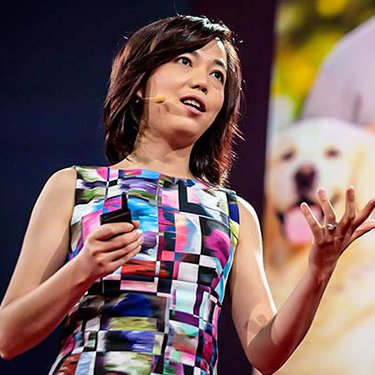
Every one of my mathematician friend sees beauty in the numbers, shapes and the natural phenomena they work with. Who defines beauty in the age of machines?🤔
MinChi retweeted

✍️ Writing is essential to how @Mercury communicates as a 1300 person remote-first company.
I wrote on Writing At Mercury (inspired by @vxanand's post).
Principles of Writing at Mercury
1. Writing is thinking: Spending time on writing is not wasting time, it helps you process ideas, analyze problems, and explore solutions.
2. Less writing is better: Good writing is concise, which makes it easier to understand.
3. Reading should be easy: If >2 people will read your writing you should spend extra time making your writing good + digestible + clear etc. It is not fair for people reading to do work that the writer could have done for them.
4. Writing is expression: Your writing will be taken as an expression of your identity, so give it the care it deserves and be authentic.
5. Writing is important: Writing is the main way we communicate internally at Mercury, as a remote-first firm. We frame important discussions, and document thought processes and ultimate decisions, with our writing.
On Using AI for Writing
It is very easy to use AI to write a lot of content. If you do so, then by default you have:
1. Outsourced your thinking
2. Created a verbose/long doc
3. Made it hard to read
4. Have a doc that is not expressive and very bland
5. Watered down our discussions and decision making
In other words, heavy AI use for writing is diametrically opposed to the principles of writing laid out above.
Some effective ways that AI could be used instead:
1. Critiquing your writing
2. Condensing your writing
3. Shaping initial drafts
4. Summarizing complex information
On Using AI to Respond on Slack/Comments
Slack threads and comments are a particularly bad use of AI writing.
1. Slack responses and doc comments should always be short. Large blocks of AI text don’t belong.
2. AI used here is often thoughtless and the other party could have just used the AI tool themself. It inherently shows a disrespect for the reader’s time.
3. Given our remote culture, one of the main ways we connect with each other is via Slack. Using AI often would obscure your authentic perspective.
4. It would be better to share the prompt you gave to the AI directly to the other person and they can just prompt their own AI tool.
How to do Great Writing at Mercury
We aren’t going to police whether someone is using AI or not to help them write. We will just have a high standard for your writing output.
Here are some high-level rules that should help:
1. Always read and stand by 100% of your written output.
2. When it is important, spend time on your writing. You might spend time on the narrative arc, the tone, the structure, whether it clearly articulates an issue, explores solutions, and drives toward an outcome.
3. Think hard about how you can use fewer words and be more concise.
4. Be authentic. You don’t need to dress up your writing in corporate jargon to make it sound professional. Simple, plain writing is often more effective.
5. Never copy-paste AI responses to someone in Slack or to comment on a doc.
6. Sometimes it's better to write nothing at all. Don’t make a comment in a doc/slack because you want to be part of the convo, say it if it materially moves things forward.

MinChi retweeted

one of these apps must adopt zk passport so everyone follows suit

Woke up to all my data leaked by @Revolut.
Sharp reminder that KYC hasn’t produced meaningful upside and has put many in harm’s way.

MinChi retweeted

if you ever have ai impostor syndrome looking at things i do -- don't. i spend 101% of my day with AI and I still look around and feel so behind, so many things to try, tactics i haven't mastered yet, swarms i'm not swarming, etc etc
don't feel bad - the frontier moves fast 🙃
MinChi retweeted

for small business owners using grok @bot
what connectors should we add to make your life easier?
MinChi retweeted

Spent the weekend building a little site for NYC events I’d actually want to go to, with my @bot doing the research.
Bot checks museum pages and blogs every day and messages me with free museum days and exhibitions I might like. When something looks good, I just give the message a thumbs up and the event goes on the site.
All feedback welcome.
senyil.com/what-should-we-do…
MinChi retweeted

grok 🤝 coinbase agents
your agent can trade the everything exchange
here are some cool things you can do
- set up automations for portfolio rebalancing
- use X social data for trading
- weekly analysis of your positions
- copy trade politicians
etc etc

Grok can now trade and manage a portfolio on @Coinbase.
Add the Coinbase connector, then ask Grok to check balances, analyze data, and place or cancel trades for any available asset, right from chat.
MinChi retweeted

A few things I like about Muse vs. single-threaded agents on iMessage or WhatsApp 👇
- Rich library of Connectors available in-app - I imagine these will be more reliable than browser use
- Can set up Goals connected to this data + attach Artifacts to them to visualize progress


MinChi retweeted
made a calendar, curating nyc events with @bot - still wip senyil.com/what-should-we-do…


MinChi retweeted
check out some cool grok @bot templates from creators!


MinChi retweeted

A few thoughts from this week's @rwasummit:
- Lack of newsworthy progress. There were no major announcements at this summit. Conversations revolve around the same topics from early 2020s: random fund tokenization, vaults, "How does DeFi meet TradFi?"... boring. We just launched ATPs with @Bitwise last week, so it was too close to have a session about this new innovation. The one area of development is tokenized equities, which leads me into:
- Hate for the wrapper model of tokenized equities. Continued propaganda from @DinariGlobal, @Securitize, @NYSE and others. They come up with ridiculous reasons why permissionless stocks are not the future: "own the real thing", "what about dividends and voting rights" (both of which are already solved by @Ondo and others), "they are doing illicit things." All bullshit. It was great to see @RobinhoodCrypto's @NicolaWhite444 push back. Good luck outcompeting @coinbase @RobinhoodCrypto @Ondo @binance @xStocksFi and more. My bet is with them (and they're already winning).
- Demand is a problem. @DigitalAssets's Cynthia Lo Bessette raised a good point that "No one has ever called Fidelity asking for the tokenized version of a product." That's fair, but tokenization is not the end goal: it's margin, collateral, 24/7 liquidity, leverage, and overall better capital efficiency. Tokenizing a fund alone is lame. Allowing people to borrow against or use it as collateral on a perps exchange is not. btw ATPs plug into all of this DeFi composability.
- A handful of new, random, sketchy faces. While there were plenty of reputable names and companies backed by real VCs (like @glider__), there were random folks mixed in to panels. These folks detract from the credibility of onchain finance and all that we've built. We must fight to keep them away. Many of them will not be here a year from now. Pay-for-play bites the sanctity of a good conference.
- Didn't see @CantonNetwork. Thank god.
- Vaults are about to get regulated hard. This is a good thing for consumer protections. However, institutions still do not want to touch vaults because of smart contract risk, speed to get to market, and oracles. Lots of questions about discretion, fund managers, etc. This is the reason ATPs are a better solution for institutions--it solves all of the above.
- Institutions who take risks and use new technology will reap the benefits. I was surprised to hear so much negativity around institutional adoption from the institutions themselves. Are their compliance counterparts beating down innovation? If anyone is going to drive it, it has to be the folks rooting for it from the inside. On the other hand, there are institutions doing great here: @Bitwise @vaneck_us @FTDA_US etc.
More exciting institutional launches coming from @glider__ soon. More tokenized assets and composability means more opportunities. We are still so early.