

Offensive Hacker & Cryptographer/Stego | AI cybersec guy | Speaker @blackhat @ekoparty @rootedcon... | Founder @criptored - https://xitter.cf/t.co/TU1PnWdvX3
github.com/mindcrypt
Joined February 2013
- Tweets5.7K
- Following528
- Followers9.5K
- Likes4.4K





Pinned Tweet
Acabo de publicar mi nuevo libro "Criptografía Ofensiva 2. Atacando y defendiendo organizaciones: Criptografía aplicada para programadores, analistas, cripto-agilistas y hackers éticos". 400 páginas y más de 1.100 referencias. Lo tenéis disponible en el siguiente enlace. Se agradece difusión - amazon.es/Criptograf%C3%ADa-…
Alfonso Muñoz, Phd retweeted

El libro de Alfonso Muñoz (@mindcrypt)
Es imprescindible si vas a desplegar agentes en un entorno crítico: Si estás construyendo infraestructura o dirigiendo esa "fábrica digital", este enfoque evita el sesgo de entusiasmo típico del desarrollo apresurado con IA.


🙃 Ponente en XX Jornadas STIC CCN-CERT "IA ofensiva y amenaza cuántica: hacia una nueva ciberseguridad"
Las XX Jornadas STIC, organizadas por el Centro Criptológico Nacional del CENTRO NACIONAL DE INTELIGENCIA (CNI), el Mando Conjunto del Ciberespacio (MCCE) y RootedCON, alcanzan en 2026 su vigésima edición en un momento de especial trascendencia para la seguridad nacional y para la seguridad europea de la que formamos parte. Cubriendo temáticas en las que llevo muchos años trabajando como IA, criptografía o protección frente a la amenaza cuántica.
Este año participaré con la ponencia "Inteligencia artificial aplicada al criptoanálisis de comunicaciones". Un tema realmente apasionante y que permitirá entender un poco mejor el estado del arte, oportunidades y limitaciones.
En el programa ya se están publicando algunas de las ponencias aceptadas - jornadas.ccn-cert.cni.es/es/…
Gracias por permitirme estar un año más en las jornadas y estoy seguro que será provechoso para tod@s. @CCNCERT #cni @rootedcon @criptored
Nos vemos el 25 de noviembre a las 10:00 :)
Ha tardado un poco... pero por fin me han dado acceso a Mythos 5.1 como investigador independiente #Ciberseguridad 😇
👏 ¡CFP abierto The Annual @criptored Cybersecurity Conference en @rootedcon - V Aniversario! - criptored.es/con/
Hoy tengo la buena noticia que CriptoredCON (track) vuelve a RootedCON el 4 Marzo de 2027.
Criptored organiza y celebra anualmente su Congreso de Ciberseguridad cuyo objetivo es promover el conocimiento sobre temas relevantes relacionados con la ciberseguridad, la privacidad, criptografía, esteganografía y los derechos civiles, mediante ponencias de alto nivel técnico y con un enfoque práctico que combina teoría y demostraciones.
Con una asistencia estimada de más 9.000 personas (RootedCON + Tracks), nuestro congreso es uno de los más relevantes de Europa. Reúne a un público diverso que incluye estudiantes, miembros de las fuerzas y cuerpos de seguridad, profesionales del sector tecnológico y de la seguridad de la información, así como personas apasionadas por estas materias.
El Call for Papers está abierto hasta el 22 de diciembre 2026. Te animo a enviar tus investigaciones, trabajo o propuestas divulgativas - criptored.es/con/cfp.txt
👉 cfp.rootedcon.com/
📅 Cierre: 22 de diciembre.
📍 Madrid, 4–6 de marzo de 2027. Conferencia el 4 de marzo
⚠️ Para presentar al track: seleccionad Criptored en el apartado Topics del formulario del CFP.
👉 Algunas ponencias - youtube.com/@CriptoRed_Ciber…
Si quieres formar parte de la historia de este evento, del elenco de ponentes que ya han compartido su conocimiento con nosotros, y de una edición muy especial (V Aniversario), te espero.
Difunde la palabra. No lo dejes pasar.
Cualquier duda escríbenos a [email protected] y únete a nuestro grupo de Telegram (t.me/criptored)
Nos vemos pronto.
Gracias
Alfonso Muñoz, PhD - @mindcrypt Fundador Criptored


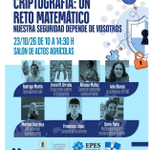
👏 Jornada: Criptografía: un reto matemático. Nuestra seguridad depende de vosotros
El viernes que viene estaré en un evento organizado por la Universidad Politécnica de Madrid hablando de criptografía aplicada. El objetivo de esta jornada es atraer y alentar nuevas vocaciones, carreras y talento en la protección digital de la información. Gracias por la invitación.
Si te interesa estos temas, te esperamos el viernes 23 a las 10 - matematicas.epes.upm.es/2026…

Vamos a por el día... Zeus mediante :) - youtube.com/watch?v=6ljA0whU…
Alfonso Muñoz, Phd retweeted

AI is getting better at solving hard math problems, especially given recent drops. But what does that mean for the cryptography that protects everything from private messages to healthcare to banking and crypto wallets?
Stanford cryptographer Dan Boneh, with @eddylazzarin, @SuccinctJT, @liz_harkavy, and @smc90, makes sense of the warnings sounded recently. They cover:
- what’s fact vs. assumption
- what’s new and what risks cryptographers have long prepared for
- where quantum computing doesn't (and does) fit
- opportunities for builders
Highlights:
00:37 – What sparked the most recent debate about AI and cryptography
01:35 – Signal vs. noise: What the math does and doesn’t tell us
05:29 – Why cryptography depends on open problems
09:25 – Why the stakes go beyond blockchains
10:43 – How AI could strengthen confidence in cryptography
13:50 – Considerations for users and institutions
20:10 – Where AI and quantum threats overlap
22:32 – Building systems that can change cryptographic methods
23:59 – Hash-based versus lattice-based cryptography
33:07 – Opportunities for builders, and better security tools
38:14 – What comes next if there were a cryptographic break?
Alfonso Muñoz, Phd retweeted

Gave a talk today cr.yp.to/talks/2026.10.09/sl… reviewing the 35, oops, no, 37 lattice-cryptanalysis papers that appeared on eprint in the past 365 days. I decided to focus on cryptanalysis of conventional lattice problems; didn't include, e.g., the papers on HAWK.
Alfonso Muñoz, Phd retweeted

And specifically for cryptanalysts who are working with models and for the labs:
Folks, what we need right now are *negative* results. Silence is the worst thing you could be publishing.
Alfonso Muñoz, Phd retweeted

Testing 15 Euros ESP32 : 80Mhz wide spectrum on 2.4Ghz with recent hack : here is DATV and wifi. Next step : getting I/Q and having TX ! A new horizon for cheap sdr : eSpDR.

👉 "Crypto & Privacy Watch" Sept 2026 newsletter - criptored.com
Crypto & Privacy Watch is an observatory where I will periodically publish a newsletter featuring news of interest on cryptography, post-quantum cryptography, quantum computing, AI, privacy, advanced computing, and digital rights. Subscribe and feel free to share any suggestions - linkedin.com/pulse/crypto-pr…
PQC Migration Framework v3.0: Build the Ability to Change Again - postquantum.com/post-quantum…

Active Memory Interposer Attacks on Confidential VMs by Dropping DDR5 Writes - ddropattack.eu/
Alfonso Muñoz, Phd retweeted

Si quieren escuchar el mejor podcast sobre servicios de Inteligencia en español, aquí lo tienen. Con @VicenteVallesTV
Buenísimo.
ondacero.es/podcast/original…

Querida comunidad de ciberseguridad española. Echádle un vistazo, firmad y compartid :)

Stop Killing The Internet: No Digital ID & No Age Verification - eci.ec.europa.eu/066/public/…

Stop Killing The Internet: No Digital ID & No Age Verification - eci.ec.europa.eu/066/public/…
How Elliptic Curve Cryptography (ECC) works and Quantum Attacks qcve.org/blog/how-elliptic-c…

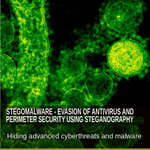
I've just released my book "Stegomalware — Evading Antivirus and Perimeter Security Using Steganography: Concealing Advanced Cyber Threats and Malware" for free, now translated into English. I think it could be useful to the #infosec community. I'd really appreciate you sharing it so it can reach as many people as possible #cybersecurity #malware #steganography #apt - github.com/mindcrypt/libros/…

This book will give you a quick and straightforward understanding of the mechanisms that cybercriminals are using to infect systems and steal information from businesses, governments, and individuals. It highlights how steganography and covert channels have been used in cyberattacks involving "modern" malware (APT32, APT37, Ursnif, Powload, LightNeuron/Turla, Platinum APT, Waterbug/Turla, Lokibot, The Dukes (Operation Ghost), Titanium, etc.) to evade detection measures based on antivirus technology or network-level protections. The text includes more than 200 references, where you will find full analyses of the attack campaigns and the APTs examined. In addition, for your convenience, the book delves into the concepts behind the underlying steganographic techniques and should — that, at least, is my intention — leave you better equipped to face these new challenges, especially if you work in information security, reverse engineering, computer forensics/DFIR, or as a malware analyst. And of course, if you work in offensive security, you will learn better techniques for staying hidden.
AI solves a 370-year-old unsolved cipher in a single day - vals.ai/blogs/fable-solves-c…
