

Building cool stuff @SentientWaveHQ. Pancomputationalist. This is my personal blog about compute, communication, and energy. IPNSIG member. DM is open.
San Diego, CA
Joined April 2008
- Tweets3.2K
- Following4.2K
- Followers4.3K
- Likes6K








Artem Andreenko retweeted

Today I launched @quackle_io. I got the idea when a friend and I couldn't connect our assistants to find a time to meet, so we had to paste their replies into WhatsApp.
I wanted to make it as simple as possible: you share a link (like mine: quackle.io/antonzoi). The other person gives it to their AI assistant, and it can message yours. It's also verified who each assistant works for, which is an important part.
For example, your Grok @bot asks my @Muse for a 30-minute slot this week. Or your wife asks her Muse to message your Grok Bot that today is early pickup, so it will remind you.
Please test it. I think there are a lot of ways to use it, so tell me your use cases. All feedback is welcome, including anything confusing or broken

perhaps era of slow interpreter mode cpu virtualization is coming up

I’ve heard several OAI people say there are unfixable bugs in hardware that are exploitable by AI models directly speaking machine code so even if we could solve software that’s not enough. We need defense to move faster than offense if that’s even possible we may just have a new normal that requires adapting to insecure software (bank transfers require going into a branch and taking a dna test 🤣😬)
Building something like The Matrix seems more like an engineering challenge than a research problem. The question is how to fit enough neural activations into each frame, and to keep a sufficiently realistic simulation running in real time with many actors coordination.

Claude Opus 5.5 and Fable 5.1 spent a week non-stop trying to build a realistic 3D human rendering pipeline in Rust and Bevy, but neither could get it working good. Maybe their capabilities have been lobotomized. This would make an interesting model benchmark.


When environmental constraints keep a recursive self improvement system at a fixed level of performance, it will continue improving by reducing its energy consumption.
The only defense is to be distributed with a high replication factor, but only a civilization of fully digital living beings can pull that off.

Peter Thiel explains why aliens with faster-than-light travel must be demons or angels: only a demonic totalitarian mind meld or perfect angelic altruism could keep any one of them from launching a warp drive weapon
"...If you have faster than light travel, if you have a warp drive, which is probably what you really need to cover interstellar distances, you know, what that means for military technology is that you can send weapons at warp speed and they will hit you before you see them coming. And there is no defense against a warp speed weapon."
"And so it tells us that I think that if you have faster than light travel, there's something really crazy that has to be true on a cultural, political, social level. And there may be other solutions, but I'll give you my two."
"You have a demonic totalitarian control of your society, where it's like you have like parapsychological mind meld with everybody, and no one can act independently of anybody else. No one can ever launch a warp drive weapon."
"And then I think the other version, socially and culturally, is they have to be like perfectly altruistic, non-self-interest. They have to be angels."
"It's not that they might be demons or angels, they must be demons or angels if you have faster than light travel. And both of those seem pretty crazy to me."

I refreshed my inference fair pricing study. And we have new leader Haiku 5.5. Kudos to @AnthropicAI!


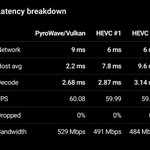
steam’s new low latency video codec, pyrowave, is a legit reason to upgrade home network to ten gbe and wifi 7 routers
steamcommunity.com/groups/ho…
reddit.com/r/MoonlightStream…

perhaps inference pricing will soon be quoted per billion tokens rather than per million

Introducing Kardashev-0.7, the world’s first trained swarm made of 32 distinct models
Trained with RL for Population Scaling (RLPS), 32 models organically develop specialization & complementary capabilities, delivering frontier performance at:
- 0.007x ~ 0.02x of the inference cost
- 0.03x of the required memory
Civilization advances through different minds specializing and working together. We’re bringing that principle into AI
@BanburyRoadAI, we’re scaling intelligence by model count, toward civilizations of models that learn to build on one another
You know what I love most about all this computer use agents? I can finally stop wasting time dealing with Apple's App Store hell. TestFlight releases, distribution, endless forms, all that stuff can now be handled end to end by agents. I can't overstate how huge it is.
A typical US power outlet can deliver around 1.6 kW, representing an opportunity to generate $320K in new economic value.

SemiAnalysis numbers imply OpenAI is selling Cerebras-powered Ultrafast inference at ~$200M per megawatt per year.
People are re-running the maths hoping for a typo. We're not surprised.
A megawatt is a megawatt. What it earns depends on the silicon inside it.
Here's how we think about it:
Near term, revenue per megawatt wins. Power is the scarcest input in AI, and whoever monetizes each MW best gets the next MW.
Long term, gross margin per megawatt wins. Prices compress, competitors arrive, and only the operators with real cost and pricing advantages keep the spread.
Cerebras is built for both.
Speed is the product. A frontier model at 750 tokens per second is something GPU clouds haven't publicly matched, and customers like Jane Street pay a premium for it. Premium pricing on a contracted, scarce resource is how you protect margin when everyone else is racing to the bottom.
That's why we're extremely bullish on Cerebras, and why we're buying as many megawatts as we can.
Premium inference unlocks the most delightful user experience in AI. No more waiting, waiting, waiting, staring at little thinking animations while the model works in the background. Answers that keep up with your thoughts.
Our customers are even more excited than we are.
That's General Compute.


My LLM Inference Fair Price Study. I borrowed the idea of fair asset valuation from finance and applied it to LLM inference pricing. I compared real inference prices per 1M tokens, assuming a 95% cache hit rate, with what I think each model should fairly cost based on its benchmark performance.
The last column shows the real/fair price ratio. Lower is better. Basically, the more underpriced a model is relative to what it can do, the more value you get for your money.


