

Black Caribbean labor economist; Prof @johnjaycollege CUNY; 2nd gen immigrant (mom); 6th gen formerly enslaved U.S. (dad); #doublegap ; #AskForMore
Manhattan, NY
Joined January 2017
- Tweets2.1K
- Following884
- Followers2.7K
- Likes2.8K


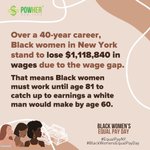




Michelle Holder retweeted

Here is to this heroic police officer and the courageous bystander who leapt into action to save someone in crisis.
Here is to those who don’t stand by, but step up. Who combine courage with compassion, empathy with action, and grace with a willingness to put themselves at risk for others.
These are the everyday heroes who lift us, protect us, and remind us that there is so much goodness in this world.
May we see them. May we celebrate them. May we be more like them.
Michelle Holder retweeted
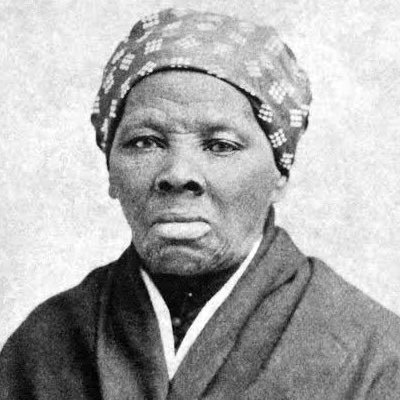
Orphaned during a slave-raiding war in 1848, Sarah Forbes Bonetta was taken to England in 1850 and presented to Queen Victoria as a “gift,” later becoming her goddaughter.
Sarah Forbes Bonetta was born in West Africa around 1843 to a Yoruba royal family. Her early life was dramatically changed during the Okeadon War in 1848, when the Kingdom of Dahomey captured her community. Many people were killed during the conflict, and the young Sarah was taken captive.
Because she was believed to be the daughter of a chief, she was kept alive and held as a royal captive in the Dahomey court.
In 1850, British naval officer Captain Frederick Forbes arrived in Dahomey on a diplomatic mission aimed at encouraging the kingdom to abandon participation in the Atlantic slave trade. During his visit, he requested that the young girl be entrusted to him. King Gezo agreed, and she was taken to Britain aboard the ship HMS Bonetta. She was given the name Sarah Forbes Bonetta, combining the captain’s name and the ship on which she traveled.
Soon after arriving in England, Sarah was introduced to Queen Victoria and Prince Albert at Windsor Castle. The Queen took a personal interest in her welfare and arranged for her education. Sarah proved to be an exceptionally bright student and developed a particular talent for music.
As she grew older, she became part of Victorian society while maintaining her African heritage. In 1862 she married James Pinson Labulo Davies, a wealthy Nigerian businessman and philanthropist. The couple later had a daughter named Victoria, for whom Queen Victoria served as godmother.

Michelle Holder retweeted
HAPPY 70TH BIRTHDAY TO HISTORY-MAKING ASTRONAUT MAE JEMISON! 👩🏾🚀✨
Dr. Mae Jemison made history as the first Black woman in space and the first real astronaut to appear on Star Trek. 🌍🚀
I saw her give a speech once and she said, "As a child I dreamed of going to space. And then I went." 🤯🖤

Michelle Holder retweeted
“In a racist society it is not enough to be non-racist, we must be anti-racist.”
—Angela Davis


Michelle Holder retweeted
George McLaurin, the first black man admitted to the University of Oklahoma in 1948 was forced to sit in a corner far from his classmates.
When he first applied he was denied based on his race. He went to court & it ruled that denying him was unconstitutional.
George W. McLaurin provided the Oklahoma civil rights case that irreparably damaged the "separate but equal" legal position established in Plessy v. Ferguson in 1896.
Plessy v. Ferguson was a landmark U.S. Supreme Court decision in which the Court ruled that racial segregation laws did not violate the U.S. Constitution
The justices affirmed that McLaurin’s 14th Amendment rights means he must receive the same educational experience as OU’s white students.
He earned a master's degree from the University of Kansas and taught at Langston University, an all-black institution, until 1968.

Michelle Holder retweeted

One of the greatest American writers of the twentieth century died in a county welfare home and was buried in an unmarked grave in a segregated cemetery.
Her neighbours took up a collection for the funeral. It was not enough for a headstone. Zora Neale Hurston. 1960.
She had published four novels, two books of folklore, an autobiography and dozens of essays. She had travelled the South and Haiti collecting stories that would otherwise have been lost entirely. She wrote "Their Eyes Were Watching God" in seven weeks.
By the 1950s she was out of print and working as a maid in Florida. A newspaper found her in 1950 cleaning a house, and ran it as a human interest story: a once-famous author, scrubbing somebody's floor.
She had a stroke and went into the St Lucie County welfare home. She died there in January 1960, aged sixty-nine.
She was buried in the Garden of Heavenly Rest, the Black cemetery in Fort Pierce, in a plot nobody marked.
Thirteen years later a young writer named Alice Walker went to Florida to find her. She walked into a waist-high field of weeds and snakes, shouting Zora's name, until her foot sank into a depression in the ground.
She bought a headstone. It reads: "A Genius of the South."
Hurston is now taught in every American literature course in the country. Her books were out of print for a quarter of a century, and she went into the ground with nothing on top of her.

Michelle Holder retweeted
“If you can only be tall because somebody’s on their knees, you have a serious problem.”
—Toni Morrison

Michelle Holder retweeted
Big Mama Thornton performing "Hound Dog". She released the song first in 1953 before Elvis Presley (1956), his biggest worldwide rock and roll hit record.
Thornton was a blues singer who helped shape the sound of Rock&Roll. She released the song “Hound Dog” in 1953 and it sold two million records and went #1 on the R&B charts.
Unfortunately Thornton only received about $500 from those profits.
Michelle Holder retweeted
"My father was a slave, and my people died to build this country, and I am going to stay here, and have a part of it just like you. And no Fascist-minded people will drive me from it. Is that clear?"
—Paul Robeson

Michelle Holder retweeted
Lucy Higgs Nichols was born into slavery in Tennessee around 1838, but during the Civil War she escaped and eventually found her way to the Union Army’s 23rd Indiana Infantry Regiment. Rather than simply seeking safety behind Union lines, Lucy remained with the regiment and served as a nurse, caring for sick and wounded soldiers as the unit moved through the war.
Her service took her alongside the 23rd Indiana through several major campaigns, including the siege of Vicksburg. Nursing during the Civil War was difficult and dangerous work. Medical facilities were often overwhelmed, disease killed enormous numbers of soldiers, and nurses worked with limited supplies under conditions that would be almost unimaginable today. Lucy earned the affection of the soldiers, who came to know her as “Aunt Lucy.”
After the war, she moved to New Albany, Indiana, where many veterans of the regiment lived. Years later, when Lucy sought a federal pension for her wartime nursing service, she encountered a problem familiar to many women and formerly enslaved people whose contributions were poorly documented. The government had no official record proving that she had served as a nurse.
The men of the 23rd Indiana had not forgotten her. Dozens of veterans supported her claim and petitioned Congress on her behalf, testifying to the work they had personally watched her perform during the war. Their efforts eventually succeeded, and in 1898 Congress granted Lucy a special pension of $12 per month.
This photograph from an 1898 reunion of the 23rd Indiana is especially powerful because Lucy stands among the veterans whose lives she had shared decades earlier. She was welcomed at their reunions and became closely associated with the Grand Army of the Republic, the influential organization of Union veterans.
Lucy died in New Albany in 1915 and was buried with military honors. Her story reminds us that Black participation in the Civil War extended far beyond the famous Black regiments. Formerly enslaved people served the Union cause as nurses, cooks, laborers, scouts and soldiers, sometimes without the official records that would later prove what they had done. Lucy Higgs Nichols was fortunate in one respect: the soldiers she cared for lived long enough to make sure her service was not forgotten.

Michelle Holder retweeted
"Ignorance, allied with power, is the most ferocious enemy justice can have."
—James Baldwin

Michelle Holder retweeted
U.S. sailor Carl Brashear was the first Black American to become a Navy Master Diver in 1970.
Brashear overcame poverty, racism, and a life-threatening injury to become the U.S. Navy's first Black American Master Diver and first amputee diver.

Michelle Holder retweeted
Gwendolyn Brooks was the first Black American to win a Pulitzer Prize. She wrote poetry that captured the beauty and struggle of Black life without apology.

Michelle Holder retweeted

“I, Too” by Langston Hughes, 1926
s.si.edu/4eXo1TO
📸 “The American Flag: Photographs from the National Museum of African American History and Culture”
Michelle Holder retweeted

In the 1950s, Ella Fitzgerald was not allowed to play Hollywood's most popular nightclub, Mocambo, because of her race.
Marilyn Monroe, who was a big fan, called the owner & told him that if he booked Ella, Marilyn would be there every night - which guaranteed huge press coverage.
He booked Ella and Marilyn was there, front table, every night. Ella said, "After that, I never had to play a small jazz club again. She was an unusual woman - a little ahead of her times. And she didn't know it."

Michelle Holder retweeted
In the remote corners of South Carolina, where poverty and lack of access to healthcare made illness almost a death sentence, one woman illuminated the lives of thousands with her dedication and knowledge. Her name was Maude Callen ( pictured holding her hand over the elderly woman), but to those who knew her, she will always be remembered as the "Angel of the Twilight."
Born in Florida in 1898, Callen faced adversity from a young age. Orphaned along with her 12 sisters, she found not only a home but also a calling with her uncle, one of the first Black doctors in the country. From him, she learned medical techniques that she later perfected at Florida A&M University and Georgia Infirmary in Savannah.
In the early 1920s, she moved to Pineville as a medical missionary, becoming the primary healthcare provider in an isolated community with no access to hospitals. Her home was not just a refuge but a community clinic, where she treated wounds, illnesses, and, most importantly, brought hope. She also traveled a 400-square-mile region, navigating difficult roads to visit those who needed her most.
Callen's impact went beyond that of a nurse; she was a doctor, dietitian, psychologist, support system, and friend.
It is estimated that she assisted in the birth of between 600 and 800 babies throughout her career, ensuring that each new life had a dignified start. She also passed on her knowledge to other women, training future midwives and ensuring that her legacy would live on. In 1989, the Medical University of South Carolina awarded her an honorary degree, and a scholarship was established in her name at the nursing school, ensuring that new generations of professionals would follow her example. Maude Callen devoted her life to healing both bodies and souls, leaving an indelible mark on the history of medicine and humanitarian service.


Michelle Holder retweeted

More than 160 years after abolition, racial inequality remains deeply embedded in our economy.
On Juneteenth, Roosevelt Fellow @mlholder999 reminds us of the need for structural changes to build a more equitable distribution of wealth and opportunity.
truthout.org/articles/over-1…
