
Reader of political economy of development, passionate about coffee and would move miles for a good conversation.
Uganda
Joined January 2015
- Tweets141
- Following677
- Followers367
- Likes66


@BOU_Official When banks violate their duty and obligations to clients, whom are we supposed to turn to for help? I have been trying to get access to my bank accounts for three (3) weeks, and @stanbicug won’t give me access. Every other time it is one thing after another.
1
3
214
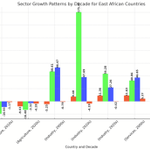
There is something disturbing about the structure of Uganda's economy: There no noticeable change in sectoral growth relative to its EA peers over every decade since 2000.

2
209
What a game of football! @realmadrid congratulations on your deserving win! @FCBayern team, you can return home with your head held high because you put a good show and game us a good game of football.
2
446
Listening to @ChrisObore1 intervention on the twitter on the issues raised by #ParliamentExhibition, one begins to grasp the meaning of impunity. When leaders despise the citizens they lead, there is no ending to how far they can go to abusing authority entrusted them.
1
5
421
GDP is important but we must go beyond Ggoobi’s thesis monitor.co.ug/uganda/oped/co….
@KagutaMuseveni address this evening is a precursor to the budget speech for the FY2024/2025. Interesting developments and optimistic outlook for Uganda's economy generally. One thing that misses from your speech your Excellence: interventions to strengthen growth of local...
2
1
179
"Once on the top, there is no exit. They have become prisoners like many others they have thrown in jail." A telling ending of @BrankoMilan review of Basu's paper on "how rulers once in power cannot leave even if they wish to do so..."
Rural Africans are finding work beyond their farms from TheEconomist economist.com/middle-east-an…

1
4
227
“You can put solar on your roof, live in a gated estate, have private security, own a holiday home. But if 90% of the population are suffering, how is that sustainable?”
Are ballooning debt levels in African countries an indictment of a failure of neoliberal economic policies and therefore call for a rethinking of current structure of capitalist relations? Or are they a result of wasteful expenditure of those who ran the state?
An economy that heavily relies on foreign investors without a strong participation of local capitalists to develop its productive base is one that will certainly lack the capacity to address its society's needs.
A new macroeconomic era is emerging. What will it look like? from TheEconomist economist.com/leaders/2022/1…

In this piece, I reflect on how rising inequality in Uganda threatens the citizenship project and democratisation, but also why we shouldn't be too quick to claim that Kenya's progress towards democratisation is almost irreversible.monitor.co.ug/uganda/oped/co…
But I think we seriously need to talk about @ManUtd team. Perhaps the players are not interested in the game of football anymore.
2
8
"..decolonising the political, which is a process of reimagining political identities as hisotrical rather than natural. The epistemological revolution is closely tied to internal political revolution--not throwing off outside rule

1
2
It is clear that challenging a powerful regime hell bent on staying in power comes at cost. Doing nothing for avoidance of the cost of action, inevitably increases the cost of inaction. Ultimately one has to decide what cost they are willing to bear: cost of action or inaction?

Uganda's net foreign assets (a measure of proportion of total national assets that are foreign owned) beats the rest of the countries in the region. This trend is loaded with a mouthful implications for employment, democracy, redistribution etc.
