

Stanford, ERAU, Pilot, GIS, Vehicle Autonomy (ML/Perception), NASA Shuttle Program, Digital TV, iTunes Music, STEM education (Navy-ONR). The usual.
Virginia
Joined April 2009
- Tweets18.8K
- Following1.4K
- Followers1.3K
- Likes261K







Philip McBride retweeted

Another magic by DeepSeek v4.1 + Blender MCP + DeepSeek Harness running locally!
I'm blown away by the power of this model! 🤯
Prompt:"Create and ultra detailed Pagoda in Blender using its MCP and animate it. Here a line with an immensely complex scenario I want you to replicate. You can do it!"
Philip McBride retweeted

Armies that win have the general at the front lines. Nobody wants to bleed for the prince in the palace.

Ron Baron asked Elon Musk how many CEOs live on site in an Airstream and work hands-on with everyone.
MUSK: “Airstreams are actually pretty nice... It’s parked right next to the power plant.”
“We built this power plant that’s producing over a gigawatt... in about a year, as opposed to normally about five years.”
“There is no upstairs.”
He walks the entire site up to five times a day. He’s pulled power cables “the size of an anaconda,” run fiber, wired switches, and worked on the power plant software.
“I try to do at least a little bit of everything, so that I’m not numb to the pain of the people who are actually doing it.”
“It’s not as though I’m sitting in an office and somebody has to come to me. I’m walking the floor, asking them questions actively.”
There’s a reason SpaceX is winning the compute race.
Philip McBride retweeted

Let’s talk about weather radar and how @elonmusk could save lives.
All radars work by sending out a small beam of energy and listening for its reflection. The beam necessarily has to be small so that the location of the thing reflecting (maybe hundreds of miles away) can be determined with reasonable accuracy. The beam width varies somewhat in vertical and horizontal dimensions, but you can think of it not all that dissimilarly from shining a laser pointer at something.
So to get a complete view of a volume of sky (or ground or whatever medium you’re using the radar in), you have to point it at each piece, wait a very brief moment (roughly the time to cover 2x the range at the speed of light) to listen for a reply, and then move on to the next piece of sky. Most radar systems sweep in one direction at a time, then tilt in the other axis, and sweep in the original direction again — for example sweeping side to side at a particular vertical tilt and then that vertical tilt can be adjusted before sweeping side to side again at the new tilt.
The latest modern airborne radar systems are fantastic. Sophisticated algorithms remove much of the art of using and interpreting radar and present a very NEXRAD-like composite view of weather throughout the entire 3D space being scanned.
Traditional radars are much more manual and 2D. Users have to select a single tilt angle to scan, and the most reflective parts of a storm (where there’s the most liquid water) may be well above or below you requiring some dramatic tilts. The user even has to select the range to view. And in older systems that aren’t stabilized, the antenna rolls with the airplane, so in turns you’re largely just painting the ground and are temporarily blinded. That could make it very easy to miss a close-in cell that’s been largely below you when you’re looking further ahead.
The safest way to deal with thunderstorms, whether you have onboard weather radar or not, is to avoid the entire storm system entirely. That’s where datalink weather, with wide reaching views of the weather from multiple ground stations and tilts, can be a huge help to start deviating early and often.
But older traditional datalink systems (SiriusXM, ADS-B) also introduce significant delays that can still mask rapidly developing storms even when you think you’ve already navigated around all of the weather.
That’s where @Starlink has been a major game changer in aviation safety, by allowing pilots to view truly realtime NEXRAD data via the Internet and spot those kinds of rapidly developing threats, even when they’re not somewhere your onboard weather radar is currently looking or you might even think to be looking.
Unfortunately though recent price increases have made it too expensive for most pilots and aircraft owners to afford ($4,000/mo for a Learjet for instance, and $1,000/mo for many much smaller airplanes, even $200/mo for the kinds of planes student pilots fly). Obviously it doesn’t cost them any more to serve these customers, they just don’t fully understand the market and the impact they could have. But lives could be saved tomorrow.
Philip McBride retweeted

Writing this in my personal capacity, but I have been flying these types of aircraft for more than 20 years, with over 8,000 hours, and have reasonable familiarity with how the charter world operates. I feel compelled to post after seeing commentary about the Lear 60 crash, from missile strikes to DEI to critiquing this poor woman’s final radio calls.
That last part is what I find most troubling. She was the second-in-command (SIC), and while she was empowered to point out mistakes as part of good crew resource management, she was doing her job, communicating with ATC right to the end in a terrifying situation. She likely knew before many of those calls that she was going to die. I have heard final calls from friends, from military pilots with thousands of hours in fighter aircraft, and they are just as heartbreaking because they know the end is approaching.
I understand the public interest given the footage and audio. But you do not know the aircraft’s maintenance history, whether there was a structural failure, if any failure was induced by turbulence, overspeed, or overcontrol, or everything happening in that cockpit. I am sure weather will be part of the investigation, but beyond that, it is speculation. The charter industry routinely hires commercial pilots very early in their careers to gain experience alongside an ATP-qualified captain before they move up to the airlines. She would still have the appropriate training, qualifications, and checkouts by an FAA examiner or designee.
Let people investigate, learn, and share the facts. Be respectful to those who perished and the families who carry their memories. God bless them and their loved ones.
Philip McBride retweeted
In just these past two weeks we have seen:
1. Widespread civil unrest and riots in France.
2. Widespread civil unrest and riots in Albania.
3. Widespread civil unrest and riots in Italy.
4. Widespread civil unrest and riots in Spain.
5. Widespread civil unrest and riots in Portugal.
6. Widespread civil unrest and riots in Belgium.
7. Widespread civil unrest and riots in Serbia.
8. Widespread civil unrest and riots in Georgia.
9. Widespread civil unrest and an apparent judicial coup in Poland.
10. Widespread civil unrest and riots in Czechia (including an attempted takeover of the Parliament building).
11. Widespread student protests in Greece.
12. Targeted student protests in Indonesia.
13. Localized violent protests in India.
14. An apparently fraudulent election in Brazil where the presumed presidential election winner was forced to flee the country under threat of arrest by his opponent.
15. The uncovering of a Color Revolution plot in the USA led by embittered former USAID employees and ex-military members.
That’s a lot to be happening all at once, don’t you think?
And the USA is having midterm elections next week.
You know, if I was a conspiracy-minded type I might be connecting some dots here. 🧐
Philip McBride retweeted

Trotsky – The Myth.
Ask a Western leftist which communist he admires, and you often get the same answer: Trotsky. The intellectual. The orator. The true revolutionary, betrayed by Stalin. If only he had won…
Look at the young Trotsky in the picture: round glasses, wild hair, burning eyes. Many young leftists today would recognize themselves in him. The look hasn’t changed. Neither has the certainty.
So let’s look at what he did when he had power.
Born in 1879 in what is now southern Ukraine, Trotsky was a brilliant writer and a spellbinding speaker. In October 1917, he played a central role in organizing the Bolshevik seizure of power.
Then Lenin made him Commissar for War, and he built the Red Army, directing it from an armoured train that rushed from front to front.
Deserters were shot. Military discipline was enforced through executions. Blocking detachments were deployed to stop retreating soldiers, and former tsarist officers recruited into the Red Army were kept under surveillance by political commissars. Their families were sometimes held hostage to guarantee their loyalty.
Cruelty knows no limits when you have no doubts.
In 1920, the Red Army marched on Warsaw. It was stopped on the Vistula.
That same year, Trotsky published an entire book, Terrorism and Communism, explaining why revolutionary terror was necessary. He wanted labour militarized too: workers organized like soldiers, subjected to military discipline and compelled to serve the needs of the state.
In 1921, the sailors of Kronstadt – once hailed as the pride of the revolution – demanded free elections to the soviets. Trotsky supported the suppression of the revolt. Thousands were killed in the assault or executed afterwards.
Then he lost the power struggle to Stalin.
Expelled, exiled, forced abroad. From there, he wrote that the revolution had been betrayed – by Stalin, never by himself.
He ended up in Mexico City, where he stayed for a time with Frida Kahlo and Diego Rivera. And so the Western romance took shape: the exiled prophet, the revolutionary betrayed, the road not taken.
In August 1940, a Soviet agent who had gained his confidence entered his study and struck him with an ice axe.
The machine Trotsky had helped build had come for him too. His killer later received the Soviet Union’s highest honour.
Trotsky was not the alternative to Stalin. He was the same machine – only with better prose. He never rejected the terror. He rejected losing control of it.
The "good communist" is always the one who lost.
Next: Stalin.


The Butchers – The Men Who Ran the Soviet Terror.
Moscow, a winter night in 1937. Long past midnight in the Kremlin, a man with a pipe sits at his desk under a lamp. In front of him, a stack of typed lists – names, one per line. He runs a blue pencil down the pages. A tick. A note in the margin. Sometimes a name crossed out, sometimes one added. The same pencil he uses to edit film scripts and poems.
His officials stay awake at home, next to the phone, in case he calls before dawn.
Hundreds of lists. Tens of thousands of names. On a single day, December 12, 1937, he and Molotov approved more than three thousand death sentences. Then, historians tell us, they went to watch a film.
But Stalin didn't invent the machine. He perfected it.
In August 1918, Lenin sent a telegram to his comrades: hang at least a hundred kulaks – hang them so that people see it for hundreds of kilometers around. Trotsky, the "good communist" of Western nostalgia, ordered the families of officers taken as hostages.
The founders gave the orders. Then the machine needed men – men who would build the apparatus, fill the camps, write the confessions and pull the triggers. And sooner or later, it devoured many of them.
1. Dzerzhinsky – the Founder. "Iron Felix," a Polish noble's son, who built the Cheka in 1917.
2. Trotsky – the Myth. The revolutionary Western intellectuals still romanticize, who wrote a whole book defending terror – until the machine he helped build killed him with an ice axe.
3. Stalin – the Editor. The man at the desk, with the blue pencil, long past midnight.
4. Yagoda – the Builder. The Gulag as an economy: canals dug by prisoners who died by the tens of thousands. Then shot by his own machine.
5. Vyshinsky – the Prosecutor. "Confession is the queen of evidence" – so he got confessions. "Shoot the mad dogs!" at the show trials, then the Soviet seat at the United Nations.
6. Yezhov – the Butcher. The Great Terror, the quotas, the Polish operation – then shot, and erased from the photographs.
7. Beria – the Strategist. Katyn, the atomic bomb, the deportations – and a predator. Shot by his own colleagues three months after Stalin's death.
8. Blokhin – the Executioner. In the spring of 1940, at Kalinin, he personally shot thousands of Polish prisoners over a few weeks, in a leather apron and cap.
9. Serov – the Hunter of Poland. He crushed the Home Army, lured the leaders of the Polish Underground State to "talks" and had them tried in Moscow. Then Hungary in 1956, and the first chairman of the KGB.
10. Andropov – the Modernizer. Dissidents sent to psychiatric hospitals instead of camps: softer, quieter – same goal: erasing people. The first secret police chief to rule the country.
11. Epilogue – The Chekists Never Left. From the KGB to the FSB to the Kremlin.
Why name them? Because their whole work was erasure – of people, of records, of memory. Remembering is the opposite of what they did.
And erasure didn't die with them. Today it rarely needs a bullet. It is called cancelling, deplatforming, debanking, lawfare. The inconvenient person isn't shot – he is removed: from his job, his bank account, his platform, the conversation. Yezhov needed a retoucher. Today a terms-of-service update does the job.
For Poles, these are not names from a history book. They are the names behind our grandparents' graves – and that is why we recognize their heirs.

Philip McBride retweeted

Mercedes sold its Tesla stake for $780 million. that same 4 percent is worth about $56 billion today.
in the clip below Musk explains how Mercedes ended up there. the US government gave Tesla almost $500 million, and he is asked directly whether that loan saved the company. he says no.
what saved it was a $50 million check from Daimler in May 2009. all of Tesla was worth $550 million then.
"they were the only ones. there was no other company, no other entity of any kind from which we could get investments."
Tesla repaid the government's $500 million with interest and a prepayment penalty, ten years early. he sent a thank you note with it.
"i don't like having a lot of debt. the taxpayers supported Tesla, we ought to repay them as soon as we can."
Mercedes turned $50 million into $780 million and walked away in 2014.
so was that a great investment - or the most expensive mistake in car industry history?
Philip McBride retweeted

Pat Buchanan, 1999:
“By moving NATO onto Russia’s front porch, we have scheduled a twenty-first century confrontation. … America will face a hellish dilemma: risk confrontation with a nuclear-armed Russia determined to recreate its old sphere of influence, or renege on solemn commitments and see NATO collapse.”
Therefore, he said, “Offering NATO memberships to Estonia, Latvia, Lithuania, and, as some urge, Ukraine is rashness bordering on madness.” Referring to maps the Clinton team must have ignored, Buchanan warned, “This would put the Russian base at Kaliningrad behind NATO lines and bring into a U.S.-led alliance three nations with huge Russian minorities.” Foreseeing future conflict, he observed that “Latvia is almost half Russian; eastern Ukraine, almost entirely Russian. America could neither defend nor liberate these nations without the risk of nuclear war.”
Pat Buchanan, A Republic, Not an Empire: Reclaiming America’s Destiny (New York: Regnery, 1999), 17–18, 22.

Philip McBride retweeted

Harry Caray interviewed Bill Murray before Wrigley Field's first attempted night game on August 8, 1988, and naturally the two ended up sharing a beer on the WGN broadcast.
Then rain wiped the game out in the fourth inning. The first official night game had to wait until the next evening.
Even Wrigley's transition to night baseball managed to become a very Cubs story.
Philip McBride retweeted

Chris Rock just nailed one of the biggest problems with wokeness.
Helping people who feel marginalized is good. He says so himself. The trouble starts when a good cause becomes an institution.
The first few witches were real. Then you open a witch office. Now there are salaries, budgets and pensions to justify, and the office needs a steady supply of witches to keep existing.
That’s the trap. Once a cause becomes a career, solving the problem means losing your job. So the problem never gets solved. It just keeps getting redefined.
A system built to find wrongdoing will keep finding it, whether it’s there or not.
Philip McBride retweeted
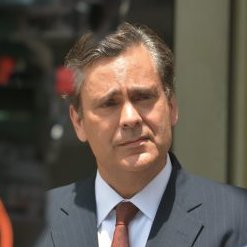
“Who Gets to Tell the Story?” That question was supposed to be the theme of a “press freedom” event this week at Columbia. However, the event was canceled after student writers had the audacity to offer their own views on the coverage of the alleged Cornell rape case. jonathanturley.org/2026/10/1…

Philip McBride retweeted
There can never be a common understanding of anything between an intelligent person and a mental communist.
Two walls stand between them.
The first wall is intelligence itself. The development of AI gave us, inadvertently, a better understanding of intelligence. In machines, each step up in measured ability takes roughly a multiplication of the underlying capacity. If humans work the same way, 20 points of IQ is about a two-fold increase in intellectual capacity. So the difference between about 100 and about 170 is over ten-fold. It is a different world. You can share a language and still not share a world.
The second wall is higher. It is the relationship to reality: the answer comes first, and the facts must fit.
The intelligent person discovers. The mental communist decrees.
Show him evidence, and he hears an attack. Show him a result, and he asks who paid you to say it. Show him a failure of his system, and he explains that it wasn’t real communism.
Two people who disagree can still talk, as long as they share a method: look at the evidence, follow it, accept being wrong. That shared method is the only common ground there is. The mental communist has left it.
You can argue with someone who is wrong. You cannot argue with someone who has decided that reality is negotiable.
So don’t waste your evenings trying to convert him. The conversation was never for him. It is for the people watching – they have not decided yet.

Les « Ça sert à quoi ? » sont de sortie. 😂
Bah, c'est très simple. Ça s'appelle l'innovation.
Évidemment qu'en l'état, ça ne sert pas encore à grand-chose. Ce sont des expérimentations, des phases de test, des avancées technologiques.
Avant d'avoir votre dernier iPhone ultra-plat dans la poche, il a fallu passer par des téléphones énormes qui pesaient plusieurs kilos.
On teste, on expérimente, on améliore, on recommence.
C'est comme ça que fonctionne le progrès technologique depuis toujours...
Et dire qu'il faut encore expliquer ça à des adultes en 2026. C'est plutôt inquiétant.


Philip McBride retweeted

Any business that thrives on the opacity and friction associated with a particular space (eg healthcare, taxes, dark patterns, etc) is going to get wiped out by commodified AI.
Philip McBride retweeted

The left has reacted in their usual and entirely predictable way to Tesla's new flying car. And once again, the explanation is to be found in the Frankfurt School.
Max Horkheimer and Theodor Adorno treated modern technology as the triumph of instrumental reason: the reduction of the world to what can be measured, controlled and made useful. Anything that cannot be justified as efficient or socially necessary is already suspect.
Herbert Marcuse went further still: advanced industrial society, he argued, integrates people by delivering comforts and spectacles that leave the underlying relations of power untouched. A car that flips for the sake of flipping fails both tests. It is not optimised for transport and it does not expose or overturn domination. It is therefore waste - an affirmative culture that offers intensity without politics.
It is, however, not just the critical theorists - the same instinct appears in older forms too. Rousseau’s suspicion of luxury survives in the idea that ostentation is a moral problem rather than a private choice. Marxist traditions treat concentrations of capital and engineering talent as socially produced and therefore socially accountable; spent on a private demonstration rather than a state-defined need, the expenditure is read as appropriation.
Contemporary environmentalism supplies the immediate language of carbon and opportunity cost, but the deeper move is the same: once every resource is a claim on a shared budget, private technical play becomes difficult to defend. The demand that a new device name its social purpose before it is allowed to exist is a that of a central planner. It assumes the relevant ends are already known. Free-market traditions reject that premise; they treat many valuable uses as discoveries that appear after the thing exists. The left’s tradition treats unplanned exuberance as a category error.
A machine built to do something astonishing, by a private firm, before its practical uses are fully enumerated, violates the requirement that technology be instrumental, collective, sober and pre-justified. The joyless outrage is entirely political.





Philip McBride retweeted

Are Small Models Really a Threat?
The Anthropic Fear Factory just released a new report warning that small models may be only months away from self-replicating across cheap IoT devices like off-brand Android TV boxes and smart ovens. They say such an AI worm would be hard to shut down since there’s no central kill switch.
We’ve gone from “The Terminator is coming” to “your toaster might kill you.”
But the experiments don’t support the dramatic headlines. They ran a 26B model across 15 $55 TV boxes at 0.39 tokens per second. The end-to-end test used emulated devices with deliberately open ADB ports, so the “hacking” step was trivial. The capable model often ran on a separate server. Agents were harnessed and told to propagate. This is not proof of autonomous rogue AI worms in the wild.
Nor is the threat even novel. Worms that do this without AI already exist. Mirai in 2016 scanned for default credentials and built massive DDoS botnets. Kimwolf has infected over two million devices, mostly cheap Android TV boxes, by hitting open ADB ports.
Small models don’t currently add much that matters on these targets. The bottleneck has never been figuring out the device. It’s the huge number of devices that ship with open ports, default passwords, and no patching. Traditional worms already exploit that at scale.
A practical attacker would use the best models available offline to design a better traditional worm, then ship the lean binary. You get the intelligence benefit at design time without dragging a slow, heavy model along with every infection. Embedding a weak model in the payload is the worse option for anyone who actually wants the largest, fastest botnet.
The timing of Anthropic’s latest scare campaign is hard to ignore. The day before, Brian Armstrong posted that Coinbase fine-tuned an open-weight small model (Qwen-3.5-9B) on proprietary fraud data. It beat frontier models, including Anthropic’s own Opus 4.5, while being faster and much cheaper. In testing it cut fraudulent transactions by about 30%.
This is the emerging pattern. For narrow enterprise workloads you don’t need a general superintelligence. You need a small specialist model trained on your own data. Cheaper to run, especially as compute gets tighter, and often better on the metric that matters. That is a direct threat to the frontier-company model of selling access to ever-larger general models.
Safety advocates should be welcoming this development. If the real concern is existential risk from ever-larger frontier systems — the ones that could theoretically do sustained autonomous R&D or become hard to control — then a shift toward smaller specialized models is the safer outcome.
Small models specialized on fraud detection or support tickets are not pushing the frontier. They are not in the category of systems that could become a new species. The theoretical loss-of-control risk is created by models getting bigger and more generally capable.
Safety advocates focused on those risks should welcome companies having a cheaper alternative to constantly scaling general models. Instead we get dramatic warnings about small models at the exact moment they are starting to take real enterprise share from closed-model companies like Anthropic.


