
I am an urbanist and architect focusing on the redevelopment and enhancement of urban places.
windsor/ detroit
Joined October 2011
- Tweets4.2K
- Following305
- Followers348
- Likes2K






What can American cities learn from European urbanism?
Walkable streets, human-scaled buildings, mixed-use neighborhoods, and connected public spaces offer valuable lessons. The challenge isn’t copying European cities, it’s adapting their lessons.
youtu.be/3iY4sHHbf8E?is=mlKr…
The 3 prongs of the housing crisis:
Affordability- Availability- Accessibility
The terms are often used interchangeably. They require their own specific response + coordination.
Each its own challenges.
But they have very different answers to the question “who’s it for?”.

We intuitively know the answer but, why are the most attractive urban residential areas the ones that were built decades or even centuries ago?

Adaptive reuse of existing buildings is a critical tool for the sustainability and resilience of our cities. It allows our cities to be viewed creatively and provides valuable lessons regarding what we should value in our built environment.
Field study: Ruhr Valley in Germany.


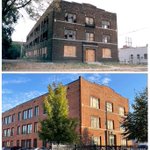
This is why we do it. Before/afters like this prove the power of incremental city-building. At Archive DS, we’ve transformed cramped, dysfunctional buildings while preserving their place in context; here, turning 36 units into 12 modern apartments/lofts. #MediumScaleMediumDensity

Mark and I connect with colleague San Diego-based urban designer Howard Blackson to talk about his hyper-local focus on the San Diego region.
How does West Coast urban design differ from other regions?
And, most importantly, what’s next?
youtu.be/0fARpqj1M3Q?si=Bd8B…
Each street, no matter what condition it’s in currently, has an underlying character that can be built upon and enhanced. It’s about how we approach these streets. Do we approach them with reverence or disdain or apathy?

An intriguing industrial find in the back alleys of London, Canada, a few years back. I liked the simple, blocky, rugged forms and character. The concrete masonry, the brick, the industrial sash windows the painting of wood elements. It screamed for #adaptivereuse in the future.


It’s pretty simple. Want more people biking? Build a network.
Protected paths are good, but connected, safe, low-stress routes are what actually make cycling a way to get around.
Stop building isolated lanes!
cyclingwest.com/advocacy/stu…

Talbot St., Leamington, Canada.
Smalltown main streets still have great bones. Add urban housing and they can fuel demand for homegrown retail, services and unique businesses. Renovations, infill, adaptive reuse, restorations, and yes, a craft brewery.
#todaysmainstreet


An #UrbanStructureDiagram of Vienna, one of my all-time favourite cities. Studying there shaped how I think about architecture and city making. My sketch captures the streetfronts, plazas, landmarks, my dorm, and my local café. USDs are how I remember/document place.

Detroit’s downtown public spaces are more interconnected than they first appear.
Often, in cities, individual spaces get the attention, not the linkages between them.
Downtowns’ public realms should be judged as a network.
youtu.be/en2Moo3eRco?si=R6ud…

Thinking again about the Detroit/Windsor border.
It can be seen as a barrier. I prefer to think of it as a seam, uniting shared histories, and their relationship to the river.
I study the “seam” via #urbanstructurediagrams , documenting memories of place and connectivity.


What makes a city truly bike-friendly? It’s connected, low-stress routes to everyday destinations, and safer journeys. Look beyond what you build to how well it connects people and protects them.
🔗 familyhandyman.com/article/m…
#UrbanDesign #Mobility #CityBuilding

Good Sense Coffee, Howell, Michigan
Coffee shops are frequently cited as community amenities. Third places.
A corner location, ample glass frontage, and seating inside and out contribute to sidewalk vitality.
Ground floor design IS urban infrastructure.
#todayscoolcoffeeshop


Small-town Main Streets offer big lessons for urbanism.This one’s both destination and thoroughfare. Its width weakens the “outdoor room,” but local character, retail and everyday activity make it a place.
Field study: Grand River Ave., Howell, Michigan, USA. #todaysmainstreet


What does it mean to be an urbanist beyond the projects we design?
One aspect that often goes overlooked is civic leadership: involvement in your locality.
We discuss because, cities are shaped by people who choose to participate.
Ep.40 youtu.be/KDT8ZWIhsO4?is=Gzrh… via @YouTube

What can a painter teach us about seeing a city? Georgia O’Keeffe’s architectural paintings remind us that cities aren’t just buildings and streets. They’re experiences of scale, light and abstraction. What do we miss if we see cities only through the language of urban design?


