

MDPC brings together advocacy groups, health care providers & patients to inform policy impacting patient-centered care for people with movement disorders.
Washington, DC
Joined August 2017
- Tweets2.4K
- Following55
- Followers497
- Likes394



#StepTherapy interrupts treatment plans and undermines patient-centered care.
Learn more about how step therapy affects neurological care: bit.ly/4yirpkG

Increased insurance coverage for #telemedicine will support continued access to care for people with movement disorders.
Learn more about the benefits of telemedicine: bit.ly/4etevX3

Excessive #PriorAuthorization burdens clinicians and undermines patient-centered care.
Learn more: bit.ly/4yl7XDR

Patients facing a Huntington’s disease diagnosis have had little hope until recently, but new gene therapies show promise in slowing disease progression.
Read more on gene therapy: healthpolicytoday.org/2025/1…

#TD can cause involuntary and repetitive movements of the face or torso such as:
🟪Chewing
🟪Blinking
🟪Rocking
Learn more: bit.ly/3xo2kIs

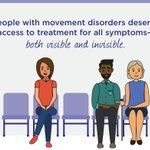
Many people with movement disorders also experience mental health conditions that aren’t as obvious.
Learn more during #MentalIllnessAwarenessWeek: bit.ly/3Ycpdfy

It's #MentalIllnessAwarenessWeek!
#DYK? At least 500,000 people have #TD and it can further stigmatize people with mental illness.
Learn more: bit.ly/38HDRU9

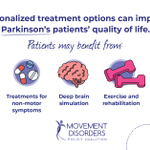
As new treatments become available, coverage policies must adjust to ensure patients can access personalized treatment.
Learn more: bit.ly/4xhbrqv

Patients need access to the treatment that works for them, but barriers stand in their way, such as:
🟣Limited access to movement disorder specialists
🟣Utilization management restrictions
🟣Coverage policies that lag behind innovation
Learn more: bit.ly/4xhbrqv

During #MentalHealthAwarenessMonth and #TSAwarenessMonth, take some time to learn the connection between #TouretteSyndrome and mental health.

It's Tourette Syndrome Awareness Month!
Watch the video to learn more this #TSAwarenessMonth: bit.ly/4cB2hMe

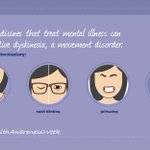
#DYK? #TD may cause involuntary:
🟪 Lip smacking
🟪 Rapid blinking
🟪 Grimacing
🟪 Jerky movements
This can lead to increased isolation and worsening symptoms.
Learn more this #MentalHealthAwarenessMonth: bit.ly/3Ycpdfy

#DYK? According to medical guidelines, patients at high risk for #TD should be screened at least every six months, and all other patients should be screened at least every twelve months.
Learn more: bit.ly/4lSzZkm

#DYK? There are two ways to address symptoms of #HuntingtonsDisease:
🟣 Medications
🟣 Non-pharmacological
Learn more in MDPC's resource during Huntington's disease Awareness Month: bit.ly/40szhPo #LetsTalkAboutHD

💡Member Spotlight!💡
FARA's mission is to focus on the resources and relationships needed to cure #FA by raising funds for research and promoting public awareness.
Learn more about FARA: bit.ly/45u3d1X

For individuals living with movement disorders, challenges often extend beyond managing physical symptoms.
Read more in MDPC's blog: healthpolicytoday.org/2026/0…

It's Huntington's disease Awareness Month! #DYK? Huntington’s is an inherited, relentlessly progressive neurodegenerative disease caused by a genetic mutation.
Learn more: bit.ly/40szhPo #LetsTalkAboutHD

#Parkinsons patients need access to effective, patient-centered treatment and care options that work for them.
Learn more in MDPC's latest resource: bit.ly/4xhbrqv

Movement disorder patients have more hope and more treatment options today than ever before.
Read more in MDPC's paper: bit.ly/4eQSq42

#FA is a rare progressive neurological condition that usually presents in childhood with balance and gait issues but ultimately results in life-altering fatigue.
Read more: bit.ly/4vyzQHn
