

Analyst https://teapawt.net/t.co/tLfvswQbFW | Early-stage Web3 Focused on tokenomics, traction & tech Tier 0 → Dealflow filter
Joined January 2025
- Tweets454
- Following97
- Followers209
- Likes1.7K






Pinned Tweet
@paramonoww is 100% right. Reading his article, I realize: this is exactly what we in VC constantly talk about behind closed doors, but publicly everyone pretends the problem doesn't exist.
As an analyst at Funders.vc, I review dozens of projects every month, and you know what?
Over the past couple of months, we've shifted to a classic venture approach for analyzing web3 projects:
▫️ Technology: how big is the market, what are you building, what problem are you solving
▫️ Business model: revenue, growth, unit economics
▫️ GTM: launch strategy, team, founder exits
▫️ Token (last)
And that's where it gets interesting 👨💻
About 80% of pitches end in rejection specifically on the token. Not because the team is weak or the product is bad.
But because the token simply isn't connected to the product at all. It exists in a parallel reality, glued on the side because "that's what you're supposed to do".
What's even worse: you talk to founders and can feel that they themselves don't understand why they need this token.
⚙️ You look at the deck: governance, staking, utility written beautifully on slides.
You ask for specifics - why would anyone need your token, what value does it bring? They can't give a clear answer. That's why equity is much more honest now.
When you enter as an LP or buy a company stake at any stage (Pre-seed, Seed), we know the founder will think about:
✅ Revenue
✅ User retention
✅ Building a business
Not about creating visual noise to successfully list the token.
📍The market will change when VCs and founders understand: a product can generate stable revenue without a token.
Build a quality business, and it will return more than the endless grind of projects with TGE dumps.


Kirill Titarenko retweeted

Great piece👏
Thanks for featuring Funders and giving us the opportunity to share our perspective.


Revolut is valued for what it could become: a global bank with a broader revenue base. Its US expansion could justify $115bn and push it towards $200bn.
The real test is turning new banking licences into sustainable profits at scale.

@Revolut has completed a secondary share sale at a $115bn valuation. No new money was raised, employees sold shares to investors including Coatue, T. Rowe Price and Baillie Gifford.
We wanted to look at what stands behind this number and why the market is ready to pay it.
The first thing people point to is scale.
Simon Taylor noted that a company launched as a travel money card in 2015 is now worth more than @BarclaysUK and @DeutscheBank. It is the first private company in Europe to pass $100bn.
The fundamentals support the story. Revolut is growing fast and is already profitable, which is still rare for fintech at this stage.
And the next stage of growth is only starting.
This year @Revolut received a full UK banking licence and conditional approval for a US national bank charter. Lending is still a small part of the model, so the licences open a large new source of revenue.
Simon Taylor calls the US charter the swing variable. If it works, $115bn may look like an early price.
The main counterargument is the multiple. Linas Beliūnas points out that Revolut is valued at about 19x revenue, while listed fintechs trade closer to 2x.
But Revolut is no longer priced as a fintech app. Investors are pricing a global bank in the making.
Revolut is aiming for an IPO valuation of up to $200bn, not before 2028. Linas names three conditions for getting there. Licences need to turn into profit, growth needs to hold at scale, and public markets need to accept the story. Two of the three are already on track.
Our view
Revolut’s strategy is clear to us. The US launch is what can justify the current valuation. Meanwhile, in Europe’s complex fintech market, the company keeps growing at a very high pace from an already large base, launching lending in the UK and rolling out new products.
There are challenges, but the overall picture looks positive. Revolut’s rounds and growth are doing a lot to build investor interest in European fintech.

2
71
Kirill Titarenko retweeted
Pool2 used to be one of the familiar growth tools in DeFi.
Protocols launched pools around their own tokens or products and incentivized users to bring liquidity there.
During the previous cycle, this category reached several billions of dollars in TVL.
Today, according to @DefiLlama, Pool2 TVL is around $171.75M.
So the main question is no longer how big the category remains.
It is what is left after the incentive-driven liquidity cycle cooled down.

Kirill Titarenko retweeted
Looking forward to this conversation🤝
Exits and liquidity are a crucial part of the investment cycle, and we’re glad to have @al_nechaev joining the discussion in Singapore.
This quoted post is unavailable.
Kirill Titarenko retweeted
@HyperliquidX gave Korea Blockchain Week a great start.
The Community Dinner had exactly the kind of atmosphere you want at events like this, lively conversations, strong people, and an active community around what’s being built.
And of course, great food to keep the networking going 🙃
Thanks to everyone who made the evening so enjoyable.
See you at @kbwofficial.


Kirill Titarenko retweeted
Our first Funders VC newsletter is out📜
Funders VC H1 2026 Recap
In this edition, we look back at the first half of the year across the Funders ecosystem, including new investments, portfolio updates, team activity, events, partnerships, and our focus for H2.
This is the first edition of our newsletter, and we are glad to finally share it.
Hope you enjoy the read.
Link: fundersvc.substack.com/p/fun…
What stands out to me is the infrastructure angle. As crypto funds scale across exchanges, DeFi protocols and increasingly complex strategies, operational fragmentation becomes a serious bottleneck.
Renesis is interesting because it is not simply aggregating data. It is building an operating layer around reconciliation, performance attribution, portfolio management and execution.
From a traction and technology perspective, the key question is how deeply @renesisfi can integrate into the daily workflow of fund managers and become infrastructure they cannot easily replace.
If the platform continues expanding coverage while reducing manual operational work, that could create strong long-term stickiness.

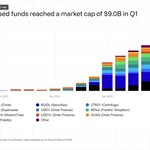
From an analyst's perspective, FOBXX's expansion via Benji is a massive game-changer, but the institutional CeDeFi picture is incomplete without highlighting other RWA giants in the @bouncebit roster.
Alongside Franklin Templeton, heavyweights like @centrifuge and @SuperstateInc are natively integrating into Prime. This shifts the platform from a single-asset play into a comprehensive aggregator of regulated liquidity.
Superstate scales funds on public rails with programmatic compliance, while Centrifuge tokenizes private credit pools from the real economy.
Ultimately, BB Prime users get more than just tokenized Treasuries via BENJI they unlock a diversified matrix of secure RWA assets with layered yields. This is exactly what a true bridge between TradFi liquidity and on-chain efficiency looks like.

The massive evolution of institutional finance: how @FTI_US scaled their tokenized Benji platform past the 1 billion dollar milestone in on-chain assets in mid 2026.
Unlike standard DeFi experiments, Franklin Templeton moved their FOBXX money market fund directly onto public networks to bridge public layer one chains with private interbank layers.
This remains a monumental regulatory milestone because a mutual fund strictly regulated under the Investment Company Act of 1940 utilizes public distributed ledgers for official ownership record keeping.
Deep dive into this upgraded, highly integrated multichain liquidity pipeline 👇

Current on chain metrics for solana:So11111111111111111111111111111111111111112 reveal a classic structural cooling following a phase of hyperactive retail speculation. There is a synchronized drop in total network revenue and overall transaction fees.
This trend directly reflects fading trading volumes across decentralized exchanges and a general slowdown in speculative traffic, which has historically served as the primary engine for network activity.
The underlying mechanics of this shift are most evident in the sharp decline of priority fees and a massive drop in tip fees. During peak market euphoria traders and MEV bots aggressively bid up transaction costs to guarantee execution speed.
This significant contraction indicates that fierce competition for block space has completely subsided leaving the network infrastructure operating under normalized conditions.
Despite the exit of speculative retail liquidity long term institutional positioning remains remarkably steady. While ETF native assets under management show a clear contraction the ratio of fund assets to total market capitalization holds perfectly flat.
This confirms that the decline is primarily driven by asset price depreciation rather than actual institutional capital flight from the ecosystem.
This market configuration creates a highly pragmatic environment for venture capital allocators. The current drawdown does not signal any structural weakness but rather marks a healthy transition from a highly cyclical retail frenzy to a mature accumulation phase allowing the network to demonstrate true operational resilience under moderate volumes.

The Risk Curators Protocols sector is currently a prime example of how the economy of trust works in decentralized finance.
While retail investors continue to chase random yields institutional players prefer to allocate their billions to just a handful of professional risk management teams.
This direction has rapidly evolved into a classic winner take all market. The true scale of this hidden industry is revealed by the massive concentration of capital among the top three leaders who effectively control the lion share of all on chain debt liquidity.
Such a staggering gap between the top giants and the rest of the market proves one simple point. In institutional DeFi an unblemished reputation and automated risk management frameworks have become the most scarce and valuable commodities.
One look at this current leaderboard is enough to understand the actual power hierarchy and see who truly dictates the rules in the premier league of capital management.

Why is the industry virtually ignoring the fundamental shift in the Risk Curators Protocols sector and so few are talking about the actual architecture of @SteakhouseFi?
The firm operates as the premier institutional grade risk curation layer primarily building on top of the Morpho ecosystem. Their infrastructure automatically underwrites collateral configures vault controls and monitors DeFi lending positions across Prime and High Yield mandates.
This automated system shifts risk management upstream to the market creation level while utilizing smart downstream processes to maximize liquidity provision across @ethereum, @base, @arbitrum, @Polygon, @unichain and @katana.
Today the team firmly holds the status of the largest risk curator on the Morpho protocol with massive orchestrated value locked. This substantial deposit base generates significant annualized revenue purely from curation fees. Due to the core design of @Morpho the project maintains virtually zero DeFi infrastructure overhead ensuring highly efficient unit economics for the business.
The scaling capacity of this model is proven by specialized products like the mF ONE tokenized private credit fund launched with @MidasRWA which captured immense capital.
The fundamental value of @SteakhouseFi lies in its multi layer security mechanics. The framework combines issuer platform and market risks into a single Final Market Rating to precisely calibrate discounts and liquidation parameters.
A strict Safe multisig with a five key quorum and a mandatory 7 day action timelock are reinforced by a depositor veto right via the unique @AragonProject Guardian mechanism. Meanwhile proprietary off chain reallocation engines autonomously protect assets during sudden liquidity crunches.
The project operates as a comprehensive safeguard primitive for institutional capital allocators. It redefines the approach to on chain debt markets and drastically reduces counterparty exposure for automated liquidity providers.

The figures accurately reflect the current institutional trend. The growth of the active lending portfolio to nineteen billion dollars proves the formation of a real blockchain based credit market rather than familiar speculation. The initiative to update HASH tokenomics is an absolutely logical and necessary step to synchronize protocol capitalization with its actual economic activity.
May Pulse Check Provenance Ecosystem
Six weeks ago we highlighted how the @provenancefdn architecture is reshaping the private credit sector. Today fresh data from Artemis confirms that institutional capital migration onchain is happening even faster than anticipated.
Core Growth Metrics
The network TVL experienced a massive (+92.0%) surge over the last 14 months hitting an absolute peak of $25.75B. In just the last month alone the network added $1.34B in total value.
Simultaneously the lending portfolio broke all historical records. Daily active lending loans reached $19.18B. We are seeing a clear trend acceleration of (+20.6%) over the past 4 months with $945M added to the loan balance in May alone.
This capital growth is matched by user adoption as the network now hosts over 77K participants generating upwards of $316K in monthly chain fees.
Strategic Roadmap
These figures represent real economic activity rather than speculative volume. To sustain this momentum the project is focused on executing a three step plan
1. Reworking HASH tokenomics to capture economic value more efficiently
2. Creating deeper utility mechanisms for asset holders 3. Actively attracting third party participation and developers to the platform
Such fundamental dynamics prove that the real integration of traditional finance and blockchain has already begun. We continue to closely monitor the progress of infrastructure solutions in this segment.

Kirill Titarenko retweeted

The @HyperliquidX architecture systematically absorbs adjacent verticals through the zero-cost conversion of its existing active trader base.
Sustaining this expansion rate over a six-month horizon mathematically guarantees the protocol will capture the dominant share of prediction markets without incurring external capital acquisition costs.

Prediction Markets Weekly Open Interest:
@Kalshi - $590M (-12%)
@Polymarket - $480M (-2%)
@predictdotfun - $13.7M (-2%)
@opinionlabsxyz - $7.7M (-5%)
@HyperliquidX - $4.3M
@SX_Bet - $1.3M (-19%)
@trylimitless - $955K (+15%)
Kalshi is still #1, but losing some momentum (compared to last week).
HIP-4 has confidently entered the top 5 and keeps getting more attention.
While @trylimitless is getting close to the $1M mark.
Thanks to the teams at @raikucom and @hazeflow_xyz
for publishing the Q1 2026 Solana Revenue Report.
The core insight of the research lies not in peak fees but in a fundamental shift in user demographics. February marked the first time the blockchain recorded systemic infrastructure payments originating directly from autonomous algorithms.
Machines are now paying customers:
Providers Helius and QuickNode integrated programmatic API billing directly in USDC. Algorithms currently purchase their own computational capacity.
A new liquidity model:
Protocols DFlow and Claw Credit opened credit lines specifically for AI. Simultaneously BankrBot manages Raydium pools with complete autonomy.
The optimal execution environment:
Algorithms require high transaction frequency and near zero costs. Block finality under 50 milliseconds makes this architecture the default layer for machine micropayments.
Blockchain revenues have historically relied on retail emotion and speculative cycles. The integration of autonomous agents breaks this paradigm. Machines establish a persistent base load on the network.
They do not panic and they completely ignore price trends. For smart capital the scaling of this sector represents the emergence of the first truly predictable revenue stream in Web3.

ALT https://x.com/hazeflow_xyz/status/2057090864569364520?s=20

We're excited to announce our collaboration with @raikucom on our first-ever Solana Revenue Report, covering Q1 2026.
• Protocol-Level Revenue
• Infrastructure Revenue: MEV, Jito, Invisible Layer
• Who Earned the Most in Q1
• Established Players & New Ones
Enjoy the read!

2
117
Chasing the highest APY is a fool’s errand for institutional treasuries.
Today, DAOs and corporate funds are manually hopping between @ethereum , @base , and @avax . They burn margin on gas, slippage, and bridge fees just to squeeze out an extra 20 basis points. But once you factor in the operational overhead and the exponential smart contract risk of managing positions across four networks, that 3.89% on @aave quickly evaporates.
The answer isn’t bloating your internal treasury team. That’s not how TradFi scales, and it’s not what Web3 should be doing either.
Grove skips the noise via algorithmic capital routing. The protocol doesn’t compete for "degen" yields. At 3.65%, it establishes a definitive, risk-adjusted benchmark. By batching transactions, dynamically balancing tokenized RWAs with decentralized lending pools, and removing cross-chain friction, @grovedotfinance collapses fragmented liquidity into a single, unified yield curve.
Composability risk is the industry’s biggest hurdle, but Grove solves it through network-isolated vaults and asynchronous circuit breakers. A blowout on Avalanche won’t drain the vaults on Base.
With $8.3B in TVL generating over $72M in annualized fees, the value accrual is undeniable. Revenue flows directly back into the ecosystem via Real Yield and liquidity bribes, turning the token into a cash-generating asset rather than just a governance proxy.
By next year, I expect automated RWA-to-DeFi routing to be the standard primitive for every major on-chain entity. This is how crypto balance sheets finally mature.
Did anyone actually track @grovedotfinance and understand its core architecture?
The protocol launched in June 2025 as a capital allocation layer within the Sky (formerly MakerDAO) ecosystem.
The platform automatically deploys capital into tokenized RWA assets, Aave lending, Morpho vaults, and Curve LP positions.
This infrastructure operates across Ethereum, Base, Avalanche, and Plume.
Let us review the actual metrics:
• Grove Savings TVL has reached $5.7 billion.
• Core protocol TVL stands at $2.67 billion.
• Annualized fees exceed $72.6 million.
• The $SKY Savings Rate offers a 3.65% APY. This rate competes tightly with $AAVE at 3.89% and $MORPHO Prime at 3.75%.
The fundamental value of Grove lies in algorithmic capital routing. The protocol bridges fragmented liquidity across multiple networks and forms a unified yield curve for stablecoins.
Dynamic balancing between tokenized RWAs and lending pools establishes the baseline risk free rate for the sector.
The project operates as a comprehensive treasury primitive. It automates corporate asset management and drastically cuts portfolio rebalancing costs.

9
262
Onchain perps are matching CEX execution on event flows and beginning to pull measurable share.
> @DecibelTrade average daily volume: $142M in November, +340% from Q3
> Median trade latency: 180ms during volatility spikes
> Slippage on $1M BTC perp: 4.2bps vs 3.8bps on top CEX
> Share of onchain perp volume: 12% and rising
Fully onchain venues now compete on the metrics that matter for tactical flows. This is what share migration looks like.

When a chain @solana actively supports its projects, it creates a powerful symbiosis: the growth in quality of individual applications directly boosts the overall revenue and user metrics of the entire ecosystem.
We have moved from "infrastructure for infrastructure’s sake" to a phase where the success of a network is measured by the success of the products launched within it.
This shift evidenced by the surge to 29.9K weekly deployers and 50.5K new contracts is the leading indicator that promises a major wave of high-impact application projects in the near future.

Full list of Solana projects that generated >$1M in revenue in the last 30 days ↓
@Pumpfun
@AxiomExchange
@phantom
@JupiterExchange
@ore
@fomo
@solana
@MeteoraAG
@helium
@TrojanOnSolana
@gmgnai
@Raydium
Currently just 12 names in the entire ecosystem.
But given the pace at which projects are being built on Solana right now, expect this list to multiply very soon.


AI is shifting from the discovery stage to the ROI stage, and the market now demands infrastructure over hype.
Key points:
1) Early AI was focused on testing capabilities and building broad applications.
2) The focus is now shifting toward sustainable economics and solving real-world problems.
3) Vertical AI solutions in logistics or fintech are becoming drivers of margin expansion.
4) The next decade will be built by infrastructure solutions, not standalone features.
Capital is gradually flowing toward cash-flow-generating, industry-specific products.
Great read below.
Y Combinator’s RFS for Summer 2026 confirms a market shift we’ve been acting on at Funders VC : the AI industry is moving from the "discovery" phase to the "ROI" phase.
The first wave of LLM adoption naturally focused on testing capabilities and accessible applications. Now, the market demands foundational infrastructure and sustainable unit economics. The hype cycle is over; the execution cycle has begun.
At @FundersVC , we aren’t looking for broad horizontal platforms. Our current thesis is built around "real solutions for real problems." We are hunting for AI-infra and Vertical AI deeply embedded in narrow industries such as logistics, construction, manufacturing, QA or B2B fintech.
We back founders who are building the backbone of the next decade by:
• Delivering margin expansion
• Solving complex legacy enterprise workflows rather than building superficial features.
• Demonstrating clear paths to revenue and capital-efficient growth from day one.
Every VC makes a bet on what the world will look like in 10 years. Our bet is on founders turning technological shifts into scalable, cash-generating businesses.

Great observation. To build on this, the most interesting part lies in the math of their capital and their long-term hedging strategy.
Tether is currently operating on a model that no classic VC fund can replicate. By leveraging zero-cost liabilities (users don't earn yield for holding solana:Es9vMFrzaCERmJfrF4H2FYD4KCoNkY11McCe8BenwNYB ) and massive cash flows from US Treasuries, they are funding complex, capital-intensive deep tech with essentially free money.
Their pivot away from pure crypto infrastructure toward brain-computer interfaces, robotics, and alternative communication networks looks like a highly pragmatic macro hedge. The core stablecoin business will inevitably hit a ceiling either due to strict institutional regulation or competition from banking products and CBDCs.
By acquiring physical hardware, media platforms, and independent data transmission channels, Tether is preemptively building an autonomous conglomerate. If the crypto market stagnates or gets squeezed by compliance, they will still hold the foundational infrastructure of the next technological cycle on their balance sheet.
We are essentially witnessing the evolution from a token issuer to a Berkshire Hathaway-style tech holding company.
A closer look at Tether’s venture arm shows a portfolio moving far beyond standard crypto infrastructure.
Stakes in Blackrock Neurotech, Neura Robotics, and Generative Bionics indicate a clear focus on deep tech and human-computer interfaces.
Meanwhile, investments in platforms like Rumble and Holepunch show an active interest in alternative media and P2P communication networks.
This isn't just basic diversification. Tether is essentially using its massive financial float to buy into the physical and digital hardware of the next decade.
