

doctrine & doctorin’
Arlington, TN
Joined February 2010
- Tweets54.5K
- Following98
- Followers2.8K
- Likes63.1K





W. Clay Jackson, MD, DipTh retweeted

El descubrimiento arqueológico de Megido, en Israel, cerca de Jerusalén, conocido por la inscripción de Akeptous y datado aproximadamente en el año 230 d. C., constituye un testimonio extraordinario de la fe cristiana primitiva: ya se llamaba explícitamente «Dios» a Jesucristo, casi un siglo antes del Concilio de Nicea (325).
La inscripción dice textualmente:
«Akeptous, la amante de Dios, ha ofrecido esta mesa a Dios Jesucristo como memorial».
Y para que después no digan que fueron los gnósticos: estamos hablando de un testimonio arqueológico de una comunidad cristiana de Megido, en Tierra Santa.


W. Clay Jackson, MD, DipTh retweeted

Sexual compatibility is one of the greatest lies of modern times. They’ll have you convinced it’s some sort of factual number you need to test before you commit to someone.
But when people say this what they usually mean is — can you perform in some sort of fashion that would give me the most pleasure? It’s nothing to do with love, with devotion, with meaning, and it has everything to do with the body, with our flesh.
Sexual intimacy is not something we can discover, it is only something we can build, and building intimacy is done by trust, by being exclusive and most of all by the lifelong covenant that is marriage. A good and healthy sexual relationship comes from fidelity, love and devotion, not the other way around. You cannot build a roof without first having a foundation.
And so now that pleasure has become this new standard by which we now measure love and our desire for long term commitments it is no wonder that nobody ever stays for long. Pleasure is a terrible foundation, and that is because it was made to be the overflow, not the source.

W. Clay Jackson, MD, DipTh retweeted

“Mao and Stalin and Hitler didn’t come to power promoting tyranny. They came to power promising equality.”
— Rand Paul


W. Clay Jackson, MD, DipTh retweeted

Worth your time to read, particularly if you’re prone to posting—

Social media back-and-forths on Christian Nationalism-related matters suffer from a seemingly insurmountable problem: participants routinely conflate words and opinions with actions and violence. But instead of issuing trigger warnings and demanding safe spaces, we cry "slander!", issue a Ninth Commandment proclamation against our foes, and self-righteously demand that the rest of the Internet enforce our verdict.
It's a peculiar form of Christianized speech policing, where criticism, disagreement, rebuke, or even an uncharitable interpretation is elevated from something we dislike into a moral offense against God Himself. And once we've declared ourselves the victims of such an offense, we assume the authority to adjudicate the matter, pronounce judgment, and demand that everyone else recognize the guilt of the accused.
Of course, genuine slander exists. Bearing false witness is sinful, and Christians are obligated to speak truthfully about their neighbors (Exodus 20:16; Ephesians 4:25). But criticism is not inherently slander, disagreement is not violence, and even poorly formed, unfair, or materially false speech is not automatically evidence of malicious intent. The moral evaluation of someone's words requires considerably more care than simply announcing that we have been wronged.
The tell is when public Christian figures begin treating criticism of themselves as actual material harm—a kind of violence or violation of their rights—rather than speech to be answered, corrected, or, when appropriate, rebuked. This pious pre-adjudication does something rather convenient: it rhetorically transforms an opponent from someone who might be mistaken, unfair, or even genuinely sinful into a morally disqualified enemy.
And once someone has been placed into that category, apparently all bets are off.
The critic is no longer simply wrong. He's a liar, a slanderer, a wicked man, an enemy of righteousness. His arguments need not be represented accurately, his motives may be freely presumed, and his character can be reduced to whatever contemptuous category best serves the occasion. Caricature, ridicule, insinuation, and crass generalizations become permissible because, after all, look what kind of person we're dealing with!
The initial accusation of slander thus becomes the mechanism by which we grant ourselves permission to slander. The designation of an enemy becomes the mechanism by which we excuse treating him in ways Christ expressly forbids.
And this is where the whole exercise becomes especially absurd.
The Ninth Commandment does not cease to apply to us because we believe someone else has violated it. Scripture condemns not merely lying, but malicious speech, false accusations, and the misuse of the tongue (James 3:5–10; Colossians 3:8–9). We are forbidden to repay evil for evil (Romans 12:17), commanded to avoid reviling in return when reviled (1 Peter 3:9), and explicitly instructed by Christ to love our enemies and pray for those who persecute us (Matthew 5:44).
Notice that none of these commands contains an exception for opponents who have actually wronged us.
Indeed, loving one's enemies would be a rather meaningless command if it applied only to people who had never treated us unjustly.
Even a genuinely slanderous opponent is not thereby rendered "fair game" for our own sinful behavior. We may correct him, rebuke him, expose his falsehoods, and demand accountability where appropriate. But we may not abandon truthfulness, fairness, or Christian charity in doing so. The fact that someone has sinned against us does not confer upon us the right to sin against him.
Ironically, the very people demanding painstakingly charitable interpretations of their own words will sometimes offer their opponents nothing of the sort. They insist upon precision when describing their own positions while indulging sweeping, dehumanizing categories when describing everyone else's. They demand that their motives be judged favorably while confidently assigning the worst possible motives to their critics.
It's a remarkable asymmetry, particularly among Christians who profess to believe that God's moral law is universal, objective, and binding upon everyone.
Somehow, we've convinced ourselves that thin skin is actually toughness, that indignation is discernment, and that responding to every criticism with the imprecatory finality of God Himself demonstrates spiritual courage. We condemn the therapeutic culture's obsession with emotional injury while adopting its central conceit: that being offended or wronged grants us special moral privileges in how we treat others.
But it doesn't.
The Christian response to injustice is not to manufacture a class of people toward whom justice is no longer required. Nor does Scripture permit us to replace Christ's command to love our neighbors with a friend/enemy distinction in which our friends receive every benefit of the doubt and our enemies receive none.
"Do not be overcome by evil, but overcome evil with good" (Romans 12:21).
That command is not suspended when the evil is directed at us.
Words are not violence simply because we'd like the emotional and rhetorical advantage of calling them that. Criticism is not slander merely because it stings. And even when genuine slander occurs, the person committing it does not forfeit his claim to truthful, just, and Christian treatment.
If our defense of the Ninth Commandment requires us to violate it, perhaps we weren't defending the commandment in the first place.
W. Clay Jackson, MD, DipTh retweeted

Somebody turned the saturation up on Mount Rainier.
Autumn has painted the national park's slopes in brilliant shades of red, orange, yellow and green.
Planning a visit? Check the forecast and park conditions before you go. Mountain weather can change quickly.

ALT Tall evergreen trees stand prominently amid a vibrant autumn hillside covered in red, orange, and yellow foliage.
W. Clay Jackson, MD, DipTh retweeted
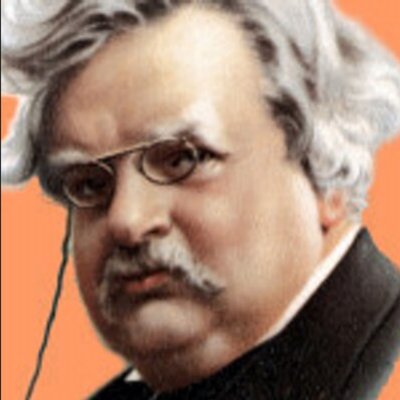
We hear much of old people being bigoted in their antiquated ideas. It has always been my experience that the young are much more bigoted in their new ideas.
W. Clay Jackson, MD, DipTh retweeted

A Planned Parenthood doctor tries to lecture Matt Walsh on child gender identity and insists even babies understand gender.
Then he asked her about Santa Claus, and it was over.
MICHELLE FORCIER: “There’s research and data that show that babies and infants understand differences in gender. Some children figure out their gender really early...”
WALSH: “Have you ever met a 4-year-old who believes in Santa Claus?”
FORCIER: “Mhm.”
WALSH: “So, this is someone who believes that a fat man is traveling through the sky on a flying reindeer at lightning speed coming down his chimney with presents.”
FORCIER: “Yeah.”
WALSH: “Would you say that this is someone who maybe has a tenuous grasp on reality?”
FORCIER: “They have an appropriate 4-year-old handle on the reality that’s very real for them.”
WALSH: “Agreed. Agreed. But Santa Claus is real for them, but Santa Claus is not actually real.”
FORCIER: “Yeah, well, and but Santa Claus does deliver their Christmas presents.”
WALSH: “Well, yeah, but he’s not real, though.”
FORCIER: “To that child, they are.”
WALSH: “When I see a child who, you know, believes in Santa Claus, and then let’s say this is a boy and he says, ‘I’m a girl.’ This is someone who can’t distinguish between fantasy and reality, so how could you take that as a reality?”
FORCIER: “I would say that as a pediatrician and as a parent, I would say how wonderful my 4-year-old and their imagination is.”
Most 4-year-olds can’t even tie their shoes. We don’t let them cross the street alone, pick their bedtime, or choose what’s for dinner. But she thinks they’re mature enough to decide they’re “in the wrong body.”
The most terrifying part about this lady is that she’s also an Assistant Dean of Admissions at Brown University.
She’s not just affirming fantasy as reality in her own practice. She’s helping hand-pick the next generation of doctors — ones who think just like her.


“Literary experience heals the wound, without undermining the privilege, of individuality.”
Lewis, as per usual, with a banger

This is what reading actually does to you:
“Those of us who have been true readers all our life seldom fully realize the enormous extension of our being which we owe to authors. We realize it best when we talk with an unliterary friend. He may be full of goodness and good sense but he inhabits a tiny world. In it, we should be suffocated. The man who is contented to be only himself, and therefore less a self, is in prison. My own eyes are not enough for me, I will see through those of others. Reality, even seen through the eyes of many, is not enough. I will see what others have invented. Even the eyes of all humanity are not enough. I regret that the brutes cannot write books. … Literary experience heals the wound, without undermining the privilege, of individuality. There are mass emotions which heal the wound; but they destroy the privilege. In them our separate selves are pooled and we sink back into sub-individuality. But in reading great literature I become a thousand men and yet remain myself. Like a night sky in the Greek poem, I see with a myriad eyes, but it is still I who see. Here, as in worship, in love, in moral action, and in knowing, I transcend myself; and am never more myself than when I do.”
— C.S. Lewis, An Experiment in Criticism
If you enjoy our posts, consider becoming a paid subscriber. You'll get:
- Live book club discussions (biweekly)
- Access to our incredible community chat
- Essays to guide you through the Great Books
- All past recordings, essays, and podcasts
- The ability to vote on what we read next
Join here: athenaeumbooks.com/subscribe

W. Clay Jackson, MD, DipTh retweeted

Evil detests beauty because beauty is proof of a transcendental order, of objective Goodness and Truth.
To attack beauty is to wage war against the possibility of transcendence.
Beauty is a great affront to nihilism. It testifies to that which is greater than the individual, because to create a beautiful thing is to acknowledge that you are answerable to standards higher than your own. Beauty is often called a great evangelist for this reason.
This is why they outright destroy beauty or try to subvert your perception of it by promoting ugliness or triviality. Beauty is neither neutral nor trivial — your ability to discern the beautiful from the ugly is intimately connected to your capacity to recognize the divine.
Dietrich von Hildebrand once declared that "beauty is the archenemy of mediocrity." Why?
Beauty elevates a person toward truth, goodness, and the divine. The antitheses to beauty drag the soul down into nihilism and worship of the self.


W. Clay Jackson, MD, DipTh retweeted

You can't fight something with nothing. De-Christianized Europe has nothing. To paraphrase T.S. Eliot on the eve of World War II, for Europe's current moment: "If you will not have God, and he is a jealous God, then you should prepare to pay your respects to Allah and Lenin."

Please read

"You reduce crime by eliminating poverty."
This is one of the greatest intellectual confusions of our century. It sounds compassionate. It feels obvious. And the moment you actually test it, it falls apart.
Let's look at the data.
First, the correlation is real. Nobody serious denies that poorer areas have more crime. In Sweden, kids from the poorest 20% of families are about 7 times more likely to be convicted of a violent crime than kids from the richest 20%.
But correlation is not causation. So Swedish researchers did something brilliant: they compared siblings. Same parents, same home, same upbringing, but different family income at different points in their childhood, because parents' income moves over time.
Result, on more than 500,000 children (Sariaslan et al., British Journal of Psychiatry, 2014): once you account for what's shared inside the family, the effect of income on violent crime goes from 7x to nothing. The hazard ratio drops to 0.95. No effect.
Finland ran the same test on 650,000 people. Same result: the income-crime link disappears when you compare siblings.
What predicts crime isn't the bank balance. It's what travels inside families.
Second test: what happens when poverty spikes for everyone at once? 2008. US unemployment doubled from 5% to nearly 10%. 15% of Americans officially poor. If poverty creates crime, crime should have exploded. Instead it fell. Year after year. Robbery, the most "economic" crime of all, dropped 10% in 2010 alone. Criminologists literally said they were stumped. Same story in the Great Depression: 25% unemployment, and crime went down in many cities.
Third test: take families out of poverty and see. The US government ran a randomized lottery called Moving to Opportunity. Thousands of families in public housing got vouchers to move to low-poverty neighborhoods. For boys, violent arrests dropped at first, property crime arrests went up, and over time the effects faded. New zip code. Same behavior.
Fourth: the claim that police don't matter. This one is just false. Chalfin et al. (American Economic Review: Insights, 2022): each additional police officer prevents about 0.1 homicides. And per capita, the lives saved are twice as many among Black victims as among white victims. The people who suffer most from "police don't matter" are the poorest neighborhoods.
So what does predict crime? The Dunedin study followed 1,000 children from birth to age 32. Self-control measured between ages 3 and 11 predicted adult criminal convictions, even after controlling for social class and IQ (Moffitt et al., PNAS, 2011). Cognitive ability matters too: across 700,000 Swedish men, lower cognitive scores at 18 track with violent convictions, and the link barely moves when you control for childhood socioeconomic status (Frisell et al., 2012).
And here's the part nobody quotes: in Dunedin, kids whose self-control improved over time did better than predicted. Behavior can change. Which means responsibility is real.
Why does this matter? Because "poverty creates crime" isn't just wrong. It's toxic.
It turns criminals into victims. The man who robbed you becomes a symptom of "the system," and you, the real victim, become a footnote in someone else's narrative.
It merges two completely different things. "You're poor, we'll help you" is one policy. "You're poor and you committed a crime, so we'll excuse you" is another. Fusing them insults the millions of poor people who work, raise their kids, and never hurt anyone. The vast majority of poor people are not criminals. That alone kills the theory.
It removes responsibility. Build a political system on "your circumstances made you do it" and you destroy the one thing that actually changes behavior: the certainty that you own your choices. Every excuse the state manufactures is an incentive.
And it feeds the state forever. If every crime is a social failure, every crime justifies a new program, a new budget, a new agency. Crime becomes the business model of bureaucracy.
The alternative is simple and old.
A lighter state that protects instead of explains. The same rules for everyone, from the projects or from a gated community. Certain, swift punishment for anyone who commits a crime. And never, ever telling someone their crime was written in their social condition.
Treating someone as responsible is respecting them. Excusing someone because they're poor is the most condescending thing you can do to them.

W. Clay Jackson, MD, DipTh retweeted

“The first qualification for judging any piece of workmanship from a corkscrew to a cathedral is to know what it is – what it was intended to do and how it was meant to be used.”
- C.S. Lewis, Preface to Paradise Lost
W. Clay Jackson, MD, DipTh retweeted

Imagine a doctor who spends his life checking other scientists’ work—like a detective for research—and discovers that a huge amount of what we “know” about food and health is shaky or just plain wrong. That’s John Ioannidis.
John Ioannidis is one of the most respected scientists in the world. He is a professor of medicine and statistics at Stanford University. His famous 2005 paper, “Why Most Published Research Findings Are False,” has been read millions of times and changed how people think about science. He studies how research is done and why so many studies turn out to be wrong. Scientists and journals listen to him carefully.
When he looked at nutritional epidemiology—the science that tries to figure out which foods help or hurt us by watching large groups of people—he said the field is in serious trouble and needs a big fix.
Here’s what he found, in plain language:
Most of these studies just ask people what they remember eating and then look for links to diseases. Almost every food ends up looking “significant.” That leads to crazy claims if you take the numbers at face value. For example, the math can suggest that eating 12 hazelnuts a day adds 12 years to your life, or that two slices of bacon a day shortens your life by a decade (worse than smoking).
Ioannidis says those results are almost certainly not real. They mostly show bias, errors in how people report their diets, and other problems that create noise instead of truth.
He argues that small differences in ordinary foods rarely cause big changes in how long people live or whether they get major diseases. Extreme problems (like not getting enough of a vitamin, or eating way too many calories) matter. Everyday variations usually do not.
Ioannidis has said the field has largely become a “null field”—meaning most of the single-food or single-nutrient findings are probably zero or close to zero once you account for biases. He has even said nutritional epidemiology has “grown old and died” and that researchers should stop producing more of the same observational studies and move to better methods, especially large, carefully done randomized trials where people are actually assigned different diets.
In short: He respects the hard work of people in the field but believes the main tools they have used for decades produce mostly unreliable results. That is why headlines about one food being a miracle or a poison keep changing—and why he says the science needs radical reform.
His warnings matter because he is not an outsider. He is a top expert who has spent decades showing how science can go wrong, and many other researchers take his critiques seriously even when they disagree with parts of them.


