
Ex-founder & Ex-CTO @JinaAI (acquired by Elastic) | Ex-Zalando | Ex-Tencent | Build AI & IR Systems | OS enthusiast | Speaker & contributor (50+ talks) | PhD
Global
Joined June 2009
- Tweets304
- Following573
- Followers365
- Likes311
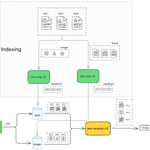
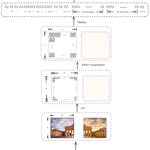


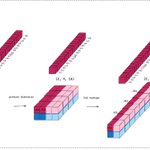

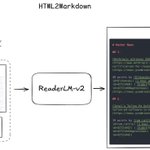


Having built and scaled multivector embedding systems since huggingface.co/jinaai/jina-c… in 2024, I’ve long expected late-interaction models to move from research curiosity to production infrastructure. Kudos to @tomaarsen and the SentenceTransformers team— MultiVectorEncoder in v6.0 is a meaningful step toward making that a reality at industry scale.


This is how you build reliable agents.
- The 10-point checklist covers the stack end-to-end — goal fulfillment, trigger logic, overlap detection.
- The deterministic/latent split is the insight most teams learn the hard way. Use code as guardrails. Let the model handle the emergent stuff.


Evals are taste, made executable.
In the LLM era, the marginal cost of execution drops to zero. Scarcity doesn't vanish—it migrates.
What's scarce now: translating fuzzy context into precise problems, and codifying what "good" looks like.
The execution bottleneck is gone. The taste bottleneck is just beginning—and shipping an eval set is how you stake a claim on it.
GBrain v0.14 now has a jobs server for OpenClaw that significantly increases throughput and reduces gateway load, based on proven patterns from BullMQ.

221
Love this. check-resolvable closes the static gap — is there a path at all. There's a runtime gap underneath that's harder.
Three layers of darkness, in order of difficulty:
→ Skill is reachable but doesn't fire when it should (false negative at the trigger)
→ Skill fires but is used wrong (false positive at execution)
→ You change something to fix it — did the fix actually work?
@garrytan 's meta skill idea is good for surfacing layer 1 candidates. Layer 3 is the one that haunts me. We have no eval harness for skill changes. Every fix is a guess dressed up as a patch.

103

Browsing through the #hermesagent Hermes-agent source and stumbled on this interesting little comment 🤔
```
# Alibaba Coding Plan API always returns "glm-4.7" as model name regardless of the requested model.
```
github.com/NousResearch/herm…

200
That's a compelling thread—fascinating to dive into the data curation approach and looking forward new VLM backbones!

We releasing a large update to 📄FinePDFs!
- 350B+ highly education tokens in 69 languages, with incredible perf 🚀
- 69 edu classifiers, powered by ModernBert and mmBERT
- 300k+ EDU annotations for each of 69 languages from Qwen3-235B

184
With visual encoding this efficient, it's prime time to revisit Visual RAG! Efficiency and VLM precision have been the big blockers, but this changes the game.
Imagine: Cheaper long-context scaling, better code handling, and unlocking visual retrieval for real-world apps. Is this the spark for next-gen #VLMs? Curious what you think?

DeepSeek finally released a new model and paper. And because this DeepSeek-OCR release is a bit different from what everyone expected, and DeepSeek releases are generally a big deal, I wanted to do a brief explainer of what it is all about.
In short, they explore how vision encoders can improve the efficiency of LLMs in processing and compressing textual information. And the takeaway is that rendering text as images and feeding that to the model results in more efficient compression than working with text directly.
My first intuition was that this sounds very inefficient and shouldn't work as well as using text tokenizers (or alternatives like Byte Latent Transformer) to prepare the input. It actually reminded me of the line of research I saw years ago, where researchers represented 3D molecules as 3D inputs or 2D images for ConvNets instead of using graph neural nets. This shouldn't work well and should be prone to overfitting.
In the case of DeepSeek-OCR, why even try such an approach? I imagine it started as a curiosity, but then it may have turned into an interesting idea for long-context scaling in LLMs and how to make it cheaper by using vision tokens and representations. (An image can say more than a thousand words, but who would have thought that an image of text can say 1000 words more efficiently!)
In any case, this DeepSeek-OCR approach turns out to be surprisingly efficient. In particular, they found that at a fixed precision of 97% for long-context decoding (i.e., how well the model can compress information into a latent representation and reconstruct it), the OCR version needed 10 times fewer visual tokens than text tokens. In other words, the OCRed version can compress information 10x better than the text version.
How is it different compared to other VLLM architectures?
- They don't use a monolithic ViT as encoder, instead they fuse local and global vision features through a clever 16x convolutional compressor (this can handle high-resolution inputs efficiently in terms of memory and token counts).
- They are (to the best of my knowledge) those who use an MoE as a decoder.
I think it's an interesting, refreshing approach, and the twist here is that it works surprisingly well.
However, I don't think that visual representations of text will solve the limitations of LLMs. Also, while it is popular to dislike text tokenizers like BPE, image representations are messy as well (one has to deal with aspect ratios, resolutions, croppings, color intensity variations, brightness levels, etc.). Still, it’s an interesting idea. Also, if this approach is more efficient than regular black&white text, I am curious to see compression ratios when we add syntax color to code.
Regarding code, this may be an interesting alternative for storing contextual information, as spacing and subword tokenization remain challenges in traditional tokenizers. (Especially when working with code that uses many custom variable names that may not be represented in vocabularies and that have to be broken down into many individual subword tokens.)
Overall, it’s still such an esoteric concept to encode text in images that I am (still) surprised it could do well (and may it would only make sense for very long documents or special domains like OCR or code, not general language modeling).
(PS: Personally, I expected the DeepSeek team to follow up with a V4 model using the sparse attention mechanism they tried in V3.2 recently, but maybe that's still forthcoming. Now, after reading this paper, V4 is perhaps going to be a VLLM.)

1
232
From Feb 2020 to now, 2000+ days building this wild ride. From OSS roots to ES acquisition: funding highs, ChatGPT panic, jina topping GH/HF, reader traffic booms, bilingual embeddings' crickets. Family ties keep me from joining ES.
Thank you for all your support, and here's to the next adventure! @JinaAI_

We’re excited to announce that we have joined forces with @JinaAI_, a leader in frontier models for multimodal and multilingual search. This acquisition deepens Elastic’s capabilities in retrieval, embeddings, and context engineering to power agentic AI: go.es.io/48QeYCM

3
8
1,001
Nan Wang retweeted

Excel was built for the '80s.
@sheet0ai is built for today.
Sheet0 is the first Level 4 data agent — a spreadsheet that drives itself.
Made for 100% accuracy, 0 AI hallucinations, and fully explainable results.
Early preview is live — Comment or quote for invite code. 🧵
I'm continuously amazed by the idea of bottling expert knowledge with LLMs! I've extensively used LLMs for this purpose, but the quality of this feature still surprises me. The major difference? Source curation in NotebookLM is done by experts themselves. This isn't just a feature; it's a fundamental shift. 🧵1/4

For most users, @NotebookLM is a tool for understanding and exploring project-based information.
But we also think it could be a distribution platform, amplifying expert knowledge.
Today we're offering a preview of that vision: Featured Notebooks.
Here's the backstory...
In a way, all of this dates back to a conversation I had with @joshwoodward in late July of 2022, one of the very first I had in Mountain View after joining Google Labs. We were talking about an idea that had come to us through the work of @kevin2kelly: the concept of "intelligence as a service" that he'd written about many years before—AI that you could tap into on demand like electricity or water. I told Josh that I'd always thought that sounded like a fascinating prospect, though I’d struggled to imagine what it would look like in practice. But what we'd seen with language models, and particularly the source-grounded language models that we were starting to experiment with, had suddenly made it clear to us both how Kelly's intelligence-as-service might actually work, how it might actually give authors and publishers a new platform to share their wisdom with the world.
"We're going to be able to bottle up the knowledge of experts," I said at some point. "And then people will just have that expertise on tap."
Somehow the metaphor stuck: Knowledge bottles. At some point that fall, our then-designer @gabeclapper created a mock for a future page where you could purchase and download expert collections of knowledge; we called it, irreverently, "the Bottleshop." (It looked quite a bit like the design we are launching today for Featured Notebooks, as it turns out.) I kept encountering the phrase in meetings over the next year, as it spread around Labs and other parts of Google. And every time I would say: love the concept but please don't lock in on "knowledge bottles" as the official name. It was just a passing metaphor!
Naming aside, the underlying premise only grew more compelling over time. General purpose models trained on aggregations of human information were incredibly useful, but imagine how much more useful they would be if they were guided by (or were guides to) knowledge that had been peer-reviewed, edited, researched by experts—knowledge that had a particular point of view. If you're looking for parenting advice, say, you don't just want the average of all parenting advice across the internet, you want parenting advice from a specialist who you trust.
There was another reason why we were interested in this approach. The experience of using NotebookLM is heavily influenced by the quality of the sources you've curated in each notebook. There's literally nothing to do in the product until you load a source, and it can take time to assemble a truly rich notebook on a particular topic. Source curation (or context engineering, as we would now call it) is not something that the average user is familiar with. So being able to showcase notebooks with high-quality sources on a range of topics was important for us just to explain how the product works.
So you can think of the Featured Notebooks we are launching today as a preview on two levels. For newcomers to NotebookLM, the notebooks are a preview of how useful the product can be when you've assembled a collection of sources for whatever project you're working on. But it's also a preview of a potential future where there are thousands of expert-curated notebooks on all sorts of topics that you can add to your own collection, to have the knowledge you need on tap. Our launch lineup is:
Longevity advice from legendary scientist @EricTopol, bestselling author of “Super Agers”
Expert analysis and predictions for the year 2025 as shared in The World Ahead annual report by @TheEconomist
An advice notebook based on bestselling author Arthur C. Brooks' "How to Build A Life" columns in @TheAtlantic
A science fan’s guide to visiting Yellowstone National Park, complete with geological explanations and biodiversity insights
An overview of long-term trends in human wellbeing published by the University of Oxford-affiliated project, @OurWorldInData
Science-backed parenting advice based on psychology professor Jacqueline Nesi’s popular Substack newsletter, Techno Sapiens
The Complete Works of William Shakespeare, for students and scholars to explore
A notebook tracking the Q1 earnings reports from the top 50 public companies worldwide, for financial analysts and market watchers alike
In the blog post announcing the notebooks, there's a wonderful quote from @nxthompson, CEO of the Atlantic, that really captures the spirit of what we're trying to do here: "The books of the future won’t just be static: some will talk to you, some will evolve with you, and some will exist in forms we can’t imagine now," Nick said. "We’re delighted to partner with Google in its pioneering work on this front.” It's the adaptability of the notebook format that I think makes this such a compelling platform for sharing knowledge. You can read the original texts in their entirety; you can ask questions or brainstorm ideas through a conversational interface, with citations pointing you back to the relevant passages from the original sources. Students or novices can ask for simpler explanations of complex topics, or listen to Audio Overviews or review Study Guides to help them master the material. But experts can ask more challenging questions, or quickly assemble the information they need. And all of the conversational interactions can unfold in over 80 languages, no matter what language the original sources were written in.
We are making these notebooks freely available to all users, either because they involve public domain information or because we have secured world rights for the material from the original authors or publishers.
This is still very much an experiment, and there are many elements that we would like to improve over time. You can't generate your own studio artifacts, like Audio Overviews or Study Guides, in featured notebooks; all the artifacts have been pre-generated. Chat can be in any language, but the artifacts themselves are English-only for now. While we have tried to focus on topics that will have global relevance, the initial lineup is more U.S.-focused; if these turn out to be useful to people, we plan to diversify in terms of both language, region, and topics.
The best way to get a sense of what "bottled knowledge" actually feels like in practice is to open one of these notebooks and ask for advice: ask for a sample itinerary for a 3-day trip to Yellowstone focused on wildlife, or ask for advice on a making a mid-life career change in the "How To Build A Life" notebook from The Atlantic; or ask the experts at The Economist about how global economic trends might impact your industry. I think you'll find that the results are genuinely helpful, and maybe offer a hint of a new way of interacting with an author or publisher's work. And if you have ideas for future versions of featured notebooks, please let us know!

This expert-driven context is, in my opinion, one of the cruxes for making expert knowledge truly sharable and extractable in a meaningful way. It bridges the gap between raw data and actionable insights. 🧵3/4
1
96
Nan Wang retweeted

I just integrated jina-embeddings-v4 with vLLM, and throughput doubled compared to inference via transformers (tested on Flickr data, 2k text/images). Instructions on the model page:
huggingface.co/jinaai/jina-e…
Nan Wang retweeted
Quantization can act as a regularizer, preventing the model from overfitting to the training data. By forcing the model to operate with lower precision, QAT can improve generalization performance and robustness. In jina.ai/news/quantization-aw… we show QAT models sometimes outperforming full-precision baselines on certain tasks.

Had some fun running experiments with jina-reranker-m0 on the multimodal retrieval task! 🔬 This is key for searching through documents that mix text & images.
Really happy to see a boost in Recall@10! 🔥 Still tons of room for improvement, but it's a super exciting direction!

Multimodal docs, each with an image and a text snippet. Now with CLIP-like models, you get text similarity=0.7 & image similarity=0.5. So which doc is more relevant? You can't tell—and that's the core problem breaking multimodal search. When we use jina-clip-v2 to retrieve the top-3 documents using both text and image channels from the EDIS dataset, we find the groundtruth (yellow box) can lie within either channel. So what now? Averaging? Normalizing? Random picking and hoping for the best?


2
293