

Live & Sports @Netflix | Product Design & Interactive Storytelling | He/him | Board member @AlchemyRPG | Views expressed here are my own
San Francisco, CA
Joined September 2008
- Tweets6.9K
- Following2.5K
- Followers2.1K
- Likes19.7K







Navin Iyengar retweeted

We were taught that Earth orbits the Sun in a closed circle. In reality, Earth has never returned to the same point in space once in 4.5 billion years.
Right now, the Sun is carrying Earth and every planet around the center of the Milky Way at 230 km/s (828,000 km/h), more than 18,000 kilometers every 80 seconds.
Because the Solar System is tilted 60.2° to the galactic plane and bobs up and down through the galactic disc roughly every 30 million years, the planets trace open 3D corkscrew helices across deep space rather than flat loops.
The last time the Sun stood where it stands today, one Galactic Year (230 million years) ago, the very first dinosaurs were only beginning to appear on Earth. Since forming 4.6 billion years ago, our Sun has completed only 20 laps.
Navin Iyengar retweeted

SIR PATRICK STEWART (1940-2026)
Before everything else, Patrick was defined by being born and bred in Yorkshire, the proud county in the north of England which he loved to the end. You could hear it in his accented voice and in the stern honesty with which he told you what he thought and felt. Yorkshiremen have no truck with half-truths or avoidance of big issues. He wore his heart on his sleeve, which made him a man to rely on, to admire and in my case, love.
We first met as ambitious young actors with the Royal Shakespeare Company half a century ago but we weren’t in the same productions. My first strong memory was a few years later, meeting him in the street in central London when he told me about an offer to take over a leading part in 'Star Trek'. “But Patrick think of your stage career in the UK. Do you really want to risk—getting lost in Hollywood for years and years?”. Well, he took the risk and thank goodness for us all that he did for not just his devoted Trekkies but film and theatre audiences, who marvelled at his using international celebrity to star in a string of cinema successes ('X-Men' of course) and in great classical plays by Shakespeare, Ibsen, Arthur Miller, Peter Shaffer, Pinter and Beckett at Stratford-upon-Avon, in London’s West End and on Broadway.
America was his adopted home, where he met his adored Sunny who has cared for him through sickness and health, through thick and thin. But he never forsook his origins: and the proudest achievement of the most respected and beloved actor of his generation on either side of the Atlantic, was his appointment as Chancellor of Huddersfield University in Yorkshire.
His farewell performance in 'Avengers: Doomsday' is yet to be seen.
Ian McKellen 29 October 2026
Photo: University of Huddersfield

Navin Iyengar retweeted

Before Hollywood, I was living in a van in Hawaii and waiting tables at Bubba Gump Shrimp Company. One day, the incredible Rae Dawn Chong walked into the restaurant, and naturally, I went up to her table and said, “Hey, you’re a movie star! What are you doing here?”
She asked if I could act, and I said, “Fuck yeah, put me in your movie!”
She asked for my phone number. The only problem was I didn’t have one. So I gave her my buddy Mike’s number instead. A couple days later, Mike casually mentions, “Oh, by the way, someone called you.” ARE YOU KIDDING ME, MIKE?!
I called her back, and sure enough, she was serious. I drove over to pick up the script, went back to Mike’s house, and read all 120 pages three times in a row. First script I’d ever read. My character's name was Devon, and I remember thinking, “Sweet! I could totally play a Devon!”
I showed up to the audition with every line and inflection mapped out in pencil. Rae told me I could act and offered me the part. I asked if we were shooting in Hawaii. Nope. Los Angeles.
I had about $60 to my name, a bag of clothes, and some rollerblades.
Then Rae told me they'd fly me out. And I remember thinking right then and there, my life just changed forever. I'm going to be an actor.
That little movie was Cursed Part 3, a low-budget horror comedy that opened the door to Hollywood for me.
I'll forever be grateful to Rae for taking a chance on a kid working at a shrimp restaurant. Everybody starts somewhere, and this is where it all began for me.


Navin Iyengar retweeted

It’s kinda crazy to me that we melt sand down, clean it to 99.99999% purity, literal wizards have to draw it slowly into an ingot, we cut it, inscribe a hundred billion little on/off switches on it, and when you run electric current through it you can do basic arithmetic, which when you do enough of it can do any math on the planet, and which describes reality well enough that we can teach it the ontological meaning of words and their distance from each other on a high-dimensional space, and if you ask, it can tell you what word comes next and that apparently is powerful enough that if you do it a hundred billion times it’s the smartest thing to ever exist
oh yeah and we use this primarily for email


Navin Iyengar retweeted

Rick Steves has spent $2 million of his own money to rescue a single-screen theater in Edmonds, Washington.
This is part of a multi-million-dollar effort he has made to invest in community properties in order to preserve local institutions and keep them serving the communities they were built for.
There are just 54 single-screen theaters left in the United States.
“This theater is a place that brings people together, and community is an intangible that is quite important these days.”
Navin Iyengar retweeted

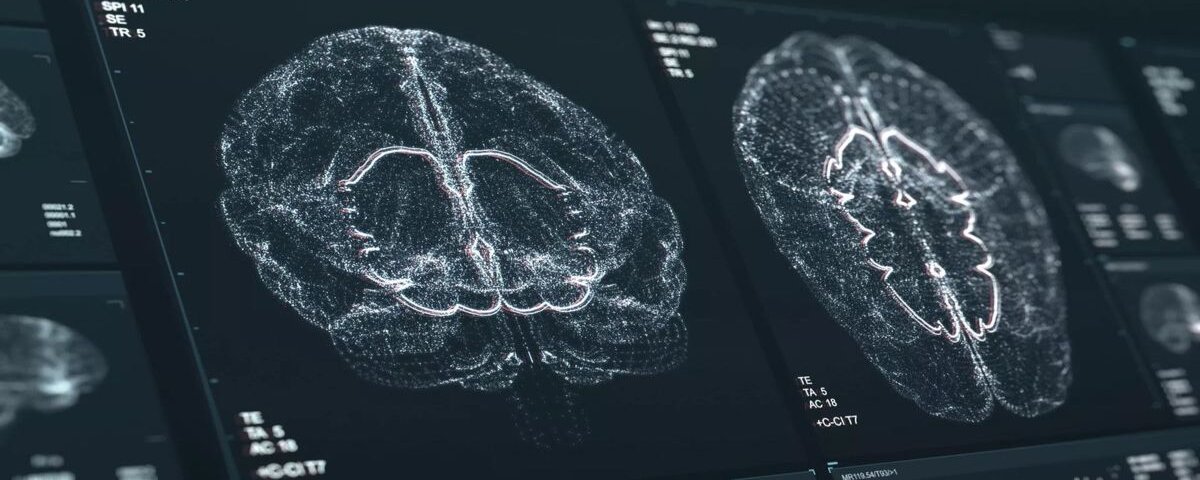
"The fastest way to trigger neuroplasticity isn't playing brain games or reading research papers.
It's forcing your brain to fail repeatedly at something you have zero natural talent for. high frustration is the literal chemical signal that forces synaptic rewiring."

Navin Iyengar retweeted

Just returned from a trip to Japan. In truth, I think modern Tokyo is one of the great accomplishments in civilizational history. It is the apex city.
There are 40 million people living there with extremely high levels of *justified* social trust.
It's incredibly clean, orderly, and safe, and yet it doesn't feel totalitarian--at least not if you behave yourself like a civilized person. The respect for individual freedom is clear and visible.
Reaching such high levels of social harmony would be an accomplishment for a single neighborhood, but Tokyo happens to the biggest city in the world. The sheer size alone is unbelievable--the infrastructure alone boggles the mind--and yet it's coupled with ultra-high levels of social harmony. There's nothing else like it.
Truly, it gives me some pride as a human. What an incredible thing we've accomplished.
Navin Iyengar retweeted

I’m a retired brain surgeon and I wanna tell you why you feel like life is passing by. I just need one minute to explain this to you so hang in there.
Repetitive daily routines stop the brain from recording clear detailed memories. When every day looks the same, your brain does not track time the same as a clock does. It tracks change. If nothing new happens then days, months, and years start to blur together.
This is know as Time compression. When life lacks variety, your brain compresses past days together, making it feel like time is sped up.
To stop feeling like life is passing you by, add new experiences to your life. Break routine habits, like changing your daily home routine, taking a different route to work, or trying a new hobby.
Schedule small trips or plan new adventures so your days do not blend together.
Practice mindfulness by staying fully focused on what you are doing right now and not trying to race off to the next task.
Keep a journal and write down happy memories or memorable parts of the day before you go to sleep.
Take deep, calm breaths when you feel anxious or rushed to return your focus to the moment.
You can and you will retrain your brain to not feel like life is passing you by by following these few simple measures.

Navin Iyengar retweeted

Lost my phone at the office and spent 30 minutes turning the place over. Find My was disabled by MDM.
Out of ideas, I asked Claude how I could find it. It suggested tracking the Bluetooth signal strength, then wrote me a meter in about a minute.
I walked around watching the number climb. Found it.
Apparently you can just make the tool you need now.
Code: github.com/ben-z/findphone
Navin Iyengar retweeted

Nobody teaches you that discipline feels like punishment until the results start feeling like freedom
Navin Iyengar retweeted

There’s no amount of intelligence that can get packed into AI models that replaces the need for context. For any sufficiently general purpose AI, you will always have to guide it in the direction you want as it has an infinite range of directions it can go in.
As long as the same model is used by a lawyer, an engineer, a financial analyst, or a healthcare professional, and as long as you’re trying to do anything uniquely differentiated or specific, then instructions, domain context, and proprietary data will always need to get into the context window for the model to be useful.
This is partly why AI automation doesn’t come for free, and why there’s still a wide spectrum of who’s getting the largest gains from AI and who’s not. You have to put in real work, and you get real value on the other end.
This is one of the advantages that applied AI will also have in the market. Any layer of abstraction above just the raw intelligence that can meaningfully get you off to the races faster will likely continue to be valuable.


Navin Iyengar retweeted

There's a TV show in Japan
that has run for over 30 years.
The premise: a parent sends
their two or three-year-old child
on an errand. Alone.
To the store. To buy tofu.
Across actual streets.
A camera crew follows secretly,
hidden, never helping,
as a tiny human in a backpack
completes a task most countries
wouldn't let a child attempt.
The kid cries. The kid forgets.
The kid gets distracted by a dog.
And then the kid comes home,
holding the tofu, glowing.
It's the most-watched thing
of its kind in the country.
Americans who discover it
cannot believe it's legal.
In Japan, we cannot believe
it's remarkable.


Navin Iyengar retweeted

Mexico paid $20 million for eight minutes in this movie. Then those eight minutes forced them to invent an entire cultural tradition.
Before Spectre, Mexico City had no Day of the Dead parade. The holiday was celebrated at home, at cemeteries, with family altars. Quiet, intimate, centuries old. Sam Mendes fabricated a massive street parade for the opening sequence, shot it with 1,500 extras in skeleton costumes across the Zócalo, and audiences worldwide assumed they were watching a real annual event.
Mexico's government had negotiated hard for the placement. Leaked Sony hack emails showed officials offered up to $20 million in tax incentives for four minutes of positive portrayal. Sony was drowning in a $300 million budget. The deal included script changes: the Bond girl had to be a Mexican actress, the villain could not be Mexican, and the city's modern skyline had to appear on screen.
Then the movie opened in 182 countries and tourists started booking flights to Mexico City for the parade.
The parade that did not exist.
Tourism authorities panicked. Visitors were arriving expecting the spectacle they saw in the film and finding nothing. So in October 2016, the government spent $500,000, hired 650 volunteers, built dozens of floats and giant skeleton marionettes, and staged the first real Día de los Muertos parade in Mexico City's history. 250,000 people showed up. They openly called it a "Spectre-style parade" in press materials.
Ten years later, the parade draws millions. Anthropologists call it the "pizza effect," where a cultural element gets exported, transformed abroad, and reimported as authentic. Mexico's most famous public celebration of its most sacred holiday was invented by a British director shooting a $300 million spy movie.
That tracking shot is doing more for Mexico City's economy every November than the $20 million they paid for it.

Navin Iyengar retweeted

Shopify CEO Tobi Lutke explains Goodhart’s law and why he doesn’t like KPIs or OKRs
“Goodhart’s law is real. The moment a metric becomes a goal, it’s no longer a useful metric… No metric by itself is a complete heuristic for a complex business. There’s a million different tensions in a company, and you can’t keep all of them in harmony by optimizing for one thing.”
For this reason, Shopify doesn’t use KPIs or OKRs. But as Tobi explains, this doesn’t mean they don’t value data and metrics.
“We are extremely data informed. We have invested enormous amounts of money and time into systems that give us basically everything at our fingertips… But what Shopify attempts to do is just not over-fit for what’s quantifiable.”
People love optimizing for highly-quantifiable things because there’s immediate gratification that comes from seeing a number go up. But Tobi thinks that the most important aspects of a product are rarely quantifiable:
“The overlap of the most valuable things you can do with a product and the things that happen to be fully quantifiable are like maybe 20%. Which leaves 80% of a value space unaddressable by the people who only look at quantifiable things.”
He continues:
“Shopify is comfortable with unquantifiable things like taste, quality, passion, love, hate… The sort of deep satisfaction that a craftsperson feels when they’ve done a job well is actually a better proxy if you allow it to be.”
They then have robust analytics systems that tell the company if something’s wrong or a new rollout breaks something.
“We think about it as a cockpit for a pilot. The decisions are still made by pilots, and we think this leads to better results… I think there needs to be more acceptance in business of unquantifiable things… And then metrics take a support function.”
Source: @lennysan (Feb 2025)

Navin Iyengar retweeted
The moment Ron Taylor won #FunnyAFwithKevinHart LIVE on Netflix!!!
Winning the live vote, Ron will go on to star in his very own Netflix comedy special.