

Building on Blockchain
Joined March 2009
- Tweets3.2K
- Following1.9K
- Followers269
- Likes6.8K


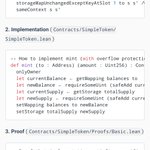


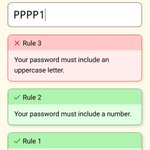


browser-web3-signer v0.5.0 is out:
- chains can be added to the wallet automatically, no manual Chainlist.org detour needed
- sign raw bytes - works even if your wallet fails signing (like here github.com/AmbireTech/extens…)
github.com/nikicat/browser-w…
1
75
Nik retweeted

"Can everyone read the code on the slide?"
"Not really."
<enlarges text> "Better?"
"No, it's still C++ template"


Nik retweeted

I'm so freakin sick of how Claude talks.
It's not just annoying, it's infuriating.
The honest evaluation: it's the precise mechanism driving my current headache.
It's the load-bearing root cause of my daily stress.
It's genuinely painful, and that matters.
TIL how to formally verify Rust programs github.com/nikicat/verified-… . We are still very early. The process isn't smooth, the tooling is flaky, but formal verification is probably our future in agentic-engineering world.

1
69
Made a Claude/Codex plugin for PayPerQ AI — Lightning topup QR right in the chat, text-to-image, Kimi K3.
github.com/nikicat/claude-pp…
@PPQdotAI would love a review

AI agents suck at refactoring... so much the worse for refactoring: medium.com/p/f86ab1b7c79c
1
67
Gave a coding agent shell access, then realized it could quietly read every token in my keyring — GitHub, cloud keys, all of it. Didn't love that.
So I built a proxy that makes each app ask first, and logs who read what.
github.com/nikicat/secrets-d…

1
49
PPQ Whisper is now packaged for Arch Linux, fresh off yesterday's v0.1.53: aur.archlinux.org/packages/p…
Great work, devs — fast, genuinely useful dictation. The AUR build patches a few Linux issues (GTK crash, Wayland hotkey & clipboard, mic detection); happy to upstream the fixes!

1/6) Introducing PPQ Whisper, an AI-powered dictation app on your desktop that's 3x faster than typing.
Works for #vibecoding, emails, slack, whatsapp, and any other app.
Ridiculously simple, useful, affordable, and private. Just plug in your existing PPQ API key and go:

Nik retweeted

Just watched @MetroplexGOS 's first-ever interview with @davidbombal about @GrapheneOS and took some notes.
If you're considering GrapheneOS or just curious about what it actually offers, this interview breaks down the key points.
Metroplex handles GrapheneOS community outreach, so he fields questions from users daily. This interview addresses the most common misconceptions and concerns people have.
BIGGEST MISCONCEPTIONS DEBUNKED:
1) "Banking apps don't work"
~99% work fine. The remaining 1% that enforce Play Integrity API can often work with exploit compatibility mode. There's a community-maintained compatibility list at discuss.grapheneos.org/d/833…
Even apps like eBay that show Play Integrity flags often work - just need to install via Aurora Store instead of Play Store.
2) "You can't get notifications"
False. Three options:
- Sandboxed Play Services (Firebase Cloud Messaging) - works without Google account
- UnifiedPush for supported apps
- Individual app websockets
All function exactly like stock Android. The difference? You control the permissions.
3) "Using a Google Pixel defeats the purpose"
This one comes up constantly. GrapheneOS uses Pixels because they're the ONLY devices offering:
- Full firmware support for alternate operating systems
- Verified boot with locked bootloader
- Hardware attestation through Titan M2 chip
- Best security research backing
It's not about avoiding Google hardware - it's about using the most secure Android hardware available.
WHAT GRAPHENEOS ACTUALLY IS
It's an AOSP (Android Open Source Project) distribution, like how Fedora and Arch are Linux distributions.
Key difference from stock Android: On first boot, GrapheneOS makes ZERO default connections to Google. Everything goes through GrapheneOS proxies that strip identifiable information.
THE SANDBOXED PLAY SERVICES CONCEPT
Stock Android: Play Services run at system level with elevated privileges. They can access whatever they want and you can't fully restrict them.
GrapheneOS: Play Services installed as regular user apps in the sandboxed compatibility layer. Subject to the same permission model as any other app.
You can revoke permissions. You can control data access. You can even run them without a Google account.
PRIVACY FEATURES THAT STOOD OUT:
Storage Scopes: Grant apps access to specific files/folders instead of entire storage. Facebook wants photos? Give it access to one folder, not everything.
Contact Scopes: Share specific contacts with apps like WhatsApp instead of your entire contact list. The app thinks it has full permission, but you've limited the scope.
Per-connection MAC randomization: Every time WiFi turns on/off, your device appears as a new device to access points. They can't track you through a mall.
Auto WiFi/Bluetooth timeouts: Customize how long before they auto-disable. Prevents beacon tracking when you're walking around.
SECURITY FEATURES:
Auto-reboot to Before First Unlock (BFU):
Set between 10 minutes to 72 hours. When triggered, encryption keys are purged from memory. Metroplex sets his to 8 hours (overnight).
Forensic firms have specifically flagged Pixel + GrapheneOS as the hardest combination to extract data from.
PIN scrambling: Numbers randomize on unlock screen. Defeats shoulder surfing.
Two-factor fingerprint unlock: Strong passphrase for first unlock, then weaker PIN + fingerprint for subsequent unlocks. Combined with Titan M2 throttling makes brute force impractical.
Memory Tagging Extension (MTE): Apple just announced this as revolutionary. GrapheneOS has had it system-wide since release.
Covers kernel, all OS processes, bundled apps, AND user-installed apps. When apps crash due to memory corruption, you get notifications with crash reports to send to developers.
This benefits the entire Android ecosystem when developers fix issues.
THE PIXEL 10 SITUATION
People worried about Google removing Pixel device trees from AOSP.
Status: GrapheneOS has automated device tree generation from factory images. Pixel 10 experimental builds already exist.
Waiting on Google to release QPR1 to AOSP (expected soon), then Pixel 10 goes to stable release.
Also: GrapheneOS is partnering with a top-tier Android OEM for alternative hardware. Target launch Q4 2026 / early 2027.
SECURITY UPDATES ADVANTAGE
Through the OEM partnership, GrapheneOS now gets security patches up to 4 months early.
There's an embargo before open-sourcing them, but users get protection immediately - faster than stock Pixel users.
Metroplex's take: If you trust GrapheneOS enough to install it, trust getting security patches that make you safer.
CAMERA QUALITY
Secure Camera app (bundled) provides equivalent quality using CameraX API.
Want Google Pixel Camera's full AI features? You can install it. GrapheneOS built compatibility layer support even after Google added hard Play Services dependency.
Can even toggle Tensor Processing Unit access for AI enhancements.
USER PROFILES
You can create multiple user profiles, each with separate encryption and PIN.
Use cases:
- Isolate apps requiring Play Services
- Reduce screen time (Metroplex's approach - essentials in main profile, time-wasting apps in secondary)
- Sensitive data isolation (banking apps together in one profile)
- Travel (before crossing borders, keep device in BFU state with minimal profile active)
Each profile can auto-stop background processes when you switch away. "End session" button purges encryption keys for that profile.
NETWORK LOCATION
GrapheneOS recently launched network location provider using Apple's services (via proxy).
Why Apple? Best privacy option available. GrapheneOS proxy strips all identifiable information before sending requests.
Gives you faster location fixes indoors without exposing data to Google or Apple directly.
APP INSTALLATION OPTIONS
1. GrapheneOS App Store (first-party apps: Secure Camera, Auditor, PDF Viewer, plus select third-party)
2. Play Store (via sandboxed Play Services - can use existing Google account, throwaway account, or no account for free apps)
3. Accrescent (new open-source alternative to Play Store, recently out of beta - developers control distribution)
4. Obtainium (pulls APKs directly from GitHub/GitLab release pages, auto-updates)
5. Aurora Store (Play Store front-end with shared accounts - against Google ToS, use as last resort)
Metroplex's tip: Don't use VPN IP when creating throwaway Google accounts - Google often requires phone verification, adding friction.
WHAT GRAPHENEOS ISN'T ABOUT
Not about avoiding Google entirely. Not about paranoia. Not about being a "drug dealer" (looking at you, Spanish government).
It's about USER CONTROL over a device you own.
Want to use Google services? Fine - but sandboxed with permissions you control.
Want zero Google? Also fine - everything has alternatives or proxies.
WHO SHOULD CONSIDER IT?
Anyone who wants:
- Privacy by default
- Proven security hardening
- Full app compatibility (banking, notifications, everything works)
- Automatic OTA updates
- Control over their own device
MY KEY TAKEAWAYS
1. Most "GrapheneOS problems" people mention are outdated or false
2. It's not privacy OR security - it's privacy AND security as complementary
3. The project has matured significantly - it's genuinely usable
4. User control is the core principle, not anti-Google ideology
5. Pixel + GrapheneOS is legitimately the most secure mobile setup available

Nik retweeted

🚨Bounty Raised to 100% - $3.1M USD🚨
...as @MEXC_Official Attempts to Gaslight an Entire Community
Apparently, I’m a criminal now.
That’s the narrative MEXC is floating. According to them, I’m part of some secretive money laundering operation using their platform as a conduit.
At least that’s the latest version. Their story keeps changing.
First, it was about KYC - even though I completed Advanced KYC long ago.
Then it became “high-frequency API trading” - despite the fact I’ve never had API access on the account.
Now, the new angle is: Anti-Money Laundering investigation.
Because it sounds scarier. And more convenient.
Because implying I’m a criminal is their best shot at shaking public backlash.
But let’s take a step back and apply some basic logic.
If this were a legitimate investigation:
Why keep changing your story?
Why has no investigator ever contacted me with questions? (I'm not aware of any investigative service in the world who would not jump at the chance to interview their "suspect")
Why is the only path forward an in-person meeting - with no formal accusation, no explanation? What exactly do you hope to achieve face-to-face that can’t be done over Zoom? Are you planning to take my fingerprints? My blood? My life? If not, then there’s no excuse. This could have - and should have - been handled virtually.
I’ve made it clear: I can prove the source of funds.
They’re not interested. They just repeat the same line:
“Come meet us. Face to face.”
After public backlash mounted to the suggested of in-person KYC, they recently started saying it’s “not compulsory.”
But in the same breath, it’s still “the only way to resolve the review.”
You can’t have it both ways.
To @MEXC_Official :
You are not Interpol. You are not MI6. You are not James Bond.
You have my KYC. You have my location. Where I live, where I sleep. My IP address. If you believe there’s a crime, forward your evidence to actual law enforcement.
What you’re doing instead is freezing user funds while inventing new reasons as you go.
You’re not enforcing the rules.
You’re making them up as you go.
And every trader watching knows it.
This was never just about my account - and it’s never been about the money. It’s about standing up to exchanges that operate like the shadowy criminal organizations they falsely accuse their customers of being. Seizing user funds without process, without proof, and without consequence. There are hundreds of stories just like mine - users who never had a voice, never had a following, and never had a chance. That ends here.
The bounty has now been increased to 100% of the frozen funds - $3.1 million. Half will go to verified, transparent charities, and the other half will go directly back to the community that continues to amplify this cause. Every last cent will be documented on-chain. Just truth, transparency, and accountability. That is, after all, what crypto is all about.
🫡 From the depths —
The White Whale 🐋

Nik retweeted

My name is Roman Storm, and I am one of the founders of Tornado Cash, a non-custodial privacy protocol.
I am being prosecuted for writing open-source code that enables private crypto transactions in a completely non-custodial manner. This prosecution represents a terrifying criminalization of privacy.
The charges against me threaten to criminalize software development itself. If successful, the implications could extend far beyond the crypto industry, impacting every software developer. I face up to 45 years in prison on charges including operating an unlicensed money-transmitting business, conspiracy to commit money laundering, and sanctions evasion.
This case has already had a chilling effect on developers working on software tools. Recently, a developer filed a lawsuit against the DOJ, seeking relief because my case has made them fearful of releasing new software.
teapawt.net/lewellenmichael/status…
Additionally, there is significant confusion around the 1960 charge (operating an unlicensed money-transmitting business), as different government agencies have conflicting interpretations of the law.
teapawt.net/amandatums/status/1863…
“This prosecution threatens to criminalize software development itself,” said Keri Axel of Waymaker LLP, my legal counsel.
American entrepreneur and politician @VivekGRamaswamy commented, “You can’t go after the developers of code. What you actually need to do is go after individual bad actors who are breaking the laws that already exist.”
teapawt.net/benzingacrypto/status/…
Multiple amicus briefs have been filed in support of my defense by the DeFi Education Fund (@fund_defi), Coin Center (@coincenter), and Blockchain Association (@BlockchainAssn):
defieducationfund.org/_files…
coincenter.org/app/uploads/2…
theblockchainassociation.org…
The 5th Circuit Court has already ruled that Tornado Cash sanctions were unlawful:
teapawt.net/AlexanderFisher/status…
However, the DOJ has dismissed this ruling as irrelevant:
storage.courtlistener.com/re…
My trial is set for April 14, 2025.

PRIVACY WON. FREE SPEECH WON. WE WON.
Fifth Circuit reverses its judgement after we won our appeal. Another step closer to being able to freely use Tornado Cash again.
storage.courtlistener.com/re…




Nik retweeted

Why your ZK tutorials suck.
The biggest mistake I see people make is they describe the algorithm — I.e. they translate the math in the paper to a slightly less mathy version and maybe add some code.
Translating a paper into code is no small feat — you could even make a career out of it.
This is good work to do. But it doesn’t provide meaningful alpha for the readers.
But this is the same as teaching a more basic algorithm (like mergesort) by saying “first we do this, **and then** we do this, etc.”
Translating a paper is does not lead to a good tutorial. Most papers make gigantic conceptual leaps because they assume their readers are the top of the field. But a good tutorial identifies the assumed background knowledge of the paper and explicitly goes over those instead of in a callout box. A good tutorial sequence feels like a bunch of small steps from where the reader currently is instead of describing an entire subfield with a paragraph or two.
This is where the hard work comes in. Some algorithms I can code from memory but the knowledge is intuitive — not verbal. Intuitive knowledge is vastly more expressive and compact than verbal knowledge. But it’s also the hardest to communicate.
Being able to recreate intuitions with words (and pictures) is what makes a good tutorial a good tutorial.
My favorite example of this is the ZK Book’s discussion of alpha and beta in Groth16. The temptation is to write “we have a QAP, **and then** we add alpha and beta.”
No, that’s just translating the code.
The correct flow is “we have a QAP, but when we evaluate it on a SRS, it’s too easy to forge proofs. How do we solve this problem?”
The original Groth16 paper doesn’t discuss this (it assumed the audience could easily figure it out on their own).
So if I was to just translate the Groth16 paper, that key information would be lost.
So if you say “and then this and then that” you’re just rattling off an algorithm. Explore — why this way and not another way? Are there less efficient solutions that are easy to understand and serve as a stepping stone to describe the original subroutine?
Nik retweeted

I have succeeded in distilling leftism into a single diagram.


There's a 106-degree heat index today where I live. Two blocks over, a home is getting a new roof today. Not one white dude on top of that house. These migrants are some HARD WORKING MF's, so, yeah...dumb ass, make them all go away. Let's see how much shit still gets done.
Also, I want to see more migrant business OWNERS instead of lazy white dude's running a company where all of the hard work is done by migrants. Let's get more migrants EMPLOYED by migrants!
I just dropped off a couple of cases of water that the owner must have "forgotten" about.