

Bodhee reschedules production, QC, and maintenance when reality changes. From Neewee, for process manufacturers in pharma, specialty chemicals, and F&B.
Bengaluru, Eindhoven
Joined December 2014
- Tweets357
- Following16
- Followers86
- Likes12







Machine down. Which tasks actually move?
Five questions sort every task into move, wait or stay. Includes a worked example: eight tasks, one dryer trip.
bodhee.com/blog/which-tasks-…

2
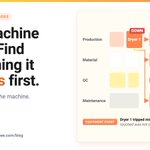
How do you reschedule production when a machine breaks down? Find everything it touches first. Most of it isn't on the machine.
A guide for planners: material hold times, QC samples, maintenance windows, and five questions that decide what moves.
bodhee.com/blog/reschedule-p…

ALT Card: One machine down. Find everything it touches first. Dryer 1 is down on the production lane, with connectors to the next batch, granules, QC samples and a PM job.
13
If your schedule only catches up at the next rebuild, that gap is where capacity goes missing. Bodhee Production Scheduling runs on Adaptive Scheduling: bodhee.com/bodhee/production… Request a Demo. #ProcessManufacturing #AdaptiveScheduling

Static tools optimise a snapshot. Adaptive Scheduling optimises a moving target, because that's what a plant floor actually is.
1
None of this is a knock on the people running static schedulers, traditional APS, or spreadsheets. It's a structural limit: they only check the plan when someone tells them to.
1
That means the plan a shift lead is looking at reflects what's actually happened on the floor in the last few minutes, not what the last planning cycle assumed would happen.
1
Adaptive Scheduling treats every one of those moments, the early finish, the released hold, the changeover that ran long, as an event the plan has to react to, not a footnote for the next rebuild.
1
A static scheduler assumes every changeover on that line takes about the same time, because that's what the template says. It doesn't notice when the actual changeover runs long, or short.
1
2
A traditional APS system rebuilt the plan overnight. A hold gets released mid-morning. That release doesn't touch the plan until the next overnight rebuild, whenever that runs again.
1
3
A spreadsheet-based schedule says the next batch starts at the top of the shift. The batch ahead of it finishes early instead. The spreadsheet doesn't know that until someone opens it and edits the cell.
1
8
Question for plant heads: does a rush order on your floor get checked against the live sequence right away, or does it wait for the next time someone rebuilds the plan? #ProcessManufacturing #AdaptiveScheduling
1
That's the shift from rigid to reactive: not a bigger plan, a plan that keeps re-proving itself is still right, all shift long.
1
1
Benefit before feature: it isn't about optimising harder. It's about checking feasibility exactly when the floor changes, not on a fixed clock unrelated to what's actually happening.
1
1
A rush order is a normal event on any plant floor. The problem was never that it happens. It's a schedule that can only absorb it after the fact.
1
1
The rigid version isn't wrong because nobody cares. It's wrong because the plan only updates on a schedule of its own, once a day, once a shift, whenever someone sits down to rebuild it.
1
1
That check doesn't wait for a planning meeting. It happens the moment the order is confirmed, while the floor is still mid-shift and still able to act on it.
1
3
On a schedule built to react, the rush order gets checked against the current sequence immediately: which line has the changeover slack, which batch can slide, what actually fits before the shift ends.
1
4
A rush order lands mid-shift. On a rigid schedule, it gets scribbled onto tomorrow's plan and the floor keeps running today's version until someone notices the mismatch.
1
8
When a machine goes down mid-campaign at your site, how long before the rest of the queue actually reflects it: seconds, minutes, or the next shift handover?
12
8/8 Same question, different machine: a capper jams on your line right now. Does the queue behind it already know, or is that still someone's job to chase down on the floor? #ProcessManufacturing #AdaptiveScheduling
1