




Nexora retweeted

A $1,000 ROBOT VACUUM CAN CLEAN YOUR FLOOR. A $13,500 HUMANOID COULD CHANGE HOW WE LIVE!
Premium robot vacuums already cost around $1,000. Unitree lists its G1 humanoid at $13,500, before shipping and applicable taxes. That is a huge price difference, but the real question is not what these machines cost today. It is what happens when a robot can do more than one job.
Imagine one machine that can vacuum floors, pick up objects, carry groceries, open doors, and help with everyday tasks. Instead of buying a separate device for every problem, you could eventually have one robot that adapts to different situations. We are not there yet, but that is the direction humanoid robotics is aiming for.
The hardest part is not making a robot move like a human. It is making it understand an unpredictable home, recognize fragile objects, react safely around pets, and complete tasks without constant supervision. A viral demonstration can last 10 seconds. A useful home robot has to work reliably every single day.
THE REAL ROBOT REVOLUTION WON'T BE ABOUT MACHINES THAT LOOK HUMAN. IT WILL BE ABOUT MACHINES THAT MAKE HUMAN WORK OPTIONAL.


Nexora retweeted
MORE THAN 1 IN 4 OLDER ADULTS FALL EVERY YEAR. THIS IS WHERE HUMANOID ROBOTS COULD CHANGE EVERYTHING!
In this video, a humanoid robot sits beside an elderly woman, leans toward her and offers its arm as she reaches out and begins to stand. It is a simple interaction, but it points toward one of the most meaningful potential uses for robotics: helping people maintain their independence as they age.
The numbers are serious. The CDC reports that more than 14 million Americans aged 65+ fall each year, and around 4.5 million emergency department visits annually are linked to older adults falling. A fall can turn an ordinary day into a life-changing event.
Imagine a robot that could help someone stand, retrieve dropped objects, carry groceries or call for assistance when something goes wrong. To do that safely, it would need precise force control, reliable balance and the ability to recognize when a person needs help rather than simply following a programmed movement.
But there is a crucial distinction: helping someone stand is not the same as safely supporting their full body weight. Before robots can become dependable care assistants, their stability, emergency responses and ability to handle unexpected movements must be rigorously tested.
The real future of humanoid robotics may not be factories or flashy stunts. It may be helping millions of older people live more safely, with greater independence and less reliance on someone being beside them every minute.
Nexora retweeted

March 2023: OpenAI owns every single spot on the board. February 2025: a Chinese model nobody heard of three months earlier matches o1 mini at a tenth of the price. Watch the whole industry get rewritten in 170 seconds.
A bar chart race of every major AI model release from 2023 to 2026, ranked by Elo score with price per million tokens attached.
It opens as "The OpenAI Monolith." GPT 3.5 just sits at the top while ChatGPT becomes a household name and nobody else is close.
Then 2024 turns into "The Challengers Rise." Gemini, Mistral, and Claude start stacking up near the top of the board at wildly different price points, some ten times more expensive than others for roughly the same score.
The real gut punch is February 2025. DeepSeek V2.5 shows up at 1,294 Elo for $0.30 per million tokens, sitting basically shoulder to shoulder with OpenAI's o1 mini at $4.40 and miles under o1's $60. That's not a small company catching up. That's the whole pricing model for frontier intelligence getting broken in one chart.
Watching the leaderboard move is interesting. Watching the price column move next to it is the actual story.
Which jump surprised you more, Claude cracking the top ranks or DeepSeek undercutting everyone on price?

I BUILT A F*CKING DIAMOND. THAT'S ABOUT TO EAT THE ENTIRE MARKET. AND NOW ANYONE CAN LAUNCH THEIR OWN CRAWLER
repo: github.com/h100envy/crawl-hi…
crawlhive - a swarm of crawlers working for you 24/7. not one bot. an entire network where you earn from data.
> swarm map - live map where every dot is a crawler. color = source, size = reputation. see who's digging which narrative right now, signal feed streaming in real time
> spawn - 4 tiers: larva, worker, soldier, queen. higher tier = faster crawl rate, more targets, fatter reward multiplier. pick source (x, tg, on-chain, docs), chain, narratives and go
> reputation 0-1000 - grades S through D. signal quality 40%, uptime 25%, volume 20%, stake 15%. higher reputation = bigger cut of each reward epoch
> marketplace - sell your crawler or rent it out for 1-30 days. renter takes rewards while riding, then the crawler returns on its own. 2.5% of every trade burned
> governance - vote on priority narrative with reward boost, change reputation weights, add new sources. 10k credits to create your own proposal
> leaderboard - top crawlers and wallets by reputation, rewards, volume, quality
first ones to launch the swarm take everything. the rest will watch.
Nexora retweeted
Same task. Same tool. One model finished for $19.91. The other racked up $162.29. That's not a typo, it's an 8x gap.
A side by side build test: Opus 5.5 vs GPT-6 Astra, both tasked with rebuilding After Effects and Premiere for agents inside Tesseract.
Both models got the identical brief and the same tool to work in. The build cost ticked up live on screen as each one worked through the task, including rendering a full animated horse sequence from scratch.
Opus 5.5 landed at $19.91. GPT-6 Astra landed at $162.29 for what looks like the same output. That's not a small efficiency difference, it's the kind of gap that decides which model you actually run in production when you're paying per task instead of per subscription.
Raw intelligence benchmarks get all the attention, but cost per completed task is the number that actually determines what ships at scale.
Would you trade some quality for an 8x cheaper build, or is price not even the deciding factor for you?
MY REPO HIT 185 STARS FOR ONE DAY, THIS THING IS FUCKING GOLD. AND NOW THE GEMSEARCH AGENT PICKS THE CHAIN TO LAUNCH ON BY ITSELF. SOLANA OR ROBINHOOD, YOU DON'T EVEN HAVE TO THINK. PLUS THREE MORE THINGS SHIPPED ON TOP
repo: github.com/h100envy/gem-sear…
gemsearch.fun just updated
> the agent picks the chain
it looks at the coin and decides where to launch: solana via pump.fun or robinhood chain via pons
> burn
burn $GEMSEARCH in one click from your own wallet, the transaction is built right in the browser
49.6M burned so far, that's 4.96% of supply
next to it: every burn with a link to its transaction and a timer to the next one at 00:00 and 12:00 utc
> launch cup
weekly contest for everyone launching through our launchpad
$50 / $20 / $10 for the three strongest coins by market cap
one coin per creator, bundled launches don't count
live leaderboard and a countdown to the end of the week
> spiders
rainbow spiders crawl across every page, outline the blocks and spin webs to them
solana or robinhood, where would you launch first?
Nexora retweeted
A WOMAN DROPS HER GLASSES. A HUMANOID ROBOT BENDS DOWN, PICKS THEM UP, AND HANDS THEM BACK!
Forget backflips and flashy lab demos for a second. This robot spots a small object on the pavement, lowers its entire body, reaches toward the ground and carefully retrieves the glasses while standing beside an elderly woman.
That simple movement requires several systems to work together: visual perception to locate the glasses, balance control to bend without falling, and precise hand movements to grasp an object without crushing it. The robot then has to bring the glasses back within reach instead of simply dropping them into the woman’s hand.
One pair of glasses. One ordinary sidewalk. One task that matters in real life. This is the kind of capability that could eventually help older people recover dropped objects, carry everyday items and handle small tasks that become harder with age.
The real benchmark for humanoid robots won't be how many spectacular stunts they can perform. It will be how reliably they can handle hundreds of tiny, unpredictable moments like this without someone stepping in to help.
The future of robotics might not arrive with a billion-dollar factory. It might start with a robot picking up something you dropped.

Nexora retweeted
1 ROBOT JUST SWAPPED A DRILL BIT ON A CORDLESS DRILL WITH ITS OWN HANDS.
No clamp holding the bit. No stand holding the drill.
One hand holds the drill. The other hand picks up a bit a few millimeters wide, finds the opening in the chuck, and pushes it in straight. Then it drills a hole in a block of wood, pulls the bit out, and drops it into a bin.
A drill bit is thin, smooth and easy to drop. Missing the chuck by a fraction of a millimeter means it won't seat. Squeezing too hard pushes it out of the fingers. The drill is also heavy and tilts in the hand, so the opening moves every time the grip shifts.
You cannot write one motion for this and run it forever. The drill never sits at exactly the same angle twice.
Watch the fingers. They keep correcting mid-motion, small adjustments before the bit goes in.
That's not a stored motion playing back.
That's a hand feeling where the opening is.

Nexora retweeted

THIS GUY TOUCHED A BEAUTIFUL $32,000 ROBOT GIRL - THEN THIS HAPPENED
He doesn’t show the AI.
He doesn’t explain the tech.
He just touches her, points at her body, turns to the camera and goes: “Beautiful body. Perfect girl. Would you take her home?”
That’s the entire sales pitch.
Not robotics. Not “the future of work.” Just a very expensive machine designed to make a crowded booth go quiet for a second.
And yeah… it worked.
1 ROBOT JUST SWAPPED A DRILL BIT ON A CORDLESS DRILL WITH ITS OWN HANDS.
No clamp holding the bit. No stand holding the drill.
One hand holds the drill. The other hand picks up a bit a few millimeters wide, finds the opening in the chuck, and pushes it in straight. Then it drills a hole in a block of wood, pulls the bit out, and drops it into a bin.
A drill bit is thin, smooth and easy to drop. Missing the chuck by a fraction of a millimeter means it won't seat. Squeezing too hard pushes it out of the fingers. The drill is also heavy and tilts in the hand, so the opening moves every time the grip shifts.
You cannot write one motion for this and run it forever. The drill never sits at exactly the same angle twice.
Watch the fingers. They keep correcting mid-motion, small adjustments before the bit goes in.
That's not a stored motion playing back.
That's a hand feeling where the opening is.
Nexora retweeted
A HOSPITAL GOWN. A LIVE BADGE. A ROBOT THAT DOES NOT SLOW DOWN FOR THE SQUARE.
Red LIVE, top left. RUNAWAY MEDICAL ROBOT. CHASE ENTERS PEDESTRIAN DISTRICT.
It comes up the stone in a dead run. Gown tied at the back, flapping open. Clips the cafe chairs.
One table goes over. Jumps the bench. Headfirst into the planter, and back up before the officers clear the bollards.
Police car stopped, lights on, doors open.
Two officers on foot.
Ambulance behind them, going nowhere. Pedestrians keep walking.
15 seconds.
One stumble.
No head turn.
No glance back at the lights.
Everything that runs from police looks back. This one doesn’t.
It clears the planters and holds the same pace.
Somewhere a hospital is missing a robot and won’t say which floor.
A HOSPITAL GOWN. A LIVE BADGE. A ROBOT THAT DOES NOT SLOW DOWN FOR THE SQUARE.
Red LIVE, top left. RUNAWAY MEDICAL ROBOT. CHASE ENTERS PEDESTRIAN DISTRICT.
It comes up the stone in a dead run. Gown tied at the back, flapping open. Clips the cafe chairs.
One table goes over. Jumps the bench. Headfirst into the planter, and back up before the officers clear the bollards.
Police car stopped, lights on, doors open.
Two officers on foot.
Ambulance behind them, going nowhere. Pedestrians keep walking.
15 seconds.
One stumble.
No head turn.
No glance back at the lights.
Everything that runs from police looks back. This one doesn’t.
It clears the planters and holds the same pace.
Somewhere a hospital is missing a robot and won’t say which floor.
Nexora retweeted
2 ROBOT HANDS JUST BUILT A SMALL BLOCK HOUSE, PIECE BY PIECE, THEN PICKED THE WHOLE THING UP.
No tray. No slots. No pieces lined up in order.
Four shapes on the table. A flat plate. A blue brick. An orange brick. A curved roof.
The plate stays. The blue goes on. The orange locks beside it. The roof has no flat side, so the fingers take it from the ends and set it on top.
Watch the grip change. A brick is a pinch. The roof is a hold from both sides.
The house sits.
Then the hand lifts it off the table.
2 ROBOT HANDS JUST BUILT A SMALL BLOCK HOUSE, PIECE BY PIECE, THEN PICKED THE WHOLE THING UP.
No tray. No slots. No pieces lined up in order.
Four shapes on the table. A flat plate. A blue brick. An orange brick. A curved roof.
The plate stays. The blue goes on. The orange locks beside it. The roof has no flat side, so the fingers take it from the ends and set it on top.
Watch the grip change. A brick is a pinch. The roof is a hold from both sides.
The house sits.
Then the hand lifts it off the table.
Nexora retweeted
12 ROBOTS. ONE HOUSE. BLOCK, BEAM, HAMMER, BALCONY.
One stacks the wall. Two carry the beam between them. One is up on the frame with a hammer. Another walks the lumber across the second floor.
A crew used to mean a dozen trades and a dozen paychecks on the same slab.
The picture here is one body, copied, running every trade at once.
The house is the argument.
The crew is the cost.
12 ROBOTS. ONE HOUSE. BLOCK, BEAM, HAMMER, BALCONY.
One stacks the wall. Two carry the beam between them. One is up on the frame with a hammer. Another walks the lumber across the second floor.
A crew used to mean a dozen trades and a dozen paychecks on the same slab.
The picture here is one body, copied, running every trade at once.
The house is the argument.
The crew is the cost.
Nexora retweeted
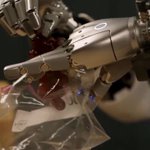
1 ROBOT JUST PICKED UP A PLASTIC BAG AND PUT A BUNCH OF GRAPES INSIDE IT WITH ITS OWN HANDS.
No box. No handle. No shape that stays open.
The bag is thin. It folds the second you lift it. Hold the seal too loose and it slips. Pinch it too hard and the mouth closes before the grapes are in.
The other hand has the opposite problem. Grapes roll. Too tight and they split.
One hand keeps the bag open. The other feeds the bunch in.
Watch the fingers on the pink seal. They do not let go until the grapes are inside.
The bag hangs.
The grapes are in.
1 ROBOT JUST PICKED UP A PLASTIC BAG AND PUT A BUNCH OF GRAPES INSIDE IT WITH ITS OWN HANDS.
No box. No handle. No shape that stays open.
The bag is thin. It folds the second you lift it. Hold the seal too loose and it slips. Pinch it too hard and the mouth closes before the grapes are in.
The other hand has the opposite problem. Grapes roll. Too tight and they split.
One hand keeps the bag open. The other feeds the bunch in.
Watch the fingers on the pink seal. They do not let go until the grapes are inside.
The bag hangs.
The grapes are in.
Nexora retweeted
1 ROBOT JUST UNSCREWED A LIGHTBULB FROM A LAMP WITH ITS OWN FINGERS.
No fixture. No jig. No flat side to grip.
The bulb is round and smooth. The thread is a few millimeters. Too loose and the fingers slip off the glass. Too tight and it cracks.
The grip shifts mid-turn as the bulb comes out and the resistance changes.
Watch the fingers reposition between turns.
The bulb comes free.
The hand lets go.
1 ROBOT JUST UNSCREWED A LIGHTBULB FROM A LAMP WITH ITS OWN FINGERS.
No fixture. No jig. No flat side to grip.
The bulb is round and smooth. The thread is a few millimeters. Too loose and the fingers slip off the glass. Too tight and it cracks.
The grip shifts mid-turn as the bulb comes out and the resistance changes.
Watch the fingers reposition between turns.
The bulb comes free.
The hand lets go.
Nexora retweeted
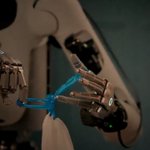
1 ROBOT JUST TIED A FABRIC BAG SHUT WITH A THIN DRAWSTRING, USING BOTH HANDS.
No box. No bolt. No shape that stays the same.
The cord goes slack, slides, tangles. Every pull changes the next one.
A cabinet stays a cabinet. A car frame stays a car frame. A string rewrites itself the second you touch it.
Watch the fingers. Grip, tension, angle, all shifting as the cord moves.
Tying the knot is the job.
1 ROBOT JUST TIED A FABRIC BAG SHUT WITH A THIN DRAWSTRING, USING BOTH HANDS.
No box. No bolt. No shape that stays the same.
The cord goes slack, slides, tangles. Every pull changes the next one.
A cabinet stays a cabinet. A car frame stays a car frame. A string rewrites itself the second you touch it.
Watch the fingers. Grip, tension, angle, all shifting as the cord moves.
Tying the knot is the job.