

Real-time tracking of pathogen evolution. Mastodon: @nextstrain@mstdn.science Bluesky: @nextstrain.org
Joined September 2016
- Tweets2.8K
- Following0
- Followers40.9K
- Likes14




Since early May, researchers at the National Institute of Biomedical Research (INRB) and their partners have been sequencing isolates from the ongoing Bundibugyo ebolavirus outbreak in the DRC. (1/2)
Together with the INRB, we are maintaining an outbreak-focused tree with the latest sequencing data, and have prepared a detailed analysis of the current data in the form of a Nextstrain narrative. (2/2)
nextstrain.org/narratives/eb…
The Nextstrain team has been focused on extending the usability of Auspice and auspice.us.
See the blog post for details: nextstrain.org/blog/2026-07-…
Our discussion forum has moved from discussion.nextstrain.org to nextstrain.discourse.group.
You can continue to use your existing account at the new location. Old links will be automatically redirected.
Please contact us if you experience any issues.
Nextstrain is happy to announce a major update to our tuberculosis analysis, making it our first real-time (continually updated) analysis for a bacterial pathogen. Please see our new blog post for details:
nextstrain.org/blog/2025-11-…

On Oct 1, 2025, @GISAID informed us that they had ended updates to the flat file of SARS-CoV-2 genomic sequences and associated metadata that we had used to update Nextstrain analyses since Feb 2020. GISAID's stated rationale was that their "resources are limited". 1/5

Closing these public analyses puts the world more in the dark and concretely harms surveillance as it becomes more difficult for variant spotters to contribute to global situational awareness. 4/5
Full blog post explaining situation and background is available here: nextstrain.org/blog/2025-11-…
We've set up automated ingest routines to combine data from NCBI GenBank with data from the SRA. Including SRA data allows for a more up-to-date view of evolution. 2/3

Phylogenetic results and resources are described in this blog post: nextstrain.org/blog/2024-06-… 3/3
We've continued to track evolution and spread of H5N1 in cattle at nextstrain.org/avian-flu/h5n… as data has been shared by @USDA_APHIS. 1/3

Thanks to work by Kim Andrews, we've recently updated our analyses and resources for measles virus. We now include automatically updated views of evolution of both the full genome at nextstrain.org/measles/genom… as well as the N450 segment at nextstrain.org/measles/N450. 1/2

We also include a new Nextclade dataset to call measles genotype at clades.nextstrain.org/?datas…. This work is described on the Nextstrain blog at nextstrain.org/blog/2024-06-….

We've been less active on Twitter / X for the last few months. A decent summary of recent Nextstrain activities and future directions can be seen in our annual update posted to the blog in March: nextstrain.org/blog/2024-03-…
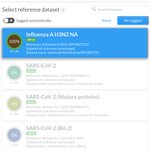
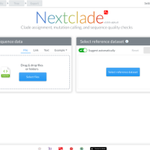
Nextclade might be useful for many more viruses that our team can support. We therefore added the possibility of community datasets and hope that some of you will contribute datasets!
We have a new tutorial to help get started: github.com/nextstrain/nextcl…
6/9

This was an enormous amount of work. Congratulations to @ivan_aksamentov, @corneliusroemer and the @nextstrain team for pushing it across the finish line!
8/9
We hope that this will enable many exciting applications in the future.
Let us know if anything doesn’t work, what you like or don’t like, and what can be improved!
Ask a question on: discussion.nextstrain.org/
Or open a Github issue: github.com/nextstrain/nextcl…
9/9
