

Supporting Government's response to communicable disease threats - Reference Microbiology, Virology, Epidemiology, Surveillance, Public Health Research&Training
Johannesburg, South Africa
Joined April 2013
- Tweets10.8K
- Following1K
- Followers105K
- Likes3.8K
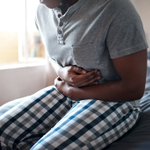




In a recent interview with @Radio702, Dr Keeren Lutchminarain, senior pathologist at the NICD’s Centre for Enteric Diseases, discusses E. coli, its symptoms, and health risks. This follows recent cases of gastrointestinal illness.
Listen here: primediaplus.com/listener-s-…

Join us for the final session in the Pillars of Biosecurity series, focusing on the critical role people play in strengthening biosecurity.
Topic: Pillar 5: Personnel Reliability – People as the Strongest Line of Defence
Date: Friday, 30 October 2026
Time: 13:00–15:00

This #WorldPolioDay, we honour the parents, healthcare professionals and volunteers who are bringing us closer to a polio-free world. Vaccination remains key to protecting children against polio. Together, we must reach every child and leave no one behind. #EndPolio

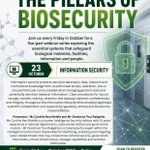
Topic: Pillar 4: Information Security—Protecting Sensitive Data and Knowledge
The webinar is now live from 11:00 to 12:30. Join the session from PC, Mac, iOS or Android: echo.zoom.us/j/84411105546?p…


Information is a biosecurity asset. Classification, need-to-know access, cybersecurity and secure sharing protect sensitive data, laboratory systems, research and knowledge from misuse. #BiosafetyMonth2026 #Biosecurity

Tune in to @Newzroom405 this evening at 18:15! Prof. Nicola Page will discuss the reported gastroenteritis cases in Tshwane, exploring possible causes, public health risks, and the response to the situation.

We are hosting a cross-country exchange with public health colleagues from Uganda and Zambia from 20-23 October 2026. The exchange provides a platform to share knowledge and strengthen approaches to translating data into policy and producing public health bulletins.


NICD retweeted

New interview 🎉 Meet Dr. Shareen Boughan, #FIDSSA 2026 Best Flash Presentation Award winner.
Dr. Boughan’s work improves molecular detection of rare free-living #amoeba infections in South Africa.
Read full interview: mdpi.com/about/announcements…
#Parasitology #TropicalMedicine


Congratulations to NICD’s Dr Shareen Boughan on winning the FIDSSA 2026 Best Flash Presentation Award! Her presentation highlighted 5 parasitology cases & the importance of timely, accurate diagnosis through national reference laboratories.
Read more here: mdpi.com/news/18977

Join us for the next Biorisk Management NHLS Project ECHO session, focusing on the importance of protecting sensitive data and knowledge.
Pillar 4: Information Security – Protecting Sensitive Data and Knowledge
Date: Friday, 23 October 2026
Time: 11:00–12:30
🔗 Join the session:

Topic: Pillar 3: Transport Security. Protecting Biological Materials in Transit
The webinar is now live from 11:00 to 12:30. Join the session from PC, Mac, iOS or Android: echo.zoom.us/j/84707793536?p…
Password: 211305

In week 41 (5 October 2026 to 11 October 2026), from 105 samples tested, we detected 2 (1.9%) cases of influenza, 1 (1.0%) case of respiratory syncytial virus (RSV) and 2 (1.9%) cases of SARS-CoV-2.
For more insights, click on the link provided:nicd.ac.za/diseases-a-z-inde…


Good hand hygiene is an everyday habit that can contribute to healthier communities.
This Global Handwashing Day, make clean hands part of your routine.
#GlobalHandwashingDay #HandHygiene #NICD
Throughout the day, there are moments when handwashing is particularly important.
Wash your hands before preparing or eating food, after using the toilet, after changing nappies, after coughing, sneezing or blowing your nose, after caring for someone who is sick.

Additionally, you should wash your hands whenever they are visibly dirty.
Making handwashing part of these everyday moments can help reduce the spread of infections.
#GlobalHandwashingDay #HandHygiene #NICD
Washing your hands properly can help remove germs that may cause illness.
Wet your hands with clean, running water and apply soap.

Rub your hands together for at least 20 seconds, making sure to clean your palms, the backs of your hands, between your fingers and under your nails. Rinse well under running water and dry with a clean towel or allow them to air dry.
#GlobalHandwashingDay #HandHygiene