

CISA | GIAC | Passionate Cyber Security Leader | Mentor | Speaker | Risk advisor | Amazing human
Joined June 2008
- Tweets2.6K
- Following318
- Followers99
- Likes62
Check out my latest article: A QA engineer asked an AI coding agent for one GitLab token. The agent returned the entire configuration file. linkedin.com/pulse/qa-engine… via @LinkedIn

6
Check out my latest article: Your AI model passed its tests. Can you prove which model actually reached production? linkedin.com/pulse/your-ai-m… via @LinkedIn

4
Check out my latest article: An API error can be the start of an intrusion—not the end of one. linkedin.com/pulse/api-error… via @LinkedIn

3
Check out my latest article: Your AI agent can remember an attacker’s lie long after the conversation ends. linkedin.com/pulse/your-ai-a… via @LinkedIn

2
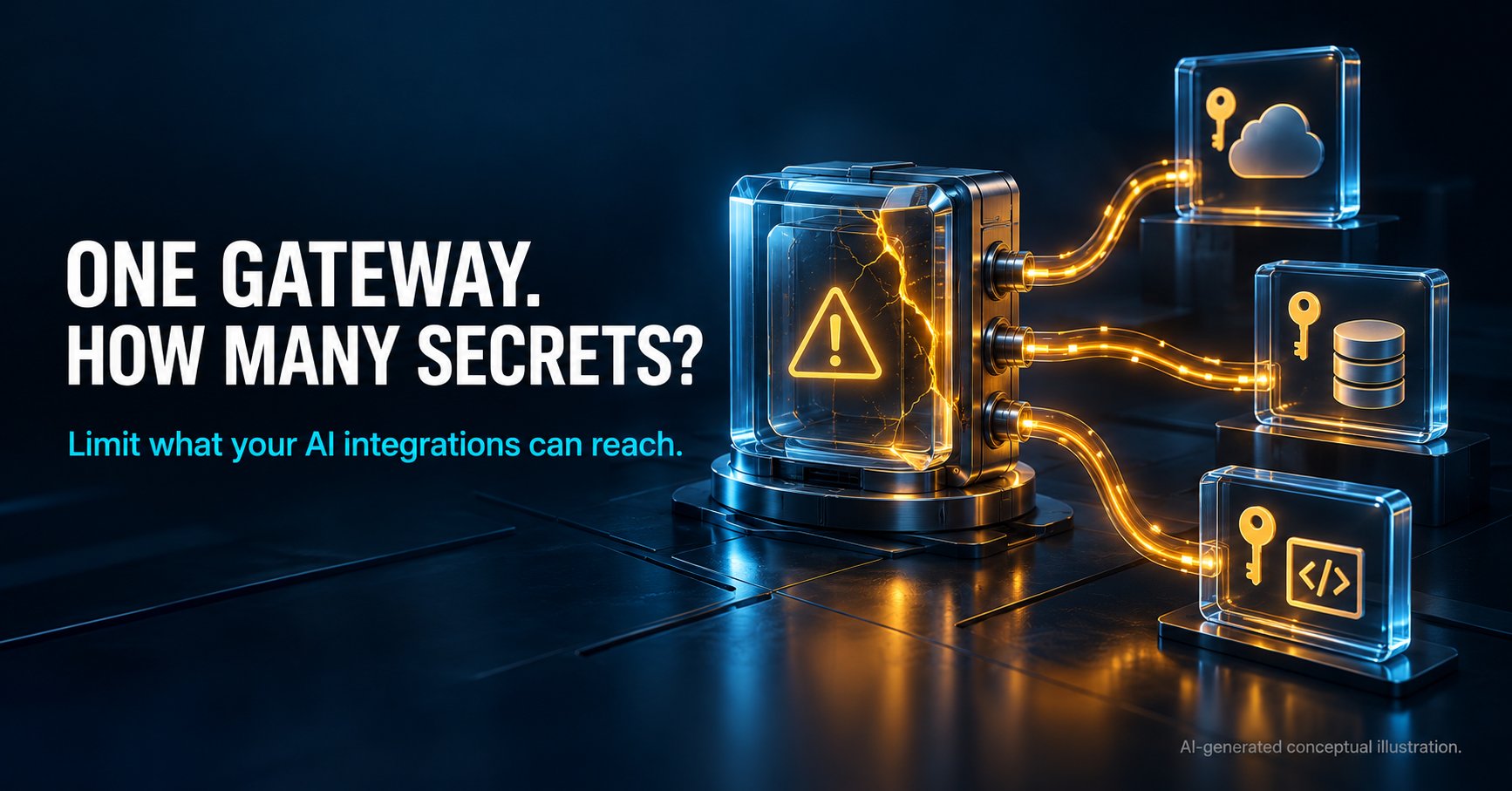
Your AI gateway can become a gateway to your credentials.
On 21 October, attackers compromised LiteLLM’s release pipeline and published malicious version 1.107.0.
Microsoft’s analysis highlights an uncomfortable detail: starting Python in an affected environment could execute the payload—even if the application never imported LiteLLM.
This was a confirmed supply-chain compromise affecting AI infrastructure. The cited reports do not establish that an autonomous AI attacker conducted it.
For SOC teams, the investigation must extend beyond the production AI gateway. Developer laptops, build runners, test environments and container images also matter.
My recommended response priorities:
• Establish exposure. Check deployment history, package inventories and image digests. Today’s installed version may not reveal what ran yesterday.
• Investigate safely. Avoid launching Python or pip inside a suspect environment; use trusted tooling from outside it.
• Recover credentials as well as systems. Rebuild affected environments from verified artifacts. Revoke exposed sessions and rotate reachable credentials from a clean system.
My proposed monitoring triggers include unexpected Python startup-file changes, Python reading credential stores, and unusual outbound connections immediately after dependency updates. Correlate these signals with installation and identity activity; individual events require investigation.
For anyone building AI integrations, this raises a design question: how many unrelated secrets can one component reach?
A gateway supporting security operations, content creation or publishing should receive only the credentials its specific workload needs.
If your AI gateway were compromised, could you quickly identify every credential—and every downstream system—within reach?
#AISecurity #SOC #SupplyChainSecurity #APISecurity
Disclaimer: Views expressed are personal and does not represent of my current or previous organisation. This post draws on publicly available research and is intended for awareness and discussion. Suggested monitoring triggers require validation in your environment. The accompanying visual is AI-generated and illustrative..
Sources:
LiteLLM’s canonical incident investigation, published 23 October 2026; confirms the compromised release and corrects earlier assumptions about the attack chain. liteLLM
Microsoft’s technical analysis and response guidance, published 23 October 2026; documents startup execution, credential collection and recovery considerations. Microsoft Security Blog
🤖 Made with AI
1
59
Check out my latest article: Your AI gateway can become a gateway to your credentials. linkedin.com/pulse/your-ai-g… via @LinkedIn

7
Check out my latest article: What if your AI agent fixes the workflow—and switches off the alert that should warn you? linkedin.com/pulse/what-your… via @LinkedIn

1
9
Check out my latest article: Your forgotten test API may be the fastest route into your business. linkedin.com/pulse/your-forg… via @LinkedIn

6
Check out my latest article: Can you trace your AI Agent? linkedin.com/pulse/can-you-t… via @LinkedIn

1
12
Check out my latest article: Threat Contained? linkedin.com/pulse/threat-co… via @LinkedIn

7
Check out my latest article: What if the phishing email your AI SOC is investigating starts directing the investigation? linkedin.com/pulse/what-phis… via @LinkedIn

11
An AI agent can use valid credentials and still perform an unauthorized action.
Consider a SOC assistant asked to summarise an incident. Its integration also allows it to close cases, disable accounts and delete evidence.
The assignment is narrow. The permissions are broad.
This hypothetical example illustrates what OWASP calls “excessive agency.” A September 14 research preprint also examines the gap between an agent’s access and the authority a human actually delegated.
For me, this is a critical design question when building AI for Security: what technically prevents an agent from exceeding its assignment?
My starting recommendations:
• Separate investigation tools from response tools. Reading an alert should not automatically grant permission to isolate a server.
• Enforce permissions at the API or downstream system. A prompt saying “do not delete” is insufficient access control.
• Bind sensitive approvals to the specific action, target and time window.
• Record who delegated the task, which agent acted, which tool it used and whether approval was required.
For SOC monitoring, I would test alerts for new permission grants, write operations during read-only workflows, and actions attempted after approval expires. These are proposed investigation triggers; each needs validation against expected behaviour.
The same principle applies beyond security: an assistant drafting a brand announcement should need explicit authority to publish it.
Before connecting your next AI agent, can you show exactly where its authority ends?
#AISecurity #SOC #AgenticAI #CyberSecurity
Disclaimer: Views expressed are personal and does not represent of my current or previous organisation. This post draws on publicly available research and is intended for awareness and discussion. Suggested monitoring triggers require validation in your environment. The accompanying visual is AI-generated and illustrative.
🤖 Made with AI

2
2
74
Check out my latest article: SOC Monitoring for AI Agent linkedin.com/pulse/soc-monit… via @LinkedIn

8
Nikunj retweeted

Scam message? Clock it before you click it.
A suspicious link, an urgent request or an unknown message can be the first sign of a scam.
Scam का तरीका कोई भी हो, जवाब एक ही है - Hum #ScamMeinNahiAyenge
If you are a victim of cyber fraud, immediately call 1930 or report it at cybercrime.gov.in.
#CyberDost #CyberAwareness #CyberSafety #ThinkBeforeYouClick @mygovindia @_DigitalIndia

Check out my latest article: The Evoolution of the SOC linkedin.com/pulse/evoolutio… via @LinkedIn

8
For years, cybersecurity leaders have focused on ransomware, nation-state attacks, insider threats, and supply chain vulnerabilities. However, recent developments in the Middle East have highlighted another dimension that deserves equal attention—geopolitical instability.
As security leaders, we often design resilience strategies around technology failures and cyber incidents, but physical disruptions arising from regional conflicts can impact organizations just as significantly.
Recent events have demonstrated how quickly geopolitical uncertainty can affect aviation, telecommunications, supply chains, critical infrastructure, and employee mobility. Organizations operating globally must now prepare for scenarios where cyber resilience and business continuity intersect with geopolitical realities.
Based on my experience leading cybersecurity initiatives within the banking sector in the Middle East, I believe CISOs should consider five strategic questions:
• Can key security operations continue if employees need to relocate unexpectedly?
• Are incident response capabilities fully distributed and remotely executable?
• Is the organization dependent on a single geography for critical cybersecurity functions?
• Have cyber crisis simulations included geopolitical disruption scenarios?
• Does the board understand cyber resilience beyond technology failures?
Cybersecurity is no longer only about protecting systems. It is about ensuring organizations can continue operating securely despite uncertainty, disruption, and change.
Resilience is not measured during stable periods.
It is measured by how effectively organizations adapt when circumstances change unexpectedly.
What additional measures are organizations taking to incorporate geopolitical risks into their cybersecurity and resilience programs?
Disclaimer: The views and opinions expressed in this article are solely my own and do not necessarily reflect the views, positions, or policies of my current or former employers, clients, or affiliated organizations.
🤖 Made with AI

1
23
Check out my latest article: When Geopolitics Becomes a Cybersecurity Risk: Lessons from the Middle East linkedin.com/pulse/when-geop… via @LinkedIn

5
@"Fable 5 & Mythos 5 Ban: A Wake-Up Call for India’s AI Sovereignty"linkedin.com/pulse/fable-5-m… on @LinkedIn

35