

PhD candidate@UTokyo Reinforcement Learning Game AI
Joined July 2021
- Tweets725
- Following505
- Followers332
- Likes5.1K




Pinned Tweet
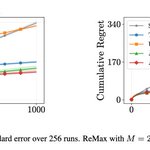
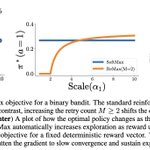
Our paper "Emergence of Exploration in Policy Gradient Reinforcement Learning via Retrying" is accepted at #ICML2026 🇰🇷
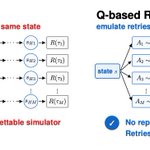
Proposed a novel exploration objective called ReMax, evaluating best of multiple trials under uncertainty.
The objective comes from the basic question,
Why do RL agents need to explore?
We argue it is because
♻️ Agents are allowed to retry (otherwise, the rational choice is the current best action).
📈 Return is uncertain (otherwise, no point in trying suboptimal actions.)
ReMax naturally captures these intuitions by modeling the distribution of returns and evaluating the maximum over multiple retries, thereby encouraging agents to select actions that are currently suboptimal but highly uncertain.
The diagram is inspired by the Vector Policy Optimization (VPO) paper.
🧵1/n

Soichiro Nishimori retweeted

Monitoring the Paper Machine: AI Research in the Age of Acceleration
Coding agents such as Codex and Claude Code are increasingly used as research agents. As authors, reviewers, and even area chairs delegate more of their work to AI, conferences—and more generally the research field—gradually become an "AI system" in its own right. We call this evolving system the Paper Machine.
AI may accelerate its output beyond human capacity to understand or check it, while the incentives shaping that output may favour proxies for progress over progress itself. Monitoring the Paper Machine therefore requires tracking not only how much research is produced, but also how it is produced, presented, and evaluated.
We build an observatory of more than 140,000 main-track papers from 11 conferences over nearly five decades, supplemented by LaTeX sources and GitHub repositories.
The historical record reveals structural changes that largely predate modern coding agents. Alongside the rapid growth in paper output, research has become increasingly comparison-driven, competitive for attention, team-based, and software-dependent. Yet the underlying evidence is not necessarily becoming easier to inspect, with growing dependence on closed models. Some of these models are retired even before the corresponding conference begins, leaving certain experiments effectively "dead on arrival".
We also identify more recent changes, including growing AI-agent use in research repositories and a sharp increase in GitHub activity among the most active researchers in 2026, while the median researcher shows little change.
Using speakers at @aiDotEngineer conferences as a reference group, we find that AI engineers are considerably more active on GitHub than AI researchers at the median, 90th, and 99th percentiles. At the very top, however, many AI researchers are now as active as highly active AI engineers such as @poteto, @simonw, @mattpocockuk, and @swyx. Of the 70 most active accounts across both groups, 27 are AI researchers. No one else in either group comes close to @steipete, who was the most active of the 8000+ Github accounts.
We also see early signs of changing participation, with more independent-researcher affiliations and even occasional secondary-school affiliations.
As AI takes on more of the research process and potentially accelerates it further, monitoring the Paper Machine may become essential for understanding and overseeing AI research. This observatory provides a first step toward that goal.
For further details, please see our paper and blog!
Paper: alphaxiv.org/abs/2611.paper-…
Blog: ishida-lab.github.io/blog_pa…
Finally, many thanks to my co-authors @shinnosukeono, @aimobiubiubiu, Bo Yang, @skydddoogg, Gang Niu, and Masashi Sugiyama!
Soichiro Nishimori retweeted

Netflixシリーズ『三体』
・-・-・-・-・-
ついに
彼らが
やって来る
・-・-・-・-・-
◤2027年1月14日◢
Netflix独占配信スタート
#三体 #3BodyProblem


Soichiro Nishimori retweeted

This work on reward hacking in RLHF has finally been accepted (as-is) to TMLR ✅️
Thanks a lot to my co-authors, @johannesack @nissymori1 @tksii and Prof. Sugiyama, for supporting me throughout the project!
Also super grateful to the reviewers / AEs for their dedication amid the current wave of submissions.
Preprint (will be updated soon): arxiv.org/abs/2604.02986


Soichiro Nishimori retweeted
Decision models like Jev from @typesafeai are designed to predict class probabilities, but how can we tell whether their predictions are actually correct?
Suppose a decision model predicts a 70% probability that an instance belongs to the positive class in a binary classification task. Even after observing the true binary label, we still don't know whether 70% was the right probability. Standard calibration metrics also do not fully answer this question, because they evaluate predictions in aggregate rather than for individual instances. Proper scoring rules such as log loss are useful for evaluating probabilistic predictions, but without knowing the irreducible loss, we cannot determine how much of the observed loss comes from inaccurate probability estimates.
In our new paper, ProbabilityBench, we introduce a benchmark where the true probabilities are known exactly. We design simulated worlds with full knowledge of the data- and label-generating processes, allowing us to compute the exact class probabilities for each instance. Models must infer these probabilities from natural-language descriptions without access to the underlying generating processes. This allows us to directly measure how close their predictions are to the ground-truth probabilities.
Based on our benchmark, we evaluate 16 models, including 8 decision models, and find that Jev, Perplexity Decider, GPT-6 Luna Decisions often achieve strong trade-offs between probability accuracy and cost (see figures in this thread).
In the paper, we also show how ProbabilityBench can help evaluate evaluation methods (meta-evaluation), including calibration metrics and Bayes-error estimators.
Until now, evaluating predictions against exact class probabilities has often meant relying on very simple synthetic settings like Gaussian distributions. If you've ever wished for something more realistic and interesting, we hope you'll give ProbabilityBench a try!

Soichiro Nishimori retweeted

I'm excited to share Erik's work!
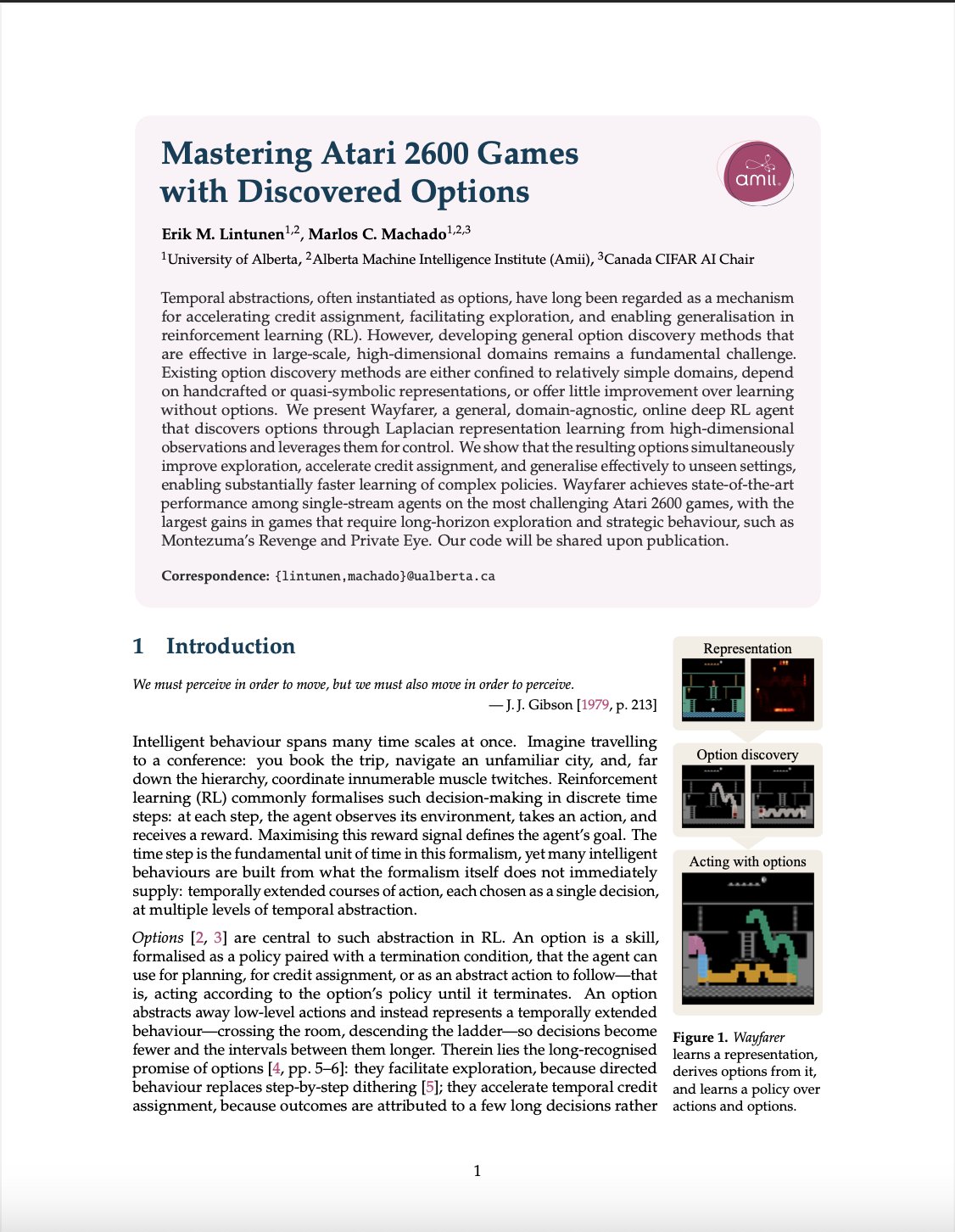
Mastering Atari 2600 Games with Discovered Options
We have a general-purpose option-discovery method that works w/ high-dimensional observations, tabula rasa, using a single stream of experience! It outperforms DreamerV3, Rainbow, and IQN! 1/9
Soichiro Nishimori retweeted
Heading to SF for #COLM2026 ✈️
I’m looking for PhD positions starting next fall, and would love to talk about reward hacking in RLHF / RLVR, scalable oversight, and multi-agent communication!
(Also looking for running sessions…🏃➡️)
Soichiro Nishimori retweeted

Cool eval. Simply ask an LLM “Land or Water?” and give it a latitude and longitude coordinate as text. Ask 16,200 times, plot as image. The models know. From compressing the internet.


Soichiro Nishimori retweeted

Can self-play on board games teach an LLM to reason? ♟️🧠
Self-Play Search Distillation (SPSD) turns the search of MuZero experts, trained by self-play on board games, into reasoning traces for LLMs.
The reasoning transfers to unseen games and to math (24.1 → 36.6) 🧵
Soichiro Nishimori retweeted

For anyone that is considering self play for training large model (LLM, VLA), you may realize the unstable of single agent RL, checkout our work NashPG -- a policy gradient method with updating magnet, it's simple and just work!
easonyu0203.github.io/projec…
Soichiro Nishimori retweeted

Our 2 papers presented at #ECCV2026 workshops are now on arXiv 🇸🇪
1. Energy-regularized imitation learning for robot manipulation
arxiv.org/abs/2609.18164
2. PRISM: interaction style inference for social robot navigation
arxiv.org/abs/2609.18125
Shout out to Toshiki and Bo-Han!

Soichiro Nishimori retweeted
📢 Call for Papers @ACCVConf !📢
The 1st HUFPEI Workshop at #ACCV2026 is open for submissions!
📝 Track 1: New papers, archival. Due Oct 1
🗣️ Track 2: Papers published in 2026 (including ACCV main papers), presentation-only. Due Oct 22
📍 Dec 15, Osaka
hufpei-workshop.github.io/ac…

Huge congrats! Glad to have been involved in this work.

1/9 🎉 Our paper "Multi-Axis Max@K Reinforcement Learning for Representative Diversity in Text-to-Image Generation" was accepted at #WACV2027 in Round 1!
An RL post-training method for generative models: we train sets of images to cover multiple target modes, letting different images represent different possibilities.

4
914
ポケカコンペ順位確定し, 36位で銀メダルでした.
初めて参加したkaggleでしたが,優秀なチームメイト @yoyu0203 のおかげで大変楽しくRLできました.Writeupも頑張ります.
Soichiro Nishimori retweeted

【研究室ブログ更新】 ICML 2026 に採択された論文 “Revisiting Regularized Policy Optimization for Stable and Efficient Reinforcement Learning in Two-Player Games” について、著者である太田 一毅さんによる解説記事を公開しました! ぜひ、こちらからご覧ください。
mi.t.u-tokyo.ac.jp/blog/rese…
『因果AI ―コードファーストで学ぶ因果推論―』をご献本いただきました!
確率的生成モデルのレビューから始まり、因果推論の幅広いトピックを、基礎から深層学習との組み合わせといった実践的な内容まで、コードを動かしながら学べるようです.
私のように因果推論について気になってはいるものの, きちんと勉強できていないという人間には大変ありがたい一冊です. じっくり読ませていただきます🙇
小山田さん(@sotetsuk), ありがとうございます!


