



For Intel current management, the scores are:
1) Capital allocation has been excellent. Nearly no debt.
2) Operations are improving. Q3 beat on both lines, revenue up 21%, data center up 78%. That's not a man failing.
3) Q4 miss wasn't his. PC demand, memory cost inflation, a plant accident in Israel. None of those are management failures.
But the market is an impatient animal.
Yield, yield and yield.
Execution is the key.
Sleep on the floor for my Intel shares. Just kidding.
Want to invest in startups? Take a look at Canton Network. It processes trillions repo. Its token is cc.
AI is likely to reduce the return on investment (ROI) of many conventional industries—but not necessarily because those industries become less productive. The deeper issue is that AI can increase productivity while simultaneously reducing the scarcity, pricing power, and competitive advantage that allow companies to earn high returns.
Look at nke, mcd, lulu, dis, ups etc.
Buffett could become old school.
Nike, stop doing that. I’m not gonna buy $NKE.
This quoted post is unavailable.
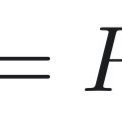
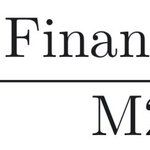
Economy is about V (MV=YP).
But economic policy can’t do anything about V.
That’s why we have extortionately high debt.
the countries that import the most goods from China in 2025:
1 🇺🇸 United States
$421.0B
2 🇭🇰 Hong Kong
$337.1B
3 🇻🇳 Vietnam
$198.6B
4 🇯🇵 Japan
$157.5B
5 🇰🇷 South Korea
$144.5B
6 🇮🇳 India
$136.0B
7 🇩🇪 Germany
$118.3B
latest available U.S. Census data (January–July 2026), the top 10 countries exporting goods to the U.S. are:
1
🇲🇽 Mexico
$358.7B
17.3%
2
🇨🇦 Canada
$233.7B
11.2%
3
🇹🇼 Taiwan
$162.3B
7.8%
4
🇨🇳 China
$156.4B
7.5%
5
🇻🇳 Vietnam
$149.6B
@SecScottBessent
The trade pattern is certainly suspicious enough to warrant scrutiny:
🇨🇳 China → Vietnam: ~$187B imports
🇻🇳 Vietnam → China: ~$66B exports
🇻🇳 Vietnam → U.S.: ~$140B exports
🇻🇳 Vietnam’s surplus with U.S.: ~$123B
@SecScottBessent @USTreasury @SecRubio
When you bought the dip on McDonald’s. $MCD

When you think Nike is a steal.

سقوط الفهد بلحه
بعد ما افتكر انه اكل التيس.
Readers added context they thought people might want to know
This video is AI generated.
forbes.com/sites/technolo…
gijn.org/resource/guide…
To bring down the yields, Fed has choice to
1) sit tight and let the market play it out. (Bad)
2) raise rates (ugly)
3) cut rates and even more do QE. (Good)
Illiquidity can be the consequence of
contraction of economy (well understood)
And expansion of economy (rarely attract attention)

Should SPCX take over Boeing?
If SPCX can execute three strategies:
1) Vertical integration ( engine, casting etc)
2) New models for pricing.
Boeing should sell capacity slots instead of just planes. No CPI binding. Cost at delivery.
3) improve design for manufacturing efficiency.
The bond yields are so stubborn. They don’t want to come down.
There’s no good remedy for calming down yields which is bigger challenge than inflation to Fed and which makes bitcoin’s legitimacy stronger.
Human is much less trustworthy than mathematics.
The yield of 30 year bond is 5.32%.
Roughly
Mortgage rate adds 2% over the yield. 7.32% mortgage rate.
Auto loan rates add 3-4%.
8-9% auto loan rate.
Oil price is > $100.
Which way consumption is going up or down?
Fed should worry about recession instead of inflation.
The yield is already functioning as rate hike.
The question is:
Can Fed hike bring down the yield?
If yes, market anticipate tamed inflation.
If no, Fed will lose credibility.
Inflation isn’t the problem.
The yield is the challenge.
Inflation volatility raises real yields.
If inflation is unpredictable, the real value of nominal bonds becomes unpredictable. Investors demand more to hold duration. That shows up inside term premium and pushes real yields up.
Surprises reprice TIPS breakevens. They don't reprice the TIPS real yield directly.
If inflation comes in hot, breakevens widen — that's the market revising its forecast.
The real yield moves only to the extent that the uncertainty around inflation rose, or that the Fed's expected real policy path changed in response.
Uncertainty is a priced variable. Not sentiment in general l.
•Level surprise → breakeven up
•Uncertainty up → inflation risk premium up → real yield up