

Studying the masters of building and persuasion.
Joined August 2026
- Tweets619
- Following39
- Followers108
- Likes39
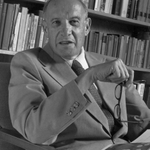


The business enterprise has two, and only two, basic functions: marketing and innovation. Marketing and innovation produce results. All the rest are costs.
- Peter Drucker

11
By the early 1900s California grew so many oranges that some growers were cutting down their trees.
The state’s crop had grown much faster than the country’s appetite. The market was full of oranges nobody would buy.
Most growers sold through one co-op, the California Fruit Growers Exchange. Its fruit went out wrapped in paper stamped with one name, Sunkist.
The Exchange and its Chicago ad agency, Lord & Thomas, saw the problem in a new way.
A person eats one orange at a time. A glass of juice takes several.
In 1916 their ads told Americans to “Drink an Orange.”
Then the Exchange had glass juice squeezers made by the hundreds of thousands. Dealers got them at cost and sold them to shoppers at about cost. The word Sunkist was on every one.
Each squeezer stayed in a kitchen and used up oranges every morning.
By the mid 1930s one Sunkist orange in five was drunk as juice.
Change how people use your product, and each use takes more of it.
Image credits: George D. Buckley
(Next story) How a man with no shipyard sold two supertankers.

29
Charles Revson summed up the whole business in one line:
“In the factory we make cosmetics. In the store we sell hope.”
19
It is not the strongest of the species that survives, nor the most intelligent, but the one most responsive to change.
1
24
In 1983 Switzerland saved its watch industry with a plastic watch.
Before the 1970s the Swiss made about half the world’s watches.
Then quartz watches arrived from Japan.
They ran on a battery, kept better time and cost less.
The Swiss stayed loyal to mechanical watches.
Between 1970 and 1983 the number of Swiss watchmakers fell from 1,600 to 600.
The biggest maker of Swiss watch movements was a company called ETA.
It supplied about 80% of Swiss watch brands, and its sales were falling fast.
ETA’s boss, Ernst Thomke, decided to fight at the cheap end.
He wanted a low priced watch that could still be made in Switzerland, one of the most expensive countries in the world.
Two of his engineers, Elmar Mock and Jacques Müller, started cutting.
A normal quartz watch had more than 90 parts. Theirs had 51.
The case was one piece of plastic, and its bottom doubled as the plate that held the movement.
Screws were replaced by rivets and ultrasonic welding. Even the glass was welded on.
So the watch could never be opened or repaired.
Every one had to come off the line right the first time, and machines did the assembly.
They called it Swatch. It launched in Zurich on March 1, 1983 for under 50 Swiss francs.
In just over five years about 62 million were sold.
The group behind it became the Swatch Group, today the biggest watch maker in the world.
Image credits: Hannes Grobe
(Next story) How orange growers with too many oranges got America to drink them.

1
1
41
Immature poets imitate. Mature poets steal. Bad poets deface what they take, and good poets make it into something better, or at least something different.
1
24
In the early 1930s a medical student in Minnesota ate nothing but White Castle hamburgers and water for 13 weeks.
White Castle set it up.
Back then many Americans were scared of ground beef. A 1906 novel, The Jungle, had shown how dirty meat packing plants could be. One nutrition book of the time said, “The hamburger habit is just about as safe as walking in a garden while the arsenic spray is being applied.”
White Castle opened in Wichita, Kansas in 1921, selling hamburgers for five cents. Its co-founder Billy Ingram had to get people past their fear of the meat.
He made the restaurants look spotless. The buildings were white enamel, and the cooks wore clean uniforms.
Then he wanted proof. He set out to show that a person could live on his hamburgers.
He found a scientist at the University of Minnesota, Jesse McClendon. A medical student named Bernard Flesche, who was working his way through school, agreed to be the test.
For 13 weeks he ate only White Castle burgers, with the bun, onions and pickles, and drank water.
He started out eating 10 at a sitting. By the last few weeks he was eating 20 to 24 a day, according to Ingram.
Ingram announced that the student “maintained good health throughout the three month period.” He put the study in his ads.
White Castle is now known as the first fast food hamburger chain. In 2014 Time named its slider the most influential burger of all time.
If people doubt your claim, give them proof they can picture.
Image credits: McGhiever

1
75
In 1892 a London family that sold seashell souvenir boxes sent an oil tanker through the Suez Canal.
The business belonged to two brothers, Marcus and Sam Samuel.
Their father had about 40 girls in London covering little boxes in shells, sold as gifts from the seaside.
The family also traded across Asia. One of the things they sold there was kerosene for lamps.
Kerosene came in five gallon tins, packed two to a wooden case.
Almost all of it came from Standard Oil in America, shipped the long way around Africa.
Marcus had a bigger idea.
Buy oil in Russia, pump it straight into a ship, and send it through the Suez Canal.
The route was far shorter, and oil in bulk was far cheaper than oil in tins.
The canal was the problem. It didn’t let oil through, for safety.
It said the oil ships of the day weren’t good enough, but it never said what would be.
So Marcus hired a marine engineer, Fortescue Flannery, to design the safest tanker he could.
Flannery put empty spaces at each end of the oil tanks in case of a crash.
He added water tanks that could be pumped out to lift the ship if it ran aground.
He fitted steam pipes to clean the tanks so nothing explosive was left behind.
In January 1892 the canal published new rules for oil tankers. They were uncannily close to Flannery’s design.
While the ship was being built, the brothers quietly put up storage tanks in Singapore, Bangkok, Hong Kong, Shanghai and other ports.
They wanted Standard Oil to find out as late as possible.
On August 24, 1892 their ship, the Murex, became the first bulk oil tanker through the Suez Canal.
Murex is the Latin name of a sea snail. Every tanker they built after it was named after a shell.
Over the next three years tankers went through the canal 69 more times. All but four were theirs.
Image credits: Hubert von Herkomer
(Next story) How the first burger chain got Americans over their fear of ground beef.

121
In 1924 a man named Asa Bales filed a patent for a sack whose cloth could be used for dresses.
By 1925 a St. Louis mill was selling flour in sacks made of gingham.
Soon bag makers were printing flowers, checks and stripes on the cotton.
By the late 1930s most of them printed the brand in ink that washed out, or on a paper label that soaked off. The cloth came out clean.
One dress took several sacks of the same print.
So families kept buying the same brand, and swapped sacks with neighbors to finish a set.
Wives started going to the feed store with their husbands to pick the print.
One store owner complained that a customer wanted her egg mash “in a flowered percale.”
During World War II about 3 million women and children in America were wearing feed sack clothes at any one time.
After the war the bag makers leaned in further.
They worked with pattern companies and ran sewing contests in every state to crown a National Cotton Bag Sewing Queen.
In 1946 these sacks used 8% of all the cotton cloth made in America.
Watch what customers do with your product after they use it.
Image credits: Smithsonian National Museum of American History

81
In 1950 a young Swedish furniture seller was thrown out of a trade fair for showing his prices.
His name was Ingvar Kamprad. His company was called IKEA.
At the big Stockholm fair, IKEA showed the price customers would pay on its furniture. Exhibitors there didn’t usually do that.
The other sellers were furious.
One shouted, “What a disgrace to ruin prices and the market in that way!”
That December the fair told Kamprad he would not be accepted again.
Then it got worse.
In 1952 the furniture retailers’ association started threatening any factory that sold to IKEA.
Kamprad kept finding ways around it.
Some factories sold to him under other names.
Some sent the goods to a neutral address in his hometown.
He set up a separate company to do his buying.
The story goes he once got into a fair hidden under a rug in the trunk of a car.
The boycott kept squeezing.
IKEA couldn’t buy the same furniture as everyone else, so it started designing its own.
Over time that became the IKEA look.
Swedish factories still couldn’t make enough.
In 1961 IKEA needed about 40,000 dining chairs, and half of them had no maker.
So Kamprad went to Poland.
Factories there could make furniture for almost 50% less than in Sweden.
A chair called ÖGLA, ordered on that first trip, stayed in IKEA’s range for decades.
Kamprad later said, “The boycott only made us stronger.”
Image credits: Wuselig
(Next story) How 3 million Americans ended up wearing flour sacks.

2
78
In January 2009 Hyundai told Americans to buy its cars, and promised to take them back if they lost their jobs.
It was the worst time to sell cars in decades. The financial crisis was spreading. Layoffs were on the news every night. People were scared to sign up for years of car payments.
Hyundai saw what was really stopping them. People still wanted new cars. They were afraid of losing their income and getting stuck with the loan.
So Hyundai took that risk on itself.
Its ads said: “Buy any new Hyundai, and if in the next year you lose your income, we’ll let you return it.”
The offer was called Hyundai Assurance. If a buyer was laid off within a year, they could hand the car back without hurting their credit.
That year American car sales fell 21%.
Hyundai’s sales went up 8%, to 435,064 cars. Its share of the market rose from about 3% to 4.2%. It was one of the few brands that grew at all.
Fewer than 100 people brought their cars back.
Hyundai’s CEO said it was far fewer than the company had expected.
Find the fear that stops people from buying, and carry it for them.
Image credits: IFCAR
(Next story) How a furniture seller got banned for showing prices and built an empire anyway.

1
64
In the 1930s a teenage boy in Denmark tried to save his father a little money on a batch of wooden ducks.
His father, Ole Kirk Christiansen, was a carpenter in the village of Billund.
When the Depression hit, he needed things that would sell, so he started making wooden toys.
One of them was a wooden duck on wheels that children pulled along on a string.
Every duck got three coats of varnish.
His son Godtfred helped in the workshop.
One day he gave a batch only two coats, packed them, and took them to the railway station.
That evening he told his father, “It’s been a good day today, Dad. We’ve earned a little more.”
“I only gave them two. I thought we could cut our costs.”
His father said, “Godtfred, don’t you know that’s wrong?”
He sent his son back to the station to fetch the boxes.
Godtfred had to unpack the ducks, give them the third coat, pack them again and take them back.
On his own, even if it took all night.
Godtfred later said, “That taught me a lesson about quality.”
He carved the company motto into wooden signs and hung them on the factory wall: “Only the best is good enough.”
The company was called LEGO, from the Danish words for “play well.”
In 1958 Godtfred, by then running it, filed the patent for the plastic brick we know today.
LEGO says a brick from 1958 still fits a brick made today. Each one is moulded to within 0.005 mm, about the width of a hair.
Image credits: Godtfred Kirk Christiansen, US patent 3005282
(Next story) How Hyundai grew in the worst year for car sales in decades.

2
72
In 1985 almost no American store wanted to sell video games.
Two years earlier the video game business had crashed.
Shops were stuck with piles of games nobody wanted.
Thousands of unsold cartridges ended up buried in a landfill in New Mexico.
To store owners, video games were a dead fad.
One magazine said the market had “virtually disappeared.”
Nintendo had a hit console in Japan.
To sell it in America, it had to stop looking like a video game.
So it changed the words.
The console became the “Control Deck.”
The cartridges became “Game Paks.”
It changed the look too.
The machine was redesigned in gray with a front slot like a VCR, so it looked like something that belonged next to the TV.
Then it added a robot.
R.O.B., the Robotic Operating Buddy, was a plastic robot that moved and stacked blocks in response to the game on screen.
It worked with only two games.
Toy stores were still doing well.
A robot toy was something they would stock.
Nintendo launched in New York in October 1985.
Later a survey of 200 owners found the top reason families bought the system: their kids wanted the robot.
Within a few years R.O.B. was quietly dropped.
The console stayed.
Nintendo sold 62 million of them and at its peak controlled up to 90% of the American market.
So, we know: if buyers have given up on your category, change how it looks and what you call it.
Image credits: Evan-Amos
(Next story) How a carpenter’s son learned the lesson behind a toy empire.

1
91
In 1929 Konosuke Matsushita’s managers told him to fire half his workers.
He had started the company 11 years earlier, at 23, making electric plugs in a small house in Osaka.
It would later become Panasonic.
Then the Great Depression reached Japan. Prices crashed and factories closed all over the country.
By December his warehouses were full of products nobody was buying.
Matsushita was at home recovering from an illness when his senior managers brought him their plan.
They saw only one way out: cut the workforce in half.
He said no.
“Cut production by half starting now, but do not dismiss even a single employee.”
The factories would work half days. Every worker would still get full pay.
The office staff and managers gave up their days off.
They went out every day to sell the stock piled up in the warehouses.
Two months later the warehouses were empty and the factories were back to full production.
Matsushita said even he was astonished.
Word spread that his was a company that put people first.
When sales stop, look at what your people can still do. Matsushita’s office staff became his sales team for two months.
(Next insight) How one robot worked with just two games and helped sell 62 million consoles.

1
79
In 1934 Allen Lane was stuck at Exeter station with nothing good to read.
He was on his way back to London after visiting Agatha Christie.
The station bookstall only had poor books, and they cost too much.
So he came up with a plan.
Good books for sixpence, the price of a packet of cigarettes.
Something people could buy without thinking twice.
The directors of his publishing firm wouldn’t back it.
Other publishers sold him reprint rights cheaply because they expected him to fail.
He launched Penguin in July 1935 from the crypt of a London church.
Ten books, plain covers, and a penguin drawn by a 21 year old office clerk.
Early sales were disappointing.
Lane told friends it might fail.
Then he thought of Woolworths.
Its motto was “nothing over sixpence.”
His books fit their price exactly.
He went to the Woolworths buying office and waited 55 minutes to see the buyer, Clifford Prescott.
Prescott barely listened.
He stared out of the window and said cheap hardback novels already sold fine.
Then Prescott’s wife put her head round the door. He had promised to take her to lunch.
She spotted an Agatha Christie on his desk and said she would buy several of these a week.
Prescott signed for 36,000 books.
By the end of that summer Woolworths had taken 63,000, enough to pay for the whole project.
By March 1936 Penguin had printed a million books.
The story goes that Lane sent Mrs Prescott a card every Christmas for years afterwards. “Merry Christmas and thank you.”
Price your product next to something people already buy without thinking. Lane picked a packet of cigarettes, and a woman on her way to lunch got it in one look.
Image credits: Lane Family
(Next story) How a founder got through the Great Depression without firing anyone.

1
1
104
In 1908 Walter Chrysler spent seven times his savings on a car he couldn’t drive.
He was a railroad mechanic in Oelwein, Iowa, in charge of the locomotives for the Chicago Great Western Railway.
At the Chicago auto show he saw a Locomobile. It cost $5,000.
He had $700 in the bank and a wife and two kids at home. A bank lent him the rest.
The car came home by train. He hired a team of horses to pull it from the freight office.
Then he didn’t drive it.
For three months he took it apart and put it back together, again and again, until he knew how every part worked.
Two years later he was running a big locomotive plant in Pittsburgh. Charles Nash, the president of General Motors, heard how well he ran it and offered him a job at Buick, the brand at the heart of GM.
The job paid half what he was making. He took it anyway, because it meant working on cars.
Buick was still building cars mostly by hand. Chrysler went through the factory the way he went through the Locomobile, one part at a time.
He brought in machines and assembly line methods and cut costs wherever he found waste. Buick more than tripled its output.
In 1916 he became president of Buick, at half a million dollars a year.
In 1919 he fell out with GM’s boss over how the company was run. He sold his stock for $10 million and planned to retire.
That didn’t last. Bankers paid him $1 million a year to rescue Willys-Overland, a car company in trouble. Then he took over another struggling one, Maxwell Motor.
At Maxwell he built the first car with his name on it.
The 1924 Chrysler sold for about $1,500 and was made to compete with cars that cost $5,000 and up, the same price as his old Locomobile.
A year later Maxwell became the Chrysler Corporation.
In 1928 he bought Dodge, which made Chrysler the second biggest car maker in America, and in 1930 his name went on the tallest building in the world.
(Next story) How a lunch date saved Penguin Books.

1
1
106
In 1915 Coca-Cola asked glassmakers for a bottle you could recognize in the dark.
Copycats were everywhere. Koka-Nola, Ma Coca-Co, Toka-Cola and Koke all borrowed Coca-Cola’s look, and lawsuits took years. Paper labels didn’t help either. They peeled off in ice cold water.
So the bottlers set aside up to $500 and sent 8 to 10 glass companies a challenge. Make a bottle so distinct that people could recognize it by feel in the dark, or lying broken on the ground.
At the Root Glass Company in Terre Haute, Indiana, the foreman sent two workers to the library for ideas. They came back with a picture of a cocoa bean, long with deep ribs.
Cocoa has nothing to do with Coca-Cola. They used the shape anyway.
It won, and it was patented in November 1915.
In 1949 a study found that fewer than 1 in 100 Americans couldn’t identify a Coke bottle by its shape alone.
If one bottle took this much thinking, imagine everything Coca-Cola has done in 140 years to protect its name.
(Next story) How a railroad mechanic built a car empire.

77
Hewlett and Dave Packard started Hewlett Packard in a garage in 1939.
Its engineers could take parts from the lab stockroom whenever they needed them, even for hobbies like ham radio.
Hewlett believed those side projects made them better designers.
Then a manager trying to cut costs decided open shelves were an invitation to steal. He put a padlock on the stockroom door after hours and on weekends.
One weekend Hewlett came in to get parts for a radio antenna he was building.
The door was locked.
He had a guard open the tool room and took out a bolt cutter.
He cut off the padlock, took his parts and left a note on the door.
“Don’t ever lock this door again.” Signed, Bill Hewlett.
The lab stockroom doors stayed unlocked for many years after that.
Google later wrote the same idea into its rules. In their 2004 IPO letter, the founders said engineers should spend 20% of their time on whatever they thought would most benefit Google. Google News and part of AdSense both started that way.
(Next story) How Coca-Cola beat Koka-Nola, Toka-Cola and Koke.

1
49
Heinz beat a bad booth with a tiny pickle.
In 1893 Henry Heinz had the worst spot at the Chicago World’s Fair.
His booth was tucked away on the second floor of the Agricultural Building. Hardly anyone climbed up to find it.
Heinz printed small tags that promised a free souvenir to anyone who brought one to his booth. He hired local boys to hand them out across the fairgrounds.
The souvenir was a tiny green pickle charm.
Thousands of people climbed the stairs. So many came that police were called in to manage the crowds.
By the end of the fair Heinz had given away about one million pickles.
The story goes that the other vendors on the second floor, who suddenly had his crowds walking past them, threw him a party.
Funny how a pickle fixed it. Every founder gets a bad light at some point. Their win/loss depends on how they handled the situation.
(Next insight) The cost cutting rule Bill Hewlett fixed with a bolt cutter.

46
Charles Schwab once fixed the worst mill in his steel plant with one piece of chalk.
Schwab ran Carnegie Steel at 35 and later ran Bethlehem Steel.
One of his mills kept missing its targets. The manager said he had tried everything.
He had coaxed the men, pushed them, sworn at them and threatened them.
Nothing worked.
At the end of the day shift, Schwab asked for a piece of chalk.
He asked a worker how many heats, or batches of steel, his shift had made that day.
“Six.”
Schwab wrote a big 6 on the floor and walked out without another word.
The night shift came in and asked what it meant.
The day shift told them the boss had been in and written down their count.
The next morning the 6 was gone.
The night shift had written a 7 in its place.
That evening the day shift left a 10.
The mill had been the worst in the plant. Soon it was producing more than any other mill there.
(Next insight) If customers can’t find you, give them a reason to come looking. Heinz did it with a tiny pickle.

1
67