


RyanO retweeted
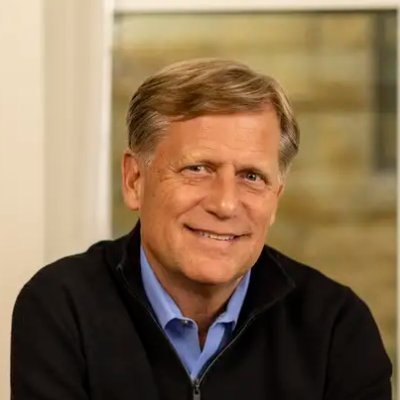
Your country invaded Ukraine. Your country illegally occupies major parts of that country. Your country has kidnapped Ukrainian children. Your country kills Ukrainian civilians every day.
These are facts, not some "McFaul strategy."

RyanO retweeted
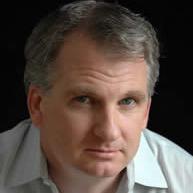
A bunch of “fake it til you make it” guys fake it until they break it — science, health, warfighting, air travel…
RyanO retweeted

🚨GAME CHANGER🚨
Introducing “SMART” — the new air traffic management tool that saves YOU time, cuts back DELAYS, and makes your flying experience BETTER
MORE TO COME ✈️

RyanO retweeted

Secretary of Defense Pete Hegseth awarded the soldier who reprimanded him and members of his staff at the Tomb of the Unknown Soldier a Joint Service Commendation Medal on Thursday.
A Pentagon official confirmed that Hegseth welcomed the 3rd Infantry Regiment, known as The Old Guard, to the Pentagon “where he proudly awarded Specialist Iglesias the Joint Service Commendation Medal for the execution of his duties at the Tomb of the unknown Soldier on November 11, 2026.”
cnn.com/2026/11/12/politics/…

RyanO retweeted

This is an historic day. For the first time since Reconstruction, a black man will represent Mississippi in the U.S. Senate.
But even more, @scott_colom is an exceptionally good man: tough, smart, good-humored and disarmingly normal.
The Senate will be a better place for his presence there.

RyanO retweeted

wow -- CNN broadcast footage of an Arlington guard yelling at a group with Pete Hegseth to "MAINTAIN SILENCE ... PAY RESPECT!" after someone in his entourage started laughing at the Tomb of the Unknown Soldier


RyanO retweeted

At approximately 3:30 PM ET, immediately following my reading of the Articles of Impeachment, I will hold a press conference at the House Triangle.

RyanO retweeted

Sober Analysis: 100,000 Followers, a Few Principles, and One Goal
To my 100,000+ followers: Thank you for being part of this journey. I wanted to take this opportunity to share a few thoughts about my approach to analyzing the Middle East. I don't take your interest or your trust for granted. And this seems like a good opportunity to explain a few things about how I approach my work, what I believe, and what you can expect from me.
First, I try to analyze developments as they are, not as I would like them to be. My goal is to be as objective as possible, stay close to the facts, and distinguish between what we know, what we assess, and what we simply cannot predict. I don't always get things right, and when the facts change, I'm willing to reconsider my conclusions. Being willing to admit mistakes is not a weakness. It is an essential part of serious analysis.
Much of my professional career, particularly the past fifteen years, has been devoted to understanding Iran. It remains my main area of expertise. But over the years, I have also worked extensively on other Middle Eastern issues, which is why I occasionally write about them as well. I try to stay within the areas where my professional experience allows me to offer something meaningful.
Let me also address something that comes up quite often. Despite what some people claim, I am not a regime apologist. I do not represent the IRGC, and I am certainly not on the Iranian Foreign Ministry's payroll.
I spent many years of my professional life working to weaken the Iranian regime. I would welcome a genuine change in Iran's political system, particularly one that improves the lives of the Iranian people and contributes to regional stability.
But wanting to see the Iranian regime weakened or changed does not mean believing that every military operation against it is strategically wise.
I can hope for the fall of the Iranian regime while recognizing that a particular military strategy is unlikely to bring it about. Confusing what we want to happen with what is likely to happen is one of the most dangerous mistakes in strategic analysis.
I have never believed that military force alone can resolve the Iranian challenge. In fact, I argued from the beginning that the latest war was a profound strategic mistake. In my assessment, despite the considerable military damage inflicted on Iran, it ultimately strengthened the regime's determination and left Israel facing a more complicated strategic reality.
I know these arguments are not always popular. They have also brought their share of personal attacks. But I believe an analyst's responsibility is to say what the evidence suggests, even when the conclusions are uncomfortable, rather than tell people what they want to hear.
My analysis is not intended to serve any government, political party, or ideological camp. I have no interest in defending a particular leader or promoting a political agenda. My responsibility is to the facts, to sound strategic judgment, and to the conclusions that follow from them, even when those conclusions challenge my own assumptions.
I also believe that Israel's disproportionate, sometimes almost obsessive, focus on Iran has come at a considerable strategic cost. It has diverted attention from other challenges that are no less important to Israel's future, particularly the Palestinian issue.
I have said this repeatedly: there is no sustainable path toward a more stable Middle East without addressing the Palestinian question. For Israel, finding a political way forward with the Palestinians is more important to its long-term future than the identity of whoever governs Tehran.
That does not make me a pacifist. I believe military force is sometimes necessary, and I fully recognize the threats Israel faces. But force must serve a political strategy, not replace one. After three years of war, we should have learned that military achievements, however impressive, do not automatically translate into lasting security.
We need to invest far more seriously in diplomacy, use military achievements to create political opportunities, and understand that not every problem in the Middle East can be solved through another military campaign.
If you choose to follow this account, what I can promise is an effort to provide independent, evidence-based analysis of the region without sugarcoating reality.
I am Israeli, and Israel's security matters deeply to me. But precisely because I care about my country's future, I have no difficulty criticizing Israeli policies when I believe they undermine its long-term security. Supporting Israel should never mean supporting every decision made by its government.
I am also a strong believer in the US-Israel alliance. I am deeply concerned about the deterioration in that relationship. In my view, the long-term erosion of American support poses a greater strategic danger to Israel than Iran or any other individual regional threat.
Israel must do everything it can to preserve this relationship, including making fundamental changes to its approach toward the Palestinians. The alliance cannot be taken for granted, and its future will depend not only on shared security interests but also on the political choices Israel makes.
The same applies to Israel's peace treaties with Egypt and Jordan. These relationships are strategic assets of enormous importance. They must be protected, strengthened, and never treated as permanent achievements that require no further investment.
More broadly, I believe Israel's integration into the Middle East is essential to its future. A secure Israel should not be a country that relies only on military superiority, but one that builds lasting relationships with its neighbors and becomes an accepted, constructive part of the region.
Ultimately, I believe most of us want the same basic things: to wake up in the morning feeling safe, to give our children a better future, and to live normal, decent lives.
I am not naive. There will be more crises, more threats, and probably more wars. But if we want to build something better, we cannot rely on military power alone.
We need strategic thinking, political courage, diplomacy, and a willingness to question assumptions that no longer serve us.
Thank you again to everyone who has joined me here. I appreciate the support, the criticism, and the conversations.
My goal is not to tell you what you want to hear. It is to help us understand the Middle East as it is, because only then can we make better decisions about what comes next.
#MiddleEast
RyanO retweeted

Scott Colom just flipped a county in Mississippi named after a KKK founder. Poetic justice!!!!!!

RyanO retweeted

Some people come to WV to take advantage of us. Reporters come to get clips. Companies to extract our resources. Failed politicians to get in office and for power. Jay Rockefeller genuinely came to help and no one has ever been able to convince me otherwise. May you RIP Senator.

RyanO retweeted

Trump took 5 deferments to keep from serving in Vietnam so you can shove that tough guy talk up your ass.
You are a war criminal.
Tick tock, No Tab Pete ⏰⏰⏰


RyanO retweeted

.@AndyBeshearKY and the @DemGovs just changed the electoral map for 2028 and beyond.
RyanO retweeted

Our poll of Jewish voters for @jstreetdotorg: There's no exodus of Jewish voters from the Dem party:
