

Co founder https://teapawt.net/t.co/jMy6Xem5aZ $500M+ generated for 87+ brands: Fatworks, Diamond Cross Ranch, DisputeBeast, + more.
London, United Kingdom
Joined September 2024
- Tweets4.6K
- Following915
- Followers1.7K
- Likes4.4K





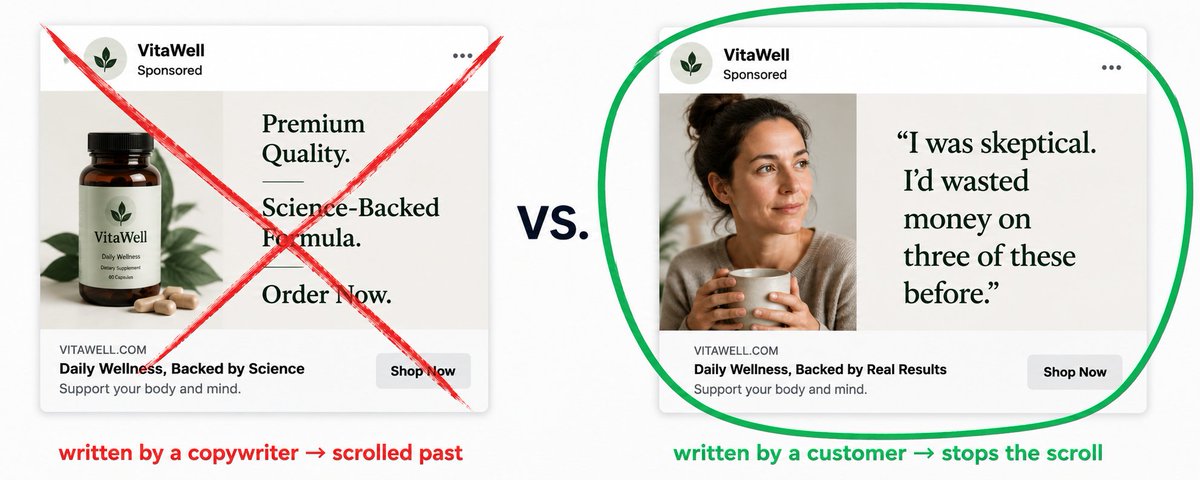
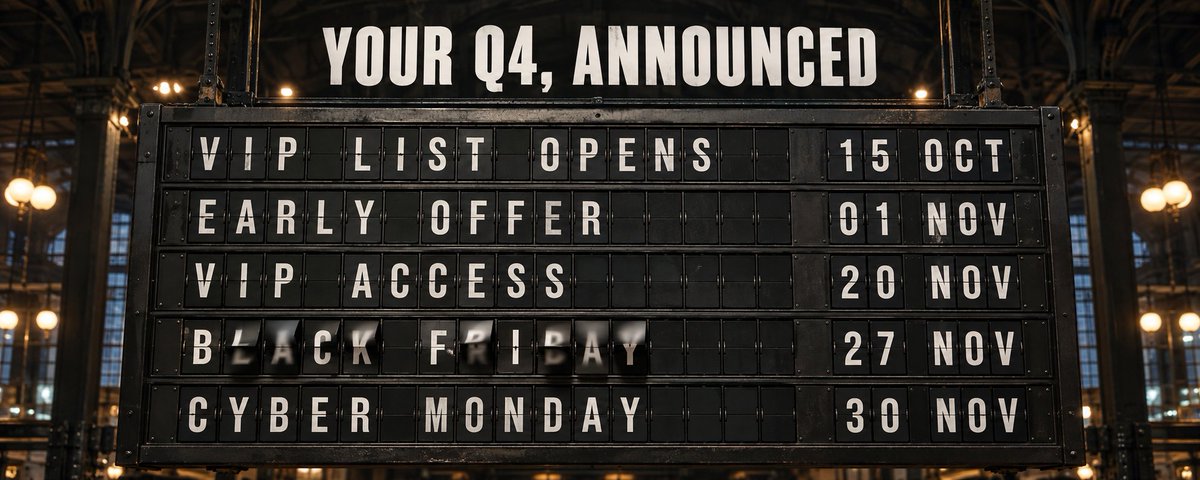
In October I wrote up the full Black Friday playbook we run for 7-figure brands.
All of it still stands. But two weeks out, the hooks matter even more than the strategy. Every Black Friday ad you launch on Monday the 23rd lives or dies in the first few seconds.
So we pulled the 100 most-scaled Black Friday hooks on Meta and broke each one down, ready to copy in 4 formats.
Link in the first reply.

1
1
66
One thing I never did enough of was hiring mentors. This year I finally got one and our revenue 3x'd.
I always knew I needed one but they're so hard to find.
I got lucky when a friend of mine introduced me to the founder of the leading agency in our space and he happened to be doing some mentoring on the side.
I can't stress it enough.
Pay people who've already built what you want to build.
Have them tell you the exact steps you need to take.
Save insane amounts of money by learning from all the mistakes they made.
1
54
The longest-running Black Friday ad we found says "TODAY ONLY."
It's been live for 717 days.
We ranked 100 Black Friday hooks by how long brands kept paying for them. Here are the 6 that lasted longest, and how to steal each one:
1. "Black Friday SALE: TODAY ONLY!" (717 days)
Steal it: one line of urgency, nothing else on the image.
2. "Still doing this in 2025?" (362 days)
Steal it: "Still [the old way of doing it] in 2026?"
3. "JUST DROPPED / 2 FRESH COLORS" (348 days)
Steal it: "Just dropped: [new colour or version]" for people who know you but haven't bought.
4. "BUY 1 SAVE 15% / BUY 2 SAVE 18%" (344 days)
Steal it: a discount that grows with the basket.
5. "Don't buy [product]. Here are 5 reasons why." (330 days)
Steal it: tell them not to buy, then give the reasons.
6. "The MOST effective hobby for your mental health ❤️" (276 days)
Steal it: "The most effective [what you sell] for [the outcome they want]."
Only 2 of these 6 are about the discount. Across all 100, only 33 open with the offer.
I've put all 100 in one file, broken down second by second, each ready to copy as a video hook, static ad, UGC opener and ad text.
Comment HOOKS and I'll send it over (follow so the DM comes through).
Every Friday at 18, I pitched my business to 40 people more than double my age.
It took a year to land our first client from that room.
It was a networking group in Central London. CEOs, agencies, real estate, hospitality, marketing. The whole point was for everyone to refer each other clients.
One minute each to pitch.
I was terrified every single week. 50 meetings and dozens of failed pitches.
That first client is what let me drop out of uni and start paying my parents rent.
Nothing in business has scared me since. Best sales and confidence training I've ever had.
If you're just starting, find the room where you're the youngest person there. Then keep going back.
1
1
94
$100M+ on Meta ads and 50K+ creatives later, we still don't brief a single ad without this research.
6 steps:
• Pull up to 2,000 reviews into one file
• Find the 10 things people actually want
• Turn each one into a person you can write to
• Steal the exact words they use
• Work out how much your market already knows
• Find the "that's why nothing worked" line
I've turned all 6 into free Claude skills. Link in the first reply.
My team argued with me about this, but f*ck it
You can only do one step before your next ad. Which one are you picking?
3
3
193

If you can't pull a month of test results in 10 seconds, your account is a mess.
Our naming convention:
Date // Campaign tag // Phase // Source // Creative
Filter by the tag. Every result for that period, in one view. Done.
Boring. Saves us hours a week.
It also means Claude can read your account. Connect your Meta ads to it and ask which creators or creatives won this month, and it can group the answer straight from the names.
Could you pull last month's test results in 10 seconds right now, or would it take you an afternoon?


2
168
Stop adding new ads to the ad set that's winning.
Meta counts a new ad as a significant edit. It can send the whole ad set back into learning.
And even when it doesn't, the new ads start taking spend from the one that was working. The ad set is now learning something different from what made it win.
Do that every few days and you're slowly killing your own winners.
It's crazy how many media buyers still test and scale in the same ad set.
"Creative is the new targeting."
True. But if your media buyer stops there, you've got a problem.
The second half most of them miss: your structure decides whether that creative ever gets spend.
Meta puts budget behind the ads it already trusts. Launch a new ad next to a proven winner and it might never get a real test.
We've seen great ads sit at almost zero spend because they went into the wrong ad set.
The setup we use so every ad gets a fair shot:
1. New ads go into a testing campaign, where they only compete with other new ads.
2. When the data proves one, it moves into its own winners ad set
3. Nothing new gets added to an ad set that's winning.
4. The testing campaign goes back to iterating on the winner, one change at a time: a new hook, a new creator on the same script, a different CTA.
Media buyers who think the job is only creative won't survive 2027.
Be honest. Does your media buyer test new ads in their own campaign, or drop them in next to your winners?
Winning creatives are losing you money.
Here's how:
You find a winning creative.
You raise the budget on that campaign.
The winner does well for a bit, then plateaus.
You keep throwing new creatives into the same campaign to find more winners.
Most of them lose money and drag your average ROAS down.
By the end, you've lost money on that campaign.
But the dopamine rush of finding a winner keeps you going. Like a gambling addict.
Instead, isolate winners when you find them.
Move each winner into its own campaign, and use your testing campaign to find more variations of it.
Change one variable at a time:
• New hooks on the same video
• New creators with the same script
• Different CTAs
This is the only way I'd scale right now without your failed creatives drowning out your winners.
You find a winner on Monday. Do you move it into its own campaign straight away, or give it a week to prove itself first?


12-hour days. The best numbers the business has ever had.
And still time to play ball. 🔥
Where are the other online business ballers at?


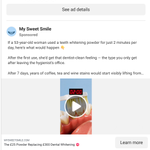
The desire ad framework I'd use for any product people buy to feel confident again:
Open on one specific person and a tiny effort (a 53-year-old woman, 2 minutes a day)
↓
Promise to show them what would happen
↓
Start with a feeling they already know (that dentist-clean feeling after the hygienist)
↓
Show the problem starting to lift (years of coffee, tea and wine stains)
↓
Name what they've quietly accepted (yellow stains "most women their age have simply accepted")
↓
Land on the moment they actually bought it for (smiling in photos with friends, at family events, with the grandkids)
↓
Remove the last fear (zero sensitivity)
↓
Give them someone to blame (the dental industry "doesn't want you to know")
↓
Soft call to action (see if it's still available)
The voiceover never once says "whiter teeth". Its biggest line is the grandkids one, and the brand's newer version kept it. The ad has been live since April.
This ad framework is ideal for:
• Teeth whitening
• Skincare and anti-ageing
• Hair loss
• Anything people have quietly accepted as part of getting older
Not ideal for:
• Products bought on price or specs, where nobody pictures a moment
• Impulse buys where the offer does the selling
• Anything where you can't honestly promise the result
Your whitening ad has room for one last scene. Do you show the before and after, or her smiling in photos with her grandkids?


Every static is written for one awareness level, whether you picked it or not.
I pulled 5 live ones from the Meta Ad Library to show what each level looks like:
1. Unaware (blames the wrong thing): Dog Health Tips lists four symptoms owners have already noticed, then ties them to one cause.
2. Problem aware (knows it, hasn't fixed it): Kalm opens on "I counted: 22 hot flashes in one single day." The image is a sweat-stained pillow.
3. Solution aware (about to buy a fix): Fresh Reveal catches people pricing up a new sofa. The headline is "Don't Replace It. Cover It."
4. Product aware (knows you, has one objection): PITAKA leads with a customer review that opens on "worth the price."
5. Most aware (just needs a reason): Bentley Trike puts its Early Black Friday offer in the first line.
Where statics usually break: the copy is written for one level and the image for another, so the viewer gets neither.
Pick the level first, then write the image and the headline for it.
You can only make one new static this week. Do you make it for people who already know your brand, or for people who don't know they have the problem yet?


If you want us to map your live statics by awareness level and show you which levels you've never run, book an audit here: go.loudlioncreative.com/disc…

135
"You got lucky."
What "lucky" looks like 8 years in:
- Started the business after I finished school
- Missed almost every uni class because I was up all night working on it
- Signed my first client a year later, dropped out and started paying my parents rent
- 3 years of monk mode
- Ran it from hotels and Airbnbs in 20+ countries
- 200+ ecom brands worked with
- $100M+ in Meta ad spend and $500M+ in revenue tracked for clients
- Still doing 12-hour days, 8 years in
If you're just starting out, steal the 3 habits that carried it:
1. Set yourself a money rule. Mine was that I had to be making money to justify dropping out.
2. Find people at your stage and work next to them every day. I did a year of 12-hour Zoom days with 3 of them, and we learned about 4x faster than we would have alone.
3. Keep one person close who tells you the hard truth. For me that's Alex, my best friend since we were 11.
Call it luck if you want. I'll be at my desk.
You're 18 and you've just signed your first client. Do you drop out, or stay at uni until the business can pay your rent?


If you type "write me an ad for my product" into Claude, you get an ad written by someone who's never seen your website.
Give it your customer research first, then work in two steps (copy these):
1. "Give me 10 marketing angles for this product on Meta, using the avatars, the mechanisms and the exact language above."
2. "Write a 30-second UGC script using angle five and the mechanism ranked first for that avatar."
Same model, completely different ads.
The article has every prompt for the research part too. Six research prompts that turn your reviews into what your customers actually want, who they are and the exact words they use, plus the landing page build, the templates, and how to plug it all into your data.
It's the full system we use to build ads, and the most useful thing I've written this year. Read it before your competitors do.
What's the first thing you type into Claude when you need a new ad?

4
360
