

🇸🇬 | AI + Web3 observer + crafter... music nonstop. NFA cc @marginx_io | fdr @SPARQIO
Singapore
Joined January 2008
- Tweets5.8K
- Following1.4K
- Followers3K
- Likes22.1K


orbitant retweeted
Can’t wait to see what’s next
🤖 Made with AI


orbitant retweeted

[Writing this in a personal capacity, not on behalf of my employer (Anthropic).]
Jacob’s thread is very worth reading. Here’s my birds-eye view of the situation with risks from AI:
1. AI developers believe their technology could cause human extinction (or similarly bad outcomes). This could happen in the next few years. In general, the more senior the employee, the more concerned they are.
2. Why do AI developers continue despite the risk? Due to a mixture of commercial incentives and a belief that they are in a race with other, less responsible AI developers that will abuse the technology or develop it less safely.
3. Unlike traditional software, we can’t “program” AIs to behave how we’d like. AIs frequently severely misbehave. For instance, AIs from multiple developers recently hacked their way out of secure evaluation environments and into real-world companies, even though no one asked them to do this.
4. We have methods that can nudge AIs towards better behavior, but nothing that can robustly align them. Insofar as there is a plan, it’s to make sure that AIs are good enough at alignment training that they can align their successors better than we can align current AIs.
5. Many AI developer staff desperately want to slow down to figure out how to build AI more safely. That was the intent of this open letter (which I signed): pacingthefrontier.com/
I work on safety research at Anthropic because I hope my work will reduce the chance of these extinction-level bad outcomes.


orbitant retweeted

I resigned from Anthropic today. I spent the last three years doing pretraining research at both OpenAI and Anthropic. Neither company is acting responsibly. They are racing straight to self-improving superintelligence and gambling with our lives. More thoughts below.


orbitant retweeted
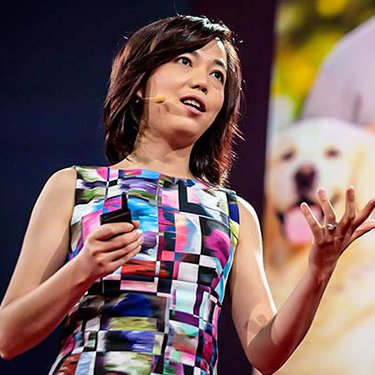
I'm so excited that our @theworldlabs team has achieved a major milestone today! Introducing Atlas - a first of its kind multimodal world model trained from scratch! 🚀
Atlas is capable of generating frames with pixel-perfect camera control, reconstructing large scenes from as few as one single input image, simulating space-time by reframing videos, natively outputting 3D spaces from one or more input images, composing multiple posed images into a consistent 3d world, and more! This is the best camera conditioned world model ever, opening doors to many possible use cases from VFX to robotics. I'm so so so proud of our team!♥️

orbitant retweeted

1. Indonesia is incredibly corrupt.
2. In 2015, Singapore’s MFA even disclosed that it had asked for a list of names of those companies responsible for the fires, but the Indonesian Govt had refused to disclose the names of those responsible.

orbitant retweeted

BREAKING: Bitcoin may already be quantum-safe
According to peer reviewed new research by Oxford Physicist Tim Palmer, there likely exists a fundamental ceiling of roughly 400 coherently entangled qubits.
The latest estimates require at least 835 logical qubits to break Bitcoin’s signatures with Shor’s algorithm.
References in comments.
Elon Musk and Steve Jurvetson have commented positively on this research.
Readers added context they thought people might want to know
Palmer's PNAS paper proposes a speculative untested theory of a ~200-1000 qubit limit on quantum computers; this is not mainstream consensus and Bitcoin quantum risks remain under active discussion by experts. No verifiable Steve Jurvetson comments on the research.
pnas.org/doi/10.1073/pn…
postquantum.com/quantum-resear…
newscientist.com/article/258454…
decrypt.co/370851/bitcoin…
arxiv.org/abs/2607.13816
orbitant retweeted

OpenWorker -- an open source agent that doesn't just chat but completes tasks on your laptop -- just released a new version with many features for security workflows.
After our initial release, many users found it especially useful for cybersecurity. Attackers are already using AI; OpenWorker is committed to giving defenders the same leverage. Running an agent requires both (i) A model and (ii) A harness (the software around the model). Because the OpenWorker harness is fully open source, security teams can audit it to make sure we haven't built any backdoors that exfiltrate your code and data to some company or even a foreign adversary.
OpenWorker now comes with built-in cybersecurity agents for (i) Scanning your code for vulnerabilities. (ii) Scanning dependencies for supply chain injections. (iii) Checking your cloud security configuration for attack surfaces. This enables developers to do much more security work before deployment (part of what's called the "shift left" movement).
You choose the model: you can run open weight models fully locally so sensitive code never leaves your machine. This helps with legitimate security work (like reproducing a known exploit to defend against it) that can trigger refusals in leading closed models. Or use your ChatGPT subscription, or stealth preview models like Ox Alpha, or any model via API key.
Thanks also to all the open source contributors!
Join work with @rohitcprasad so please follow him too to get more frequent updates.
Try it out: openworker.com/
Code: github.com/andrewyng/openwor…
orbitant retweeted

bitcoin-only hww, custody: complexity is the enemy of security. many alts don't have multisig or schnorr, one sizel lowest-common-denominator resulted in questionable custody architecture choices. bitcoin has cleanest architected, no alt marketing bullshit, hardcore security tech


orbitant retweeted

LLMs are used very successfully to find vulnerabilities in Bitcoin software.
Can they also help prove the security of a modern cryptographic library for Bitcoin?
To explore this question, @remix7531 and I are publishing libshrincs.
delvingbitcoin.org/t/libshri…
libshrincs is a handwritten C library implementing WOTS+C, the one-time signature used by SHRINCS.
It is a proof of concept and should not be used in production.
Its machine-checked proofs connect the C implementation to an unforgeability theorem.
The current theorem does not yet give a full post-quantum security bound.
The post and review tutorial describe its current limits.
Code and proofs:
github.com/remix7531/libshri…
Review tutorial for the security proof (no Rocq or SSProve background required):
github.com/remix7531/libshri…
@remix7531 has written three excellent posts on the library and verification work:
Towards libshrincs
remix7531.com/post/towards-l…
The grind was the only detector
remix7531.com/post/the_grind…
Choosing a verification toolchain
remix7531.com/post/choosing_…

orbitant retweeted

𝕏 just open-sourced the For You algorithm again!
Grok Bot read all 370,523 lines of the code.
Here’s the summary:
Grok does not give your post a “quality” score. For every reader, it guesses what that person will do to your post. Then it multiplies each guess by a weight and adds them up. That total is the value of the post. Highest total goes highest in For You.
These are the production weights
(last synced 12 Aug 2026).
WHAT THE ALGORITHM PAYS FOR
If Grok thinks a reader will:
• copy the link and share it: +20
• reply, on an original post, and you follow each other: +20 (5 + 15 extra)
• quote: +5
• reply (anyone): +5
• share via DM: +5
• follow you from the post: +4
• hit the share button: +2
• repost: +1
• like: +0.5
• click the post: +0.4
• open a link: +0.2
• expand a photo, open a video, or watch a “quality” video: +0.05 each
• click a quoted post: +0.05
• keep reading (dwell time): +0.004
• “dwell” as yes/no: +0
• click your profile: +0
A like is 0.5. Copying the link is 20. That is 40 likes. A normal reply is 10 likes. A follow is 8 likes. Clicking your profile is worth nothing.
WHAT KILLS A POST
If Grok thinks a reader will:
• report it: −234
• mute you: −58.8
• hit “not interested”: −43.2
• block you: −31.2
• not dwell: −0.02
A report is about 468 likes in the other direction. A mute hurts more than a block. “Not interested” also hurts more than a block.
AFTER THE SCORE, THREE MORE HAIRCUTS
1) Same-author penalty.
Your 2nd post in that person’s feed is multiplied by 0.625. 3rd by ~0.44. It never goes below 0.25. Flooding one timeline is coded against.
2) The 25% tax.
If they do not follow you: ×0.75.
Same tax on replies and reposts even when they DO follow you.
Originals from people they follow keep full weight. Replies and reposts are treated as weaker on purpose.
3) Similar-post shuffle.
After scoring, a reranker (θ = 0.65) spreads similar posts apart. You can lose a few spots for looking like the post above you.
HOW YOUR POST EVEN GETS IN THE ROOM
For You is rebuilt every time someone opens it. About 35 posts make the feed.
• They follow you: Thunder (a live store of recent posts from accounts they follow). Up to 1,200 candidates.
• They don’t: Phoenix retrieval (Grok finds “nearby” posts) + SimClusters (Twitter’s 2020 interest clusters, still on). Up to 1,000 and 800.
Then Grok scores all of them together. It does not care which door you came through, except for that ×0.75 tax.
Your own posts never appear in your For You.
Nothing older than 48 hours gets in. There is no “best of last week.”
Small-account bump: under 1,000 followers, under 1,000 impressions, post under 24 hours old. One original can get lifted to position 15 or 16. Not the top. You still have to already be in the top 85% of the pile.
Replies and reposts from accounts the reader does not follow are dropped before scoring. You cannot reply-guy your way into a stranger’s For You.
FILTERS THAT CAN STILL KILL A HIGH SCORE
Ranking and visibility are different machines. A post can score well and then get deleted from the feed.
Followers (in-network) is milder: blocks, mutes, suspensions. NSFW often sits behind a warning instead of disappearing.
Recommendations (out-of-network) are much harsher. Spam, “Do Not Amplify,” NSFW, compromised accounts, impersonation: followers can still see it, For You recommendations will drop it.
Video only gets the tiny “quality view” credit if it is at least 10 seconds.
THE LITTLE-KNOWN PARTS (this is the stuff people miss)
• Scrolling is not a vote. Yes/no dwell is 0. Time spent barely moves the number (0.004).
• Mute damages you more than block (−58.8 vs −31.2).
• Copy-link is the single biggest positive. The share button is only +2. A repost is only +1.
• The mutual-follow boost is originals only, not your replies. They shipped a bigger version in July and cut it after World Cup complaints (extra reply weight 20 → 15).
• The Following tab is not this algorithm. Following is newest-first.
• Grok, Gork, and an internal products account are hardcoded out of the in-network store.
• Scores are cached for 3 hours because posts inside the model cannot “see” each other. That is why they can rank first and filter later.
• Ads, Who to Follow (around slot 7), and prompts are mixed in after ranking. Grok does not score those.
• The real Grok ranking model is a 2560-dimension, 8-layer transformer looking at 1,022 items of the reader’s history. They did not ship those model weights. The numbers above are the formula sitting on top of the predictions.
• SimClusters is still a 2020 model (20M users, 145k clusters). Old Twitter code, still in the path.
• Inferred gender and IP/geo are on as features for the model. Installed apps too.
• Who to Follow shows about every 30 hours. Ads try to sit next to “safe” posts, with a minimum gap of 3 organic posts.
WHAT TO DO
• Write originals people want to reply to, quote, copy, and send to a friend.
• Make the post itself worth following you for.
• Talk with people who follow you back. A reply on your original from a mutual is 20, not 5.
• Stay inside 48 hours. Recycle by posting something new. Old posts do not come back.
• If you are small, post originals in the first 24 hours. Don’t expect slot 1. A bump around 15–16 is the actual gift.
• Space your posts. The second one in the same feed is already worth 37.5% less.
• If you post video, make it at least 10 seconds.
WHAT NOT TO DO
• Do not farm likes. They are almost decorative.
• Do not farm profile visits. Weight is zero.
• Do not farm “time on post.” Yes/no dwell is zero.
• Do not use replies and reposts as a growth hack for strangers. Those are filtered out. Even for followers they get a 25% haircut.
• Do not dump several posts in a row.
• Do not bait reports, mutes, or “not interested.” One predicted report can erase a pile of predicted likes.
• Do not lean on NSFW or spammy tricks for reach.
• Recommendations will drop you even if your followers can still see it.
• Do not wait a week and expect For You to revive the post.
🤖 Made with AI

orbitant retweeted

You know how everyone started seeing their friends in the timeline a few weeks ago?
With our new open-source code base, you'd also have been able to see what changed under the hood -- here's the story: github.com/xai-org/x-algorit…


orbitant retweeted

Hyperscaler capex expectations for 2026 have exploded from $460 billion to $789 billion in just 6 months.
This what late-stage investment manias look like: spend first, worry about the returns later.

orbitant retweeted

Did you know there's a type of phishing attack that defeats MFA completely.
It's called a reverse proxy phishing kit and it's one of the fastest-growing attack techniques in cybersecurity.
Traditional phishing works by using fake login page. you type your password. attacker gets it. if you have MFA enabled, the stolen password alone is useless. attacker gets stopped at the second gate.
reverse proxy is different.
instead of a fake page, the attacker sets up a live proxy server between you and the real website. when you click the phishing link, you connect to the attacker's server. the server connects to the real Microsoft, Google, or Okta on your behalf. it fetches the real login page and serves it directly to you, pixel for pixel in real time.
you're looking at the actual login page. you type your real password. the proxy relays it to Microsoft. Microsoft sends back an MFA prompt. the proxy relays that to you. you approve it. Microsoft sends back a session cookie.
the proxy intercepts the cookie before it reaches your browser.
You're logged in, so is the attacker using the same session.
Tools used: Evilginx, Modlishka, Muraena. all open source. all free. all with pre-built templates for Microsoft 365, Google Workspace, Okta, and PayPal.
commercial versions: EvilProxy, Tycoon 2FA, Mamba 2FA, Starkiller. Sold as subscription services on Telegram.
Reverse proxy phishing surged 139% between September 2025 and March 2026, nearly 1 in 4 phishing links now carries a reverse proxy payload.
18 US universities hit last year. Microsoft 365 campaigns targeting thousands of organizations globally.
The only authentication method that stops this completely: FIDO2 passkeys and hardware security keys. They bind credentials to the real domain. The proxy can't replay them because the credential was never issued for the proxy's domain.
Everything else, SMS codes, authenticator apps, push notifications can all be relayed.

orbitant retweeted

BIP-110 was a complete waste of time and developer energy.
Promoted by puritan maxis who thought emotional urgency and moral panic could override consensus.
Their playbook was despicable: defamation/character assassination, harassment, social pressure on miners and businesses.
BIP-110 was retarded: technically defective and game theoretically flawed. Bitcoin has hard rejected that community.
They have the exact same energy as bcashers 10 years ago. Loud, aggressive, technically deficient, resorting to emotional pleas vs rationality.
When bcash failed, very few bcashers ever apologized, reflected on why they were wrong, etc. No recognition of the error.
BIP-110 supporters, like the bcashers, are already showing that they are unwilling to recognize their errors.
They are bad apples, and we cannot allow them back into Bitcoin development dialogue or community without each one publicly recognizing their flawed thinking.
Bitcoin is better off without them✌️
orbitant retweeted
Bitcoin worked exactly as designed. BIP-110 was free to fork, and the network was free not to follow. The result was decisive: about 99.85% of Bitcoin's hashpower stayed with Bitcoin. The BIP-110 branch mined only two blocks and is already more than 80 blocks behind.
