

Sailing Through WEB3 And Am Into NFTs
Antarctica
Joined December 2023
- Tweets3.2K
- Following706
- Followers408
- Likes6.3K








Pinned Tweet
I love supporting the fucking determined.
The founders who keep building when nobody is watching.
The projects that keep shipping instead of looking for a way to rug.
I’ll always have more respect for a stubborn builder than a perfect roadmap.
Keep building. Never give up.
Devcon drip goes hard! ✨
A special collab, a fresh design, and a memory worth keeping.
Huge shoutout to @Gemswizzard for making it happen! 💕🫂
Aptos ecosystem never misses. 👀
@Aptos @DecibelTrade @shelbyserves @EFDevcon


orca retweeted

BEEPLE EVERYDAY DAY #7124 - MIDTERMS
Made entirely with @traceforms characters.
12400 tiles, 971 unique characters.


orca retweeted

🔐🔓LAZARUS , TraderTraitor
Different Names but one parent !
How they are different ? Am just binding some information that i know below , sit back and read their operation.
Yesterday, $6.3 BILLION was stolen from Binance.
Most of it moved in just 20 minutes.
Investigators suspect North Korea's TraderTraitor unit.
But the real story begins decades earlier.
With children selected for their intelligence, secret operations in China and Russia, and a regime that turned hacking into an industry.
Here's the dark history of LAZARUS.
2/ WHO IS LAZARUS?
******************
Lazarus isn't an ordinary hacking gang.
It's an umbrella name for North Korean state-backed cyber operations, many linked to the Reconnaissance General Bureau, the country's military intelligence organization.
APT38, BlueNoroff, and TraderTraitor are among the names researchers use for related operations.
Their objectives?
Espionage. Sabotage. Financial theft.
And generating money for a heavily sanctioned state.
3/ THE CHILDREN BEHIND THE MACHINE
******************
North Korea doesn't wait for talented hackers to appear.
Research describes a system that identifies gifted students, sometimes between 11 and 17, especially those strong in mathematics and science.
Selected students can enter specialized schools such as Kumsong before progressing to Kim Il Sung University or Kim Chaek University of Technology.
Some spend close to a decade developing technical skills.
By the time they enter state cyber units, they've been prepared for years.
4/ THE PRICE OF BEING CHOSEN
******************
Selection isn't just about intelligence.
Reports describe political loyalty checks and scrutiny of family backgrounds, particularly for overseas assignments.
Some selected families receive privileges, better living conditions, or opportunities unavailable to ordinary citizens.
But there's another side.
Operators can face intense monitoring, restrictions, and pressure to meet state expectations.
For some, the opportunity to work abroad also comes with little freedom to walk away.
5/ WHY CHINA AND RUSSIA?
******************
Most North Koreans cannot freely access the global internet.
But cyber operators need international networks, modern infrastructure, and exposure to foreign technology.
Reports document training and operational activity in China and Russia.
Places like Shenyang have been identified as hubs for North Korean cyber personnel.
Working abroad provides better connectivity, access to international markets, and another layer between operators and investigators.
The keyboard may be in China.
The operation may serve Pyongyang.
6/ THE PEOPLE YOU NEVER SUSPECT
******************
Their wider cyber network doesn't always operate like a traditional hacking team.
Some North Korean IT workers pose as developers from other countries.
-Fake LinkedIn profiles.
-Stolen identities.
-Remote interviews.
-Overseas facilitators.
US investigators have uncovered laptop farms used to make workers abroad appear physically located in America.
In October 2026, authorities seized approximately 187 devices linked to suspected operations.
An employee can spend months inside a company without colleagues knowing their real identity.
7/ THEIR REAL WEAPON IS TRUST
******************
These operators study people, not just computers.
Fake recruiters, attractive job offers, technical interviews, and convincing software projects have all been used in documented campaigns.
In 2024, a fake recruiter approached an employee of Japanese crypto wallet provider Ginco.
A malicious coding test helped compromise the employee.
Attackers later manipulated a legitimate transaction.
$308 MILLION was stolen from DMM Bitcoin.
The FBI attributed the operation to TraderTraitor.
8/ 2014: SONY PICTURES @SonyPictures
******************
Before the great crypto heists, the world received a warning.
Sony was preparing to release "The Interview", a comedy about Kim Jong Un.
Then attackers struck.
Confidential emails leaked.
Sensitive information was exposed.
Computers were destroyed.
The attackers called themselves Guardians of Peace.
The FBI attributed the operation to North Korea.
A movie studio had become a target of state-backed cyber retaliation.
9/ 2016 TO 2017: THE WORLD UNDER ATTACK
******************
In 2016, attackers tried stealing nearly $1 billion from Bangladesh Bank using fraudulent SWIFT transactions.
$81 million was stolen.
Then came WannaCry in 2017.
Ransomware spread across more than 150 countries.
Hospitals, businesses, and government systems were disrupted.
The US and UK attributed WannaCry to North Korea.
The pattern was becoming clear.
These operations could steal, sabotage, and cause international disruption without sending soldiers across borders.
10/ WHY THEY TURNED TO CRYPTO
******************
Sanctions restrict North Korea's access to international finance.
Traditional bank transfers can be intercepted or frozen.
But crypto created a new opportunity.
Billions in digital assets held by exchanges, bridges, and wallet providers.
Attackers increasingly targeted the people and infrastructure trusted to control those funds.
2022: Ronin @Ronin_Network , roughly $625M.
2024: DMM Bitcoin , $308M.
2025: Bybit @Bybit_Official , roughly $1.5B.
Crypto became one of their most lucrative targets.
11/ 2025: THE BYBIT HEIST
******************
Around $1.5 billion vanished from Bybit.
The FBI blamed TraderTraitor.
Attackers compromised the transaction-signing process, causing a malicious operation to appear legitimate.
This wasn't about breaking blockchain cryptography.
It was about compromising the systems people trusted to approve transactions.
A single carefully prepared operation produced one of the largest thefts in financial history.
Until yesterday.
12/ OCTOBER 29, 2026: BINANCE @binance
******************
Approximately $6.36 BILLION moved from Binance wallets across ten blockchains.
TRM Labs says preparation started at least 36 hours earlier.
The attackers tested their code and prepared signed authorizations before the theft.
Binance initially identified a compromised DevOps engineer's laptop, then discovered additional breach points.
No private-key leak has been confirmed.
Most of the assets moved in around 20 minutes.
TRM attributes the attack to TraderTraitor with high confidence.
The full entry method and investigation remain unresolved.
13/ STEALING IS ONLY HALF THE OPERATION
******************
Once the money moves, another battle begins.
Investigators have documented laundering through mixing services, chains of wallets, decentralized exchanges, and cross-chain transfers.
Following Binance, issuers and security partners froze roughly $3 billion in assets.
But substantial holdings were already in assets that cannot be frozen by a token issuer.
The attackers know blockchain transactions are visible.
Their challenge is turning stolen assets into money the authorities cannot easily recover.
14/ THE EMPIRE BEHIND THE SCREEN
******************
This is what makes the North Korean cyber apparatus so unusual.
It combines:
Years of technical education.
Military intelligence structures.
Overseas operational networks.
Identity deception and social engineering.
Specialized financial theft teams.
State protection.
Authorities have linked cyber revenue to sanctions evasion and North Korea's weapons programs.
The attackers don't need to be physically close to their victims.
They only need a path into something those victims trust.
15/ THE DARK REALITY OF LAZARUS
******************
A child selected for mathematical talent can eventually enter a secretive cyber organization.
An operator working abroad can hide behind another identity.
---------------------------------------
A fake recruiter can become the beginning of a multimillion-dollar theft.
And one compromised system can expose billions.
From Sony and WannaCry to Ronin, Bybit, and the suspected Binance attack, these operations have evolved with the financial world.
Lazarus isn't simply a group of clever hackers.
It's part of a state-backed system that has spent years learning how to exploit global connectivity.
And somewhere, the next operation may already be in preparation.
Stay SAFU!


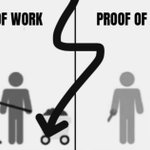
How does a blockchain decide who adds the next block?
Meet the two popular consensus mechanisms:
1) Proof of Work (PoW)
2) Proof of Stake (PoS)
Let's understand them👇🏻

Which uses more energy?
PoW networks like Bitcoin require substantial computing power.
PoS networks don't need the same energy-intensive mining competition.
That's one reason Proof of Stake generally consumes much less electricity.


How does blockchain network works with strangers network🤔?
1) Imagine thousands of computers worldwide maintaining and verifying copies of the same ledger.
These computers are called nodes.
When Alice sends BTC to Bob, the transaction is shared with the network.

6) How does the transaction enter the blockchain?
Here's the journey:
Alice signs the transaction
↓
The network receives it
↓
Nodes verify it
↓
Consensus determines the accepted block
↓
The transaction is recorded
↓
Bob receives the BTC

