



United Reborn retweeted

One lady came to me, hugged me and gave us 2 iced bottles of Tiger-nuts drink.
She said she also helped host Leo DaSilva when he came to Onitsha.
I do not know your handle. Please say hi. It means alot to all of us.
United Reborn retweeted
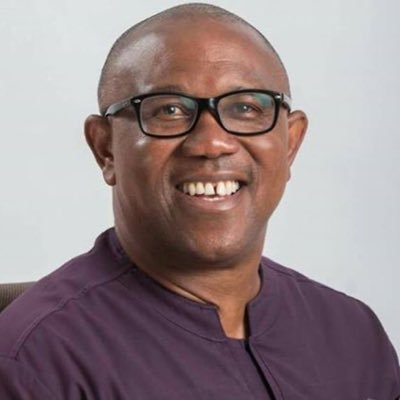
NIGERIANS, GO AND VERIFY (5)
CONNECTING COMMUNITIES, UNLOCKING PROSPERITY: OUR ROAD INFRASTRUCTURE RECORD
Peter Obi
Another critical foundation of development is infrastructure, particularly road construction and maintenance.
Infrastructure is not just about constructing roads, bridges, and buildings. It is about connecting people, opening up economic opportunities, reducing poverty, and enhancing the well-being of ordinary citizens. A road that connects a farmer to a market, a patient to a hospital, a child to a school, or a manufacturer to a distribution centre is an investment in economic and human development.
This thinking informed our approach under the Anambra Integrated Development Strategy (ANIDS). We set out to connect all 177 communities in the State with motorable roads, paying particular attention to rural communities that had suffered years of neglect. Our objective was to build an interconnected road network that served the entire State, rather than concentrate projects in major cities or politically important locations.
I. The Road Revolution: Over 900 Kilometres of Road Projects
Between March 2006 and March 2014, during my two-term tenure in office, my administration asphalted over 900 kilometers of roads. These projects were deliberately distributed across the three senatorial zones of Anambra State to connect communities, facilitate commerce, and enhance transportation.
I acknowledge that Dr. Chris Ngige started the road revolution in Anambra State, and I commend the efforts his administration made in initiating several road projects. When we assumed office in 2006, we recognised the importance of continuing worthwhile projects rather than abandoning them simply because they had been initiated by a previous administration.
Among the roads we inherited from Ngige and completed were the Owerri–Ezukala–Umunze–Umuchu–Amesi–Uga–Igboukwu Road, where his administration stopped around Umuchu and we continued through Amesi, Uga, and onward to Igboukwu; the Iseke–Orsumoghu–Ukpor–Utu–Nnewi–Awka-Etiti Road, where his administration stopped at Ukpor and we continued towards Awka-Etiti; and the Ideani-Otuocha where work stopped around Awkuzu before our administration continued the project from Nteje to Otuocha.
There were also roads, such as Mmili John and Nkwelle Ezunaka bypass, which had been awarded before we took over, but on which no payment had been made by the time we assumed office. We took over these projects, assessed their status, and proceeded with the work. This was our approach to continuity in governance: acknowledging what had been started, distinguishing between projects merely awarded and those on which work and payment had actually commenced, and ensuring that important infrastructure projects were carried forward.
Some of the major roads and corridors included Amansea–Ebenebe Road; Aguleri–Umueze Anam–Mmiata Road; Nnewi–Ozubulu–Okija Road; and the Old Onitsha–Awka Road.
Other important projects included:
Awka and its Environs: Zik’s Avenue, Awka; Adazi-Nnukwu–Obeledu–Neni Road; 33 Junction–Nwafor Orizu College of Education Road; roads within the Awka Government Reserved Area (GRA); and the Old Nkpor–Amawbia Road.
Nnewi and Surrounding Communities: Nnobi–Nnewi Road; roads within Nnewi town; Akwaeze–Oraeri–Igboukwu Road; and Ekwulobia–Nkpologwu–Akpo–Achina–Umuchu Road.
Onitsha and its Environs: Bridge Head–Umunya Road; over 30 roads in other parts of Onitsha; more than 25 roads within the Onitsha GRA; over 20 stone-based roads within Harbour Industrial Estate, Onitsha; and the Nkwele Ezunaka Bypass.
Other Communities and Strategic Corridors: Awgbu–Amaokpala Road, with the Odor Bridge; Aguluezechukwu–Ogboji–Ajalli Road; Awkuzu–Igbariam Road, passing through the university; Owerri–Ezukala–Umuchukwu Road; Ugwuoba–Obosi Road; and Lilu Road.
United Reborn retweeted

Peter Obi pays over N2Bn to make a total of N37Bn spent by his govt to clear arrears of Pension&Gratuity owed by successive govts since 1996
United Reborn retweeted

Today, I want to do something different.
If you’re a man going through a difficult time or you need help with anything meaningful, drop it in the comment section.
I will make sure at least one man’s life changes today.
Happy International Men’s Day, brothers. 🍷
United Reborn retweeted
NIGERIANS, GO AND VERIFY (4)
Building a Healthy Nation: Our Health Sector Record in Anambra
Peter Obi
In the previous instalment of this series, I discussed our investments in education and explained why we considered human capital development central to the progress of Anambra State. Another sector that received considerable attention under our administration was healthcare. We understood that education gives people the tools to build their future, while good healthcare enables them to live healthy and productive lives.
When we assumed office in 2006, the healthcare system in Anambra faced serious challenges. Our health institutions required rehabilitation, medical equipment was inadequate, many communities lacked accessible primary healthcare facilities, and several medical training institutions had not secured accreditation. We therefore decided to approach healthcare as a comprehensive development priority, rather than concentrate resources on a few prominent hospitals.
Under our Anambra Integrated Development Strategy (ANIDS), we invested simultaneously in primary, secondary, and tertiary healthcare, medical training, maternal and child health, medical equipment, and partnerships with religious and private institutions.
Our approach was simple: healthcare should be accessible to people wherever they live, and the quality of treatment they receive should not depend on their status or whether they live in a city or a rural community.
Building a Teaching Hospital and College of Medicine
One of our most significant achievements was the establishment of the Chukwuemeka Odumegwu Ojukwu University Teaching Hospital at Awka.
We initiated, constructed, equipped, and secured accreditation for the institution, building it virtually from scratch. When I discovered that the state university was admitting medical students without having a teaching hospital through which they could complete their training, possibly with the intention of assigning them elsewhere, I considered the situation unacceptable. We therefore embarked on the construction of a modern teaching hospital to address this deficiency.
We constructed more than 25 buildings and provided facilities for the College of Medicine, laboratories, pathology, accident and emergency services, pediatrics, male and female wards, special wards, consultant clinics, and other essential departments.
We also provided vehicles, including ambulances and staff buses, to support the hospital and the College of Medicine as part of the accreditation requirements.
The objective was not merely to build another hospital but to establish an institution capable of providing specialist healthcare while training the next generation of Nigerian medical doctors.
Rehabilitating General Hospitals
We also recognized that a teaching hospital alone could not meet the healthcare needs of the population. General hospitals had to function effectively because they provide the essential link between primary healthcare and specialist treatment.
We rehabilitated and resuscitated 15 general hospitals across the three senatorial zones of Anambra State. We undertook substantial improvements in their buildings, wards, equipment, and general facilities.
In 2013, we provided ₦400 million for the ongoing renovation of 11 selected general hospitals, alongside other healthcare interventions.
Our intention was to ensure that people did not have to travel unnecessarily long distances to obtain basic secondary medical care.
Taking Primary Healthcare to the Communities
We believed that the best healthcare system is one that prevents illnesses and treats people early, rather than one that waits until minor health problems become emergencies.
That informed our extensive investment in primary healthcare. We built over 120 primary healthcare centers across communities in the 177 autonomous communities of Anambra State and rehabilitated existing facilities.

United Reborn retweeted
Nigerian youths are SUFFERING!!!!!
Like really suffering.
There is no work. The work that some get are not at par with their salaries. They get paid and 3 days later, all the salaries has finished.
Those that try their hands in entrepreneurship get pulled down by bad enabling environments like lack of electricity, mad taxes, bad roads, insecurity etc.
Nigerian youths are literally in HELL FIRE.
They work so hard yet nothing to show for it. It’s really unfortunate.
United Reborn retweeted
CLARIFICATION: MY MEETING WITH US CONGRESSIONAL LEADERS WAS NOT AN ENDORSEMENT-SEEKING MISSION
I wish to address the inaccurate interpretation presented in certain media reports concerning my recent engagements with members of the United States Congress in Washington, DC.
As I expressly noted in my remarks, my visit to the United States was not intended to secure an endorsement, and I did not characterise my meetings as endorsements of my political aspirations by the US Congress or any of its members.
The primary purpose of the visit was to engage with congressional leaders and other influential American stakeholders, exchange perspectives, and discuss matters related to Nigeria’s development, the welfare of our citizens and, most importantly, the consolidation of our democracy.
I am especially concerned with strengthening democratic institutions, advancing accountability, and ensuring that Nigeria’s electoral process produces elections that are free, fair, transparent and credible. These matters should concern every Nigerian who is committed to our country’s future.
I consider engagements of this kind valuable, and I encourage other Nigerian political leaders, especially those seeking public office, to pursue similar discussions with international stakeholders. Our democracy can be strengthened through constructive dialogue, the exchange of experiences and a shared commitment to credible elections.
Nigeria’s democratic future is far too consequential to be distorted by sensational headlines or inaccurate interpretations. My mission centred on Nigeria, its people and the future of our democracy—not on endorsing any individual. -PO
United Reborn retweeted

The problem with modern politics is that winning elections has become more important than solving problems.
United Reborn retweeted
Endless Human Bloodletting and Failure of Intelligence
I am deeply saddened and troubled by reports that at least nine people were killed in the Zuwagal community, Mangu Local Government Area of Plateau State, in yet another assault on innocent Nigerians. These deaths have occurred amid a deeply concerning pattern of recurring attacks, displacement and the destruction of communities throughout the country.
Data from the past two weeks are alarming. OpenWatch's security incident records show 261 reported deaths across Nigeria between 2 and 15 November 2026, including 24 in Plateau during the first week and 15 during the second. Plateau also reported additional attacks on 16 November.
These victims are not merely numbers. They were fathers, mothers, children and breadwinners whose lives were abruptly ended, leaving families and entire communities to mourn.
Why are communities being threatened without receiving adequate protection? Why are intelligence reports failing to result in preventive action? How many more innocent Nigerians must lose their lives before decisive measures are implemented?
I call on the Government and security agencies to immediately reinforce security operations in vulnerable communities; thoroughly investigate these attacks and ensure that both the perpetrators and those who support them face justice; establish reliable early-warning and rapid-response systems; deliver humanitarian aid and rehabilitation services to displaced families; and release transparent, accurate casualty figures for all affected communities.
We must also confront the root causes of insecurity by strengthening accountable institutions, intelligence gathering, justice, education, economic opportunity and meaningful engagement with communities.
Every Nigerian life is valuable, regardless of ethnicity, religion or political affiliation. The right to life must never be subject to negotiation.
My deepest condolences go to the bereaved families and the people of Plateau State. May God comfort them and bless our country with peace.
Nigeria must do more than mourn those who have died. We must protect those who are still living. -PO
United Reborn retweeted
At Nwafor Orizu College of Education, Nsugbe, we constructed classrooms and lecture halls, provided staff office complexes, renovated the library, constructed an auditorium, and improved instructional facilities. We also provided boreholes, generators, and security facilities, facilitated programme accreditation, and employed additional academic and non-academic staff.
The College of Agriculture, Mgbakwu, received considerable attention, with approximately 15 buildings constructed during our administration.
We also built the Chukwuemeka Odumegwu Ojukwu Teaching Hospital from scratch, constructing over 25 buildings. In addition, we supported major nursing and health institutions across the state. St Charles Borromeo Hospital and Iyi-Enu Hospital, for instance, have since become teaching hospitals.
Supporting Institutions Beyond Government Ownership
We did not restrict our interventions to government-owned institutions. We believed that every institution educating our people deserved encouragement, irrespective of ownership.
Our administration, therefore, extended financial assistance to Madonna University, Paul University, Tansian University, and Peter University. These institutions received grants of about ₦100 million each at the time, in addition to vehicle support.
We also introduced a policy of rewarding academic excellence by giving every Anambra indigene who graduated with a First Class degree ₦1 million. Over 500 persons benefited. I am delighted by the text messages and posts in which some of the beneficiaries still recall how the money helped them become what they are today. My friend, Dr Uchenna Nze, would always tell me how the money facilitated his further education. He is now the Head of Department of Mass Communication at Tansian University. We wanted our young people to understand that intellectual achievement mattered and deserved recognition.
The Results and Our National Commitment
By the time we left office in 2014, the results of these investments were becoming evident. Anambra had moved from the lower positions in external and national examinations, including WASCE, GCE, NECO, and JAMB, to the topmost positions. Till today, various schools in Anambra State have continued to win awards both locally and internationally. This was the outcome of sustained investments in infrastructure, teachers, technology, and effective supervision.
Such awards and recognitions are encouraging indications of what sustained investment in education, strong institutions, and a culture of academic excellence can produce over time. When we invested in schools, teachers, technology, and learning facilities, our intention was not to produce temporary achievements that would disappear with a change of government. We wanted to establish a foundation upon which successive administrations could build. Seeing Anambra schools continue to excel gives me great satisfaction and reinforces my conviction that investments in education are among the most enduring legacies any government can leave behind.
My commitment to education did not end when I left office. I have continued to support schools and educational institutions across Nigeria as a private citizen through donations, classroom construction, learning materials, and other interventions.
As President, I will bring the same energy, commitment, and political will to bear on education nationally. All agencies responsible for education must function effectively and be held accountable. Taxes and other revenues collected specifically for educational purposes must be properly accounted for. Nigerians must know how much is collected, where the money goes, and what it is used for.
United Reborn retweeted
We did not stop at computers and digital learning. Mr Gerald Ilukwe, Chief Executive Officer of Galaxy Backbone Plc, commended our rollout of VSAT internet access to over 500 secondary schools, describing it as incomparable to what had been achieved in any other state in the country. He particularly recognised that ours was the first state government to treat mass broadband connectivity in public schools as essential infrastructure rather than a token pilot project.
These endorsements are important because they came from people and institutions with direct knowledge of the technology industry and its deployment across Africa. They demonstrate that our investments in education were not merely about constructing buildings; we were preparing Anambra’s children for a world increasingly driven by knowledge, science, and technology.
Public secondary schools received buses, some even received two, primarily for school runs, the transportation of essential supplies, and emergencies. We also released ₦525 million directly to schools for the construction of sick bays and dispensaries and provided principals with intervention funds to address erosion and other urgent infrastructural challenges.
I took a personal interest in the condition of our schools. I personally visited every secondary school in the state, often unannounced. I ate with the students in boarding schools and quietly inspected their dormitories, classrooms, and other facilities to ascertain their actual condition. I did not want to depend entirely on official reports. In fact, all the senior prefects had my telephone numbers and could call me whenever they wished. I believed in listening directly to those who used the facilities every day.
Teachers and Academic Standards
We understood that no educational system could rise above the quality and commitment of its teachers and administrators. We recruited 2,000 teachers for primary schools and 5,000 teachers, alongside another 2,000 special-subject teachers, for secondary schools. We also made financial provisions to cover their salaries for two years so that our successor would not inherit an immediate financial burden.
We ensured prompt payment of teachers’ salaries and allowances, cleared outstanding pension and gratuity arrears, restored teacher promotions, and removed the ceiling that had prevented some teachers from progressing beyond Grade Level 16. Outstanding principals and teachers were also regularly recognised and rewarded.
Technical, Vocational and Adult Education
Our educational vision went beyond conventional academic institutions. We fully renovated and re-equipped the Government Technical Colleges at Onitsha, Nkpor, and Umuchu, secured accreditation for several technical programmes, strengthened Adult Education Centres and Market Schools, and supported vocational education and youth empowerment initiatives.
We also equipped 53 nomadic and migrant schools and sustained campaigns against school dropout. Our objective was simple: every child deserved an opportunity to learn, irrespective of background or location.
Higher Education
At Chukwuemeka Odumegwu Ojukwu University, we constructed or completed over 40 projects. These included the Faculties of Law, Engineering, Agriculture, Management Sciences, Arts, and Social Sciences, as well as the Mass Communication Complex and studios.
Other projects included the Administrative Complex, engineering workshops and laboratories, departmental buildings, hostels, an E-learning and Research Centre, internal roads, water supply infrastructure, electricity-generating facilities, and campus landscaping.
We released ₦5 billion to the university for infrastructural development and facilitated the construction of two 250-bed hostels through the Central Bank of Nigeria under the leadership of Dr Kingsley Moghalu, then Deputy Governor of the apex bank.
United Reborn retweeted
NIGERIANS, GO AND VERIFY (3)
Building the Future Through Education
Peter Obi
In the first two instalments of this series, I explained how we approached the task of building strong institutions and laying a solid foundation for the development of Anambra State. One of the most important institutions we invested in was education.
For me, education was not a political game or a convenient political promise. Even before I ventured into politics, I had always regarded it as the foundation of meaningful development and the most enduring investment any government can make in its people. I believe that the future of any society depends largely on the quality of its educational institutions, teachers, learning environment, and opportunities available to its young people.
This conviction informed our decision to invest across the entire educational spectrum, from primary schools to universities, technical institutions, and adult education.
Basic and Secondary Education
One of our first major decisions was to return mission and privately owned primary and secondary schools to their original proprietors while retaining government support. We also provided billions of naira to assist in rehabilitating the returned schools, restoring the partnership between government and religious institutions that had historically contributed to educational excellence.
This policy attracted international attention. Professor Paul Collier, the Oxford economist and World Bank consultant, led a World Bank-commissioned study of Anambra’s educational transformation. His team examined our decision to return schools to their original missionary owners while retaining government responsibility for funding teachers’ salaries and supporting infrastructure. The team described the partnership model as a revolution in public service delivery and recommended it as a model that could be replicated by other Nigerian states and developing countries. We believed then, as we do now, that government does not necessarily have to own every institution to discharge its responsibility effectively. What matters is ensuring that every child has access to quality education.
For those who claim that we built no schools, I invite them to verify our records. We constructed five-classroom blocks in virtually all of the 177 communities in Anambra State, one of the most extensive community-based school infrastructure programmes undertaken by any state government. The town union chairmen and community leaders of that period can attest to this.
We also renovated hundreds of dilapidated schools, including some where trees had literally grown through abandoned buildings. Comprehensive Secondary School, Onitsha, and Oraukwu Grammar School are examples.
Beyond infrastructure, we distributed approximately 40,000 computers to schools, including more than 22,500 HP laptops. We equipped secondary schools with Microsoft Academies and connected schools across the state to the internet. We supplied generators, established and stocked libraries, revived school sporting activities, and installed boreholes in over 300 schools, including all girls’ schools. We also provided funding to support sporting activities in all our secondary schools.
These technology investments attracted remarkable international recognition. Mr Fabrice Campoy, Managing Director of the Personal Systems Group at HP Inc., described our procurement and distribution of over 22,500 HP laptops as the biggest project of its kind in the Middle East and Africa. Similarly, Mr Ken Spann, then Country Manager and Head of Microsoft Nigeria, described the establishment of Microsoft Academies in more than 500 Anambra secondary schools as the most extensive deployment of its kind in Africa at the time.
United Reborn retweeted
Gov Peter Obi presents N5bn cheques for the continued rehabilitation of schools in Anambra state
United Reborn retweeted
Gov Peter Obi pays N1.2bn to Anambra pensioners making it N33bn committed to clearing arrears owed since 1996
United Reborn retweeted

Nollywood, why does Issakaba, a movie inspired by the Bakassi Boys, a group which was created in the East, have Yoruba dialect in it?
A group that was formed in Aba by traders who were tired of constant robberies and attacks all of a sudden has Yoruba dialect in it?
This is a distortion of the story. Even the original Isakaba had Igbo language in it.
The Bakassi Boys operated only in the East, not in the West!
Let’s assume he relocated. Are you trying to say Ebube forgot his own language? Why must Ebube, who has no ties with Yoruba, all of a sudden be speaking Yoruba?
It seems the criteria for releasing Nollywood movies these days is that you have to remove the Igboness from them.
What made Issakaba Issakaba was its realism, originality and Igboness.
Issakaba is Bakassi spelt backwards. This is an event based on a true story that happened in Igbo land.
If you are going to create a sequel, it should remain consistent with the original.

United Reborn retweeted
Fixing education in Northern Nigeria is extremely difficult because many NGOs have a financial incentive to keep the number of out-of-school children high. The higher the numbers, the stronger their case for continued funding from international and local organisations.
These funding allocations run into millions of dollars annually.
United Reborn retweeted

He said Obi is stingy. Someone tell that drunk that Obi is spending his own personal money. Can we say same about him? Someone whose son is currently facing a lawsuit over a $2.1M fraud!
Nigeria is in the hands of shameless people!
United Reborn retweeted
I strongly advise every school in Nigeria to begin preparing for a possible return to online learning ahead of the 2027 general elections.
The political tension that could accompany this election must not be underestimated. Schools need contingency plans NOW.
Whatever happens in 2027, the education of our children must not become another casualty of Nigeria’s political crisis.
