

Thematic investor | Market intelligence Ichimoku swing trader Equities & Crypto since 2017 Market structure, secular trends & trade journal
Joined June 2026
- Tweets1.8K
- Following20
- Followers570
- Likes812



Pinned Tweet
Our Sector Timeline Tracker (STT) is updated for Q4.
This edition looks deeper into each ecosystem’s key components, mapping their timelines, supply-demand conditions and estimated market opportunities, based on cited analyst research.
A clearer guide to where opportunity is developing, when it could scale and how large it could become.
The STT is updated quarterly with the latest available information.


CORNING $GLW Q3’26 EARNINGS HIGHLIGHTS
🔹 Revenue: $5.08B (Est. $5.02B) 🟢; +19% YoY
🔹 Adj. EPS: $0.91 (Est. $0.88) 🟢; +36% YoY
🔹 Core Gross Margin: 40.5%; +150 bps YoY
🔹 Core Operating Margin: 22.7%; +310 bps YoY
Q4 Guide:
🔹 Revenue: $5.2B-$5.3B (Est. $5.21B) 🟡
🔹 Adj. EPS: $0.96-$1.00 (Est. $0.94) 🟢
Segment Net Revenue:
🔹 Optical Communications: $2.4B; +44% YoY
🔹 Glass Innovations: $1.5B; -3% YoY
🔹 Automotive: $470M; +4% YoY
🔹 Solar: $436M; +37% YoY
🔹 Life Sciences & Emerging Growth: $290M; +1% YoY
Announcements:
🔹 Secured four long-term, multibillion-dollar customer agreements, including with Verizon and AT&T
🔹 Solar revenue stream progressing toward more than $3B
Other Q3 Metrics:
🔹 GAAP Gross Margin: 37.3%
🔹 GAAP Operating Margin: 18.8%
🔹 Operating Cash Flow: $1.1B
🔹 Adjusted Free Cash Flow: $661M
Comments:
🔸 “faster adoption of our innovations helped us double our Gen AI sales year over year in the quarter, outpacing GPU unit growth.”
🔸 “we expect our outstanding performance to continue.”

Foreign media Summary with Outer Ninth commentary/highlights.
- 2360 Chroma ATE: US firms reiterate positive outlook US brokerage firms expect the semiconductor and photonics technology businesses to continue driving growth in 2H26; next year is anticipated to be a year of robust growth. Expect 3Q gross margin at 60.5%, flat QoQ; OPM to rise QoQ to 39.3%. Reiterating positive outlook.
▶️ Chroma ATE 致茂 2360.TW came in very high in our testing and advanced packaging research rankings, read about Chroma ATE here:
xitter.cf/outerninth/status/2113…
- TPCA 2026: US brokerage firms indicate that whether CCL will use PTFE will be decided by mid-next year; in the meantime, trials are underway for other methods such as hydrogen resin (HC) substrates, HC + PTFE hybrid materials, and benzocyclobutene (BCB) substrate CCLs.
▶️ Nan Ya Plastics 👀 👀 👀
Additionally, thin E-glass remains in short supply, with existing production lines being converted to LDK1/2 and T-glass fiberglass fabrics to meet robust AI demand.
▶️ I wrote about this in the Nittobo interview post today, lower quality production lines are being converted to higher grade, higher margin products which as we know causes scarcity cascades for the lower grade prodcuts such as Q-glass.
Finally, lead times for ABF lamination equipment are at least two years, meaning that new ABF substrate capacity from entirely new factories can only begin gradual ramp-up from 2029 at the earliest. Next year, substrate sizes will increase further, and brokers continue to view the substrate industry positively. Summary: Brokers maintain their positive views on covered companies such as Taiyo Yuden, Elite Material, Kinpo, Unimicron, Nan Ya PCB, and Kingboard.
▶️ I will post some Unimicron research tomorrow but this is extremely pertinent to the findings, but don't want to spoil it. I've also got an article/post of ABF equipment coming (unwritten).
h/t: @QQ_Timmy

早安!10/27 外電綜合整理
- 2327國巨: 美系重申正向
美系大行預期3Q 毛利率40.4%、OPM 29.1%,高出市場共識。展望4Q,預期漲價與AI需求預期持續推動營收成長及利潤率擴張。在即將到來的法說會上,券商會關注非AI市場的需求能見度,還有各產品漲價及供需狀況,重申正向。
- 2345智邦: 美系重申正向
將辦理現金增資,美系大行表示稀釋幅度最高2%,影響可控。重申正向。
- 2360致茂:美系重申正向
美系大行預期半導體及光子技術業務持續帶動2H26成長;預期明年有將是強勁成長的一年。預期3Q毛利率60.5%,季持平;OPM季增至39.3%。重申正向。
- TPCA 2026:
美系大行表示CCL是否會用PTFE會在明年中決定,在此同時也在試其他方法如氫樹脂(HC)基材、HC+PTFE混合材料,以及苯並環丁烯(BCB)基材的CCL。
此外,觀察薄型E-glass仍是短缺,將既有產線轉換為LDK1/2及T-glass玻纖布,以滿足強勁的AI需求。
最後看到ABF的壓合設備交期至少兩年,意即全新建廠的ABF載板產能,最早只能從2029年開始逐步放量。明年載板尺寸又放大,券商持續正向看待載板產業。總結:券商對覆蓋裡的台燿、台光電、金居、欣興、南電、金像電等持正向看法不變。
#每日外電
Institutional investors revised upwards their profit forecasts for Nan Ya Securities, causing the stock price to surge to a new high of NT$350.5
Article date: 10.14.2026
> Important parts in bold/italics
Nan Ya Plastics Group (1303) reported Q3 earnings per share (EPS) of NT$4.9, significantly exceeding expectations, with cumulative earnings for the first three quarters exceeding one share capital. According to a FactSet survey, analysts have revised upward their 2028 EPS forecasts for Nan Ya Plastics, with the average forecast rising from NT$14.28 to NT$14.44 and the median from NT$14.72 to NT$15.35, setting a target price of NT$357.5. Nan Ya Plastics' share price surged again on the 14th, rising over 8% intraday, and has gained 50% since September 24th.
Nanya Technology's third-quarter profit hit a record high, with EPS reaching NT$4.90. Net non-operating income reached NT$28.91 billion, accounting for 61% of pre-tax profit. This was mainly due to the significant growth in Nanya Technology's (2408) memory chip business, with the company recognizing NT$23.56 billion in investment income from Nanya Technology in the quarter, contributing NT$2.97 to EPS, accounting for approximately 60% of the overall EPS. The company earned more than one share of profit in the first three quarters of this year, with earnings per share of NT$10.07.
However, Nan Ya's core business also performed strongly. Electronic materials, including low dielectric and low thermal expansion glass fiber, fine grain copper foil, self-developed hydrocarbon resin and ultra-low loss copper foil substrate, etc., accounted for 58.1% of revenue. In the third quarter, operating profit increased by 96.1% quarter-on-quarter, and the operating net profit margin reached 30.9%.
Analysts point out that among Nan Ya's various electronic products, the copper foil substrates M9 and M10 are currently undergoing sample verification, with verification results expected in the first half of 2027. M7 and M8 are already in mass production, and orders are being negotiated with cloud service providers; production is expected to surge in the fourth quarter.
In the upstream electronic materials sector, Nan Ya Plastics' self-developed hydrocarbon resin achieves ideal electrical properties without the need for quartz cloth. Current test data shows excellent performance, making it suitable for M9, M10, and next-generation M11 and above specifications. Regarding fiberglass cloth, high-end T-glass production capacity has increased to tens of thousands of meters per month, while Low DK2 production has secured stable quotas through cooperation with Nittobo. Nan Ya Plastics has also independently developed HVLP 4 and continues to develop higher-end HVLP5, HVLP6, and ultra-thin copper foil.
→ Just so you guys know other analysts write about this, it's not just me- You just don't see it but pls take note of these companies and the ownership structure of 1303 that I posted below.
It has a very unique vertical integration touching almost every part of our passive component ecosystem.

Nan Ya Plastics 南亞 1303.TW
As a follow-up to the "mini article" that I wrote at the bottom of this post.
I have not yet performed detailed financial analysis on the company but I did uncover some REALLY interesting information on the corporate structuring of the Nan Ya trio of companies.
→ I want to quickly point out that I see barely any mentions if any at all about this company which for me is bullish.
Nan Ya Plastics is becoming a lot more interesting 🚨
Nan Ya Plastics 南亞 1303.TW currently owns:
- ≈ 67% of Nan Ya PCB 南亞 8046.TW
- ≈ 30% of Nanya technology 南亞科 2408.TW
- 100% of PFG Fiber Glass, which makes electronic grade glass yarn
- 100% owned electronic materials subsidiaries producing combinations of CCL, copper foil, fiberglass fabric and epoxy
So 1303 owns/controls:
- epoxy/resins
- glass yarn/fabric
- copper foil
- prepreg/CCL
67% of Nan Ya PCB
- ABF substrates
- PCB
- BT
30% of Nanya Technology
- DRAM
Materials + substrates/PCB + memory all inside one economic group with vertical integration- that's powerful.
Vertical Integration here is VERY important:
Glass shortages
→ they make glass
Copper Foil shortages
→ they make CF
Resin/formulation scarcity
→ they formulate resin
CCL price inflation
→ they sell CCL
ABF/BT substrate shortage
→ 67% owned nan Ya PCB sells substrates
Memory recovery
→ 30% owned Nanya Tech. participates
That's a remarkable amount of the value chain under one corporate umbrella. They have constant access to most of the scarce upstream materials and the drastic price increases pass right through directly to their margin.
Nan Ya's electronic material segment reached roughly 58% of revenue in Q3 and OPM reached 30.9%. It is already mass producing M7/M8, has M9/M10 under qualification, and is developing its own HC resin as well as HVLP 4/5/6 copper foil 👀 👀 👀
1303 you have my attention !
The remaining question becomes- How does Nan Ya Plastics stand up to Outer Ninth's rigorous financial analysis ?
We intend to answer that question later this week.
Spoke about this at the end of my Nomura global memory post. Memory demand does have future catalysts.
When does the market start understanding memory is no longer trading like a cyclical commodity !?

Elon Musk says “robot RAM needs will exceed everything else on Earth” and believes superintelligence will eventually drive even more demand through deep space compute.
To put that into perspective $TSLA producing 10M Optimus robots a year would require ~720 petabytes of memory at 72GB per robot.
Pretty wild for $MU and $SKHY as AI expands beyond data centers although robots use LPDDR rather than HBM so this could become a much bigger volume story.


Nan Ya Plastics 南亞 1303.TW 👀 👀 👀
Nan Ya Plastics takes the lead in launching M11 material projects.
Securing strong results with CSP clients in 2027.
M9 projects also show good progress in self-developed chips
@pcbanalysis casually dropping the street-level intel


Nittobo's Yuhiro Mikami Interview 📰
Nitto Boseki Co. 日東紡 3110.JP
Company Positioning
- Global leading supplier of high-performance semiconductor packaging substrates and high-end glass cloth for electronic equipment motherboards.
- Special glass (NE/T glass, etc.) holds overwhelming market share and industry standard status.
Current Market Conditions
- AI server demand remains robust, with excellent demand for T glass (low CTE, warp-resistant, used for GPU/CPU) and NE/NER glass (low dielectric/low loss, used for high-speed signals).
- Supply is severely tight; the company is working to improve yields to increase shipments.
Demand Structure
- CCL base materials for thin FCCSP and FCBGA are mainly from Japanese manufacturers.
- CSP for memory/modules is stronger from Korean manufacturers.
Investment Plans
- Continuing large-scale investments domestically and internationally, advancing according to schedule.
- Original yarn expansion: Centering on Taiwan to add melting furnaces; T glass yarn expected to contribute to mass production starting in fiscal 2027, aiming to ship as early as possible.
- Domestic plans to decommission E glass melting furnaces to expand special glass production capacity.
- Glass cloth expansion, with weaving processes in collaboration with Nan Ya Plastics.
- Due to upward demand revisions, investment amount revised upward to 120 billion yen by fiscal 2027 (an increase of 40 billion yen from original), targeting T glass capacity at 3 times that of fiscal 2025.
Competition and Differentiation
- Known competitors entering the T glass market, potentially leading to a slight drop in market share, but revenue scale continues to grow.
- Emphasizing over 30 years of proven track record in stably supplying high-quality T glass, upholding "Nittobo quality."
Future Demand Outlook
- Inference AI driving an increase in CPU volumes, with growth in dedicated ASICs/CPUs from service providers.
- Packaging substrates becoming larger in size and more multi-layered at the core, with core thickness potentially doubling to 2.4–3 mm.
- Special glass demand expected to remain strong in the short term; currently evaluating demand for 2029–2030 and the next wave of investment.
Next-Generation Products
- Recommending NER/NEZ (excellent low-Dk/Df), with partial mass production already underway.
- Next-next-generation "DX II" at quartz glass level, targeting sample shipments around fiscal 2028.
- Next-generation T glass "Vlex" under development (low CTE + low loss), expected to officially ship around 2028.
- Emphasizing the need to pair with new resins and collaborate on substrate design to deliver high value-added products.
🔽 🔽 🔽
The interview directly confirms several of our assumptions:
- T-glass and NE/NER demand remains extremely tight
- Nittobo is trying to increase output through capacity additions AND yield improvement.
- Taiwan glass yarn melting capacity is being expanded
- E-glass furnaces in Japan are being retired/reallocated toward specialty glass (scarcity cascades 👀)
- FY 2024-27 total CAPEX was raised by ¥40B to ≈120B
- T-glass capacity is targeted at roughly 3x FY25 levels by FY27
- Next gen VLEX T-glass is targeted around 2028
- next gen low loss products include NER/NEZ and later DX II
Key Takeaway:
Even though Nittobo is undertaking a ¥120B four year CAPEX program, demand has repeatedly been revised upwards faster than their expansion plans.
Another theme we are seeing throughout the passive component ecosystem- demand is increasing faster than supply, even with aggressive capacity expansion.
Nitto Boseki Co. 日東紡 3110.JP A Critical Chokepoint
As another follow-up to this Nittobo series I wanted to address what happens during a re-design around scenario like the move to PTFE or HC for CCL & PCB boards ?
You might think Nittobo would suffer in this scenario, however they will not and remain insulated for multiple reasons:
1. The Glass Core Substrate and ABF Moat:
While the switch trays on the board might explore glass-free materials to ease PCB drilling issues, the actual chip packaging (CoWoS / ABF substrates) for NVIDIA Rubin Ultra and subsequent generations still faces a severe structural bottleneck for high-performance low-Dk fiberglass. Tech giants like Apple, Amazon, and NVIDIA are in fact still actively competing to secure Nittobo’s allocation.
2. Delayed Packaging Substitutions:
Financial analysts, including Goldman Sachs (as of July 26'), have explicitly upgraded Nittobo to a "Buy," noting that radical glass-core substrate alternatives are unlikely to broadly displace glass fiber cloth in packaging before 2030.
"The GS report emphasized that existing glass fiber cloth will likely continue to be used at least through the Rubin Ultra product generation. During this period, Nittobo will continue to benefit from larger packaging substrate dimensions and increased core thickness driving volume growth, which translates to higher T-glass content and additional layers to mitigate warpage. Goldman even highlighted four reasons why replacing glass fiber cloth-based cores with glass core substrates is no easy task."
3. Massive Capacity Backlog:
Nittobo is booked solid. They are actively spending billions of yen expanding facilities in Fukushima and Taiwan to triple special glass output by FY2028. Even if one component (the switch tray) reduces glass consumption, the broader AI infrastructure market is absorbing all the high-end glass fabric Nittobo can possibly melt.
Now, this won't carry on forever, but that's why we deploy the STT and new constraint map. These documents are heavily researched, reviewed, with each data point validated and audited prior to publication.
I stand behind their accuracy based on available market data.
$NVDA $AAPL $AMZN #Tglass #Qglass #NER #日東紡

🚨 Nittobo 日東紡 3110.JP & Nan Ya Plastics 南亞 1303.TW Connection uncovered.
There is a very important Nan Ya Plastics connection here:
The interview explicitly says Nittobo is working with Nan Ya Plastics on the weaving stage of glass cloth production (see quoted post and my analysis at the end).
This matters a lot.
Nan Ya isn’t just:
“a vertically integrated materials company that happens to manufacture glass.”
It is apparently important enough in the specialty-glass ecosystem that Nittobo itself is partnering with Nan Ya on weaving capacity.
The production chain appears to be roughly:
Nittobo
→ specialty composition / melting / fine yarn / core know-how
Nan Ya
→ additional weaving capacity
Nittobo / ecosystem
→ finishing / treatment / qualified specialty fabric.
That strengthens Nan Ya’s positioning substantially.
It does not mean Nan Ya suddenly owns Nittobo’s T-glass IP or can independently produce equivalent material.
But it does mean Nan Ya occupies a more strategically embedded position in the specialty-glass supply chain than simply being an alternative producer.
⸻
It also explains why T-glass supply is difficult to expand and why Nittobo has a defensible moat:
The process isn’t simply:
buy loom → weave more cloth.
Nittobo’s advantage spans:
glass formulation
→ melting
→ ultra-fine yarn
→ weaving
→ surface treatment
→ yield
→ customer qualification.
That is why Nittobo can outsource/collaborate on a portion of weaving without surrendering the moat.
And it explains why the market can see new entrants yet still remain tight.
Nittobo itself acknowledges competitors are coming and that its percentage share could decline, while still expecting its absolute sales to keep rising.
That is exactly the distinction we want:
Share dilution does not necessarily mean earnings deterioration when the market itself is expanding faster than supply.
Nittobo 日東紡 3110.JP
Nan Ya Plastics 南亞 1303.TW
I keep telling you guys Nan Ya Plastics is underdiscussed and misunderstood- I barely see anyone talking about this company outside of @pcbanalysis
It still needs to pass my financial screening this week but it very much has my attention 👀
I posted a bunch about it today.
Nittobo's Yuhiro Mikami Interview 📰
Nitto Boseki Co. 日東紡 3110.JP
Company Positioning
- Global leading supplier of high-performance semiconductor packaging substrates and high-end glass cloth for electronic equipment motherboards.
- Special glass (NE/T glass, etc.) holds overwhelming market share and industry standard status.
Current Market Conditions
- AI server demand remains robust, with excellent demand for T glass (low CTE, warp-resistant, used for GPU/CPU) and NE/NER glass (low dielectric/low loss, used for high-speed signals).
- Supply is severely tight; the company is working to improve yields to increase shipments.
Demand Structure
- CCL base materials for thin FCCSP and FCBGA are mainly from Japanese manufacturers.
- CSP for memory/modules is stronger from Korean manufacturers.
Investment Plans
- Continuing large-scale investments domestically and internationally, advancing according to schedule.
- Original yarn expansion: Centering on Taiwan to add melting furnaces; T glass yarn expected to contribute to mass production starting in fiscal 2027, aiming to ship as early as possible.
- Domestic plans to decommission E glass melting furnaces to expand special glass production capacity.
- Glass cloth expansion, with weaving processes in collaboration with Nan Ya Plastics.
- Due to upward demand revisions, investment amount revised upward to 120 billion yen by fiscal 2027 (an increase of 40 billion yen from original), targeting T glass capacity at 3 times that of fiscal 2025.
Competition and Differentiation
- Known competitors entering the T glass market, potentially leading to a slight drop in market share, but revenue scale continues to grow.
- Emphasizing over 30 years of proven track record in stably supplying high-quality T glass, upholding "Nittobo quality."
Future Demand Outlook
- Inference AI driving an increase in CPU volumes, with growth in dedicated ASICs/CPUs from service providers.
- Packaging substrates becoming larger in size and more multi-layered at the core, with core thickness potentially doubling to 2.4–3 mm.
- Special glass demand expected to remain strong in the short term; currently evaluating demand for 2029–2030 and the next wave of investment.
Next-Generation Products
- Recommending NER/NEZ (excellent low-Dk/Df), with partial mass production already underway.
- Next-next-generation "DX II" at quartz glass level, targeting sample shipments around fiscal 2028.
- Next-generation T glass "Vlex" under development (low CTE + low loss), expected to officially ship around 2028.
- Emphasizing the need to pair with new resins and collaborate on substrate design to deliver high value-added products.
🔽 🔽 🔽
The interview directly confirms several of our assumptions:
- T-glass and NE/NER demand remains extremely tight
- Nittobo is trying to increase output through capacity additions AND yield improvement.
- Taiwan glass yarn melting capacity is being expanded
- E-glass furnaces in Japan are being retired/reallocated toward specialty glass (scarcity cascades 👀)
- FY 2024-27 total CAPEX was raised by ¥40B to ≈120B
- T-glass capacity is targeted at roughly 3x FY25 levels by FY27
- Next gen VLEX T-glass is targeted around 2028
- next gen low loss products include NER/NEZ and later DX II
Key Takeaway:
Even though Nittobo is undertaking a ¥120B four year CAPEX program, demand has repeatedly been revised upwards faster than their expansion plans.
Another theme we are seeing throughout the passive component ecosystem- demand is increasing faster than supply, even with aggressive capacity expansion.
Nan Ya Plastics 南亞 1303.TW
As a follow-up to the "mini article" that I wrote at the bottom of this post.
I have not yet performed detailed financial analysis on the company but I did uncover some REALLY interesting information on the corporate structuring of the Nan Ya trio of companies.
→ I want to quickly point out that I see barely any mentions if any at all about this company which for me is bullish.
Nan Ya Plastics is becoming a lot more interesting 🚨
Nan Ya Plastics 南亞 1303.TW currently owns:
- ≈ 67% of Nan Ya PCB 南亞 8046.TW
- ≈ 30% of Nanya technology 南亞科 2408.TW
- 100% of PFG Fiber Glass, which makes electronic grade glass yarn
- 100% owned electronic materials subsidiaries producing combinations of CCL, copper foil, fiberglass fabric and epoxy
So 1303 owns/controls:
- epoxy/resins
- glass yarn/fabric
- copper foil
- prepreg/CCL
67% of Nan Ya PCB
- ABF substrates
- PCB
- BT
30% of Nanya Technology
- DRAM
Materials + substrates/PCB + memory all inside one economic group with vertical integration- that's powerful.
Vertical Integration here is VERY important:
Glass shortages
→ they make glass
Copper Foil shortages
→ they make CF
Resin/formulation scarcity
→ they formulate resin
CCL price inflation
→ they sell CCL
ABF/BT substrate shortage
→ 67% owned nan Ya PCB sells substrates
Memory recovery
→ 30% owned Nanya Tech. participates
That's a remarkable amount of the value chain under one corporate umbrella. They have constant access to most of the scarce upstream materials and the drastic price increases pass right through directly to their margin.
Nan Ya's electronic material segment reached roughly 58% of revenue in Q3 and OPM reached 30.9%. It is already mass producing M7/M8, has M9/M10 under qualification, and is developing its own HC resin as well as HVLP 4/5/6 copper foil 👀 👀 👀
1303 you have my attention !
The remaining question becomes- How does Nan Ya Plastics stand up to Outer Ninth's rigorous financial analysis ?
We intend to answer that question later this week.
Nittobo 日東紡 3110.JP
This is a long post but PACKED full of useful info. My comments are marked by ▶️
These are initial research tidbits and breadcrumbs for you guys.
- Read to the end, there's a mini article down there 🙂
I cover a lot in this piece from Nittobo and glass fiber to CCL, materials and numerous companies.
--------------------------------------------------------
"And the price hike rate for E-Glass, which isn't even top-grade, is insane."
▶️ Refer to the attached table from Citi. From Dec 2025 to Oct 2026
- 1080 cloth: Rmb 5.0 → Rmb 18.3/m ≈ +266%
- 2116: Rmb 4.9 → Rmb 17.7 ≈ +261%
- 7628: Rmb 4.6 → Rmb 13.1 ≈ +185%
▶️ This explains why Panasonic could issue a 200% price increase on selected conventional #ccl
The upstream input has effectively tripled or quadrupled in the thinnest fabric categories.
Thin glass fiber cloth and CCL are facing shortages again, with prices expected to rise by 15% next month. South Asia Securities bluntly states that the market has "no other options."
A shortage of upstream raw materials is triggering a new wave of price increases, and the impact is extending to copper-clad laminates (CCL). According to supply chain sources, price hikes for glass fiber cloth and CCL are imminent, with the increase estimated at around 10-15%, set to take effect from November, though the actual hike will vary by product specs and suppliers.
In particular, supply of thin glass fiber fabrics like 2116, 1080, and 1078 is especially tight. The expansion speed of looms is hitting limits, making it the biggest bottleneck in resolving the short-term supply shortage.
Supply chain analysis points to supply shortages as the main driver of price increases. As manufacturers shift existing production capacity toward high-end products, supply of standard glass fiber fabrics for general electronics is getting squeezed, even as demand persists, leaving shortages of certain thin glass fiber fabrics ongoing.
▶️ Premium AI demand is distorting the entire fiberglass allocation system, including ordinary E-glass.
This is the scarcity cascade bottleneck dynamics that I've been talking to you guys about since summer. Production capacity is re-routed to higher end products, so we get a decreased output of the lower grade commodity products which creates price inflation in those lower grade products as they become less available AKA supply down while demand up.
Nanya Plastics says the market is currently in short supply, with many competitors pivoting strategies toward high-end product lines. Yet demand for general-purpose products remains high, and supply and product lineups aren't keeping up. The shift to high-end is clear, but shortages of general-purpose items persist, and the supply-demand imbalance hasn't been resolved.
Nan Ya notes that the shortages have also shifted downstream customers' purchasing strategies. In the early stages of price hikes, customers tended to partner with suppliers offering full product lineups and diverse specs, but now with supply even tighter, it's a "no choice" situation, where securing raw materials and meeting delivery deadlines has become the focus of procurement.
▶️ I spoke about this in my note about Kinsus: "Material allocation itself has become strategic." This is an important industry read-through VERY important heading into 2027 that companies have upstream allocation so they can operate at full capacity. This is exactly why we have seen Jenson locking down upstream material supply with their announcement this week.
On whether capacity expansions by major mainland China glass fiber maker China Jushi can ease the shortages, industry insiders say Jushi's new capacity is mainly geared toward 7628 heavy-weight fabric, slated for mass production in 2027. This differs from the thin fabrics currently in shortest supply. So even as new capacity comes online, the relief for thin fabrics like 2116, 1080, and 1078 will remain relatively limited.
▶️ Without going too much into it, day 1 of research has materially increased confidence in Nittobo 👀 👀 👀
On pricing, supply chain surveys show that major mainland CCL maker Kingboard has raised prices 12 times this year alone, and the price of 1080-spec E-glass fiber cloth has surged about 300% from low to high, marking an astonishing increase.
▶️ Addressed this, see attached Citi table
Industry sources say abnormal shortages have hit certain glass fiber cloth specs, leading the market into irregular pricing via unusual distribution channels. The root bottleneck lies in the loom supply shortage.
Supply chain estimates put global annual production capacity for related looms at about 2,400 units, potentially rising to 3,600 by 2027. However, actual production volumes and delivery increases remain unclear. After equipment installation, shifting to effective supply requires setup and mass-production ramp-up.
Supply chain assessments suggest that depending on equipment deliveries, new capacity startups, and product conversion progress, the pressure from shortages could gradually ease from late 2027 into 2028. But with demand for high-end applications continuing to grow, even increased supply may leave the market tight, and rising material costs could keep getting passed on to downstream CCL and PCB makers.
▶️▶️▶️ This is IMPORTANT so i'll leave you with this- The margin outcome differs hugely on vertical position
If fabric cost rises 200%, a weak laminate supplier may simply pass it through and preserve margin. A strong vertically integrated supplier may additionally make money inside the upstream material itself.
This is why simply tracking the CCL ASP is insufficient, instead we must ask how much of the ASP increase becomes gross profit rather than simply compensating for raw material inflation.
Using Kingboard Laminates 建滔積層板 01888.HK as a case study- The company explicitly says electronic fiberglass fabric shortages forced some competitors to reduce production, while their vertically integrated supply chain allowed them to maintain near-full utilization, raise prices and win new customer qualifications.
Kingboard controls important parts of:
- glass yarn
-glass fabric
- resin/materials
- CCL
This gives them upstream margin + laminate pricing power + assured supply
This is why we see some analysts modelling much higher 2026 H2 margins for Kingboard.
Kingboard itself says the laminate industry remains tight and that prices of fabric, yarn, copper foil and laminates continued to surge after June.
I spoke about Nan Ya Plastics vertical integration in my Nan Ya business posts, but I still need to really dig into the financial structure. When including Nan Ya PCB the integrated chain is essentially:
Chemical feedstocks
↓
custom resin systems
↓
glass yarn/fabric
↓
copper foil
↓
CCL/prepreg
↓
PCB
↓
BT/PP/ABF substrate
This solves a remarkable amount of the supply chain under pressure
Nan Ya Plastics 南亞 1303.TW
Nan Ya PCB 南電 8046.TW
However, I have yet to research internal transfer economics:
- how much 8046 buys from 1303
- is pricing market based
- is scarce material preferentially allocated internally
- do upstream margins remain primarily at 1303
- does 8046 gain through lower costs or simply through supply assurance
- how much consolidated AI economics ultimately pass through to 1303 shareholders
Day 1 & 2 of research did not allow me to get into these details but I will do in the coming days.
Meanwhile if you are interested in this, check out the 2 pieces on "Nan Ya Business"
Part 1:
xitter.cf/outerninth/status/2109…
Part 2:
xitter.cf/outerninth/status/2110…
#ccl #PCB #日東紡 #建滔集团 #Tglass #Qglass

Outer Ninth retweeted
Dylan Patel from SemiAnalysis explains why he thinks substrates are "the biggest bottleneck of all the bottlenecks," ahead of memory and optics, and bigger than power, land, or tools
Exactly what I've been telling you guys and tracks with most of the areas of our investment focus. Consult our STT (pinned to my profile) and the new heat map or constraint map which I've attached.
Our top 4 investment ecosystems- Memory, Passive Components (substrates, PCB materials), Optics (photonics & networking) & CPO, all discussed in the clip.
Ecosystem 2 (substrates, PCB materials) is where we have been deploying ALL cash to as that's where the biggest bottleneck has migrated, which I've been writing about for you guys since I started this account in June.
You are going to start hearing this mentioned by more and more big accounts (which i've also been telling you for months). This is just beginning now IMO.
...Slowly, then all at once.
We have been early to this at Outer Ninth, Follow now & notifications on so you don't miss the next migration which I'm already tracking and planning 🤝
Check out Dylan's clip below.
🔽 🔽 🔽
“Yes, I think on the semiconductor side, the biggest constraint, of course, besides memory, is substrates, PCB materials, substrate materials, all of these components were severely under-invested in. Much of the supply chains that create the materials in Japan, those firms are sort of a lot more conservative and unwilling to invest heavily in capacity."
"And so we’ve seen, you know, tremendous bottlenecks there in terms of what can be made over the next two years, you know, both for accelerators as well as CPUs and every other component in the supply chain. So substrates is, I think, the biggest bottleneck of all the bottlenecks, including, you know, land, power, shell, semiconductors, tools."
"I’d say the next bottleneck would be, of course, memory. And then following that, there’s a lot of bottlenecks around the desire to ramp optics to a really, really large degree, right, with co-package optics or near-package optics. There’s humongous constraints in ramping that. You know, we just simply cannot ramp, you know, even if everyone wanted to do CPO in 2028, or even one major company wanted to do CPO in 2028, they could not satisfy their volumes in terms of lasers, in terms of fiber attach, in terms of all these different components that go into it.”


Dylan Patel explains why he thinks substrates are "the biggest bottleneck of all the bottlenecks," ahead of memory and optics, and bigger than power, land, or tools
“Yes, I think on the semiconductor side, the biggest constraint, of course, besides memory, is substrates, PCB materials, substrate materials, all of these components were severely under-invested in. Much of the supply chains that create the materials in Japan, those firms are sort of a lot more conservative and unwilling to invest heavily in capacity."
"And so we’ve seen, you know, tremendous bottlenecks there in terms of what can be made over the next two years, you know, both for accelerators as well as CPUs and every other component in the supply chain. So substrates is, I think, the biggest bottleneck of all the bottlenecks, including, you know, land, power, shell, semiconductors, tools."
"I’d say the next bottleneck would be, of course, memory. And then following that, there’s a lot of bottlenecks around the desire to ramp optics to a really, really large degree, right, with co-package optics or near-package optics. There’s humongous constraints in ramping that. You know, we just simply cannot ramp, you know, even if everyone wanted to do CPO in 2028, or even one major company wanted to do CPO in 2028, they could not satisfy their volumes in terms of lasers, in terms of fiber attach, in terms of all these different components that go into it.”
_______
Link and breakdown of the full panel with Dylan Patel and Stacy Rasgon: firesidealpha.substack.com/p…
Outer Ninth retweeted

Substrates are the bottleneck
Most people think power is what limits the AI buildout. Dylan Patel disagrees, and I think he makes a strong case. At the CASPA panel he called substrates "the biggest bottleneck of all the bottlenecks", ahead of land, power, shell and tools. Memory is next, then optics.
His reasoning: nearly 50GW of data centers are being built globally for next year, about 35GW of it in the US. Power has workarounds, like on-site turbines, reciprocating engines and fuel cells, which he says are "significantly less complex than the semiconductor supply chain." Substrates and PCB materials were "severely underinvested in", and the Japanese suppliers behind much of that supply are conservative about adding capacity. Even if one major company wanted to go fully co-packaged optics in 2028, he says "they could not satisfy their volumes."
The lesson: the bottleneck that matters is the one that's hardest to fix quickly. A power shortfall can be bridged with a turbine. A substrate shortfall can't. And whoever holds the tight part can raise prices. Patel says component vendors in memory, substrates and optics have "a lot of room to run on pricing", and the cost to build a gigawatt has gone from about $40B in 2024 to more than $60B.
Stacy Rasgon was more cautious about power and raised turbine lead times. Both agreed it stays tight through 2028. Worth asking which part of the stack you're actually exposed to.
Ibiden $4062.T, Unimicron $3037.TW, Ajinomoto $2802.T, Resonac $4004.T, $ATS.VI
JX Metals (JX金属) 5016.JP makes CF- the raw material required for HVLP
JX Metals has begun full-scale sales of rolled copper foil that achieves 100% recycling of copper raw materials for flexible printed circuit boards used in smartphones, wearable devices, and similar applications. By leveraging proprietary technology, it enables stable production with quality equivalent to conventional products. This contributes to resource circulation and the advancement of customers' sustainability initiatives
→ Don't forget they are also the third largest supplier of InP (Indium Phosphide) which is also a bottlenecked material, critical for optics. Their global market share is ≈ 10% for InP but expanding.

JX金属は、スマートフォンやウェアラブル端末等に使われるフレキシブルプリント基板向けに、銅原料の100%リサイクル化を実現した圧延銅箔の本格販売を開始しました。
独自の技術により、従来品と変わらない品質での安定生産を実現。資源循環とお客様のサステナビリティ推進に貢献します。
jx-nmm.com/newsrelease/2026/…

ABF Substrate CCL Research & Information
ABF substrate CCL prices are reaching ~US$1,500 per full sheet compared to US$180 for M8 laminate as end customers secure dedicated multi-year capacity agreements through 2027–2030. 👀
Sell-side consensus across House A, House B, and House F confirms that structural AI packaging shortages are driving direct customer subsidies, prepayments, and capacity bookings.
House A estimates ABF substrate CCL gross margins exceed 50% and could reach 70%+, driven by expanding package sizes where a quarter sheet yields only 2–3 units by 2028, down from 6–8 units today. In server networking, House A projects Nvidia ($NVDA) Rubin Ultra switch trays starting in 2H27 will likely adopt M9/M10 CCL with Q-glass instead of PTFE, as PTFE yield runs at 10–15% versus 80–90% for M9 Q-glass.
Different coverage metrics preclude a single comparable forecast range, revealing divergent focal points between pure capacity scarcity and macro headwinds.
House B (dated 2026-10-21) anchors its multi-year AI substrate thesis on Unimicron securing customer capacity reservations for its Guangfu plant, where new supply releases in 2Q27 and reaches full capacity by mid-2028.
Conversely, House F (dated 2026-10-22) projects that while strong FC-BGA and BGA pricing lifts Samsung Electro-Mechanics' operating margin by at least 1 percentage point to 18% (from 17%), currency headwinds trim its target price to W2.0mn from W2.4mn because a 1% won appreciation cuts operating profit by 1%+.
Investors should watch the execution of 2Q27 customer-backed capacity ramps and formal Rubin Ultra tray laminate qualification.
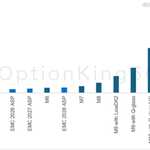
▶️ Chart 1: ABF CCL sheet prices almost 50% higher than M-10 with Q-glass/HC 👀 👀 👀
Underscores the HUGE mix shift revenue opportunity.
▶️ Chart 2: Both ABF & CCL suppliers OPM continue to expand into 2028- both major points of our investment focus.


ABF substrate CCL prices are reaching ~US$1,500 per full sheet compared to US$180 for M8 laminate as end customers secure dedicated multi-year capacity agreements through 2027–2030. Sell-side consensus across House A, House B, and House F confirms that structural AI packaging shortages are driving direct customer subsidies, prepayments, and capacity bookings. House A estimates ABF substrate CCL gross margins exceed 50% and could reach 70%+, driven by expanding package sizes where a quarter sheet yields only 2–3 units by 2028, down from 6–8 units today. In server networking, House A projects Nvidia ($NVDA) Rubin Ultra switch trays starting in 2H27 will likely adopt M9/M10 CCL with Q-glass instead of PTFE, as PTFE yield runs at 10–15% versus 80–90% for M9 Q-glass.
Different coverage metrics preclude a single comparable forecast range, revealing divergent focal points between pure capacity scarcity and macro headwinds. House B (dated 2026-10-21) anchors its multi-year AI substrate thesis on Unimicron securing customer capacity reservations for its Guangfu plant, where new supply releases in 2Q27 and reaches full capacity by mid-2028. Conversely, House F (dated 2026-10-22) projects that while strong FC-BGA and BGA pricing lifts Samsung Electro-Mechanics' operating margin by at least 1 percentage point to 18% (from 17%), currency headwinds trim its target price to W2.0mn from W2.4mn because a 1% won appreciation cuts operating profit by 1%+. Investors should watch the execution of 2Q27 customer-backed capacity ramps and formal Rubin Ultra tray laminate qualification.
#PCB #Electronics


ABF CCL- Further Information pricing per sheet
EMC, a major CCL supplier for NVIDIA AI servers, is expanding its ABF substrate CCL business, with ASP at ~US$1,500 per full sheet versus US$130/180 for M7/8.
The company said ABF substrate CCL capacity could reach 1.5mn sheets/month by end of 2027; analysts estimate that would represent 50% of global ABF substrate CCL capacity. Analysts estimate current ABF substrate CCL GM at 50%+, versus their EMC-wide GM forecasts of 35.2%/40.7%/43.4% for 2026/27/28.
→ The opportunity combines higher ASPs with higher product margins.
Analysts see the ABF substrate CCL TAM potentially rising from US$0.8bn-1.2bn in 2026 to US$2.0bn-2.5bn in 2027 and US$4.0bn-4.5bn in 2028; they estimate ABF substrate CCL at ~15%/19%/22% of EMC's 2026/27/28E revenue.
Growing substrate size, rising layer counts and lower production efficiency support the analysts' expectation of greater ABF CCL consumption. Analysts believe a quarter sheet currently produces
~6-8 high-end ABF substrates, but this could fall to 2-3 units per quarter sheet in 2028, depending on substrate design.
→ So TAM could double from 2026-2027 and double again from 2027-2028
M10 CCL is priced at ~US$800 per sheet versus EMC/TUC's approximately US$63/46 ASPs in 2026; analysts see M9/M10 Q-glass/HC as likely for NVIDIA Rubin Ultra switch trays. EMC and TUC are qualifying M10/M11 CCL with clients; analysts see substantial ASP upside from M10 adoption, all else equal. Analysts expect EMC's M10 shipments to ramp significantly in 2028 as more GPU and ASIC AI projects adopt the solution. For TUC, analysts expect M10 shipments to begin in 2028 for high-end 3.2T Ethernet switches and some ASIC projects.
The material choice is tied to yield: supply-chain checks put PTFE-based PCB production yield at 10-15%, versus an average 80-90% for PCB using M9 grade CCL with Q-glass. Analysts expect PTFE mass production only after 2H28 at the earliest.
For NVIDIA Rubin Ultra GPU-server switch trays starting from 2H27, analysts see a high likelihood of M9/M10 CCL with Q-glass/HC rather than PTFE, potentially lifting EMC/TUC's share above the analysts' current expectations over the next 2-3 years. Both companies also continue developing PTFE-based CCL alongside their M10/M11 work.
→ PTFE yields still low, need more development time past 2027.
Elite Material (EMC) 台光電 2383.TW
Taiwan Union (TUC) 台燿 6274.TW
Nvidia $NVDA
h/t @OptionKing666
CCL ABF & Elite Material 台光電 2383.TW
EMC is our primary pick for #CCL and we are already positioned in size. The opportunity for EMC continues to expand. They are the global and technological leader in CCL.
→ As chips become larger and more complex, the materials needed to make their substrates are increasing too. That means demand can grow faster than chip shipments alone suggest. This is another reason I have been telling you simply tracking ASPs is insufficient.
With Japanese suppliers expanding capacity slowly, customers are accelerating approval of alternative suppliers, which opens opportunities for companies such as EMC to enter a market that has historically been difficult to access. The CCL ecosystem is rapidly changing and evolving.
The report forecasts the ABF substrate CCL market growing from US$0.8–1.2bn in 2026 to US$4–4.5bn in 2028. These higher-value products could also lift EMC’s profitability as they become a larger share of sales.
For EMC, the opportunity is an earnings-mix transformation. The analyst forecasts ABF substrate CCL reaching approximately 15% / 19% / 22% of revenue in 2026–28. Its higher selling prices and margins could allow gross profit to grow faster than revenue, provided qualification converts into commercial shipments.
→ I'm going to write a follow-up post with more pricing information.
The key takeaway: shortages can benefit existing suppliers while also opening the door to new competitors. The opportunity extends beyond making more chips to supplying the increasingly valuable materials inside them.
I've been screaming at you guys- UPSTREAM MATERIALS- everything needs them, nothing functions without them and they are all interconnected.


Nittobo 日東紡 3110.JP
This is a long post but PACKED full of useful info. My comments are marked by ▶️
These are initial research tidbits and breadcrumbs for you guys.
- Read to the end, there's a mini article down there 🙂
I cover a lot in this piece from Nittobo and glass fiber to CCL, materials and numerous companies.
--------------------------------------------------------
"And the price hike rate for E-Glass, which isn't even top-grade, is insane."
▶️ Refer to the attached table from Citi. From Dec 2025 to Oct 2026
- 1080 cloth: Rmb 5.0 → Rmb 18.3/m ≈ +266%
- 2116: Rmb 4.9 → Rmb 17.7 ≈ +261%
- 7628: Rmb 4.6 → Rmb 13.1 ≈ +185%
▶️ This explains why Panasonic could issue a 200% price increase on selected conventional #ccl
The upstream input has effectively tripled or quadrupled in the thinnest fabric categories.
Thin glass fiber cloth and CCL are facing shortages again, with prices expected to rise by 15% next month. South Asia Securities bluntly states that the market has "no other options."
A shortage of upstream raw materials is triggering a new wave of price increases, and the impact is extending to copper-clad laminates (CCL). According to supply chain sources, price hikes for glass fiber cloth and CCL are imminent, with the increase estimated at around 10-15%, set to take effect from November, though the actual hike will vary by product specs and suppliers.
In particular, supply of thin glass fiber fabrics like 2116, 1080, and 1078 is especially tight. The expansion speed of looms is hitting limits, making it the biggest bottleneck in resolving the short-term supply shortage.
Supply chain analysis points to supply shortages as the main driver of price increases. As manufacturers shift existing production capacity toward high-end products, supply of standard glass fiber fabrics for general electronics is getting squeezed, even as demand persists, leaving shortages of certain thin glass fiber fabrics ongoing.
▶️ Premium AI demand is distorting the entire fiberglass allocation system, including ordinary E-glass.
This is the scarcity cascade bottleneck dynamics that I've been talking to you guys about since summer. Production capacity is re-routed to higher end products, so we get a decreased output of the lower grade commodity products which creates price inflation in those lower grade products as they become less available AKA supply down while demand up.
Nanya Plastics says the market is currently in short supply, with many competitors pivoting strategies toward high-end product lines. Yet demand for general-purpose products remains high, and supply and product lineups aren't keeping up. The shift to high-end is clear, but shortages of general-purpose items persist, and the supply-demand imbalance hasn't been resolved.
Nan Ya notes that the shortages have also shifted downstream customers' purchasing strategies. In the early stages of price hikes, customers tended to partner with suppliers offering full product lineups and diverse specs, but now with supply even tighter, it's a "no choice" situation, where securing raw materials and meeting delivery deadlines has become the focus of procurement.
▶️ I spoke about this in my note about Kinsus: "Material allocation itself has become strategic." This is an important industry read-through VERY important heading into 2027 that companies have upstream allocation so they can operate at full capacity. This is exactly why we have seen Jenson locking down upstream material supply with their announcement this week.
On whether capacity expansions by major mainland China glass fiber maker China Jushi can ease the shortages, industry insiders say Jushi's new capacity is mainly geared toward 7628 heavy-weight fabric, slated for mass production in 2027. This differs from the thin fabrics currently in shortest supply. So even as new capacity comes online, the relief for thin fabrics like 2116, 1080, and 1078 will remain relatively limited.
▶️ Without going too much into it, day 1 of research has materially increased confidence in Nittobo 👀 👀 👀
On pricing, supply chain surveys show that major mainland CCL maker Kingboard has raised prices 12 times this year alone, and the price of 1080-spec E-glass fiber cloth has surged about 300% from low to high, marking an astonishing increase.
▶️ Addressed this, see attached Citi table
Industry sources say abnormal shortages have hit certain glass fiber cloth specs, leading the market into irregular pricing via unusual distribution channels. The root bottleneck lies in the loom supply shortage.
Supply chain estimates put global annual production capacity for related looms at about 2,400 units, potentially rising to 3,600 by 2027. However, actual production volumes and delivery increases remain unclear. After equipment installation, shifting to effective supply requires setup and mass-production ramp-up.
Supply chain assessments suggest that depending on equipment deliveries, new capacity startups, and product conversion progress, the pressure from shortages could gradually ease from late 2027 into 2028. But with demand for high-end applications continuing to grow, even increased supply may leave the market tight, and rising material costs could keep getting passed on to downstream CCL and PCB makers.
▶️▶️▶️ This is IMPORTANT so i'll leave you with this- The margin outcome differs hugely on vertical position
If fabric cost rises 200%, a weak laminate supplier may simply pass it through and preserve margin. A strong vertically integrated supplier may additionally make money inside the upstream material itself.
This is why simply tracking the CCL ASP is insufficient, instead we must ask how much of the ASP increase becomes gross profit rather than simply compensating for raw material inflation.
Using Kingboard Laminates 建滔積層板 01888.HK as a case study- The company explicitly says electronic fiberglass fabric shortages forced some competitors to reduce production, while their vertically integrated supply chain allowed them to maintain near-full utilization, raise prices and win new customer qualifications.
Kingboard controls important parts of:
- glass yarn
-glass fabric
- resin/materials
- CCL
This gives them upstream margin + laminate pricing power + assured supply
This is why we see some analysts modelling much higher 2026 H2 margins for Kingboard.
Kingboard itself says the laminate industry remains tight and that prices of fabric, yarn, copper foil and laminates continued to surge after June.
I spoke about Nan Ya Plastics vertical integration in my Nan Ya business posts, but I still need to really dig into the financial structure. When including Nan Ya PCB the integrated chain is essentially:
Chemical feedstocks
↓
custom resin systems
↓
glass yarn/fabric
↓
copper foil
↓
CCL/prepreg
↓
PCB
↓
BT/PP/ABF substrate
This solves a remarkable amount of the supply chain under pressure
Nan Ya Plastics 南亞 1303.TW
Nan Ya PCB 南電 8046.TW
However, I have yet to research internal transfer economics:
- how much 8046 buys from 1303
- is pricing market based
- is scarce material preferentially allocated internally
- do upstream margins remain primarily at 1303
- does 8046 gain through lower costs or simply through supply assurance
- how much consolidated AI economics ultimately pass through to 1303 shareholders
Day 1 & 2 of research did not allow me to get into these details but I will do in the coming days.
Meanwhile if you are interested in this, check out the 2 pieces on "Nan Ya Business"
Part 1:
xitter.cf/outerninth/status/2109…
Part 2:
xitter.cf/outerninth/status/2110…
#ccl #PCB #日東紡 #建滔集团 #Tglass #Qglass

そりゃそうでしょうね
特に薄いもの
そして、最上級でもないE-Glassの値上がり率がやばい
薄型グラスファイバークロスとCCLが再び品切れとなり、来月には価格が15%上昇すると予想されている。サウスアジア証券は、市場には「他に選択肢がない」と率直に述べている。
上流原料の不足が新たな価格上昇の波を引き起こし、その影響は銅箔基板(CCL)にも及んでいる。サプライチェーン関係者によると、グラスファイバークロスとCCLの価格上昇は間近に迫っており、今回の値上げ幅は10~15%程度と予想され、11月から実施される見込みだが、実際の値上げ幅は製品仕様や供給業者によって異なる。
中でも、2116、1080、1078といった薄型ガラス繊維布の供給は特に逼迫している。織機の拡張速度に限界があるため、短期的には供給不足を解消する上で最大のボトルネックとなっている。
サプライチェーンの分析によると、価格上昇の主な要因は供給不足による圧力である。メーカーが既存の生産能力をハイエンド製品にシフトするにつれ、一般的な電子機器用ガラス繊維布の供給が圧迫されているが、需要は依然として存在しており、一部の薄型ガラス繊維布の供給不足が続いている。
ナンヤ社は、現在市場は供給不足に陥っており、多くの競合他社がハイエンド製品ラインへと戦略を転換していると述べた。しかし、汎用製品の需要は依然として高く、供給と製品ラインナップが追いついていない。ハイエンド製品への流れは明らかだが、汎用製品の不足は依然として続いており、需給の不均衡は未だ解消されていない。
南亜氏は、供給不足によって下流顧客の購買方針も変化したと指摘した。価格上昇の初期段階では、顧客は製品ラインナップが充実し、多様な仕様を提供できるサプライヤーと協力する傾向があったが、供給がさらに逼迫した現在では、「選択の余地がない」状況となり、原材料の確保と納期厳守が調達の焦点となっている。
中国本土の大手グラスファイバーメーカーである中国巨石(Jushi)の生産能力拡大が供給不足を緩和できるかどうかについて、業界関係者は、巨石の新たな生産能力は主に7628厚手生地向けであり、2027年に量産開始予定であると述べている。これは現在最も供給不足となっている薄手生地の仕様とは異なる。そのため、新たな生産能力が次々と稼働したとしても、2116、1080、1078といった薄手生地の供給緩和効果は依然として比較的限定的である。
価格に関して言えば、サプライチェーン調査によると、中国本土の大手CCLメーカーであるキングボードは今年12回も価格を引き上げており、さらに1080仕様のEガラス繊維布の価格は最安値から最高値まで約300%も上昇しており、驚異的な値上がりとなっている。
業界関係者によると、一部のグラスファイバークロスの規格で異常な供給不足が発生しており、市場は異常な流通経路を通じて不規則な価格設定に陥っているという。根本的なボトルネックは、織機の供給不足にある。
サプライチェーンの推計によると、関連する織機の世界年間生産能力は約2,400台で、2027年には3,600台に増加する可能性がある。しかし、実際の生産量と納入状況の増加はまだ不透明だ。設備が設置された後、効果的な供給体制に移行するには、設置と量産体制の立ち上げが必要となる。
サプライチェーンの評価によると、設備納入、新規生産能力の稼働開始、製品転換の進捗状況によっては、2027年後半から2028年にかけて供給不足の圧力は徐々に緩和される可能性がある。しかし、ハイエンド用途の需要が継続的に増加しているため、供給が増加しても市場は逼迫した状態が続き、材料費の上昇圧力は下流のCCLおよびPCBメーカーに引き続き転嫁される可能性がある。
GM everyone.
Busy week this week, we've got FOMC on Weds. and a lot of important earnings releases for our holdings and/or relevant companies that we are monitoring.
I will do my best to get to them all with some ER & Market Intelligence Reports (on a priority basis).
I need to spend a substantial time today on research so going to send out a few posts and then get to it 🫡
Outer Ninth Earnings Calendar this week 📅:
Tuesday Oct. 27th
- Unimicron
- Corning
Weds Oct 28th
- SK Hynix
- Samsung Electro-Mechanics
- Elite material
- Advantest
- FormFactor
Thursday Oct 29th
- Samsung electronics
- Sandisk
- Ibiden
- ASE Technology
- Chroma ATE
- Hammond Power Solutions
Friday Oct. 30th
- Kioxia
- Murata Manufacturing
- Shengyi tech
- KYEC
Nomura Report on Global Memory- 10.19.2026
Nomura's central thesis: The market is overestimating risks surrounding AI financing, slowing AI revenue growth and Chinese memory competition, while underestimating the earnings and cash-generation opportunity of memory manufacturers.
They expect memory supply constraints to persist through at least 2028, supporting an extended period of favorable pricing and profitability.
→ AI infrastructure demand is accelerating.
Nomura forecasts:
- AI data center capacity grows from 34 GW in 2026 to 74 GW in 2028 — approximately 118% expansion in two years.
- AI's share of facility capacity increases from 54% to 76%.
- Total global data center power usage rises from 60 GW in 2025 to 115 GW in 2028.
- Heavy-agent workloads become an increasingly important source of AI power demand.
Nomura considers market concerns surrounding CXMT's progress in 4F² DRAM technology excessive.
Its position:
- CXMT's technological progress does not invalidate the broader supply-constrained memory thesis.
- The breadth of AI demand is being underestimated.
- Global memory supply constraints should persist through at least 2028.
This is particularly relevant to the scarcity thesis for Micron and SK hynix.
They make stock recommendations for Samsung and SK Hynix
🔽 🔽 🔽
Outer Ninth's 3 most important takeaways:
1. The memory scarcity thesis remains intact.
Nomura's expectation of tightness through at least 2028 supports the possibility of an extended earnings cycle, rather than a short-lived pricing spike. This is constructive for Micron, SK hynix and broader memory exposure and inline with our views.
2. The separation between infrastructure spending and economic capture is becoming increasingly important.
The difference between semiconductor suppliers' cash accumulation and data center operators' indebtedness reinforces one of our core research principles: Participation in AI growth does not necessarily translate into equal financial returns.
I've been speaking to you guys more about this recently and I research it thoroughly- debt structure and capital return to shareholders will matter more heading into 2027.
Companies that control scarce, essential components may capture a disproportionate share of the economics.
3. For our memory ecosystem, the most important insight is the potential for an extended period of scarcity-driven earnings growth and economic capture by upstream semiconductor suppliers.
Companies highlighted on our latest memory ecosystem research w/c I reposted this evening:
SK Hynix 하이닉스 000660.KW | $SKHY
Samsung 삼성 005930.KW
Micron $MU
Sandisk $SNDK
ESMT 晶豪科 3006.TW
Nanya 南亞科 2408.TW
Kioxia キオクシア 285A.JP | $KXIAY
Winbond 華邦電 2344.TW
Phison 群聯 8299.TW
AP Memory 愛普 6531.TW
Etron 鈺創 5351.TW
Seagate $STX
Penguin Solutions $PENG
Western Digital $WDC
Transcend 創見 2451.TW
PSMC 力積電 (6770)
ETFs- $DRAM & $DISK


Outer Ninth retweeted
Memory Ecosystem Update and thematic investment band introduction.
The memory opportunity has expanded beyond HBM into scarcity cascades, abandonment scarcity, customized memory solutions, composability and system level efficiency.
Attached is an updated static FA snapshot of the memory companies being tracked within our memory ecosystem- (as of 8.31.26).
There are 3 emerging themes inside memory that can all produce upside in varying degrees based on different causal factors.
1) Frontier & AI-storage scarcity (the OG)
Frontier scarcity- Sk Hynix, Micron, Samsung
AI-storage scarcity- Sandisk & Kioxia
2) Abandonment scarcity & earnings discovery
ESMT, Nanya, Winbond
3) Scarcity solving architectural/redesign
Phison, AP Memory, Etron
To put it simply:
1) Frontier & AI storage scarcity.
AI needs enormous amounts of advanced memory and data storage. When supply struggles to keep up with demand, the companies controlling production and wafer allocation can charge more and earn more.
2) Abandonment scarcity and earnings discovery.
Big manufacturers (the ones in band #1) shift production capacity towards advanced AI memory, leaving less supply of older enterprise memory that everyday products still need. The remaining suppliers can become more profitable as their produced supply becomes more in demand. Investors will react as the profits show up in earnings.
3) Scarcity-solving architectural redesign.
As the cost of memory rises and supply falls, companies redesign computers and systems to use less memory more efficiently. These companies increase profits by helping customers solve these constraints with custom solutions and controllers.
We can think about our memory ecosystem in investible robustness bands.
1. High confidence architecture & earnings band:
SK Hynix, Samsung, Micron & Sandisk - multiple paths to upside and the strongest combination of present economics & structural significance.
2. High convexity discovery band:
ESMT, Nanya, Kioxia & Winbond - larger potential upside, but with greater ecosystem sensitivity and higher risk of failure.
3. Scarcity solving & custom architecture band:
Phison, AP Memory & Etron - more dependant on product & control point adoption vs raw memory ASPs
4. Bonus secondary beneficiary band:
Seagate, Penguin solutions, Western Digital, Transcend, PSMC
My suggested band concentration would be:
Band 1 > band 2 > band 3
Company names and symbols:
SK Hynix 하이닉스 (000660) | $SKHY
Samsung 삼성 (005930)
Micron $MU
Sandisk $SNDK
ESMT 晶豪科 (3006)
Nanya 南亞科 (2408)
Kioxia キオクシア (285A) | $KXIAY
Winbond 華邦電 (2344)
Phison 群聯 (8299)
AP Memory 愛普 (6531)
Etron 鈺創 (5351)
Seagate blockstack:native
Penguin Solutions $PENG
Western Digital $WDC
Transcend 創見 (2451)
PSMC 力積電 (6770)
ETFs- $DRAM & $DISK
I'll follow up with the charts soon.
#Memory #DRAM #NAND #NOR #Flash #HBF #SSD

Memory ecosystem research & rankings update;
o9 Research update summary:
The industry thesis has become stronger, but the investment opportunity has become more concentrated.
The financial data reinforces that the largest memory manufacturers- particularly Micron, SK Hynix, Sandisk, Kioxia & Samsung are converting AI-driven demand into exceptional earnings, returns on capital, and cash generation while trading at valuation multiples that are unusually low for businesses with this combination of growth and profitability. In contrast, many semiconductor equipment companies remain exceptional businesses, but their higher valuation mean a larger portion of their expected long term success is already reflected in their current prices.
Keep it simple- The memory manufacturers are increasingly likely to capture a disproportionate share of economic value created by the AI buildout.
Financial standouts: The big 3, Micron, Hynix & Samsung.
Biggest surprises & upwards revisions: Sandisk & Nanya
Honourable mentions: Kioxia & Winbond
All of these companies in varying degrees are combining very low valuations with extremely high EPS growth, high ROIC, high margins & minimal leverage.
Ecosystem logic;
HBM/DRAM → AI NAND → Equipment → Controllers
Updated rankings based on broad ecosystem research & financial quality;
1) Micron- $MU
2) SK Hynix- $SKHY | $000660.KW
3) Sandisk- $SNDK
4) Kioxia- $285A.JP | $KXIAY
5) Samsung- $005930.KW
6) Lam research- $LRCX
7) Applied Materials- $AMAT
8) ASML- $ASML.NV
9) Tokyo Electron- $8035.JP
10) Screen Holdings- $7735.JP
11) Phison Electronics- $8299.TW
12) Silicon Motion- $SIMO
13) Western Digital- $WDC
14) Winbond Electronics- $2344.TW
15) Nanya Technology- $2408.TW
If we review our sector timeline tracker (pinned to profile) we are expecting normalization or slowdown in 2028-2029. So, we are still in a window of opportunity in the memory ecosystem. We have been buying memory from January onwards, added in April, and now added more on this present dip.
We remain bullish on memory and will follow up with 8 charts including levels and discuss existing memory holdings from earlier in the year.

How can you be bearish memory looking at this Vera CPU compute tray. We have shortages, AI agent proliferation, smart cars (need memory) and eventually humanoid robots.
The market is very disconnected to fundamentals RN across our investment concentration. This changes soon IMO.
"Every time I see this Vera CPU tray, reconfirms the DRAM demand is here to stay as the role of CPU in the Agentic AI era grows day by day."

🍽️ DRAM devouring Vera.
▪️1.5 TB LPDDR5X memory (1 Vera CPU)
▪️12 TB SOCAMM LPDDR5X memory (x8 Vera CPUS)
Every time I see this Vera CPU tray, reconfirms the DRAM demand is here to stay as the role of CPU in the Agentic AI era grows day by day.
1️⃣ Rising Number of Agents, multiple Autonomous Loops Per Core: Demanding Orchestration and Concurrency
2️⃣ Thousands of Agents API Calls & Execution, State Management
3️⃣ Decision Making Graph Logic and Flow Control
4️⃣ Semantic Search (RAG) and Vector Processing
$NVDA $ARM $INTC
