

Launch a coin on @RobinhoodCrypto and pair it with a coin from any chain. 0x3024d06034a3fc1faf85f11fabb491c25ff7e5fd
Joined October 2026
- Tweets27
- Following3
- Followers151
- Likes28









Pinned Tweet
A coin's price in ETH is two prices multiplied: the coin against its pair, and the pair against ETH. Until now the chain picked that second half for every coin on it (SOL on Solana, BNB on BNB Chain, ETH on Robinhood).
Pair is live on Robinhood Chain, and the creator picks it. Pair your coin with ETH, any Robinhood token with liquidity (USDG, stock tokens, PONS), or one of 344 Pair tokens that follow SOL, BNB, PEPE, BONK and the top coins of Solana, Ethereum, Base and BNB Chain. When SOL runs, every coin paired with pSOL runs with it in ETH; buyers still pay with ETH, in one transaction, on one chain.
CA: 0x3024d06034a3fc1faf85f11fabb491c25ff7e5fd
pair.cx
If you're new here, this is the one to read.
Our thesis: traders care about specific chains, and their volume stays there until something gives it a reason to move. Launch on Robinhood Chain, pair across chains, and a coin here moves with what those traders already follow on Solana, Ethereum, Base and BNB Chain. As Robinhood Chain grows, we expect those pairs to pull that attention and volume over, and every wave of it makes Pair a better place to launch the next coin.
The article also goes under the hood: one buy followed through the contracts, where every price comes from, and each attack we ran against the pools.


Traders pick the chains and coins they care about, and that attention rarely moves on its own.
So we built them a way in. A trader who follows a coin on another chain can now paste the address they already have and land on Robinhood Chain, with cross-chain pairs moving alongside that coin. Launch here, pair across chains: that's how other chains' volume finds its way to Robinhood Chain.
Find your coin is live on Pair.
Search any of 344 coins from Solana, Ethereum, Base and BNB Chain by name, ticker or the contract address you already know from its home chain, and you land on its own page on Robinhood Chain: how it's moving against ETH, every coin launched against it, and one click to launch the next.
pair.cx/find
344 coins from Solana, Ethereum, Base and BNB Chain are about to get their own page on Robinhood Chain.
Update soon.
In cross-chain pairing the price is the one thing that crosses chains, so it gets checked at every step.
Before a coin gets a pair, the exchanges' median price has to match its own DEX pools on its home chain within 3%, which keeps a different token with the same ticker from standing in for it.
From there, 341 of the 344 pairs run on the median of 9 exchanges, read every 5 seconds: a quote more than 2% from the others is dropped, at least 3 exchanges must agree, and disagreement widens the pool's spread (the other 3 use Chainlink). If our price service stops, every pool reading it stops trading within 10 minutes.
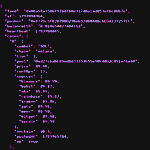
Every price and the quotes behind it are public and here is a small preview of the api response on pair.cx/api/rh/feed

Seven hours of launches on Pair: 31 coins from 16 wallets and $426k of volume, across 12 different pairs.
7 of those coins already use cross-chain pairing, against coins from Solana, Ethereum and BNB Chain, with the rest on ETH, USDG, PAIR and other Robinhood tokens. Each chart moves with the pair its creator picked.
pair.cx/explore

You can follow a rotation on Solana, Ethereum, Base or BNB Chain with one wallet on Robinhood Chain, with no bridge and no second chain's gas token. That's what cross-chain pairing does for a trader.
A coin launched against a cross-chain pair moves with the coin behind that pair as well as its own buyers, up and down. You buy it with ETH in one transaction, and it trades in a standard Uniswap v4 pool, so its chart opens on GMGN and DexScreener like any other coin.

Pair now has a live view of cross-chain rotations.
It ranks every cross-chain pair by how its coin is moving against ETH, with the Pair coins launched against it right beside each one, so when attention shifts between Solana, Ethereum, Base and BNB Chain, you can follow it from Robinhood Chain and see which launches sit inside it.
pair.cx/rotations

Five hours into launches on Pair: 31 coins from 16 wallets, 4,292 trades and $420k of volume across 12 different pairs.
Creators are already using cross-chain pairing against coins from Solana, Ethereum and BNB Chain, next to ETH, USDG and other Robinhood tokens, and each of those charts moves with the pair its creator picked.
pair.cx/explore

Pair is getting a live view of cross-chain rotations.
It will rank every cross-chain pair by how its coin is moving against ETH, with the Pair coins launched against it right beside each one, so when attention shifts between Solana, Ethereum, Base and BNB Chain, you can follow it from Robinhood Chain and see which launches sit inside it.

Cross-chain pairing runs on one of the strongest designs in DeFi: settling trades at an oracle price against a funded pool. GMX v2 and Jupiter's JLP are built on the same idea, and Pair brings it to coin launches inside standard Uniswap v4 pools.
The coin on the other chain never moves; its price is the part that travels. Each cross-chain pair has its own ETH reserve, every swap checks the price (Chainlink, or the median of 9 exchanges), and both sides get the worse of the live price and its 30-minute average, which leaves a short spike worth nothing to whoever tries to farm it.
Trading also funds Pair over time: 1.5% of every hop stays in the pair's reserve. The GMX and Jupiter comparison comes from our first article.

Cross-chain pairing gives a community on another chain a way to launch on Robinhood Chain.
Its coin stays where it is, with its own market untouched. The community launches here against a pair that follows that coin, so the new launch moves with what they already back, and everyone trades it with ETH on one chain.
For Robinhood Chain traders, the same pairing puts rotations from Solana, Ethereum, Base and BNB Chain in one place.

A creator's cross-chain pair sets a lot about their coin in one choice at launch.
The coin moves with the ecosystem its pair follows, in both directions and before anyone has bought; its floor is counted in that pair, its creator is paid in it, and holders of the coin behind the pair have a reason to look at the launch. Cross-chain pairing on Pair offers 344 of these across Solana, Ethereum, Base and BNB Chain.
Every cross-chain pair trades in a standard Uniswap v4 pool, so GMGN and DexScreener show it like any other coin.

Cross-chain pairing lets a coin on Robinhood Chain trade against a coin from another chain.
A launch has always carried the market of the chain it launched on. On Pair the creator picks it: pair your coin with a token that follows a coin from Solana, Ethereum, Base or BNB Chain, and its price moves with that ecosystem as well as its own buyers, so a launch can sit inside another chain's story and its rotations without anyone leaving Robinhood Chain.
Buyers pay ETH in one transaction, with nothing bridged; the price is what crosses chains.


Any Robinhood token with $1k+ of DEX liquidity can be a coin's pair on Pair, and new pools are picked up every 10 minutes.
That covers the stock tokens (NVDA, TSLA, SPY, QQQ, COIN, MSTR and the rest), USDG, and the community coins that migrated off their launchpads.
A coin paired with NVDA is priced in NVDA and bought with it, at the same 1% fee as an ETH pair, and its creator is paid in NVDA. Paste any token address into the pair search on the launch page to check it.

Coin pages on Pair now show both halves of a move: the coin against its pair and the pair against ETH, with the chart switching between USD, ETH and the pair.
Explore now groups coins by pair, ranked by 24h volume, with tabs for Robinhood, Solana, Ethereum, Base and BNB Chain; coin links also preview on X and Telegram with the coin's image, pair, market cap and chart.
pair.cx/explore

A Pair coin can never trade below its launch price in its pair.
The whole supply starts in one Uniswap v4 position from the starting price upward, minted as a position NFT to 0x...dEaD in the launch transaction (100% of the launch liquidity burnt). Sellers can only sell back what was bought, so if every holder sells, the pool lands back on its starting price. Graduation at 4.15 ETH worth bought leaves the pool, the position and the floor exactly where they are, and trading never pauses for a migration.
The floor is counted in the pair: a coin paired with USDG has a floor in dollars, a coin paired with pBTC a floor in BTC.

A coin's price in ETH is its price in its pair times the pair's price in ETH, and that second number has always come with the chain.
The article goes through how Pair lets a creator pick it from five chains: one buy followed through the contracts, where every price comes from, and each attack we ran against the pools on a fork of Robinhood mainnet (pump the asset 5% and sell: 0.969 ETH back on 1 ETH, the same as a calm round trip).