Paper Connections (@paperXconnect) header
Paper Connections (@paperXconnect) profile picture

History leaves traces everywhere. Join our investigation, connect the dots, and follow us down the rabbit hole. 🔗https://teapawt.net/t.co/v44dHucaOc

Joined February 2026
Photo by Paper Connections (@paperXconnect)Photo by Paper Connections (@paperXconnect)Photo by Paper Connections (@paperXconnect)Photo by Paper Connections (@paperXconnect)Photo by Paper Connections (@paperXconnect)Photo by Paper Connections (@paperXconnect)Photo by Paper Connections (@paperXconnect)Photo by Paper Connections (@paperXconnect)Photo by Paper Connections (@paperXconnect)Photo by Paper Connections (@paperXconnect)
Paper Connections retweeted
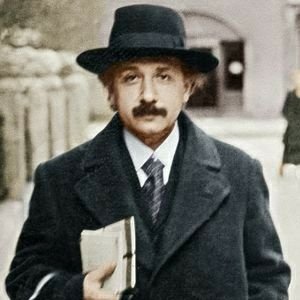
In May 1935 Einstein, Podolsky and Rosen published their paper arguing that quantum mechanics was incomplete. Over the following months Einstein and Schrödinger exchanged letters about it. Einstein first proposed a ball in one of two closed boxes, then in early August suggested an unstable charge of gunpowder that was as likely as not to explode within a year, which quantum mechanics would describe as both exploded and unexploded at once. The historian David Kaiser has argued the image reflected the rearmament of Europe that year. About a week and a half after receiving that letter, Schrödinger replied with his own version, swapping the gunpowder for a cat. It appeared later that year in his three-part essay “The Present Situation in Quantum Mechanics” in Die Naturwissenschaften, as a critique of the Copenhagen interpretation, not as an endorsement of a half-dead cat. 📷 Image edited for satirical purposes.
55
173
10
1,182
88,435
Paper Connections retweeted
Maria Skłodowska-Curie’s experimental notebooks from the late 19th century are still too radioactive to be handled without protection. They will continue to be until at least 3511.
12
115
14
745
30,742
Paper Connections retweeted
Proof that the flags on Spanish warships were massive.
55
1,447
43
36,811
1,290,606
Paper Connections retweeted
On December 30, 1952, London bus driver Albert Gunter dramatically jumped his Route 78 double-decker bus across a rising gap on Tower Bridge. Realizing the bridge was lifting unexpectedly on a green light, the former WWII tank driver accelerated, clearing the opening with 20 passengers on board.... With 20 terrified passengers on board, the red Routemaster leaped across a three-foot gap as the bridge continued to lift. The front wheels landed safely on the opposite side, though the impact broke the suspension and injured Gunter’s leg. Miraculously, everyone survived with only minor injuries. Albert was later rewarded with a £10 bonus for his bravery — roughly £400 today — and became a London legend. His daring leap remains one of the most extraordinary moments in public transport history. #drthehistories
Readers added context they thought people might want to know
The image attached here is a fabricated/AI-generated depiction that greatly exaggerates the 1952 event; no real photo of the bus jump exists and the actual gap was only about 3 feet. leadstories.com/hoax-alert/202… en.wikipedia.org/wiki/1952_Towe… bbc.co.uk/news/articles/…
123
1,350
168
8,259
531,183
Paper Connections retweeted
Edwin Hubble was an American astronomer who discovered that galaxies exist beyond the Milky Way and that the universe is expanding, leading to the formulation of Hubble's Law. His work laid the foundation for the Big Bang theory and revolutionized our understanding of the cosmos. Also The Hubble Space Telescope is named in his honor.
34
149
3
864
35,684
Paper Connections retweeted
You know the Marlboro Man. The hat, the horse, the match cupped against the wind, the open country at his back. But what became of the men behind him? In the summer of 1976 a British TV crew went looking for them. They found six, in Wyoming, New Mexico, Arizona, Montana and Oklahoma. Not one of them was old. All of them were dying. Bob Julian, fifty-one, had lung cancer. He’d started as a boy, because “to be a man you had to have a cigarette in your mouth.” John Holmes, sixty-four, rode through the film with an oxygen tank strapped to his saddle. The crew flew to New York to hear Philip Morris. Its head of research, who had listed the carcinogens in cigarette smoke for his colleagues fifteen years earlier, looked into the camera and said: “Apple sauce is harmful if you get too much of it.” The film went out once. Philip Morris sued, won, and settled on one condition: it got the footage. Three years later a note in the company’s legal files marked nine canisters “To be destroyed.” Four of the six men were dead by then. Fresh off the press, our essay Torches of Doubt: Tobacco and the Faustian Bargain in the Twentieth Century. paperconnections.substack.co…
2
3
47
Paper Connections retweeted
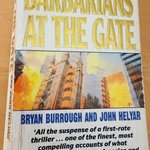
In October 1988 F. Ross Johnson, CEO of RJR Nabisco, a company that sold biscuits across one counter and cigarettes across the other, tried to buy the whole conglomerate from its shareholders with borrowed money. The auction he set off ended six weeks later when the board sold the company to Kohlberg Kravis Roberts (KKR) for $25 billion, the largest buyout in history and a record that stood for 17 years. What persuaded the banks to lend the price of a small country against a maker of crackers was the one certainty in the prospectus: that the smokers would be back tomorrow. In the middle of that auction John Gutfreund of Salomon Brothers put Warren Buffett on a speaker phone and laid out the situation. Go for it, Buffett told him, and explained why in four sentences: “I’ll tell you why I like the cigarette business. It costs a penny to make. Sell it for a dollar. It’s addictive. And there’s fantastic brand loyalty.” Then he declined to come in himself. “I’m wealthy enough where I don’t need to own a tobacco company and deal with the consequences of public ownership.” Based on the book Barbarians at the Gate, one of the best business books of all time. Hot off the printing press, our essay Torches of Doubt: Tobacco and the Faustian Bargain in the Twentieth Century. paperconnections.substack.co…
2
2
23
Paper Connections retweeted
An international research team led by Garrick Allen of the University of Glasgow has recovered the text of 42 lost pages from a sixth-century Greek manuscript. Known as Codex H, the manuscript contains the letters of the Apostle Paul. It was dismantled in the thirteenth century at the Great Lavra Monastery on Mount Athos, and its leaves were reused to bind other books. Using multispectral imaging, the researchers deciphered faint, mirror-image ink impressions left by the missing pages on surviving leaves, making text long thought lost readable once again. The discovery makes a substantial contribution to the study of the New Testament’s manuscript tradition, revealing how Paul’s letters were organised, copied and studied some fifteen centuries ago. The recovered material includes early chapter lists, with divisions different from those used today, as well as corrections and annotations that preserve traces of the scribes’ work. Multispectral imaging has thus allowed scholars to reconstruct another part of the codex, shedding light on both its original form and the changes it underwent as it was used and reused over the centuries. 📸 First lines of H54 from Codex H, showing the start of the Didache with Greek text and transcription |Schaff / Wikimedia Commons
2
2
7
675
Paper Connections retweeted
Since childhood, I've seen the world as wholes. Systems rather than products. Constellations rather than planets. Soil rather than single trees. My education followed that instinct across a divide, moving from the medical sciences to architecture, between growing and making. Somewhere in between, I came to believe that when everything we make can be grown, design becomes ecology. I named that belief Material Ecology, and for a decade at the MIT Media Lab, my team, the Mediated Matter Group, set out to build it. We almost never designed something without first inventing the technology to make it. We spun pavilions with silkworms, printed glass at furnace heat, and made architectural skins from shells and apple peels, designed to return to the soil at the end of their use. Then, around 2020, the things humans make began to outweigh all living matter. Design was no longer a matter of style, but of consequence. "Mediated Matter: Design and Invention in the New Biological Age" gathers that work, and the conviction behind it: that we don't have to choose between nature and human endeavor. That we can design to add to life. Two decades after coining the term, we're finally building what it described: shoes grown as plants, masterplans grown as ecosystems, and more. The book is out now. With deep gratitude to MIT Press and Thames & Hudson for bringing it into the world with such care. MIT Press: mitpress.mit.edu/97802620491… Thames & Hudson: thamesandhudson.com/products… Amazon: amazon.com/dp/0262049171
25
50
1
285
17,893
Paper Connections retweeted
📸 Orson Welles in action during his broadcast. It was October 30, 1938, when the young, aspiring actor—and later the director of “Citizen Kane,” widely considered the greatest film of all time—launched his show, “The Mercury Theatre on the Air,” on CBS radio. The scandal that unfolded over the following days had a profound impact on public discourse. The event marked the first time Americans realized how easily they could be manipulated by fear and the unknown. The incident remains a case study in media and communications to this day, as it highlighted the immense power of information. Read more in "When Americans Were Convinced Aliens Were Actually Invading Earth" on Studying History.
2
2
31
Paper Connections retweeted
An interesting discussion was sparked by the decision of the Kelvingrove Art Gallery and Museum in Glasgow to remove ancient Egyptian human remains from its exhibition, on the grounds that the deceased had not given their consent for their public display. My opinion is that we don't need to reinvent the wheel by inventing unworkable legalistic standards to practice ethical archaeology. Existing protocols already balance scientific study, descendant rights, and public education with dignity. Standard bioarchaeological & museological ethics (e.g., ICOM Code of Ethics) already operate under strict, respectful protocols. Stewardship over Ownership: Remains are treated as former living individuals, not mere artifacts or curiosities. Respect & Minimum Harm: Prioritizing non-destructive analysis and respectful storage/display without sensationalism. Origin & Repatriation (e.g., NAGPRA): Returning remains or collaborating closely when direct biological/cultural descendants exist. ​1. Display with Context & Dignity No Sensationalism: Mummies and human remains are not exhibited as spectacles, "curiosities," or pop-culture tropes. Educational & Interpretive Purpose: They are presented as former living human beings, integrated within their historical, social, and funerary context (e.g., how they lived, their beliefs regarding the afterlife, their health and pathologies). Sensitivity & Discretion: Displayed in climate-controlled cases for preservation, often accompanied by advisory warning signage at exhibition entrances so visitors can choose whether to view them. ​2. Respecting Historical Agency ​Rather than imposing modern legalistic concepts retroactively, ethical archaeology respects the worldview of the ancient culture itself: ​For Ancient Egyptians, mummification, the inscription of one's name on sarcophagi, and the preservation of identity were explicitly intended to ensure their names were remembered for eternity. ​The dignified, contextualized presentation of remains in a museum—clearly displaying their names (such as the priest Nekht)—actually fulfills their own religious and funerary desires, rather than consigning them to oblivion in dark storage rooms or reburial without identity. ​3. Non-Destructive Study ​Modern bioarchaeology avoids invasive procedures whenever possible, relying on non-destructive methods like CT scans, digital imaging, and X-rays to analyze age, diet, and health. ​Destructive sampling (e.g., for ancient DNA or isotopic analysis) is conducted strictly when guided by specific research questions and with minimal damage. ​The ethical treatment of ancient remains lies not in their removal or hiding, but in their dignified, scientifically sound, and protected display—honoring the memory of the individual while educating the public. 📸 Photo from the National Archaeological Museum of Athens, which houses one of the most important and remarkable Egyptian collections in the world, featuring 7,000 to 8,000 artifacts in total (in its storerooms and galleries), over 1,100–1,200 of which are regularly on display as representative exhibits.
The Kelvingrove Art Gallery and Museum in Glasgow has decided to remove ancient Egyptian human remains from its exhibition, on the grounds that the deceased had not given their consent for their public display, as part of a review of its policy on the management of human remains. The Glasgow museum's decision sparked backlash, with critics calling it excessive political correctness. What do you guys think? Was the decision correct? 📸 The ancient Egypt exhibition at Kelvingrove Art Gallery and Museum.
2
1
3
191
In the spring of 1943, in the middle of the Second World War, the Allies were about to drive the Germans and Italians out of North Africa. Everyone knew where they would go next. Sicily was the obvious stepping stone into Italy, so obvious that British intelligence set out to make Hitler look somewhere else. On the last morning of April a fisherman off the Spanish coast saw the life jacket before he saw the man. The drowned British officer had a briefcase chained to his belt, a girl’s photograph in his pocket and an overdraft at his bank, and he had never drawn breath. The girl was a clerk at MI5. The letters in the briefcase, which neutral Spain let the Germans copy, pointed to Greece. Hitler believed them and sent his troops the wrong way. “Mincemeat swallowed rod, line and sinker,” Churchill was told, and it became one of the most successful deceptions of the war. In July the Allies landed in Sicily. By September Italy had surrendered, and the German army, which had come south to help its ally, stayed on as an occupier, with the art of half a peninsula within reach. Our new essay begins with him, the officer who never existed. paperconnections.substack.co…
1
2
37
Paper Connections retweeted
The Greek messenger god Hermes (or his Roman equivalent, Mercury) fastening his winged sandals (talaria), as depicted in this wood engraving by Jonnard after a work by Victorian artist William Blake Richmond.
1
3
12
191
In October 1988 F. Ross Johnson, CEO of RJR Nabisco, a company that sold biscuits across one counter and cigarettes across the other, tried to buy the whole conglomerate from its shareholders with borrowed money. The auction he set off ended six weeks later when the board sold the company to Kohlberg Kravis Roberts (KKR) for $25 billion, the largest buyout in history and a record that stood for 17 years. What persuaded the banks to lend the price of a small country against a maker of crackers was the one certainty in the prospectus: that the smokers would be back tomorrow. In the middle of that auction John Gutfreund of Salomon Brothers put Warren Buffett on a speaker phone and laid out the situation. Go for it, Buffett told him, and explained why in four sentences: “I’ll tell you why I like the cigarette business. It costs a penny to make. Sell it for a dollar. It’s addictive. And there’s fantastic brand loyalty.” Then he declined to come in himself. “I’m wealthy enough where I don’t need to own a tobacco company and deal with the consequences of public ownership.” Based on the book Barbarians at the Gate, one of the best business books of all time. Hot off the printing press, our essay Torches of Doubt: Tobacco and the Faustian Bargain in the Twentieth Century. paperconnections.substack.co…
2
2
23
You know the Marlboro Man. The hat, the horse, the match cupped against the wind, the open country at his back. But what became of the men behind him? In the summer of 1976 a British TV crew went looking for them. They found six, in Wyoming, New Mexico, Arizona, Montana and Oklahoma. Not one of them was old. All of them were dying. Bob Julian, fifty-one, had lung cancer. He’d started as a boy, because “to be a man you had to have a cigarette in your mouth.” John Holmes, sixty-four, rode through the film with an oxygen tank strapped to his saddle. The crew flew to New York to hear Philip Morris. Its head of research, who had listed the carcinogens in cigarette smoke for his colleagues fifteen years earlier, looked into the camera and said: “Apple sauce is harmful if you get too much of it.” The film went out once. Philip Morris sued, won, and settled on one condition: it got the footage. Three years later a note in the company’s legal files marked nine canisters “To be destroyed.” Four of the six men were dead by then. Fresh off the press, our essay Torches of Doubt: Tobacco and the Faustian Bargain in the Twentieth Century. paperconnections.substack.co…
2
3
47
Paper Connections retweeted
And why should this painting — despite the black clouds, the enormous waves, and the boat struggling against them — make us feel optimistic about the future, you ask? Because it doesn't show the moment the storm is stilled, but the moment just before, with the light in the distance promising deliverance. The work is based on the Gospels (Mark 4:35–41, Matthew 8:23–27, Luke 8:22–25), where the ending is already known: the wind ceases. Rembrandt taps into this "audience knowledge." The light at the top left and the calm of Christ at the bottom right act as a hint that everything will be alright — even as the disciples cry out: "Teacher, don't you care that we are perishing?" (Mark 4:38) 🖼️ The Storm on the Sea of Galilee (Storm op het Meer van Galilea Leven van Christus), engraving by Adriaen Collaert after a design by Maerten de Vos, from the Life of Christ series, Antwerp, 1583. The print widely believed to have inspired Rembrandt's masterpiece fifty years later.
It may not look like it at first glance, but this painting by the Dutch master Rembrandt was made to tell you that everything is going to be alright. 🎨 Christ in the Storm on the Sea of Galilee (1633), Rembrandt van Rijn, born 15 July 1606 in Leiden, died 4 October 1669 in Amsterdam. 📍 Stolen from the Isabella Stewart Gardner Museum, Boston, in 1990 (still missing to this day.)
2
2
57
Paper Connections retweeted
Once upon a time, there was an ugly duckling called Maria Anna Cecilia Sofia Kalogeropoulos. If the name doesn’t ring a bell, it is because she later chose to introduce herself to the world with the shorter, more elegant name: Maria Callas. Read all about the dark rumors that wanted Callas to have close relationships with the Nazis during the Occupation, how she became La Divina and the ultimate price she paid for her fame. Finally, about the new Maria Callas museum in Athens, Angelina Jolie, and Callas as a symbol for women branded as “too difficult.” Bonus: A curated multimedia archive featuring her most revealing English interviews, videos with her ultimate, signature performances and a Spotify best-of playlist. Visit Studying History in bio
1
2
4
221
If you have ever wondered how a handful of colonies took on the greatest fleet on earth, you are going to enjoy this. Before the United States had a navy, it had privateers, and for most of the Revolutionary War, from 1775 to 1783, they were the navy. Against the Royal Navy the Congress could put a few starved frigates; the real war at sea was fought by some two thousand privately owned, privately armed vessels, each sailing under a letter of marque, the commission that licensed them to hunt British commerce for profit and for the cause at once. They took merchantmen by the hundred and carried home the powder and cloth the Continental Army could have got no other way. No one understood the business better than the great merchant houses of New England. In Rhode Island, John Brown of Providence fitted out privateers and took his share of the prizes; in Massachusetts, the Cabots of Beverly and Salem sent out a fleet so large and so successful that no name appears more often in the privateering records than theirs, and they came out of the war among the richest men in the new nation. The captains had learned the trade a war earlier, in the 1750s, taking French prizes under the King's own flag: Abraham Whipple, who ran down twenty-three French ships in a single cruise, and Esek Hopkins, who privateered through the same war before he ever commanded a fleet. Now they turned the trade against the King. The privateers paid so well that sailors left the navy to join them, until the navy's own commanders complained they could not man a ship. It was the school of plunder come round again, only this time the predation wore the colours of liberty. Where did these men learn their trade, and what else did they carry in their holds? How did a privateer's prize money become a college, a bank, a seat in the Senate? And what happened on a June night in 1772, three years before Lexington, when the same men rowed out in the dark to fire the first shot of the Revolution? The answers begin here in our longform investigation: The First Shot of the American Revolution. Smugglers, Slavers, Heroes, and the Birth of American Liberty paperconnections.substack.co…
1
3
149
Everyone knows the De Beers trick. Lock the diamonds in a vault, call them scarce, charge accordingly. Ingenious. A king of Portugal pulled the same stunt two hundred years earlier, and he did it with a straight face and lots of bureaucracy. In 1729 the governor of Minas Gerais, the Brazilian province whose gold was already paying for half of Lisbon, confessed to the Crown what the gold washers on the Jequitinhonha had known for ages, that the shiny pebbles cluttering up their pans were diamonds. For two thousand years every diamond on earth had come from India, and the greatest of them from the mines of Golconda, the name behind the Koh-i-Noor and the Hope, a name that by itself could double a price. That monopoly, older than most religions, died on the spot. And how did Portugal greet this gift from heaven? With dread. Nothing frightens a treasury like good news. A treasure that becomes common becomes cheap, so the crown fenced off the entire district, forbade free men to dig, handed the shovels to thousands of enslaved Africans who were frisked on the way out, and in 1771 nationalised the lot under a legal code so cheerful it was known only by the colour of its binding, the Book with the Green Cover. Nobody names a law after its cover unless the contents are unspeakable. In 1760 came the masterstroke, and the records call it what it was, the Secret Reserve. A quarter of a million carats hidden in a state vault, doing nothing, for the sole purpose of never meeting a customer. And when European dealers sniffed that Brazilian stones were a bit common, Portuguese traders simply shipped them to Goa and sold them back as Golconda diamonds, at the full Golconda price. Fake provenance, a royal stockpile, a price held up by a locked door. The whole modern luxury playbook, written by hand. De Beers did not invent any of it. They just had better advertising. The rest is in our longform investigation, A Diamond Is Forever. Two thousand years of power, greed, and brilliant illusion. paperconnections.substack.co…
2
4
104