

Building one-person marketing departments. Follow to learn how to do your marketing with AI. 🛠️ https://teapawt.net/t.co/NoUoU2RJO5 🏗️ https://teapawt.net/t.co/y35731purM
Joined April 2009
- Tweets268
- Following391
- Followers1.3K
- Likes173






Pinned Tweet
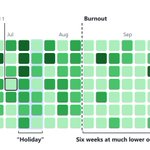
I haven't posted for over a month. It was burnout, and I'll write about it tomorrow. But I'm back now.
I'll be here a lot more from now on, so here's who I am and what I'm building.
I'm a marketer and founder. I've spent a decade selling things on the internet:
> Launched simple web projects since school and marketed every one of them myself
> Found the niche that paid: CPA networks. Years of performance marketing on my own money
> Sold every offer you've seen online, from enlargement pills/creams/pumps for a certain organ (yes, that was me pushing them on you) to bank loans
> 2017: cofounded my first project with a team - 25 people. I ran marketing and some other things. The project failed: the market moved while we were building it. (The photo is from that year - the hackathon we won. Narrator: everyone is smiling here. They didn't know yet how it would look a year later.)
> Then a marketing agency for early-stage projects, and CMO or fractional CMO at several of them - building the whole marketing function from nothing
> 2025/2026: joined the founding teams of two projects (post-mortems will follow). One reached the top 10 on its chain in about half a year, then couldn't raise. The other closed early when the market changed
When those two shut down, I understood I'd been making the same mistake all that time.
I was always behind the scenes, so nothing carried over. No audience, nothing with my name on it.
Now I'm building Adaptico OS in public - an open-source go-to-market operating system, 28 commands so far, on GitHub. It's one of a few things I'm working on - the others I'll show when they're ready.
Here's what I'll be posting about:
> What changed in marketing since 2017 - and again since 2025 - and what stayed the same
> The set-and-forget AI marketing myths: what the agents really do, and where they still need you
> The exact tools I use for each marketing job, instead of one chatbot for everything
> The launch mistakes I've watched kill projects
> The real numbers of building all this in public - wins and flops
My goal for the rest of 2026 on X: show how one person can actually run a project's whole marketing with AI - no "my agents do everything" promises, just the things that work - on live projects.
If that's the kind of thing you want to see more of, follow me. I'll be posting all of it here.

How to make AI write like a person:
"Write it like you're explaining it to a friend across the table."
That's the whole prompt.
Every founder, asked what's harder: "Distribution, obviously."
The same founder, asked what they did all week: "Built."
"Positioning is consultant bullshit."
I get it. But here's what happens without it.
Users come to your page. They look at what you offer. And they can't tell why they should pick you instead of someone else. So they leave.
Before the landing page, before a single line of the site, before any ads, settle three things:
1. Who the product is for.
2. What it replaces.
3. Why that person should switch.
Positioning feels soft next to shipping features. So founders jump straight to tactics - a redesign, a launch, some ads. Traffic arrives but doesn't convert. And the blame lands on the wording or the price.
Usually the product just never had a clear frame. You never meet the users who bounced because of it.
Once the three answers are settled, everything gets cheaper. The landing page has a claim to make. The ads know who they're for. Fewer visitors leave confused.
It's the first thing a go-to-market audit checks on an early-stage product. When I rebuilt my audit command, positioning clarity got one of the two heaviest weights in the score.
Validating a product idea, explained
Low IQ:
Ask 10 strangers who have the problem to pay for it.
Mid IQ:
- Reading a book about talking to customers
- A Notion page called "Validation framework v3"
- A competitor spreadsheet with 14 tabs and no conclusions
- AI-generated user personas (Sarah, 34, product manager, loves efficiency)
- A 40-question survey sent to friends
- A "would you use this?" thread where every reply is from another founder
- A market-size slide that says $80 billion
- A 60-screen Figma prototype nobody has clicked
- A landing page A/B test with 31 visitors
- A waitlist page with a countdown to nothing
- Asking ChatGPT if it's a good idea, then "be honest", then "be brutally honest", and hearing "great idea" every time
High IQ:
Ask 10 strangers who have the problem to pay for it.
Skills a founder needs in 2026:
1. Marketing
2. Talking to users
3. Marketing
4. Selling
5. Marketing
6. Talking to strangers
7. Marketing
8. Following up
9. Marketing
10. Marketing
11. Coding (optional now)
What founders say about their marketing, decoded:
"We're focusing on product first" = nobody has tried to sell it yet
"We just need one more feature" = see the first line
"We'll launch when it's ready" = we'd rather not find out if anyone wants it
"Users love it" = 3 friends said it looks cool
“We’re pre-revenue” = we haven’t asked anyone to pay
"It'll grow by word of mouth" = there's no plan
"Posting on X doesn't work for us" = we posted twice
"We tried ads, they don't work" = we spent $200 in one weekend
"We're doing SEO" = we wrote 8 blog posts in March
"AI handles our marketing" = nobody checks what it posts
"It's a long game" = there are no users yet
If three of these sound familiar, your product is probably fine. Nobody has seen it yet.
There's always one more marketing thing to try:
> SEO
> TikTok
> Podcasts
> AI search
> Cold email
> Influencers
> Google Ads
> Product Hunt
> Building in public
> Directory listings
> AI agents posting for you
Or you can find the one place your users already spend time, and show up there until they start signing up.
An AI resume builder: instead of a launch on X, review 5 resumes a week on r/resumes. The first users are the ones whose resumes you fixed.
A YouTube thumbnail tool: instead of ads, give feedback on 5 channels a week on r/NewTubers. Creators try the tool from whoever already helped them.
> Find where users already are
> Show up there every week
> Keep what brings signups
> Do more of it
That's the whole plan.
I’ve been saying this for months: in almost every case, vibe coding your own SaaS is a flex, not a saving.
If you count your time, the first few days of building usually cost more than a year of paying for the app. And most customers aren't engineers - they have better plans for those days.
For years I sold other companies' products online and only got paid when someone bought. That's how I learned that customers will pay someone else to solve a problem, even one they could solve themselves. And the beauty is that software works the same way.
When someone pays for an app, this is what they're buying:
> They get a result in the first 5 minutes
> Other users already find it helpful
> Someone else made all the decisions for them
> They spend the weekend doing what they enjoy
> They get updates without doing anything
> They have someone to blame when it breaks
> They never have to think about it again
> They can cancel at any moment
None of this is code. That's why SaaS isn't dead.

let me tell you why saas is not dead and how deep in the rabbit hole we are on x
⬖ my wife is technical enough, worked as QA before, understands the concepts of cloud, hosting, frontend vs backend, etc etc.
⬖ she has 2 subs to copen ai and claude, uses them on desktop and on mobile
⬖ she has heard me rambling about ai for 4 years non stop and knows most terms
⬖ she has vibed a few websites for fun and is a creative person overall
so i see she subscribed (recurring lol) to a "learn driving tests" app
i asked her wtf why dont u vibe yourself one?? it will be even better, more visual, tailored to you, etc etc.
she was like "uhm but why, someone already put all the effort and i just wanna be done with my driving tests"
now think about the people who have NONE OF THE bulletpoints above lmfao 💀
put a price tag and just put the saas in the bag lil bro
no one is vibecoding shit
How to grow your product:
> Skip talking to users, they slow you down
> Add AI to the name, it shows you're serious
> Wait until it's ready, it should be perfect
> Let AI write your homepage, it knows best
> Make it free so nobody complains
> Launch on Product Hunt, users will find you
> Check the analytics every hour, just in case
> Tell other founders on X, they'll buy it
> Redesign the logo, it's why nobody signs up
> Ship a new feature every week, one will work
After 6 months, repeat with a new product.
Consistency is everything.
Most build-in-public founders I see here are growing their X accounts to find customers.
I looked at who follows them. Other founders, growing their X accounts to find customers.
Content creator, before AI:
"I'll create a content calendar and write the posts."
Content creator, now:
"I explain the product to the AI in every new chat, tell it what’s wrong with the post, ask for a shorter version, ask again without the em dashes, check whether the numbers it gave me exist anywhere, and rewrite half of it anyway.
And then someone replies that it sounds like AI."
Here's the thing. What nobody tells you. The best part? You already know.
Any post loses nothing when those go.
/gtm humanize and /gtm critic now flag every one of them - and many more.
Adaptico OS now catches much more AI slop. New on the list:
- openers that only promise a point - "here's the thing", "what nobody tells you", "the thing nobody tells you"
- a question asked only to answer it - "The best part? It's free." A real question is left alone.
- telling the reader to be impressed - "let that sink in", a one-word "Period." A person states the fact and stops.
- "serves as a" where "is" would do
- more versions of "it's not a tool, it's a teammate" - "the question isn't whether, it's when", "Not because it's cheaper. Because it's better.", "Not this. Not that."
- the same phrases typed on a phone or in Word, where the apostrophe comes out curly (it’s) instead of straight (it's)
- in /gtm critic, a line quoted from someone else's page is marked as a quote, so it counts against their page, not your draft
/gtm humanize also fixes the chopped-up lines ("No setup. No waiting. Just results.") and the colon that builds up to a reveal ("The kicker: it costs nothing.").
If you paste in a post you wrote yourself, it keeps your voice. With --check it shows the list - line numbers and a fix for each - and you make the changes yourself.
Claude Code:
/plugin marketplace add adaptico/adaptico-os
/plugin install adaptico-os
Other agents:
npx skills add adaptico/adaptico-os
Plenty of new products can't receive a single email.
I've launched my own projects for years. Now I track other people's launches and check many of them by hand.
One thing still surprises me: the contact email.
Often the domain has no MX records - nobody has set up where its mail should go. Or the mail is set up, but the address on the site was never created.
Whatever the reason, the cost is big. Every email sent to the contact address on the site bounces:
- a user who found something broken
- someone ready to pay, with one question first
- a customer who wants a refund - when nobody answers, their bank takes the money back and charges you a fee
The fix takes a few minutes:
1. Open your email provider's domain setup page
2. Go through every record it asks for - it usually flags what's wrong
3. Create every address you list on your site
4. And just send one email to that address from your personal one to confirm it works. Please.
Yes, it's obvious. Yet a lot of developers skip it for some reason.
Check your email setup before you post your project link anywhere.
For most early-stage products the right ads budget is $0. Is yours one of them? You can find out before spending a dollar.
Three numbers tell you if ads can pay off for your product yet:
1. How much a customer pays you, and how much it costs to win one with ads - often several hundred dollars, more on Google or LinkedIn.
2. How many visitors sign up on the page your ads would send them to. Aim for a 2% or higher conversion rate into signups over 30 days. If people who find you for free don't sign up, people from ads sign up even less - and you pay for each of them.
3. How many months a customer has to pay you before they cover what it cost to win them. If you pay for ads out of revenue, 6 months is usually the longest you can wait to get that money back.
If the numbers say "not yet", that answer just saved your budget. Ads bring more visitors. If your page doesn't turn visitors into users yet, more of them won't help.
/gtm ads in Adaptico OS runs this check before writing a single ad. If the answer is "not yet", it names what has to change first, like a higher price or yearly billing.
I've built hundreds of landing pages. For years I made a new one for every affiliate offer I promoted, and paid for every visitor with my own money.
I earned only when someone signed up or ordered.
Here's what I check on any landing page now:
1. A stranger gets what it is from the first screen - the rest proves they definitely need it
2. Someone reading only the headings still gets it
3. Ideally, one action and nothing else to click
4. No menu, because every link is a way out
5. The same button repeated down the page, never a second action
6. The line under the button says what happens next (no sales call, no card)
7. Proof sits right next to the button
8. Proof shows a real person and a real number
9. Signup asks for an email - no password, nothing more
10. It works on a phone - most visitors are on one
11. It loads in 2 seconds or less, even on an old or cheap phone (you can't imagine how many visitors have those)
12. The cookie notice is as small as possible, and only where it's required
13. Nothing covers the button on a phone - no chat bubble, no sticky header
I learned every one of these with my own money, and most pages I see today still miss some of them.
If your page gets visits but no signups, go through this list before you change anything else.
The four AI app builders in the quote all sell the same promise: idea to app, fast. They can afford to - they outspend everyone else.
When a new product says the same thing, it's doing their marketing for free. People go with the name they already know.
That's how a good product ends up with no users.
If your product's bio still sounds right with a competitor's name on it, nobody has a reason to try yours.
I tried this on three more AI app builders:
❌ Softr: "for business operations"
Glide, another app builder, could say it too.
❌ Rork: "publish to App Store in 2 clicks"
Replit can say it too since January.
✅ Dyad: "local Bolt/Lovable/v0 alternative"
It runs on your computer. Theirs don't.
If a competitor could say your product's bio too, look at what you built that they didn't, and put that in the bio instead. When they ship something new, check it again.
If you ask an AI for a bio, you'll almost always get one a competitor could say too. It doesn't look at them first.
/gtm position, a skill in Adaptico OS, finds your competitors' bios first, then tries each of their names on your homepage and bio.
Use it when you plan your launch.

Builders spend months building the product, then ask AI for the one sentence that sells it and go with whatever comes back. Then nobody signs up, and they can't figure out why.
Here's a quick test.
These are the X bios of Lovable, Replit, Bolt and Base44. I removed the names. Can you tell which is which?
1. "Idea to app, fast. Create beautiful, modern web applications at the speed of thought with the power of [name]'s AI Agent."
2. "Create fully-functional apps in minutes. If you can describe it, you can build it."
3. "The fastest way to turn ideas into software people love."
4. "Build without boundaries. Create stunning web apps that scale to millions by collaborating with AI."
Answers in the first reply.
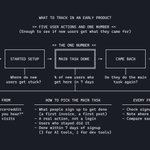
I made a skill that sets up the few numbers an early product needs - so after you change a price or a page, you can tell whether it worked.
Adaptico OS 0.21.0 ships /gtm analytics. A run leaves you with the map you can see in the image, worked out for your product:
- one number that says a new user got real value - the same one /gtm retention picked, if you ran it
- the five to seven events worth tracking, each with the question it answers
- a short check that your signup sources are being counted right
- a weekly habit: the numbers go into your project log
You set it up in whatever analytics tool you already use.
Claude Code:
/plugin marketplace add adaptico/adaptico-os
/plugin install adaptico-os
Other agents:
npx skills add adaptico/adaptico-os

Here's how to run a project's whole marketing on $176/month - the kind of stack teams pay $1,500+/month for:
AI
> Claude Code, Max plan: $100/mo
Data
> X and other data APIs: $50/mo
Infrastructure
> Email for outreach: $10/mo
> Netlify for sites and small scripts: free
> GitHub Actions for daily data pulls: free
> Machines on Hetzner: per project
> Domains on Cloudflare: per project
Everyday tools
> Wispr Flow for dictation: $8/mo
> Tactiq for call recordings: $8/mo
> One Chrome profile per project: free
Total: $176/month
Optional, for heavy research:
> X Premium+: $40/mo - Grok and a reach boost
> Google AI Pro: $20/mo - Gemini deep research
> ChatGPT Plus: $20/mo - second opinion, deep research
Claude Code tops this list, but I'm not a developer. My work is marketing first, research second - it's where I do both.
There's no marketing SaaS here - no CRM, no SEO suite. The heavy lifting happens in my own internal system. All these APIs plug into skills there - some I built, some other people built and I just use. I built the system around my own use cases, and I can add a feature in no time.
Many marketing tools are a layer on top of someone else's data: they call an API and show you the result. That's useful, but learning to call the source yourself isn't hard now.
Most sources are free or nearly free at low volumes - enough for any real small project. When the project starts earning, the paid tiers are still dirt cheap.
It took me months to put this together. Take what fits, and adjust the rest to the way you work.
Builders spend months building the product, then ask AI for the one sentence that sells it and go with whatever comes back. Then nobody signs up, and they can't figure out why.
Here's a quick test.
These are the X bios of Lovable, Replit, Bolt and Base44. I removed the names. Can you tell which is which?
1. "Idea to app, fast. Create beautiful, modern web applications at the speed of thought with the power of [name]'s AI Agent."
2. "Create fully-functional apps in minutes. If you can describe it, you can build it."
3. "The fastest way to turn ideas into software people love."
4. "Build without boundaries. Create stunning web apps that scale to millions by collaborating with AI."
Answers in the first reply.
1 - Replit
2 - Base44
3 - Lovable
4 - Bolt
Hard to tell? All four promise the same thing: idea to app, fast. Did their agents share a positioning doc?*
*To be fair, all four are fighting for the same big market, so one broad promise makes sense for them. The trouble starts when a small new product copies it.