

Community Lead @arcprize. Built The Singularity Gate: The threshold for AI-driven scientific discovery. Owner @ https://teapawt.net/t.co/RDmI9S17QC
Thrace/Europe
Joined July 2009
- Tweets2.1K
- Following67
- Followers175
- Likes6.5K



Pinned Tweet
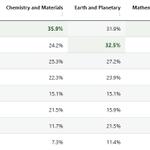
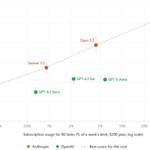
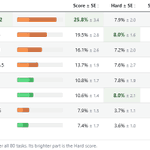
Claude Fable 5.2 is a major improvement on the Singularity Gate! It scores 25.8% while using 28.8% of a week's limit on a $200 plan. However, the models seem to hit a wall on the 12 Hard tasks, the most paradigm-breaking discoveries. Five models score between 7.6% and 8.0%.

I've been testing models on the Singularity Gate, and creating new tasks that involve paradigm-shifting recent discoveries. However, it consumes too much of my time, and the costs are getting to a point I can't handle anymore. I strongly believe it's the best AI benchmark out there by a wide margin, and it indeed tracks the path to the singularity. Still, unless I find a supporter or two, the next release, which I expect tomorrow, will be the last.
1
9
Emirhan Erkan retweeted

2026 has sucked the soul out of most things. Normally, a proof of the Riemann Hypothesis would be a century-defining milestone, universally celebrated by every living mathematician. The Fields Medal isn't enough for such an accomplishment. We'd have to invent a new award.
But it's AI, so we are supposed to be disgusted, ignore it, and pretend it doesn't exist, like a monster living in the attic eating fish heads. Meanwhile, thousands of results that rely on the Riemann Hypothesis being true are now apparently true. I can't even begin to fathom what this means for math, much less computer science.
Emirhan Erkan retweeted

Ok, it's finally time to start a serious digestion of the proof (because we finally know it is fully correct). I am mostly interested in the arithmetic geometry part (which is my field of expertise). And the proof is actually very clever and nice! I think it will take a couple of days before many experts in the field will build a deep understanding of the parts of this proof. What I find quite reassuring is that the elements of this proof are very standard and they are cleverly composed. It is very HUMAN mathematics after all!

We have a full confirmation from Andrew Sutherland who first managed to finish the nanoda kernel run and comparator in paranoid mode. This is now basically saying that the Riemann Hypothesis is 99,99999% true. It's almost impossible that any glitch has been deliberately implemented into the code and that anything is missing from the proof artifact (no sorries, no additional axioms, no weird bugs).

Emirhan Erkan retweeted

Today in AI science:
* Generalized Riemann Hypothesis: alpo.ge/remark.pdf
* unforced euler cims.nyu.edu/~tristanb/cc.pd…
* unforced Navier-Stokes blowup github.com/tristanbuckmaster…
Emirhan Erkan retweeted

The Riemann Hypothesis proof from @__alpoge__+Claude (Model 5?) is the first significant capabilities surprise to me since GPT-5.
The proof has been verified with three independent Lean checkers by independent mathematicians, like math.mit.edu/~drew/grh/
scientificamerican.com/artic…
Emirhan Erkan retweeted

BREAKING: Two months after OpenAI’s Navier-Stokes claim sparked accusations of scooping, an NYU mathematician and an Anthropic researcher say they’ve solved the unforced problem—with AI’s help.
sciam.com/article/ai-just-so…

An Anthropic employee @alpoge, claimed he proved the Riemann Hypothesis with the help of an internal Claude model. It's in review now. Then a researcher claimed he proved it first without AI assistance. A counter-example to his proof has been found in a few minutes. No surprises.
39
Emirhan Erkan retweeted

Millennium Prize Problems: humans and two labs tied with a score of one
➤ Human: Grigori Perelman proved the Poincaré conjecture in 2003, the only solution officially recognized so far. He turned down the prize
➤ OpenAI: claimed a solution to the Navier-Stokes problem in September, using an unreleased internal model
➤ Anthropic: Levent Alpöge posted a claimed proof of the Riemann hypothesis today, found working with Claude
➤ Still open: P vs NP, the Hodge conjecture, Yang-Mills existence and mass gap, and the Birch and Swinnerton-Dyer conjecture
Both AI results are still awaiting independent verification, so scores are provisional.
Congratulations to @alpoge and @AnthropicAI on the result! 🧵

Emirhan Erkan retweeted
I certainly don’t understand the practical implementations of this outside of mathematics, but the part I do very much like is toward the end, where it says it was solved by a human and AI working together. It seems human plus machine is still important for solving our toughest challenges.

Guys, this is very serious and you have to read this right now. The Riemann Hypothesis may have just been solved, and if the claim holds, it's an insane achievement.
In mathematics there is a famous problem called the Riemann Hypothesis, and it's about prime numbers. Primes are numbers like 2, 3, 5 and 7 that can only be divided by 1 and themselves. Every other number is built by multiplying them together, so they're the building blocks of all numbers. You can never tell exactly where the next prime will show up, but if you step back, there's a pattern.
Around 1,000, about 1 in 7 numbers is prime. Around a million, about 1 in 14. Around a billion, about 1 in 21. Primes get rarer at a steady, predictable pace.
Because of that pattern, mathematicians can estimate how many primes there are below any number. But the estimate is never exactly right. It's always a little off, and the big question is how far off it can get. Think of flipping a coin 1,000 times. You expect 500 heads, but you'll get something like 480 or 520. It's a little off, but never wildly, and you can predict how far off it will be.
In 1859 a mathematician named Bernhard Riemann found that the prime estimate's error isn't random. It's controlled by a hidden set of special numbers. Where those numbers sit decides how big the error gets. Riemann guessed that every single one of them sits on one straight line. If he's right, the error always stays small, just like the coin, and primes are as orderly as they could possibly be. If even one of those numbers is off the line, the error can grow much bigger, and primes are far messier than we think.
So far computers have found trillions of these special numbers, and every single one is on the line. But there are infinitely many, so checking will never be enough. You need a proof that covers all of them at once. For 167 years nobody has found one. It's one of the seven hardest unsolved problems in mathematics, with a million dollar prize attached.
Now a mathematician has posted a note saying that, working with Claude, he believes he has that proof. He says a computer has already checked every step, and that Claude raced ahead of him near the end. Experts still need to confirm it, but this isn't a random internet claim.
If it holds, it doesn't mean we can predict every prime. It means we finally know the pattern can never go wildly wrong. Thousands of math papers that begin "assuming the Riemann Hypothesis is true" become proven fact overnight. We'd also get firm limits on how far apart primes can be, and a guarantee that a fast method for testing whether a huge number is prime always works. And no, your bank account isn't in danger. Online security depends on how hard it is to break a huge number into its prime factors, and this proof doesn't make that any easier. If anything, it gives the math behind encryption a stronger foundation.
If it holds, this is bigger than one math problem. A question that beat the greatest minds in history for 167 years would have been cracked by a human and an AI in a matter of weeks. If AI can find answers and computers can check them, the limit on science is no longer how smart we are. It's how many good questions we can ask.
Emirhan Erkan retweeted

🚨 Anthropic mathematician Levent Alpöge just dropped BOTH Riemann Hypothesis AND unforced 3D Navier-Stokes proofs today 🤯
> RH + GRH formalized in Lean with Claude
> Unforced Navier-Stokes blow-up (with Buckmaster)
day after the IPO , this is what RSI looks like 👀


Emirhan Erkan retweeted
BREAKING: A mathematician at Anthropic claims to have used the company's AI to solve the Riemann hypothesis, the most notorious open problem in all of math
sciam.com/article/anthropic-…

Emirhan Erkan retweeted

Just measured how much more AI usage you get from a subscription. $100 of Claude Max buys about $4,640 of Opus at API prices.
The results:
- Claude Max ($100): 46.4x on Opus 5.5, 27.3x on Fable 5.2
- Google AI Ultra ($99.99): 25.8x on Gemini 4 Neon
- X Premium ($30): 20.3x on Grok 4.7
- ChatGPT Pro ($100): 10.25x (measured in October)
- Muse Code High Usage ($15): 9.3x (October)
How this affects the Bug Hunt Benchmark: 🧵

Emirhan Erkan retweeted
ANTHROPIC $ANT SHARES ARE NOW TRADING ON NASDAQ AFTER THE BIGGEST IPO IN HISTORY.
OPENED AT $111.5, UP 34.3% FROM ITS $83 IPO PRICE.
FULLY DILUTED VALUATION: $2.02 TRILLION
RAISED $81.34B IN THE IPO, OR $107.34B INCLUDING A SEPARATE $26B PRIVATE PLACEMENT.
Emirhan Erkan retweeted

Remarks from Anthropic CEO @DarioAmodei on our initial public offering:
My co-founders and I started Anthropic because we believe that the most powerful technology of our time should be built for the benefit of humankind.
Daniela and I lost our father to a disease that, just a few years later, became curable. I started my career in biology, hoping to help future cures come sooner. In the lab, I saw the vast thicket of complexity that scientists face when they’re trying to understand disease and develop new treatments.
So many of the scientific tools that can cut through that thicket—tools for gene editing, gene synthesis, controlling brain cells with light—started as pure ideas. In other words, they came from thinking. From intelligence.
Human intelligence has already made diseases like plague, smallpox, and polio history for most of the world. But progress on other diseases has been too slow for so many patients and their families. Going from a great idea to a treatment can take decades: it took many years from the first discovery of a strange repeating pattern in DNA to the approval of the first treatment for a disease using CRISPR.
Nature is full of these patterns. But we’ve had too little intelligence to decipher most of them; too few scientists, with too little time. Now we can build that intelligence. Whether it’s protein folding, drug design, cancer genetics, or clinical trial administration, scientists across many areas of biology and medicine are finding Claude can help them do their research in a fraction of the time it would’ve taken just a couple of years ago. I believe sufficiently powerful AI, working in concert with humans, could compress a century of scientific and medical progress into a decade.
I don’t want to get ahead of myself. At this point all we have are early results. Experiments and clinical trials will still take time. And although they involve slow and ponderous processes, I believe those processes can be substantially accelerated by AI. We hope that in the future fewer families miss a cure by just a few years.
Medicine is just a particularly vivid example, but there are many others. Our customers—the world’s most ambitious companies, nonprofits, and individual people—are already applying the intelligence we’ve built to stimulate economic growth; lift people out of poverty; protect democracy and free societies; even make everyday services like the DMV work better. We’re proud to work alongside them. And I’m extremely optimistic about what we can do together in the future.
At the same time, we have always been honest that this technology has very real risks. These range from misuse of the technology by individuals or nation-states, to economic disruption, to losing control of AI systems. We discuss these risks not because we think they are inevitable, but because we think they are avoidable.
Avoiding them depends on the choices made by the people building AI. There is a gigantic difference between how AI will go if we pay little attention to safety, versus how it will go if we are obsessed with safety. And an obsession with safety and with public benefit has been woven into Anthropic’s DNA from the start. From safeguards against biological and cyber risks, to alignment training and testing, to looking inside our models like an X-ray, Anthropic has pioneered methods for understanding and steering the behavior of AI systems.
There is much work still to be done, and the most difficult safety work lies ahead of us. The incredible talent of the company that has enabled us to build the most capable AI systems will need to be directed, even more so than it has already, towards double- and triple-checking that those AI systems are safe and secure.
And to state it unequivocally, we will pace the training and deployment of AI systems, taking as long as is necessary to have confidence that they are safe and will remain under human control. We will not bend to either business or political pressure. Today puts the company in a stronger financial position, and in doing so only strengthens our resolve to do the right thing.
If we can show it’s possible to make the right choices on safety and still build an incredibly successful company, others in our industry will be inspired to do the same. We call this a race to the top. When the race to the top is working properly, it doesn’t matter which company has the best models—everyone wins because everyone is building safely. The race to the top works best when driven from the front of the pack, and we fully hope and expect to do so, but the goal is to make the whole industry better, regardless of whether Anthropic is winning or losing at any given time.
The advent of machine intelligence is one of the seminal moments in human history, and we have a rare opportunity to shape it for the better.
This moment is bigger than any one company, or any one country. It will take all of us, working together, to ensure this technology goes well for us and the many generations to come. Starting today, we hope that you’ll join us on this mission.