






“ManyBabies 3: A multi-lab study of infant algebraic rule learning” by Ingmar Visser, Andreea Geambasu, George Kachergis, Cátia M. Oliveira, Joscelin Rocha-Hidalgo, Martin Zettersten, Teruni Ahamat, [many, many others] and Clara C. Levelt (Oct. ’26) onlinelibrary.wiley.com/doi/…


“Nahuan relative chronology: How and when did Nahuatl develop?” by Magnus Pharao Hansen (Oct. ’26) magnuspharao.com/wp-content/…

Hm, how shall we interpret this when there are three authors?


Fun topic: “Defining cognate similarity in psycholinguistics: a phonological perspective” by Isabella Fritz, Joshua Booth and Aditi Lahiri (Oct. ’26) joshuabooth.com/FRITZ_BOOTH_…


Fun topic: “Defining cognate similarity in psycholinguistics: a phonological perspective” by Isabella Fritz, Joshua Booth and Aditi Lahiri (Oct. ’26) joshuabooth.com/FRITZ_BOOTH_…
Darin Flynn retweeted

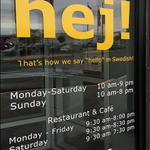
Word-final nasal vowels of French loawords are pronounced "-Vŋ" in Swedish too. For example restaurang, kupong, balkong, ballong etc. And poäng! It's my favourite French word in Sweden along with pjäs😆(they are spelled 'point' and 'pièce' in French)

Darin Flynn retweeted

I know sis either has a linguistic degree or did some phonology and phonetics classes. This is exactly how you should teach kids words.

Scores with the TRAP vowel becoming /a/ among young Canadians and Californians, like the Brits: splats, flasks, stats, snaps, splat, spats, flaps, flats, blast, slaps, asks, stab, spat, snap, slat, slab, glad, flat, flap, flab, zap, vat, tat, tap, tad, tab, sat, sap, pat, pal ...

flu, situ, lulu merriam-webster.com/dictiona…


1,743 words spelled with <æ>, most of them British, but sadly <æ> never (?) represents /æ/ en.wiktionary.org/wiki/Categ…