Nice job!
dgielis.com/every-agent-gets…
45
PLSQL retweeted
#orclapex 26.1
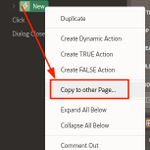
A native "menu button" is now possible - even the little things are helpful.
PLSQL retweeted
Over the last few days, I built my own Oracle APEX 26.1 AI Playground 🚀
Yes, I know there are super easy Docker setups 😄
But this time I went the old-school route and built everything from scratch. 🛠️
Full setup & walkthrough 👇
tm-apex.hashnode.dev/buildin…
#orclapex
Change an Oracle table to be insert-only with
ALTER TABLE ... BECOME IMMUTABLE NO DROP ... NO DELETE ...
This then blocks UPDATEs to the rows
You can only remove
- rows older than the NO DELETE setting
- the table if there's no new rows since the NO DROP setting

ALT Change table to IMMUTABLE (23.26.2) Convert a table to insert-only Example: create table t ( c1 int ); insert into t values ( 1 ); commit; -- Make table immutable to prevent UPDATE/DELETE alter table t become immutable no drop until 0 days idle no delete until 16 days after insert use ( systimestamp ) for row creation time version v2; update t set c1 = 0; ORA-05715: operation not allowed on the blockchain or immutable tabledelete t; ORA-05715: operation not allowed on the blockchain or immutable table
Query Link: teapawt.net/plsql/status/194123446…
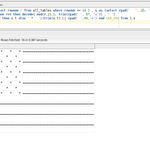
Happy 250 Years USA!
Happy 4th of July !
with l as ( select rownum r from all_tables where rownum <= 16 ) , s as (select rpad(' ', 25, '* ') t from dual) select case when r>9 then decode( mod(r,2),1, trim(rpad(' ', 67, '=')) , ' ') when mod(r,2)=0 then s.t else ' * '||trim(s.t) || rpad(' ',40,'=') end HAPPY_4TH_OF_JULY from l,s
1
83
I like this idea. Less social media but keeping everything else.
commodore.net/callback/
67
You can initialize PL/SQL arrays with FOR loops itype constructors from 21c
array := arr_type ( FOR i IN ... )
These can loop through
Values => IN x .. y
A cursor => IN ( SELECT ... )
Use the optional INDEX clause to set custom indices
Try these at freesql.com/?compressed_code…
PLSQL retweeted
Everyone debated the wrong thing.
The real answer 👇
teapawt.net/i/status/2063177489640…
Everyone debated UUIDs today.
But nobody mentioned UUID v7.
Here's why it changes everything 🧵
The real problem with UUID v4:
-> Completely random
-> Fragments your B-tree indexes
-> Kills write performance at scale
-> Larger storage than integers
This is what the "never use UUID" crowd experienced.
And they weren't wrong for v4.
UUID v7 fixes all of that:
-> Timestamp-prefixed (sequential by design)
-> No index fragmentation
-> Fast inserts, just like auto-increment
-> Still globally unique - no coordination needed
-> Works across distributed systems out of the box
UUID v7 wins on almost every axis.
The takeaway:
The debate was never "UUID vs Integer."
It was always "which UUID are you using?"
Most devs are still on v4 in 2026.
Upgrade your mental model. 🙂
Nice blog about APEXlang by ACE Jonathan Dixon:
blog.cloudnueva.com/the-anat…
PLSQL retweeted
With the combination of APEX 26.1, APEXlang, and the Integrated Browser in VS Code, your AI agent can now understand .apx files, see the actual application in the browser, and even test the implementation by itself 😎
🔗 Link kuchatom.hashnode.dev/oracle…
#orclAPEX #orclapexworld
PLSQL retweeted
SQLcl 26.1 introduces a new DIFF command 👀 It compares database schemas directly and generates deployment patches.
Check my new article to learn more!
🔗Link kuchatom.hashnode.dev/new-sq…
#orclAPEX #orclapexworld