

own your intelligence
Barcelona, Spain
Joined August 2026
- Tweets199
- Following273
- Followers34
- Likes241



Pinned Tweet
Introducing the MiniCPM-OCR plugin for Hermes Agent.
This is a problem I have experienced myself: LLMs by themselves are not always very good at OCR; sometimes I have needed another model specialized in it to solve complex document parsing.
For example, recently I have had difficulties understanding some physician recipes and other manuscripts.
This is where MiniCPM-OCR comes in. You can use the model and harness you already have to utilize a best-in-class OCR model by @OpenBMB.
@Teknium @NousResearch
Code: github.com/PovedaAqui/minicp…
PR: github.com/NousResearch/herm…

Luis Poveda retweeted

This is awesome, Luis! 🚀 Love seeing MiniCPM-OCR integrated into Hermes Agent. Thanks for building this and sharing it with the community! 💙

Introducing the MiniCPM-OCR plugin for Hermes Agent.
This is a problem I have experienced myself: LLMs by themselves are not always very good at OCR; sometimes I have needed another model specialized in it to solve complex document parsing.
For example, recently I have had difficulties understanding some physician recipes and other manuscripts.
This is where MiniCPM-OCR comes in. You can use the model and harness you already have to utilize a best-in-class OCR model by @OpenBMB.
@Teknium @NousResearch
Code: github.com/PovedaAqui/minicp…
PR: github.com/NousResearch/herm…
Luis Poveda retweeted

Insane progress for small language models!
MiniCPM5-2B is a dense 2B-parameter model by OpenBMB from China that is built for reasoning, coding, and tool use on resource-constrained hardware.
The model specifically excels at coding and tool calling, two capabilities central to the shift from on-device LLMs to on-device agents.
Instead of only answering prompts, it can use tools, generate code, carry information between steps, and complete multi-step tasks.
We ran it 100% locally and connected it to a small investigation agent with one request:
> Revenue dropped last week. Investigate what happened, quantify the impact, identify the likely cause, and produce an incident report with supporting evidence.
The evidence was spread across orders, traffic, payments, refunds, and deployment logs.
The model inspected the files, wrote its own queries, analyzed the intermediate results, and decided what to investigate next.
Each tool result informed the next action, so the final report depended on the model maintaining a coherent investigation across the complete trajectory.
The recording shows the actual task from beginning to end. It starts with the revenue question, follows the tool calls and supporting evidence, and ends with a quantified diagnosis and incident report.
The data, tool execution, and model inference all remained on our machine.
These capabilities were optimized through Agentic Pre-training, SFT, and large-scale RL. They do not come entirely from an application-level agent framework.
MiniCPM5-2B supports SGLang, vLLM, llama.cpp, Ollama, iOS, Android, and HarmonyOS.
OpenBMB has also released the model weights and parts of the training recipes and data resources behind it.
A 2B model can now maintain enough state to coordinate tools and complete a useful investigation on local hardware.
Luis Poveda retweeted

okay okay. you want mobile, we get it.
HERE IT IS: herdr for iphone, ipad and android.
see which agents need you, open the real terminal and answer. type, paste a screenshot, or just talk to it.
works with herdr-core. herdr tui isn't supported (yet)
Luis Poveda retweeted
Great perspective! 💙 Speed, accuracy, and cost all matter for real-world document processing. Excited to see MiniCPM-OCR integrated into LiteParse. Thanks for bringing it into the ecosystem! 🚀

The world needs two types of document OCR:
1. Extremely fast/cheap OCR tools: Each organization might have trillions of documents, and this is oftentimes helpful as a 'first pass' to digitalize each document so that it's accessible to AI agents. Accuracy might not be the highest, but it's 'good enough' for agentic retrieval and a deeper second pass.
This includes free/OSS tools like pypdf, pymupdf. Over the past year, we've invested heavy efforts in this area through `liteparse` - the fastest/most accurate free/OSS parser. It integrates with 5 other open-weight OCR tools, most recently with MiniCPM-OCR from @OpenBMB
github.com/run-llama/litepar…
We're also doing a lot more in this space - stay tuned!
2. Accurate VLM-based OCR: This includes the subset of documents that are a) complex, and b) the organization must parse accurately. The data needs to be accurate because this data is used in business critical workflows across finance, insurance, healthcare, and more.
At the same time, even if the tool is not free, any VLM needs to be able to scale to billions of pages in a cost-effective manner.
Two weeks ago we launched OCRia-1, the best general purpose model for document parsing. It not only parsers complex text layouts, complex tables, but also visual diagrams and charts.
llamaindex.ai/blog/parse-ocr…
It powers all our modes within LlamaParse; see the most recent benchmarks on ParseBench: parsebench.ai/
-------
Both of these document OCR types require rigorous benchmarks, data+training pipelines, and an ambitious/talent-dense team pushing the pareto frontier of accuracy and cost.
If you're looking to solve document understanding across either frontier, come talk to us!

Luis Poveda retweeted
🔥 MiniCPM Spark Program S2: Build What’s Next.
What would you build with MiniCPM to help an agent get things done? We’re inviting developers and researchers to share working projects, from useful tools and open-source integrations to agents that complete real tasks.
Choose your track:
• Open Build Track: Build applications, tools, hardware projects, or agent framework integrations with MiniCPM. Working examples and tutorials are welcome.
• On-Device Agent Challenge: Build agents that complete end-to-end tasks, with MiniCPM playing a meaningful role locally in understanding requests, selecting tools, or checking results.
Models for S2:
MiniCPM-OCR 1.0 / Jev · MiniCPM-V4.7 · A surprise MiniCPM model, coming soon 🎁
Using another MiniCPM model? Select the regular track in the submission form.
🏆 Rewards
Depending on the award level, selected projects can receive:
• Official showcase and promotion
• Inclusion in the MiniCPM developer case library
• Early access to new models and features
• Technical support and collaboration opportunities
• Exclusive MiniCPM gifts
🎁 Grand Prize
One Mac mini M6 for an outstanding project in the On-Device Agent Challenge. Full rules apply.
📅 Phase 1: Nov 2 – Dec 13, 2026
Building with MiniCPM? Share your work and join the Spark Program.
Submit your project: forms.gle/7AE8LrVEthPyRcQq5

Luis Poveda retweeted

Estoy ayudando a unos amigos a compartir este eventazo que han creado sobre accesibilidad.
Hablamos mucho de innovación, de IA, de nuevas tecnologías y de hacer cosas cada vez más complejas, pero... ¿Estamos construyendo software accesibles para todo el mundo?
La accesibilidad sigue siendo uno de esos temas que merece mucha más atención de la que recibe. Y por eso, el próximo 28 de noviembre se celebra la a11yConf 2026 en Zaragoza.
Una conferencia para compartir experiencias, aprender de otros profesionales y descubrir nuevas perspectivas sobre accesibilidad.
La agenda ya está publicada y pinta muy bien:
🎤 14 charlas
🛠️ 4 talleres
🧠 3 tracks llenos de conocimiento
Porque la accesibilidad no debería ser algo que añadimos al final de un proyecto. Debería formar parte de cómo pensamos y construimos tecnología desde el principio.
Te dejo la agenda y cómo conseguir tu entrada a continuación ↓

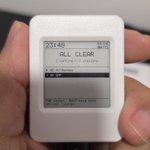
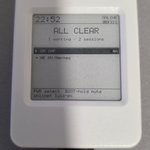
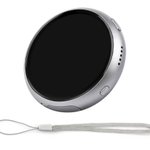
I just created a PlaudNote clone using a @waveshare00's ESP32-S3 based device
I was thinking of buying a device to record some meetings and take notes using voice, a dedicated device to gather some context, but the prices and subscription costs were not worth it for me, so I decided to make my own.
It is simple: you can record voice using the two internal mics, and on the server side, it transcribes the audio file using Whisper, creates a summary using a local LLM—in this demo I am using @OpenBMB MiniCPM-1B—and syncs the result with my Obsidian vault. Everything is processed locally, with no cloud and no internet.
Contributors and makers: I'll be open-sourcing the repo soon.


This project is now open-source: github.com/PovedaAqui/plaud-…

1
1
87

Luis Poveda retweeted
🌍 “Hola!” from the MiniCPM community!
Meet MiniCPM5-2B-catalan-chat-v2, a Catalan conversational model built by our ambassador luispoveda93 through two-stage LoRA fine-tuning of OpenBMB’s MiniCPM5-2B.
📚 Stage 1 — Single-turn instruction tuning
165,100 examples from Projecte AINA’s InstruCAT dataset, covering Q&A, summarization, paraphrasing, and more.
💬 Stage 2 — Multi-turn conversation
Continued fine-tuning on a ~23.4K chat-focused subset of BSC-LT/ALIA-2606-SFT, focusing on dialogue flow and instruction following across turns.
💻 Ready to explore locally
Merged BF16 weights and LoRA adapters are available, alongside community-contributed GGUF versions for local use with llama.cpp and Ollama.
🛠️ Building for your language? This community project offers a concrete example of adapting MiniCPM with language-specific instructions and dialogue data.
Explore the model 👇
huggingface.co/luispoveda93/…
🚀 Build with MiniCPM5-2B:
GitHub: github.com/OpenBMB/MiniCPM
Hugging Face: huggingface.co/openbmb/MiniC…
#MiniCPM #OpenBMB #Catalan #LoRA #LocalAI

Luis Poveda retweeted
Names, emails, API keys—Our ambassador @povedaai is putting MiniCPM4-0.5B to work detecting sensitive text. 🔐
The project adds a MiniCPM-powered PII recognizer to Microsoft Presidio, helping identify sensitive information in text for downstream anonymization.
Here’s what’s under the hood 👇
🧠 A compact foundation: Built on MiniCPM4-0.5B, adapting a 0.5B-parameter model for a specialized token-classification task.
🛠️ Task-specific fine-tuning: Uses a LoRA adapter trained on NVIDIA’s Nemotron-PII dataset, paired with a custom token-classification head.
🔎 55 PII/PHI labels: Covers information such as names, email addresses, phone numbers, financial identifiers, API keys, passwords, and medical record numbers.
🔗 Presidio integration: Maps model predictions into Presidio’s entity format, allowing the recognizer to work within its analysis pipeline and support downstream anonymization workflows.
💻 Local inference: The recognizer loads the model and adapter locally, offering a path for developers exploring sensitive-text processing in their own environments.
We love seeing the community turn MiniCPM into practical, specialized tools. This project is an example of how open models, lightweight adaptation, and existing developer frameworks can come together for a concrete application. 🌍
Working on data preparation, text anonymization, or privacy tooling? Try the demo, explore the adapter, and check out the implementation! 🚀
🧩 Model: huggingface.co/luispoveda93/…
📂 Repo: github.com/PovedaAqui/presid…
🔗 Hugging Face: huggingface.co/openbmb/MiniC…
#MiniCPM #OpenBMB #Privacy #OpenSource #PII

Luis Poveda retweeted

A 1.2GB model on a Mac read Anthropic's whole IPO 📄
@OpenBMB MiniCPM-OCR 1.0 went through all 415 pages of Anthropic's S-1 on an M5 Max MacBook at about 4 seconds a page and nothing ever left the laptop
GGUFs -> huggingface.co/AtomicChat/Mi…
Luis Poveda retweeted
Your OCR says it’s done—but did it get everything right? 🤔 In high-stakes workflows, even a small error can be costly.
🚀 Meet the MiniCPM-OCR suite: an open-source solution to parse fast and guard the results.
Two new models:
🔹 MiniCPM-OCR 1.0 — SOTA OCR performance and speed at 1B scale. Compact, accurate, and fast.
🔹 MiniCPM-OCR Jev — A 2B decision model that helps assess parsing accuracy, with performance approaching that of Qwen3.5-397B-A17B on JevOCRBench.
⚡ What’s new?
Small model, SOTA results: MiniCPM-OCR 1.0 scores 93.68 on Real5-OmniDocBench and 54.7 on OCRBench v2.
A sharp goalkeeper 🛡️: MiniCPM-OCR Jev is model-agnostic, checking text, formulas, and tables from different OCR parsers. It achieves 93.6 on JevOCRBench, outperforming JEV-35B-A3B (90.1) and approaching Qwen3.5-397B-A17B (93.8).
Up to 128 pages per minute 🤯: With DSpark, MiniCPM-OCR runs at 1.49× the speed of PaddleOCR-VL-1.6 and 3.62× that of MinerU2.5 Pro. The SDK’s concurrency optimizations further boost throughput to as much as 128 pages per minute.
Deploy where you work: Day-0 support for Arm, Houmo AI, Intel, and NVIDIA, plus 10 more chip vendors through FlagOS.
Ready for your stack: vLLM, SGLang, llama.cpp, and Ollama, with quantized models, fine-tuning support, and Agent Skills.
🔗 GitHub: github.com/OpenBMB/MiniCPM-O…
🤗 Hugging Face:
MiniCPM-OCR 1.0:huggingface.co/openbmb/MiniC…
MiniCPM-OCR Jev:huggingface.co/openbmb/MiniC…
👉 Try the Demo:platform.modelbest.ai/consol…
Use the API:platform.modelbest.ai/consol…


Luis Poveda retweeted

Introducing the MiniCPM-OCR suite 🚀
An open-source OCR suite for fast parsing and correctness assessment.
🔹 MiniCPM-OCR 1.0 — SOTA OCR performance and speed at 1B scale. Compact, accurate, and fast.
🔹 MiniCPM-OCR Jev — a 2B decision model that helps assess parsing accuracy by checking text, formulas, and tables from different OCR parsers.
With SDK concurrency optimizations, throughput can reach up to 128 pages per minute. The suite supports vLLM, SGLang, llama.cpp, and Ollama, with quantized models, fine-tuning support, and Agent Skills.
Ready to put MiniCPM-OCR to work? 👇
🔗 GitHub: github.com/OpenBMB/MiniCPM-O…
🤗 Hugging Face:
MiniCPM-OCR 1.0:huggingface.co/openbmb/MiniC…
MiniCPM-OCR Jev:huggingface.co/openbmb/MiniC…
👉 Try the Demo:platform.modelbest.ai/consol…
Use the API:platform.modelbest.ai/consol…


Your OCR says it’s done—but did it get everything right? 🤔 In high-stakes workflows, even a small error can be costly.
🚀 Meet the MiniCPM-OCR suite: an open-source solution to parse fast and guard the results.
Two new models:
🔹 MiniCPM-OCR 1.0 — SOTA OCR performance and speed at 1B scale. Compact, accurate, and fast.
🔹 MiniCPM-OCR Jev — A 2B decision model that helps assess parsing accuracy, with performance approaching that of Qwen3.5-397B-A17B on JevOCRBench.
⚡ What’s new?
Small model, SOTA results: MiniCPM-OCR 1.0 scores 93.68 on Real5-OmniDocBench and 54.7 on OCRBench v2.
A sharp goalkeeper 🛡️: MiniCPM-OCR Jev is model-agnostic, checking text, formulas, and tables from different OCR parsers. It achieves 93.6 on JevOCRBench, outperforming JEV-35B-A3B (90.1) and approaching Qwen3.5-397B-A17B (93.8).
Up to 128 pages per minute 🤯: With DSpark, MiniCPM-OCR runs at 1.49× the speed of PaddleOCR-VL-1.6 and 3.62× that of MinerU2.5 Pro. The SDK’s concurrency optimizations further boost throughput to as much as 128 pages per minute.
Deploy where you work: Day-0 support for Arm, Houmo AI, Intel, and NVIDIA, plus 10 more chip vendors through FlagOS.
Ready for your stack: vLLM, SGLang, llama.cpp, and Ollama, with quantized models, fine-tuning support, and Agent Skills.
🔗 GitHub: github.com/OpenBMB/MiniCPM-O…
🤗 Hugging Face:
MiniCPM-OCR 1.0:huggingface.co/openbmb/MiniC…
MiniCPM-OCR Jev:huggingface.co/openbmb/MiniC…
👉 Try the Demo:platform.modelbest.ai/consol…
Use the API:platform.modelbest.ai/consol…
I just modified my Stream Deck Mini to work as an agent monitor
Now I can use it to know if my agents are working, idle, or waiting. I used @herdrdev plus an open-source library for avatars.
Should I share the GitHub repo? Would you try it?
Every document pipeline I've built breaks in the same place. Not on the hard page: on the easy page that comes back wrong and looks right.
@OpenBMB 's MiniCPM-OCR release is the first open one I've seen that ships a fix for that specific failure. Two models instead of one: MiniCPM-OCR 1.0 parses (1.3B, Apache 2.0, about 1.2 pages/s), and MiniCPM-OCR Jev grades the result region by region with a score from 0 to 1.
The grader is model-agnostic. It held 91.9 to 93.4 AUROC on output from four other parsers, so you can put it behind whatever you already run.
Ready for your stack: vLLM, SGLang, llama.cpp, and Ollama, with quantized models, fine-tuning support, and Agent Skills.
🔗 GitHub: github.com/OpenBMB/MiniCP…
🤗 Hugging Face:
MiniCPM-OCR 1.0:huggingface.co/openbmb/MiniC……
MiniCPM-OCR Jev:huggingface.co/openbmb/MiniC……
👉 Try the Demo:platform.modelbest.ai/consol……
Use the API:platform.modelbest.ai/consol……
Your OCR says it’s done—but did it get everything right? 🤔 In high-stakes workflows, even a small error can be costly.
🚀 Meet the MiniCPM-OCR suite: an open-source solution to parse fast and guard the results.
Two new models:
🔹 MiniCPM-OCR 1.0 — SOTA OCR performance and speed at 1B scale. Compact, accurate, and fast.
🔹 MiniCPM-OCR Jev — A 2B decision model that helps assess parsing accuracy, with performance approaching that of Qwen3.5-397B-A17B on JevOCRBench.
⚡ What’s new?
Small model, SOTA results: MiniCPM-OCR 1.0 scores 93.68 on Real5-OmniDocBench and 54.7 on OCRBench v2.
A sharp goalkeeper 🛡️: MiniCPM-OCR Jev is model-agnostic, checking text, formulas, and tables from different OCR parsers. It achieves 93.6 on JevOCRBench, outperforming JEV-35B-A3B (90.1) and approaching Qwen3.5-397B-A17B (93.8).
Up to 128 pages per minute 🤯: With DSpark, MiniCPM-OCR runs at 1.49× the speed of PaddleOCR-VL-1.6 and 3.62× that of MinerU2.5 Pro. The SDK’s concurrency optimizations further boost throughput to as much as 128 pages per minute.
Deploy where you work: Day-0 support for Arm, Houmo AI, Intel, and NVIDIA, plus 10 more chip vendors through FlagOS.
Ready for your stack: vLLM, SGLang, llama.cpp, and Ollama, with quantized models, fine-tuning support, and Agent Skills.
🔗 GitHub: github.com/OpenBMB/MiniCPM-O…
🤗 Hugging Face:
MiniCPM-OCR 1.0:huggingface.co/openbmb/MiniC…
MiniCPM-OCR Jev:huggingface.co/openbmb/MiniC…
👉 Try the Demo:platform.modelbest.ai/consol…
Use the API:platform.modelbest.ai/consol…