

I am not a financial advisor or industry professional. No recommendation whatsoever. I like Lithium & Critical Minerals...
Australia
Joined December 2017
- Tweets1.1K
- Following457
- Followers218
- Likes4.6K







Prev Lyniuap 🇦🇺 retweeted

Commodities are getting absolutely slaughtered.
The last commodity bull market began when the internet bubble popped...
Over the following decade, commodities outperformed equities by 6 to 1.
Now the AI bubble seems to be popping.
I expect history to rhyme.


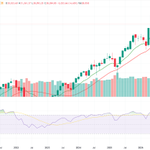
What Is Capitulation?#Lithium $LTR $PLS
Capitulation in the financial markets is mass panic selling by investors during a market downturn. The spreading anxiety feeds the downturn, causing steep losses in prices. Capitulation is usually followed by renewed interest in stocks that have been hard hit, reversing the trend.
The dramatic drop in market prices caused by capitulation can mark the end of a downturn.


The Chart will tell you about the changing fundamentals of a company before you know it from news & analysis as Insiders would know it before the news & analysis guys. Hope it helps 🙏😇
This may suprise: I started as a fundamental analyst! 🤓 I have the qualifications, I worked as a research analyst for years. Slowly I realised it didn't matter WHAT I BELIEVED. It only mattered WHAT THE MARKET DID! 💯 Technicals = Never look back! 💪 #asx youtube.com/shorts/zlvWCjz6D…

1
124


Prev Lyniuap 🇦🇺 retweeted

Lithium deficit persists despite recent price pullback
mining.com.au/lithium-defici…

#Lithium supply squeeze
Zimbabwe lithium concentrate exports ban.
At what point does the market start pricing this in, or has it started already? 🤔
The end of lithium concentrate exports from Zimbabwe (slated for January 2027) removes roughly 6% to 7% of global lithium supply, tightening the market, causing immediate supply deficits, and driving up short-term lithium and carbonate prices.
Effects on the Market.
Supply Disruption & Deficit: Zimbabwe is Africa's largest lithium producer and accounts for a significant share (roughly 15%) of China's spodumene imports. Halting concentrate exports chokes off vertically integrated feedstock supplies for major Chinese refiners (such as Sinomine, Huayou Cobalt, Yahua, and Chengxin).
In-Country Processing Bottlenecks: The ban forces miners to upgrade from raw/concentrate exports to higher-value lithium sulfate. However, many local processing plants (such as Bikita Minerals' facilities) face construction delays and will not be fully operational by the January 2027 deadline, creating a temporary stage-specific feedstock gap in Q2–Q3 2027.
Buffer & Port Stockpiles: Mines have accelerated shipments through regional ports like Beira and Durban ahead of the ban, meaning port inventories will provide a short-lived buffer through Q1 2027 before the tight deficit takes full effect.
Global Competitor Shifts: The restriction supports alternative hard-rock and lithium producers in Australia and the Americas (such as Pilbara Minerals, Mineral Resources, and Albemarle), whose marginal supply roles become more critical.
Effects on Price.
Upward Price Pressure: The removal of Zimbabwe's marginal tonnage immediately shifts the global balance into a deficit, driving up spot prices for lithium concentrates and sparking surges in lithium carbonate futures (such as on the Guangzhou Futures Exchange).
Increased Revenue Volatility: While local bans aim to capture higher long-term processing value, the transition subjects Zimbabwe's export revenues to intense price elasticity and short-term market shocks.
4
242


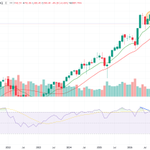
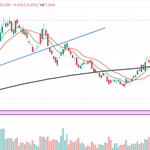
#Lithium on a reversal trend 📈
#NASDAQ100 chart is telling the same thing ‼️‼️‼️
AI-Trade-Unwinding fast $QQQ

86