

Lead Web 3 Engineer | Devrel | Podcaster | @web3wikixyz, @coverantxyz | @Moca_Network / @animocabrands | Advisor | Army Veteran | Man on many missions
Dubai, United Arab Emirates
Joined October 2021
- Tweets11.9K
- Following951
- Followers1.2K
- Likes12.6K




Arman retweeted

‼️ After PHP2Shell comes Node2Shell, a critical bug found by OpenAI's Codex Security that can let attackers run code in Node.js apps.
It was successfuly demonstrated on the official Node.js 24.22.0 image.
Node 20, 23 and 25 (all EoL) get no fix.


Arman retweeted

We were able to fine tune an open weight model (Qwen3.5-9B) on proprietary internal data at @coinbase, and it out performed frontier models, at much lower cost and speed, for a specialized task (fraud prevention in this case).
I think we'll see more of this pattern inside companies. The frontier models are amazing generalists. But increasingly you'll see specialist models out perform on more narrow tasks, either working on teams, or by themselves.
We're making it easy to fine tune models internally for our employees. We even have a skill for it in our internal harness that makes it easy to spin these up and start training them:
"/fine-tune-and-serve-llm I want to fine-tune Qwen for payments risk review. help me get started"
I imagine we'll have some backend services that could be replaced entirely by this new architecture.


Arman retweeted

We instituted an official AI Writing Policy at @Clay.
Massive thanks to @sophiebits on our engineering team who wrote this.
Originally this was just for eng, but other teams found it so helpful we expanded it company-wide.
Here are the four guiding principles:
1. You must stand behind every idea and sentence
It is your responsibility to make sure that the entire document is representative of your own thoughts before you share it.
2. Writing is thinking
Spending time on the writing process teaches you more about your topic. If you circumvent this process, you will walk away with a poorer understanding of the subject matter.
3. More time should be spent writing a document than consuming it
If you generate a document from a short prompt then ask your readers to go through the longer output, you are disrespecting their time. They can talk to ChatGPT themselves if they want to.
4. Longer is not better
AI makes it easy to generate long docs, and it loves padding them with sentences that say nothing. If you're producing docs from a short prompt, consider just sharing the prompt.
You can read (and borrow) the full policy below. Hopefully we all communicate a bit more clearly now :)

Arman retweeted

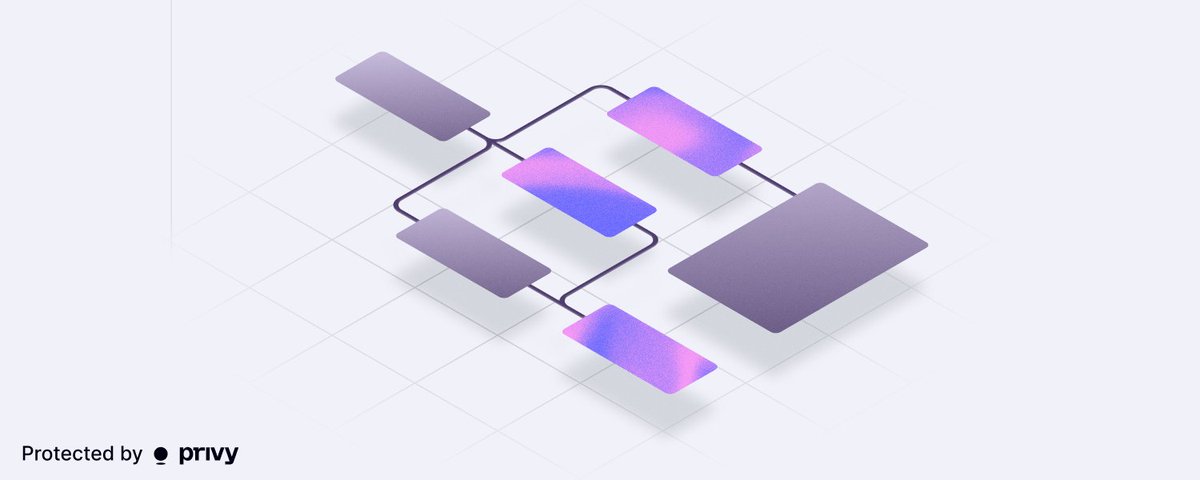
There’s a lot more to stablecoin orchestration than calling a payout endpoint.
Here are things we’ve learned about moving money onchain and offchain.

Arman retweeted
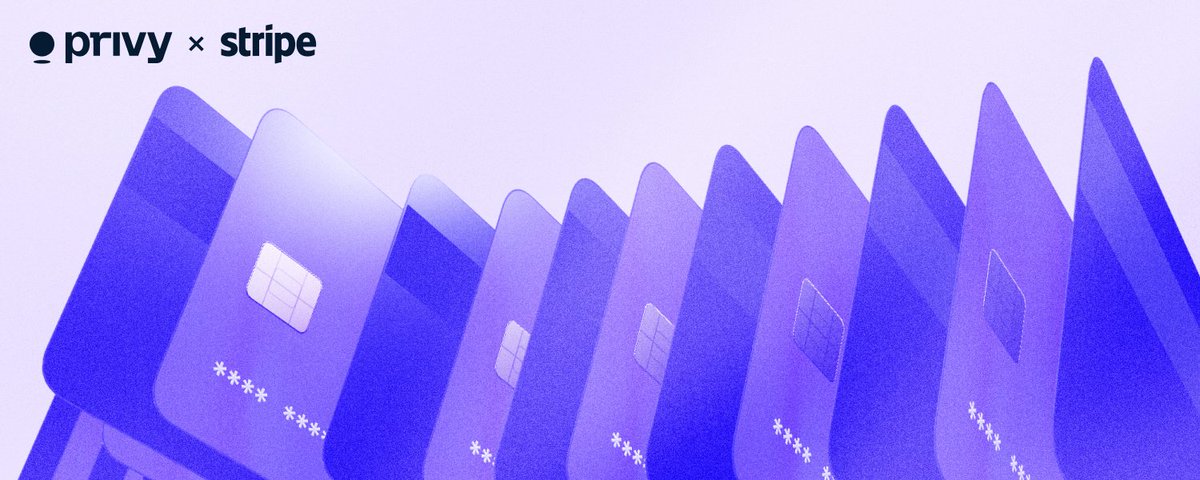
There’s a lot more to launching a stablecoin-backed card than integrating an issuing API.
Here's what we've learned.
Arman retweeted
We’re making Open USD the default for businesses using stablecoins on Stripe. Coming soon.

Introducing Open USD: a stablecoin built for the internet economy, designed by the businesses growing it.
joinopenstandard.com/blog/in…

Arman retweeted

LATEST: Europe's crypto market faces a reckoning.
Only 244 firms have secured a MiCA license ahead of tomorrow's deadline, leaving an estimated 80% of previously registered companies unauthorized.
From July 1, unlicensed firms must stop serving EU users or wind down.

Arman retweeted

Today a crazy quantum story just got wilder.
On March 31, the Google Quantum AI team published a landmark result on Shor's algorithm for elliptic curve cryptography. Technically, the paper was a bombshell: a dramatic 10x improvement over the state-of-the-art. As a stunt and wakeup call to the blockchain space, those optimisations were illustrated on secp256k1, the elliptic curve underlying Bitcoin and Ethereum signatures.
But perhaps the most striking part of the paper was sociological, not technical. Instead of following standard academic process, the optimisations were kept secret, hidden behind a zero-knowledge (ZK) proof. Google's accompanying blog post mentions they "engaged with the U.S. government". The ZK proof demonstrates the existence of algorithmic improvements without leaking details. Academic censorship with ZK, a historic first!
As a co-author of the Google paper I witnessed some of the context surrounding this censorship. To be honest, multiple aspects of that context don't sit well with me. As much as I believe the general public ought to know more, I am limited in my ability to whistleblow. Though let me be clear about one thing: the Google team's professionalism has been absolutely exemplary, and they deserve nothing but praise.
Censorship has a way of backfiring. The Streisand effect, where an attempt to bury something only draws more attention to it, is exactly what's unfolding today. First, Google's key optimisation has been rediscovered by the French. And in a thrilling turn of events, a collaborative Shor-at-home challenge just launched. The initiative, available at ecdsa[.]fail, breached a new Shor world record in a matter of hours.
Let's start with the rediscovery. Just two months after Google's paper, French quantum expert André Schrottenloher cracks the main secret optimisation. His paper, titled "Optimized Point Addition Circuits for Elliptic Curve Discrete Logarithms", landed on the arXiv today. Big congrats to André, who beat several other nerdsnipped experts to it. In a blog post also published today, Craig Gidney, the world expert on Shor optimisations, revealed that he'd been sitting on this very optimisation for a whole year under censorship pressure.
Interestingly, André missed a handful of minor optimisations, both from Google's original publication and from improvements found since. It's plausible there's still plenty of juice left to squeeze out of Shor, and this is exactly what the ecdsa[.]fail challenge is about. The verifier program developed for the ZK proof does double duty, automatically filtering for valid submissions. Dozens of compounding small and micro improvements are rolling in. As of the time of writing there's an 8.4% improvement to Google's circuit, as measured by the product of logical qubit count and Toffoli gate count. Nice!
The nerdsnipping ran deeper than anyone expected. Over the last few weeks it became clear it extended well beyond André and other quantum experts. Behind the scenes, a small army of amateurs quietly got to work. Inspired by Karpathy-style autoresearch, they turned AI on Shor. Ironically, the verifier program for the ZK proof makes an ideal reward function for AIs. The barrier to entry for this modern style of research is refreshingly low, with several non-experts, even a teenager, finding nice optimisations. Get in touch if you'd like to join a Telegram group with fellow autoresearchers :)
Part 2: neutral atoms and qday
The story doesn't end with Google. On the same day Google went public, a stealthy startup called Oratomic published its own Shor paper in a coordinated release. It made a splash, ultimately becoming the most upvoted paper on scirate[.]com, a website ranking arXiv papers.
Oratomic's claim was wild. By building on Google's logical optimisations and applying custom physical optimisations for neutral atoms, they claimed just 10K physical qubits were sufficient to run Shor's algorithm on secp256k1. That number is mind-bogglingly low.
Knowing essentially nothing about neutral atoms when Oratomic's paper landed, I was intrigued and decided to learn more about the tech. I fell straight down the rabbit hole and spent a couple hundred hours on the topic. I got a little obsessed and watched every YouTube video I could find and spoke to a bunch of experts.
My conclusion? The tech is real, very real. Even Google recently decided to start a neutral atom lab, a notable pivot from their sole focus on superconducting qubits. If you care about qday, i.e. the day a quantum computer will break the first piece of cryptography in production, neutral atoms demand your attention. I shared some of my learnings on Shor and neutral atoms in a 30min talk at the ZKProof cryptography conference. You can find it on YouTube by searching "zkproof neutral atom".
Here's an interesting observation about this duo of breakthrough papers: neither Google nor Oratomic say a word about what their results mean for qday. No timelines. Zero. Nada. That is especially baffling given that the whole point of whitehat quantum cryptanalysis is to inform qday estimations and help the general public make good decisions.
So let me attempt to partially fill the silence, similarly to what Scott Aaronson did in his April 29 post. Given everything I know, including scary non-public information, I now put the odds of qday by 2032 at 50%. 10% by 2030.
Anecdotally, the US government has its own date: 2035. Originating at the NSA and later adopted by NIST, it's when branches of the US government will be disallowed from using quantum-vulnerable cryptography. In plain language: with hindsight, that date is a joke and should be discounted entirely. I don't see how NIST avoids being forced to pull it forward by years.
Part 3: post-quantum cryptography
There are good reasons to sound the alarm today, but please do not panic. Rushing carelessly towards immature post-quantum cryptography is a recipe for disaster. IMO a good target date for migration is 2029, roughly 3.5 years out. 2029 happens to be the date selected by Google, Cloudflare, and the Ethereum Foundation.
These days most of my time goes to safely migrating Ethereum towards post-quantum cryptography as part of the broader lean Ethereum effort. There's a lot to do. We need to rip out and replace BLS signatures at the consensus layer, KZG commitments at the data layer, and ECDSA signatures at the execution layer.
The plan to get there is compelling, and is based on hash-based cryptography. Within the Ethereum Foundation we've developed a Swiss army knife called leanVM (github[.]com/leanEthereum/leanVM) powered by the magic of hash-based SNARKs. Thanks to truly exceptional work by Emile, Thomas, and others, its performance is derisked. Regarding security, leanVM is a jewel, a minimal zkVM crafted for end-to-end formal verification and maximum security.
Want to help? There are two $1M initiatives. First, the Proximity Prize (proximityprize[.]org). Solve a long-standing mathematical conjecture in coding theory, improve hash-based SNARKs, and go home a millionaire. Second, the Poseidon Initiative (poseidon-initiative[.]info), offers $1M for breaking Poseidon, the SNARK-friendly hash function.

Arman retweeted

STOP LOOKING AT THE PRICE..📉
Most retail traders appear to be fixated on the next Bitcoin moonshot, reaching price ranges of $250k, $500k, $1M etc, but they’re missing the real story unfolding behind the scenes 🎬.
As governments race to implement CBDCs and Digital IDs while exchanges tighten the grip on KYC protocols, we’re seeing a shift from permission-less freedom to state-controlled transparency & 24/7 surveillance on your assets.
In this conversation, I sat with Arman Mamyan (@primarchdev) from @animocabrands to discuss why the real battle isn’t over the charts but over the future of control.
Is mass adoption worth the cost of completely losing your financial freedom?
Media by @TradersBrawlDXB📸
Arman retweeted

We've raised $2.2B in committed capital to invest in the next generation of crypto.
Announcing Crypto Fund 5


Arman retweeted

Today we're releasing Personal Computer.
Personal Computer integrates with the Perplexity Mac App for secure orchestration across your local files, native apps, and browser.
We’re rolling this out to all Perplexity Max subscribers and everyone on the waitlist starting today.


Arman retweeted
@circle Stock Crashed 22.6% in a Single Session
The stock of USDC issuer Circle, had an insane drop today after a new draft of the US CLARITY Act proposed restricting or outright banning yield and rewards paid on stablecoins.
Circle's entire business model is built on earning treasury yield on USDC reserves and sharing some of that yield as product incentives. If regulators kill stablecoin yield, they kill Circle's growth moat.
Meanwhile Circle's biggest competitor is having a good week. @tether hired a Big Four accounting firm for its first-ever and long awaited full audit.


