





If you're going to be in Fort Collins on Tuesday, and are not doing anything at around 11am, and are in the mood to go down a nerdy rabbit hole with me, well, you might as well come see me give the keynote to Colorado State University's Democracy Summit. More information here:
libarts.colostate.edu/resear…

Kyle Saunders retweeted

An eye-raising new lawsuit filed this evening: two former and one current NCAA Division III athletes filed suit against the NCAA over Division III rules barring athletic scholarship, claiming that the restriction amounts to illegal price fixing under antitrust law.


Kyle Saunders retweeted

NEWS: A class action antitrust lawsuit has been filed against the @NCAA challenging its ban against athletic scholarships at the @NCAADIII level. Lawsuit comes 13 years after a previous legal challenge over D-III financial aid fell short. For @Sportico👇
sportico.com/leagues/college…

and that was Opus 4.8...(we're on Opus 5.5 now.)


Kyle Saunders retweeted

Massive. New Harvard study finds that AI-written paper reviews now beat the best human peer reviews on every measure the authors tested.
Peer review is slow and often misses errors. Earlier studies concluded AI should only assist human reviewers, not replace them.
They used 134 reviews from rapidPeer, a Harvard service that pays expert reviewers well. Claude Opus 4.8 reviewed the same 1124 papers, and GPT-5.5 plus 3 former journal editors judged the pairs blind.
GPT-5.5 picked the AI review in all 132 decided pairs, and the editors picked it 87% of the time. Only 5.5% of the AI's claims about the paper were wrong, versus 15.9% for the human reviews.
Teams that depend on expert critique can now let AI do the first full review pass, and keep a human for the final decision.


Kyle Saunders retweeted

Very interesting. I've been waiting for this kind of more detailed analysis of Claudelish and the like.


Kyle Saunders retweeted

People are getting smarter


Kyle Saunders retweeted

We don't have a lot of evidence, but the bulk of the academic papers modelling the dynamic seem to suggest AI initially helps attackers more than defenders because of the low marginal cost of attacks in the short term.


Kyle Saunders retweeted

The intelligent @profgoose introduced us non political people to a concept called rider. I talked to some folks inside athletics yesterday about the PCSA and they feel the only way to get it passed is to attach it to another bill - the rider.
Kyle Saunders retweeted
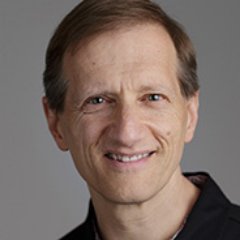
New paper: "AI Article Reviews Dominate Human Peer Reviews at Their Best: Evidence and Policy Choices" See: GaryKing.org/peerless. with Steven Worthington. Comments welcome!

1/ Most university AI task forces still leave the student AI rule to each instructor, administrations keep building committees, students barely have seats, and a small few now say try a detector. The inventory is up to 106 reports at 81 schools. kylesaunders.com/ai-taskforc…

4/ Oregon's AI Council says the university discouraged detectors "up to now" and should be ready to pilot the newest tools. That makes three reports that recommend trying one, against 35 that oppose them or warn about them.
5/ A second crawl of all 372 schools re-found reports at 39 of the 55 schools where I knew of one, against 44 in September, with essentially the same code. One crawl is a sample, and the site says so. Missing your school's report? Send the link. Write-up: kylesaunders.substack.com/p/…


Kyle Saunders retweeted

The number of people writing dissertations in the humanities has collapses, now the same thing is happening in the social sciences.
I'd wager that we will see a similar trend in psychology and other fields before long. Cuts in funding, the tight academic job market, and AI are rapidly changing the university and cratering graduate programs.

Kyle Saunders retweeted

“Any deterioration in basic democratic values is worrying,” writes Frances Lee, a professor of politics and public affairs. “Nevertheless, the track record of American elections since 2020 has been encouraging.” Read her guest essay to learn why economist.com/by-invitation/…

Kyle Saunders retweeted

Exclusive: Wealthy backers of the Protect College Sports Act quietly rounded up support from major conservative political figures, a DraftKings executive, university presidents, and conference commissioners.
FOS obtained the emails revealing a network with deep political ties.
Kyle Saunders retweeted

It is deeply discouraging that “evidence is the bottom line in any empirical inquiry” needs saying at all.

Recent prescriptions and policies would have us judge research by non-evidentiary standards, e.g. presumed political impact and scholar identity. In a new essay, Tom Clark and I argue empirical claims should instead be evaluated based on evidentiary strength. We outline a framework for judging evidence, and show its usefulness by revisiting high-profile scholarly disagreements spanning policing, political violence, election administration, and terrorism, before critiquing non-evidentiary approaches. We also argue social science needs a culture that is hospitable to critique—rather than one which condemns critics as “bullies”—if quality standards are to be upheld.
dropbox.com/scl/fi/fsgpflron…
