

A mission to capture the first photograph of a potential Earthlike planet orbiting Alpha Centauri. @BoldlyGo_Inst @MissionCentaur @UMassLowell & @SETIInstitute
Joined July 2016
- Tweets1.7K
- Following1K
- Followers1.9K
- Likes912





Our #solarsystem could host two habitable planets today, according to recent simulations from a group of @NASA researchers. #exoplanets
https://teapawt.net/t.co/6gTsvTKS2Q
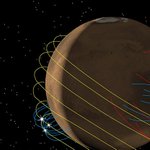
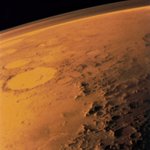
While Earth's orbit is nearly circular & it moves at a stable speed around the Sun, Mars doesn't. Its orbit is more elliptical & its speed varies. So while Earth's seasons change on the same dates year after year, Mars' seasons don't. #SeasonsChange
https://teapawt.net/t.co/yNJ2LuJsdF
To detect this super-Earth's water, the UCL researchers developed their own open-source algorithms which they applied to analyze K2-18’s starlight as it filtered through its planetary offspring’s atmosphere. #DiscoverTogether — @Forbes
https://teapawt.net/t.co/DupHeDoptb
A team of astronomers has now successfully identified the most massive neutron star on record called J0740+6620, the star is 2.14 times as massive as the #Sun, and measures about 15 miles in diameter. #Astronomy — @VICE
https://teapawt.net/t.co/2wSknGPCgP
Project Blue retweeted

PODCAST: científico del Instituto y @UnistellarScope CTO @AllPlanets hablaron sobre búsqueda de vida extraterrestre inteligente (SETI), Gemini @PlanetImager, @proj_blue, el eVscope Unistellar y #LASERSETI. Escucha aquí: buff.ly/30JdBQq #DiffusionScienceRadio

"Ten days is a really short amount of time for such a bright object to appear," Hannah Earnshaw, a postdoctoral researcher at @Caltech and lead author on the study, said in a statement. #Astronomy
cnet.co/2O5lY5y
Any #amateurastronomy fans out there? Share the difference between #asteroids, #comets & #meteors! https://teapawt.net/t.co/bJzqfFV5bi
2
Hubble scientists find new way to measure the age of star clusters #DiscoverTogether digitaltrends.com/cool-tech/…
"It's exciting to picture our new telescope out in space, exploring the universe, and we look forward to pushing the boundaries of human knowledge." - Scott Smith @NASAWFIRST telescope manager
space.com/nasa-wfirst-space-…

Project Blue retweeted

Water has been discovered in the atmosphere of a "super-Earth" exoplanet orbiting its star within the habitable zone. While the exoplanet's atmosphere isn't expected to be "habitable" by human standards, this is a remarkable discovery: spacetelescope.org/news/heic…

"It would be a dangerous volcanic world.. a place where Jedis go to die, perilously familiar to Anakin Skywalker," Apurva Oza, postdoctoral fellow at the Physics Institute of the University of Bern in Switzerland, said. — @UPI #MayTheForceBeWithYou
https://teapawt.net/t.co/bsnys87jQ5
3
A unique 3d printed telescope named the Analog Sky Drifter may spark a revolution in amateur telescope making. — @UniverseToday #3DPrinting #Astronomy
https://teapawt.net/t.co/h6LciiQmK8
.@thePhysicsGirl visits @LIGO to talk about why there are giant concrete tunnels in the desert. #physics #gravitationalwaves #SCIENCE
https://teapawt.net/t.co/hEIrfNXyps
3
Project Blue retweeted

PODCAST: Institute scientist and @UnistellarScope CTO @AllPlanets talks about the search for extraterrestrial life and intelligence (SETI), Gemini @PlanetImager, @proj_blue, the Unistellar eVscope, and #LASERSETI. Listen here: buff.ly/30JdBQq #DiffusionScienceRadio

How is it that two planets so similar in position, formation & composition can end up so different? — @inversedotcom #PlanetaryScience
https://teapawt.net/t.co/com7BIqXgD
"This planet is unlike the planets in our solar system, but more than that, it is unlike any other exoplanets we have discovered so far," said Sarah Blunt, study author & @CalTech graduate student #exoplanets #astronomy
cnn.it/2MGGg5m
What if #Earth is not the meter stick for habitability that we all tend to think it is? #LifeBeyond @UniverseToday
https://teapawt.net/t.co/gLvSntTJl4
Today marks the 230th anniversary of the discovery of #Enceladus, one of the most unique and puzzling worlds of our Solar System. — @Forbes #DiscoverTogether
https://teapawt.net/t.co/SuhtXB7fFU
Astronomers have discovered a second exoplanet hiding out in an intriguing star system. — @CNN #Astronomy #Exoplanets
cnn.it/2ZjNvlK
"Collisions between galaxies are common. Indeed, most galaxies have probably been involved in one or more encounters during their lifetimes.." #galaxies #spaceexploration #science
https://teapawt.net/t.co/WQ9kffBiqT