

Laboratorio de Sanidad Vegetal. Viticultura. I+D+I
Joined September 2022
- Tweets127
- Following209
- Followers93
- Likes135



🔬 I recently isolated a species of Sclerotinia from almond (Prunus dulcis) roots. Sclerotinia sclerotiorum is a pathogen with a broad host range affecting vital crops such as sunflower, soybean, canola, and vegetables 🍅🌽. Known for causing white mold and producing sclerotia.

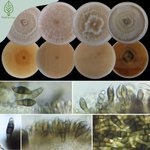
🍄 Recently we detected two fungal isolates that morphologically matched the genus Coryneum. DNA extraction and molecular identification pointed to Pestalotiopsis. Based on these results, we suspect this might be an unidentified species within the genus Coryneum.

Macrophomina phaseolina is a plant pathogen that causes charcoal rot, affects more than 500 plant species. Its ability to form microsclerotia, resistant structures, in dead tissues and soils allows it to survive for years, waiting for optimal conditions to infect.

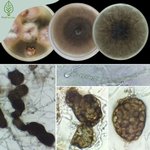
🌟 Recently, I isolated two fungi from forest soil samples that molecularly resemble the genus Diplogelasinospora.
🔬However, the literature on this genus is scarce, especially regarding its asexual stage. I cannot confidently confirm the identity of the isolates. Could you?

🌈 This image shows the diversity of Penicillium-like fungi such as Talaromyces, Penicillium and Penicillago grown in culture, where the colors and textures tell a story of biodiversity.
📸 A kaleidoscope of mushroom life, a reminder of the hidden diversity of the fungal world

Pro Plantae retweeted

#BEBIDAS | La PTV entrega los premios a la I+D+i del sector del vino
La Plataforma Tecnológica del Vino ha celebrado la VI edición de sus Premios de Innovación para continuar impulsando la I+D+i del sector vitivinícola
👉🏼 tinyurl.com/2hxervuy

ALT Foto de familia de los Premios PTV de Innovación. Foto: PTV
🌱 Trichoderma: a powerful biocontrol tool 🌿
• 🌾 Diversity matters: Explore differences among species and strains.
• 🧪 Targeted testing: Find the right strain for each challenge.
• 🌍 Local wins: Native strains are often more adaptable and effective.

🌱 Cylindrocladium buxicola: A fungus that shaped my journey 🌿
In 2008, during my first year at the Estación Fitopatolóxica do Areeiro, I learned about Cylindrocladium buxicola (now Calonectria pseudonaviculata), a pathogen that at the time was included in the EPPO alert list 🌍

🔍 Almond rust is caused by the fungus Tranzschelia discolor, affecting almond leaves and potentially leading to significant crop losses if left untreated.
🔬 These urediniospores are responsible for spreading the infection quickly during the growing season.

Stepping away from our usual work at Proplantae, we recently ventured into the field to search for mushrooms. We encountered two interesting and gastronomically prized species: Boletus reticulatus and Neoboletus erythropus (formerly Boletus erythropus). 🍄

🌱 The Nigrospora genus is a group of fungi characterized by its dark, large conidia, which are either spherical or slightly ovoid in shape, smooth-walled, and produced in abundance, turning the culture medium dark as the spores mature.

"Autumn surrounds us with its magic: temperatures drop, days shorten, and rain becomes a constant. But it also brings mushrooms! If we explore the microscopic world of fungi, we discover special structures for winter survival: cleistothecia. 🍂🍄

🔬 The genus Curvularia includes more than 200 species and is known for its wide diversity. Under the microscope, display distinct curved conidia (spores), often resembling crescent moons 🌙, which is where the genus gets its name.
#Curvularia #PlantPathology

🔬 Diplocarpon rosae, commonly known as black spot, is one of the main diseases that affect roses, damaging both their aesthetic value and their health🌹

Pro Plantae retweeted

Great Idea for Poster presentation...!!!
Via Caroline O'Donnell/O'Flaherty Lab (Linkedin)
#scicomm #scienceoutreach #sciencetalk #scienceposter
🚨 Didymella pomorum, a fungal pathogen known to cause canker and leaf spot in several fruit trees typically such as apple and pear trees 🍏🍐. This pathogen is now being reported in vineyards, adding grapevines to its list of susceptible hosts 🍇.

🌿As hop growers, one of the biggest challenges we face is downy mildew (Pseudoperonospora humuli)
🔍 What to Look For:
Yellowing leaves and spots, stunted growth and
Downy, grayish fuzz on the undersides of leaves: This is the sporangia and sporangiophores of the pathogen.

Pro Plantae retweeted

🌳 Novo na agroecoloxía? Asesoras a principiantes ou tes interese no sector? Este evento é para ti‼️
O Grupo Operativo #TERRACTIVA organiza a xornada final do proxecto:
📆 Mércores, 11/09
⌚17h
📍 Granxas da Lousada #Irixoa #ACoruña
📣 Inscricións ➡️ forms.gle/wNaPXiHSSdYFE6VB7

🦠 Cytospora is a genus of pathogenic fungi known for causing cankers and dieback in various woody plants. These fungi can be identified microscopically by their characteristic pycnidia , which release ellipsoid to allantoid under favorable conditions 🔍

