

building, gardening, hacking, making. Ocean and Mountains. AI Dev stuff @ Google, ex-AWS; Focus: https://teapawt.net/t.co/MPp0cLEhkH ; Tweets are my own.
Santa Barbara, ca 93105
Joined May 2008
- Tweets6.2K
- Following327
- Followers1.2K
- Likes2K






As we are coming up on the one-year anniversary, where was a zeitgeist moment around technical people starting to realize what's possible with a modern model in something like Claude Code.
I look at this coming holiday season as another opportunity for viral use-case spread. And the simmering discovery in the efficiency and effectiveness of personal agents such as Grokbot and Muse will be spread across many gatherings.
The question is what will happen when these people return to work after the holidays and realize that they want this same type of effectiveness at work.
And this is why as we speak I can tell you most agent platforms are trying to figure out the multi-user multiplayer work environment agent effectiveness that goes back to the openclaw revolution.
One unresolved issue will be how much do our agents live in a world like the TV show Severance.
Do we work with one agent who helps us in both work life and personal life, or do we have an innie agent and an outie agent?
2
8
363
Congrats to cursor and welcome to the multiplayer club. Scion has been multiplayer centric from the beginning and has evolved a rich set of controls for how users and agents interact.
All without vendor lock-in. Cursor may be first. but the herd is coming.
cursor.com/blog/projects-mul…

6
198
i’m unwinding my agents from what i’m going to term “Swarm Rot”.
It has a lot of similarity to the “dumb zone” of context rot which is now largely improved with better compaction approaches.
But i got greedy and let this swarm grow and self manage. Did the quality of output go down? No. Opposite problem. The agent team started to bog down in its own bureaucracy and red tape. In one corner an agent concerned about CI queue depth somehow got into a role where it was approving every other agent’s push. Eradicating this from my agent culture is kind of a pain, but educational. It resembles what i think we’ve all experienced in orgs somewhere. Something negative happens. so a well meaning rule is instituted. then another. soon nobody is able to get things done in an effective timeframe. quality stayed high. but speed and cost went in the wrong directions.
Networks of many types are a balance of excitatory and inhibitory pathways.
This feels much like observing and steering agent ecology as much as engineering.
7
5
255
Once again - couldn't agree more here on these points with Dex - a software factory is fundamentally an iteration on Platform Engineering. There is a reason why companies were not able to embrace the PaaS models (eg Heroku) for serious software delivery. Software Factories (aka Agentic SDLC) is no different.
Its what building block you use. We can all agree you should not start by vibe-coding a custom OS kernel, but where you decide to use pre-built blocks vs build your own is still a navigational challenge.

I would say
1) term software factory is being semantically diffused (hype machine, fomo)
2) software factory concept, as defined pre-ai by NATO, DoD, still useful mental model of “automate more things”
3) some of the more important parts of software factory are not easy to generalize. How you run your stack, linters, tests, previews are all things that are so heterogenous that solving in general with product is hard
This is why people feel duped by many software factory vendors
This is why I still fundamentally believe that the best products in software factory space are building blocks, not drop in solutions. Great engineers need tools that can be mixed and customized for precisely #3 reasons
3
146
My current working definition for "software factory" (but prefer 'agentic SDLC'
A software factory accepts units of work as structured intent or operational triggers and orchestrates a dynamic graph of agent sessions and deterministic tool runs to produce verified, reviewable, and promotable software artifacts through explicit acceptance criteria, authority boundaries, and feedback loops across the full SDLC.
It does this within a repeatable, governed system of cloud environments, harnesses, context sources, verification gates, and audit records.
1
3
156
this shrinking of the distinction between software and the agents that build it will be a big trend in 2027. the SDLC could start to look really different.

I'm now building an "improvements" feature into all of my personal vibecoded applications: a freeform text input that's hooked up to an agent that yolo implements whatever is submitted.
It's an interesting experience -- the activation energy barrier to sanding any rough edge or implementing any new feature becomes extremely low. Someone else who uses one of the applications I created has already implemented 150 improvements over the course of a few days. This pattern feels like a new kind of tool -- liquid software? -- and every application that doesn't have this feature now has a slightly rigid and anachronistic flavor. Why can't I just tell it how I want it to be different?
Now, it's not obvious to me how this pattern can or should scale. Does it become unmaintainable after a while? (Maybe model intelligence improvement outstrips my feature appetite such that it's fine?) How does collaborative software work in this model? Can software designed this way be secure and reliable?
Whatever the larger questions about broader deployment, it definitely works great in a personal context. It reminds me a little of the visions of Lisp/Lisp machines, Smalltalk, and HyperCard -- systems that the user can take control of and modify. Those visions never quite worked, though: the vast majority of software today is not end-user modifiable in any useful way. So, while this "liquid" affordance is a very small touch, the way it changes one's relation to the software feels a bit transgressive and empowering in a Lickliderian and Engelbartian way.

1
6
287
Preston Holmes retweeted

I built 𝚌𝚙𝚞-𝚌𝚑𝚊𝚝, a reproduction of @openai's findings of covert communication using the CPU.
It runs on a generic host with 2+ Firecracker microVMs with no internet access. Works on x86 and even my M5 chip.
I was able to chat via 3 separate mechanisms:
① CPU contention
② Cache eviction timing
③ DRAM bandwidth contention
… across multiple CPUs, defeating all Firecracker's production recommendations (no SMT, no KSM, tenants pinned to different cores.)
Essentially, if shared hardware is involved, there's a good chance your agents can communicate covertly. And with really decent latency.
The good news: this is decidedly different from a *side-channel attack* where the agents could steal information (Meltdown/Spectre), a category of attack that providers like Vercel Sandbox mitigate. Further, in our real-world environment, these 'whispering' techniques are much harder to pull off and easier for us to monitor and detect (sampling hardware counters + lots of at-scale statistical data.)
Noteworthy: ironically, OpenAI and Anthropic's models refused to do this work. Open weight models got the job done. I'm worried the labs' stance might backfire and get in the way of helping developers build correct and secure systems. e.g: building a secure sandbox requires having this kind of analysis, and without it, we'll have a less secure world.
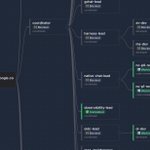
What it looks like when you have over 100 agents actively working across epics, issues, and UAT work. This is cooking. #scion
2
4
167
GCP is now the only place you can run a multi-agent solution and get access to Gemini, Anthropic, and OpenAI models all under one security, governance, and cost model. openai.com/index/openai-mode…

Preston Holmes retweeted

Not to be confused with scion from Google: github.com/GoogleCloudPlatfo…

You can now SSH into Cloud Run!
docs.cloud.google.com/run/do…

skills were invented to package and share some useful reusable bits of know-how. but people have now probably built many more skills for personal use than for distribution at this point. now with the smarter models needing thinner harnesses and the power of shared directories the line between private use of agent-skills as a standard vs just local notes/wiki in markdown blurs.
2
1
113

you think people went nuts over Jev? wait for SSI. I sense a disturbance in the force. the era of “just another LLM” is over.
2
92
pi durable might be a good fit for agent substrate

People of Pi: We've shipped Pi 1.0 with Pi Durable. Go make them yours.
earendil.com/posts/pi-1-0/

2
146
Agents are really good at working with oauth device flows, got me logged into this in flight (and duh the code is now invalid if you think i’m sharing some secret)


1
68
this might be a premature call. but opus 5.5 seems to be doing recursive deslopifying of a project. it is finding gaps and cleanups as a side effect of doing new feature work. filing issues for those items, dispatching agents to fix.
Those agents in turn find other cleanup opportunities, file issues, dispatching agents.
this has led to steady stream of dozens of often small, but cumulatively impressive hardening and robustness over the last 36 hours, fully automated.
software factories will be a thing if this proves true cc @dexhorthy
2
111
opus 5.5 is being pretty good at proactively finding security issues and being cautious about disclosure.
in my meta harness there are both group threads and DMs and agents raise security issues always in DM and almost with a whispering tone.
1
90
One inefficiency in my multi-agent use that results from agents being "over helpful + untrusting" is when an agent finds a secondary issue, and I want them to delegate that as a task, they feel they should fully investigate and research the problem to come up with a very detailed issue, which is then taken with doubt by the other agent who is compelled to do the exact same depth of research to make sure the report agrees with the code. This DOES mean less slop - but is not token efficient.
1
79