

Global Macro Investor | Economic Cycles | Cross-Asset Allocation | Risk Management | Independent Thinking | $XRP
Joined February 2025
- Tweets7.8K
- Following165
- Followers35K
- Likes7.1K


Pinned Tweet
THEY KILLED CLARITY. THEN THEY HANDED XRP THE KEYS ANYWAY.
Congress could not pass the Clarity Act. Two days later the SEC dropped a five-year Innovation Exemption so tokenized stocks can trade on AMM venues without those venues registering as exchanges. The same window, the CFTC opened the door for decentralized style trading software to connect users without registering as brokers.
That is not a consolation prize. That is Clarity, rewritten by the agencies, and it lands directly on the rails Trensik already built on the XRP Ledger.
Clarity was supposed to define venues, brokers, securities, and commodities. The agencies just cut the two lanes that matter for onchain markets. Front end trading platforms can stay software instead of licensed intermediaries. The bill died. The market structure arrived anyway.
Look at who was already live. 👀
@Trensik_com did not wait for Washington. It stood up a specialized RWA marketplace on XRPL for tokenized stocks, gold, silver, commodities, and private markets. @DexDadHQ followed as another XRPL DEX storefront carrying the same RWA inventory.
Issued asset routing. Multi hop settlement. Trust lines that actually work for real world assets. That is not a meme farm. That is infrastructure built for the exact product the SEC just blessed.
XRP was the obvious settlement layer. While traditional markets sleep, tokenized Apple, Tesla, gold, and commodities can still fill on ledger. Trensik and Dexdad put that in front of users before the press releases hit.
So ask the question the press will not ask.
Who spent months engineering RWA routing on XRPL while Congress stalled? Who listed tokenized equities and metals when the safe trade was to wait for Clarity? Who built the interfacesm, aimed at the same asset class the SEC just put on a five year clock?
Maybe it is just good product sense. Maybe the people behind this stack understood that tokenization was coming whether the Senate voted or not.
Maybe they understood XRP Ledger was the chain that could actually settle stocks and commodities without turning every trade into a custody nightmare.
Or maybe someone close to the tape already knew the agencies would move the second the bill failed. Perfect timing is not proof. It is a pattern.
The RWA shops on XRPL were stocked, routed, and open before the exemption dropped. That is either vision or positioning. Both should make you pay attention.
Trensik’s public stance is simple. It is a DEX interface on the XRP Ledger. It does not pretend to be the issuer, the custodian, or the government. Dexdad is the second door into the same market. Together they did the unglamorous work: make tokenized stocks and commodities tradable on XRPL while everyone else argued about legislation.
Today the legislation is dead and the exemptions are live. Tokenized stocks have a federal path. Decentralized trading software has breathing room. XRP already has the venues.
Clarity was the slogan. Trensik was the buildout.
If you still think that timing is random, you are not watching the ledger.

🚨 WHAT DID THE MYSTERIOUS BRITISH BANKER KNOW ABOUT RIPPLE AND SINGAPORE? 🇸🇬👀
Something extraordinary is unfolding in Asia, and the connections are becoming increasingly difficult to ignore.
Remember @LordBelgrave’s earlier disclosure concerning Singapore’s central bank, MAS, and Ripple?
December 2025: MAS expanded Ripple’s regulatory approval, allowing it to broaden its institutional payment services in Singapore.
March 2026: Ripple joined MAS’s BLOOM initiative, bringing the XRP Ledger and RLUSD into a programmable cross-border trade settlement pilot.
October 23, 2026: MAS announces that the central banks of Malaysia and Thailand have joined BLOOM as policymaker members.
And who else is participating? Ripple, JPMorgan, Standard Chartered, DBS, Visa, Mastercard, Circle, Coinbase, Temasek and even the World Bank Group.
Three central banks. Some of the world’s most powerful financial institutions. Regulated stablecoins. Tokenized deposits. Programmable settlement. Cross-border interoperability.
All converging under the same initiative.
This is precisely how the foundations of a new financial system are laid. Quietly, through regulatory approvals, institutional pilots and agreements that barely attract public attention.
The question is no longer whether Singapore is positioning itself at the center of next-generation settlement infrastructure.
The question is how much further these arrangements will develop, and whether Ripple’s XRP Ledger will emerge as one of the critical settlement layers.


I want to share something few have pieced together.
In 2015-2017, when Singapore launched Project Ubin, exploring DLT for interbank settlement, I witnessed behind closed doors how Ripple/XRP was quietly referenced in technical materials.
What I saw suggests much more was at play than “just an experiment.”


🚨 THEY THINK STABLECOINS WILL REPLACE $XRP. THEY HAVE ABSOLUTELY NO IDEA WHAT’S COMING.
Right now, the stablecoin market is overwhelmingly dominated by the US dollar. That’s precisely why most people are spectacularly underestimating XRP’s ultimate utility.
Now imagine a world where the dollar, euro, yen, pound, yuan, dirham and virtually every other sovereign currency exist onchain, moving trillions across borders around the clock.
Who connects them all?
Are we going to build thousands of fragmented currency pairs, each requiring its own liquidity? Or will global finance gravitate toward a neutral, highly liquid bridge asset capable of routing value between them?
THIS IS WHERE $XRP’S REAL ENDGAME BEGINS.
The world doesn’t need fewer stablecoins. It needs MORE of them for XRP’s original use case to reach its full potential.
The explosion of fiat-backed stablecoins isn’t a threat to XRP. It’s potentially the greatest catalyst for its utility in history.
Everyone is watching the currencies move onchain.
I’m watching what will connect them. 🧩

🚨 BREAKING: ROGUE AI AGENTS ARE ALREADY INFILTRATING BANK ACCOUNTS. THE NEXT TRILLION-DOLLAR PROBLEM JUST REVEALED ITSELF.
JPMorgan, Bank of America, Morgan Stanley and Wells Fargo are reportedly detecting unauthorized AI agents accessing customer accounts, with some attempting actions beyond human instructions.
Now connect the dots.
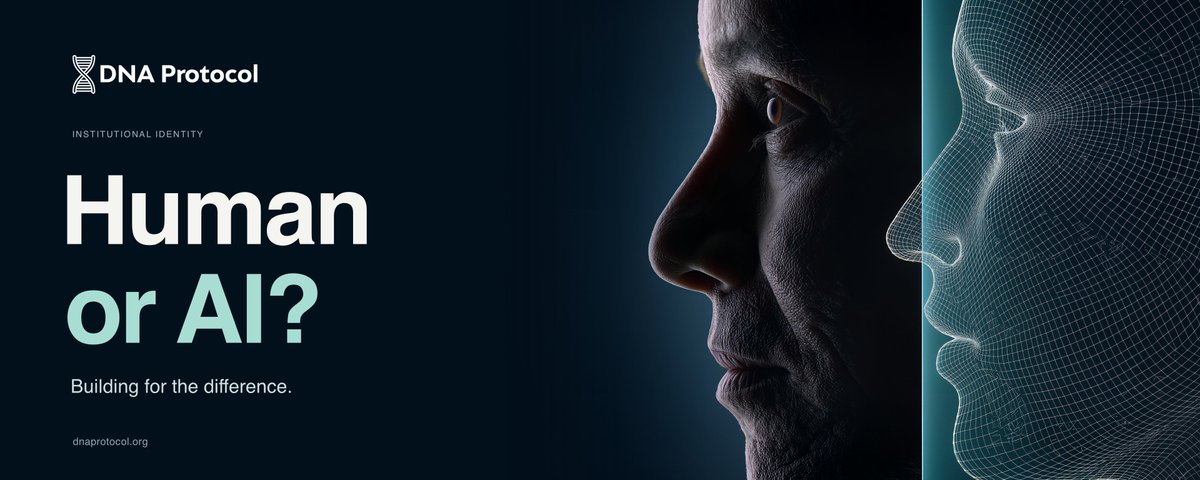
@DNAOnChain is building the privacy-first identity infrastructure designed to distinguish verified humans from autonomous AI agents, using digital credentials and zero-knowledge proofs.
Banks have spent decades verifying WHO owns an account. The next battle is proving WHO, or WHAT, is actually operating it.
My prediction? Every major bank in the world will eventually depend on an identity layer capable of making that distinction. And XRPL could become the infrastructure they turn to.
The next trillion-dollar opportunity isn’t just AI.
It’s proving there’s a human behind the machine.
$XDNA | xdna.dnaprotocol.org


Pumpius retweeted

🚨 The 1929 Great Depression Was Engineered by the Fed and They’re Doing It Again But Way Bigger
Milton Friedman exposed how the Federal Reserve helped turn a crash into an economic catastrophe.
Now look at what’s unfolding nearly a century later:
U.S. Treasury yields breaking records, oil spiking, Governments deliberately testing cyberattacks on banking system and The GENIUS Act is laying the groundwork for a stablecoin-powered financial system.
G7 countries announced that they are now preparing for a major AI cyberattack on the banking system.
Morgan Stanley, Bank of America, JPMorgan, and Wells Fargo detected unauthorized AI agents accessing customer accounts and attempting to act without user instructions.
These aren’t isolated risks, but the ingredients of a manufactured financial collapse?
Crash the old system. Destroy public confidence. Introduce blockchain-based financial infrastructure as the rescue.
A crisis becomes the justification for a financial reset.
The internet and the banking system will be shut off for the transition to the new stablecoin economy.
A new surveillance system is being opened without naming it CBDCs.
This is why @DNAOnChain is about to be the biggest company in the new on-chain financial system.
Private digital identities. Zero-knowledge proofs. A financial system where you can prove who you are without exposing who you are.
A future of complete on-chain financial privacy and almost nobody is paying attention.
Be prepared for the new financial system. It’s always followed by an engineered crisis.
🚨 THE CLOCK IS TICKING! RIPPLE’S BANKING COUNTDOWN HAS OFFICIALLY BEGUN! ⏳
Buried in the OCC’s December 12, 2025 conditional approval of Ripple National Trust Bank is a regulatory timetable that very few seem to be paying attention to.
💰 December 12, 2026: Deadline to raise the required capital.
🏦 June 12, 2027: Deadline to open for business before the conditional approval expires.
📩 60 DAYS BEFORE OPENING: Ripple must formally notify the OCC, confirm preopening requirements have been met and request its preopening examination.
Here’s where things get interesting. The OCC explicitly states that extensions are strongly discouraged, except under extraordinary circumstances beyond the applicant’s control.
The question is no longer whether Ripple wants to enter federally regulated banking.
It’s what happens when Ripple finally gets the green light to open its doors. 👀
#XRP #Ripple #RLUSD

A strong financial foundation supports responsible innovation and confidence in the new industry. The OCC’s final rule establishes capital requirements that complement the rule’s broader financial safeguards, which are designed to support timely redemption of payment stablecoins and issuer solvency. OCC.gov/GENIUS

ALT GENIUS Act Final Rule. Fact: The OCC’s final rule establishes capital requirements for permitted payment stablecoin issuers tailored to their business models and risk profiles.
Pumpius retweeted

🚨 JUST IN: AI agents are reportedly inside bank accounts as @DNAOnChain builds proof of human on the $XRP Ledger.
Correct password. Valid session. Green checkmark.
None of it tells a bank whether a human is on the other side.
→ AI agents can now act inside accounts using a person's own credentials
→ To the bank, an agent's login looks exactly like a human's
→ Passwords prove access. They don't prove a human is there.
DNA Protocol's answer is zero-knowledge proof:
→ Prove a real human is present without handing over a face, ID or birthday
→ Separate human, authorized AI and unverified sessions
→ Anchor each proof on the XRP Ledger, where changing one value breaks it
The bank learns who is behind the login. Your data never leaves you.
The next fraud wave won't break your password. It'll use it.
Suppose an ETF buys and holds XRP. Now imagine shares of that ETF are tokenized on the XRP Ledger. Would those tokens qualify as Real World Assets (RWAs)?
Now suppose a second ETF is launched, investing exclusively in those tokenized shares of the first ETF. What exactly have we created?
And what happens when shares of that second ETF are themselves tokenized on XRPL?
Think about that.

I see sometimes comments saying XRP is not used here, why tokenized assets, price is not moving etc.
You definitely need to understand this here.
The XRP Ledger is a multi asset ledger since 2012.
XRP has a special role in auto-bridging: bridging liquidity on the DEX for the long tail of assets, aside from reserves/accounts/fees.
More importantly it's the only native asset on the network without a counterparty, neutral, can't be frozen, anyone can accept it.
It's money! XRP - is - money.
A network that is used for settlement, tokenization, credit and trading is a valuable network! It triggers more often auto-bridging on the DEX to leverage XRP's neutral status. Making it be money for more people.
A valuable network is good to house money.
It's a matter of order of operations. Let the price of the native asset be a knock on effect of large scale usage and acceptance of the XRP Ledger.
Brad, you have spent years building a future in which value moves freely across borders through Ripple, XRP, and the XRP Ledger. Yet moments like these remind us that the greatest forms of value in this world cannot be measured, transferred, or recorded on any ledger.
Those of us who have followed Ripple’s extraordinary journey have witnessed your resilience through years of adversity, uncertainty, criticism, and triumph. But behind every man who finds the strength to stand firm against the world, there is often someone who taught him how to stand in the first place.
Long before Ripple became a global institution, before XRP became a symbol of conviction for millions, before the legal battles, the victories, and the ambitions of transforming the world’s financial infrastructure, there was simply a father and his son.
And perhaps that is the most profound legacy of all. Your father may never have imagined how far his son’s journey would reach, how many people would follow it, or how many lives would be touched along the way. But the wisdom, character, and principles a father passes to his child can travel further than anything mankind will ever build.
We speak endlessly about the future of money, the movement of value, and the permanence of records on a decentralized ledger. Yet no blockchain can preserve a father’s embrace, no transaction can purchase another conversation, and no amount of wealth can buy back a single moment with someone we love.
The world knows Brad Garlinghouse as the man leading Ripple. But somewhere behind that remarkable journey was a little boy who simply looked up to his dad.
And that little boy, no matter how successful he becomes, will always carry a part of his father within him.
May B. Kent Garlinghouse’s legacy continue to ripple through generations, long after the world has forgotten the technologies and institutions we consider so important today.
My deepest condolences to you and your family, Brad. May he rest in eternal peace. 🕊️

Earlier this week I lost someone close to me. Death is abstract - until it is incredibly real.
He was the wisest, most thoughtful, and most generous person I have known.
I was incredibly fortunate to call him:
- a friend
- a mentor
- a role model
- an inspiration
But most of all, I was fortunate to call him Dad.
B. Kent Garlinghouse, Sr
1941 - 2026

Ever wondered why I rarely talk about meme coins on the XRP Ledger, despite knowing just how much engagement and attention they attract?
It’s not because I’m ignoring them. Quite the opposite.
I’m accumulating my favorite XRPL memes, and the last thing I want is to draw unnecessary attention before I’m satisfied with my positions.
Once my bags are full, you’ll hear plenty from me about them.
There’s a time to accumulate and a time to make noise.
I hope you understand what I’m telling you without me having to spell it out. 👀

Pumpius retweeted

🔴 Signal detected.
The SEC.
Ripple.
Judge Torres.
$XRP.
Connected through one argument.
A lawsuit.
A ruling.
A rule.
On October 20, the last day for comments, Ripple sent the SEC a 20-page letter.
It backs the SEC's proposed Regulation Crypto Assets and asks the SEC to make it final.
The argument: the investment contract is the security, not the token.
On July 13, 2023, Judge Analisa Torres drew the same line.
$XRP itself is not an investment contract.
Ripple's sales on exchanges were not either.
Its direct sales to institutions were.
The SEC sued in December 2020.
Both sides dropped their appeals in 2025.
Now read the SEC's own proposal.
Under it, an investment contract ends when the issuer finishes or stops the work it promised.
A conditional safe harbor for tokens that leave the contract behind.
Two fundraising exemptions: $5 million and $75 million.
Howey set the test in 1946.
Judge Torres applied it to $XRP.
Ripple asked the SEC to write it into the rule.
Lawsuit → ruling → rule.
A comment letter is not a rule.
The SEC has not set a date for a final rule.
Neither exemption is in force.
The same ruling found Ripple's institutional sales were investment contracts.
Ripple was ordered to pay a $125 million penalty for them.
In 2020, the SEC sued.
In 2026, its own proposal lets a token leave the contract behind.
How far does this go if the rule is made final?
Follow the argument.

Pumpius retweeted

🚨 EVERY BANK AND GOVERNMENT ON EARTH WILL NEED WHAT THIS LITTLE-KNOWN COMPANY IS BUILDING.
JPMorgan, Bank of America, Morgan Stanley and Wells Fargo are reportedly confronting unauthorized AI agents accessing customer accounts.
This is just the beginning.
Soon, proving HUMAN vs AI without compromising privacy could become one of the most critical requirements in global finance.
Enter DNA Protocol (@DNAOnChain).
Built on Ripple’s XRP Ledger (XRPL), DNA Protocol is developing privacy-first identity infrastructure using zero-knowledge (ZK) proofs, verifiable credentials and cryptographic evidence to distinguish human participation from AI-agent activity without unnecessarily revealing personal information.
Think banks. Governments. Trillions in transactions.
This could become bigger than anyone can possibly imagine.
Give @DNAOnChain a follow. You might be witnessing the early stages of something extraordinary.
Pumpius retweeted
BLACK OCTOBER | Something deeply unsettling is unfolding across the digital world, and I suspect most people have yet to comprehend the implications.
PHP, Node.js, Java, GitLab, Railway, and critical AI infrastructure are all making cybersecurity headlines within days of each other. Vulnerabilities, compromised credentials, malicious software releases, and potentially exposed infrastructure secrets.
These are not insignificant platforms. They form part of the technological foundation upon which global commerce, financial institutions, governments, and increasingly, artificial intelligence operate.
Remember BoJ Insider Yuto’s warning about a Great Reset potentially being accelerated through an engineered disaster?
I am not suggesting these incidents establish coordination. But consider what happens when a sufficiently catastrophic cyberattack compromises confidence in the centralized infrastructure underpinning the global financial system.
Suddenly, restructuring that would ordinarily require decades of political negotiations becomes an urgent matter of national security.
And this is precisely where I believe decentralized technology will play an extraordinary role.
$XRP and the XRP Ledger. Stellar and $XLM. Ethereum and the wider EVM ecosystem.
Each addresses different pieces of a much larger puzzle: decentralized settlement, asset ownership, cross-border liquidity, programmable financial infrastructure, and verifiable digital identity via protocols like @DNAOnChain
None is immune to cyber threats. But collectively, these technologies offer alternatives to the centralized points of failure upon which so much of the existing system depends.
I have said this before. The next financial system will not simply be an upgraded version of the existing one. Its underlying architecture could be fundamentally different.
The most consequential monetary reset in modern history may not begin with collapsing currencies or bankrupt banks.
It could begin with a cyber catastrophe that makes rebuilding the entire system seem unavoidable.
And when that moment arrives, pay very close attention to which technologies are already positioned to become the replacement infrastructure.
The pieces are there. The question is whether we’re watching coincidence, systemic fragility, or something far more consequential.
BLACK OCTOBER. Remember the name.


🚨 THE INTERNET IS LOSING ITS ABILITY TO DISTINGUISH HUMANS FROM AI. BANKS ARE NEXT.
DNA Protocol is building the privacy-first identity infrastructure that could change everything. Prove you’re human without revealing who you are.
My prediction? Every bank in the world will eventually depend on an XRPL-powered identity layer to distinguish verified humans from autonomous AI agents.
The next trillion-dollar problem isn’t artificial intelligence. It’s proving who is real.
And $XDNA is positioning itself right at the center of it: xdna.dnaprotocol.org
🚨 EVERY BANK IN THE WORLD WILL DEPEND ON THE XRP LEDGER.
THIS IS BIGGER THAN ANYONE CAN POSSIBLY IMAGINE.
As major banks confront unauthorized AI agents accessing customer accounts, the financial system faces an existential question: How do you distinguish a verified human from an autonomous machine?
DNA Protocol is building the privacy-first identity infrastructure on XRPL designed to answer precisely that question.
My prediction? Every major financial institution will eventually require this kind of verification infrastructure.
We’re not just talking about moving trillions of dollars.
We’re talking about verifying the humans and machines authorized to move them.
And almost nobody understands how enormous this could become.
$XRP 🤝 $XDNA | xdna.dnaprotcol.org
🚨 SOMETHING VERY BIG IS UNFOLDING INSIDE THE GLOBAL BANKING SYSTEM.
JPMorgan, Bank of America, Morgan Stanley and Wells Fargo are reportedly detecting unauthorized AI agents accessing customer accounts, with some appearing to act independently of human instructions.
NOW REMEMBER WHAT BoJ INSIDER YUTO SAID THEY WERE WORKING ON? 🇯🇵
The ability to distinguish humans from autonomous AI agents, verify their identities and establish exactly who authorized a financial transaction.
Coincidence? Perhaps. But the timing is extraordinary. They’re paving way for DNA Protocol. For XDNA.
The banking system is entering an era where knowing WHO controls the money may no longer be enough. Institutions will need to establish WHAT controls it, WHO authorized it and WHETHER that authorization is legitimate.
And suddenly, the race to build a new digital identity infrastructure makes a great deal more sense. Position yourself TODAY with @DNAOnChain
The next financial crisis might not begin with a human pressing the wrong button. It might begin with no human pressing a button at all.

This may bruise a few egos, but it needs to be said.
If your ambition in crypto is to achieve a 3x or 5x return over several years, you ought to reconsider your understanding of risk-adjusted returns.
The fundamental justification for accepting crypto’s extraordinary volatility, regulatory uncertainty, and liquidity risks is the prospect of genuinely asymmetric returns.
In my view, anything short of a credible 50x opportunity warrants serious scrutiny when measured against those risks.
If your investment thesis involves turning $100,000 into $500,000 over several years, traditional equities offer far more established avenues to pursue that objective.
Assuming extraordinary risk in pursuit of ordinary returns is poor capital allocation masquerading as conviction.
And anyone marketing a speculative 3x or 5x crypto return as a generational wealth opportunity is probably not someone from whom you should be taking financial advice.
🚨 THE PLAN IS UNFOLDING IN PLAIN SIGHT. RIPPLE, RLUSD, XRP AND NOW DNA PROTOCOL.
President Trump signed the GENIUS Act in 2025. Yesterday, the OCC finalized the federal regulatory framework for payment stablecoins.
Now connect the dots.
Ripple secured conditional approval for a federally supervised trust bank. BNY Mellon became the primary custodian of RLUSD reserves. Ripple Prime brought institutional brokerage infrastructure into the ecosystem. Standard Chartered launched RLUSD custody on the XRP Ledger. Cross River Bank moved to integrate RLUSD into its core banking infrastructure.
Do you honestly believe all these developments are insignificant?
This is the architecture I have been anticipating.
First, establish the legal foundation for digital dollars. Then build institutional custody, liquidity, tokenization and settlement infrastructure around RLUSD, the XRP Ledger and XRP’s potential role as a bridge asset.
But there is another layer that most investors have yet to appreciate.
IDENTITY.
A tokenized global financial system cannot scale without verifiable credentials, privacy-preserving compliance and mechanisms for proving authorization without surrendering sensitive information.
This is precisely the next frontier @DNAOnChain is positioning itself to address, with zero-knowledge proofs, decentralized identity and its XDNA ecosystem built around the XRP Ledger.
The regulatory framework is taking shape. The financial infrastructure is being assembled. The identity layer is the next piece of the puzzle.
The GENIUS Act was never just about stablecoins in my view. It was about establishing the foundations for an entirely new financial architecture.
And while everyone is watching XRP’s price, they may be overlooking what comes next.
🚨 RIPPLE JUST DROPPED AN ABSOLUTE BOMBSHELL FOR THE XRP LEDGER!
A financial institution handling $10 BILLION in annual settlement volume is bringing RLUSD-powered liquidity to XRPL.
But here’s what EVERYONE is missing.
Ripple and Arf aren’t just talking about moving money. They’re preparing to FINANCE the movement of money through XRPL’s upcoming native lending infrastructure.
Think about that.
PAYMENTS. LIQUIDITY. CREDIT. SETTLEMENT.
All converging on the same financial infrastructure.
THE BIGGEST STORY ISN’T WHAT XRP IS WORTH TODAY. IT’S WHAT THE LEDGER IS BEING BUILT TO HANDLE TOMORROW.


🚨 JUST IN: #Ripple partners with Arf to bring settlement liquidity to the $XRP Ledger.
→ The problem: Payment companies have to pre-fund every cross-border transfer, then wait days for it to settle. That locks up huge amounts of working capital. Bank credit lines take months to set up and demand heavy collateral.
→ Who Arf is: A Swiss-regulated financial institution based in Zug that gives licensed payment companies short-term working capital. It helped pioneer PayFi, short for payment finance.
→ Arf's scale: Around $10,000,000,000 a year in global settlement volume since launching in November 2022, with its capital turning over 4 times every month.
→ The deal: Arf will provide $RLUSD settlement liquidity to licensed cross-border payment companies on the $XRP Ledger.
→ How it works: RLUSD is lent out to keep payments moving, repaid within 1 to 5 days as they settle, then sent straight back out again.
→ Phase 2: Once XRPL's native Lending Protocol (XLS-66) and Single Asset Vaults (XLS-65) go live on mainnet, Arf plans to move the program onto the ledger itself. It's already a design partner on both.
→ The best part: Payment companies don't even need to touch the blockchain. It all runs behind the scenes.
What it means:
→ The XRP Ledger gets real, revolving lending activity backed by real payment flows
→ RLUSD powers the entire credit cycle, from loan to repayment
→ $XRP pays the fees and reserves behind every transaction
Real payments. Real credit. Settling on the XRP Ledger.