

I break down DeFi products, yields and the risks behind the numbers. Lending, stablecoins, perps. Own charts & onchain checks
DMs open for research & collab
Joined July 2023
- Tweets37.5K
- Following1.8K
- Followers6.8K
- Likes65.7K


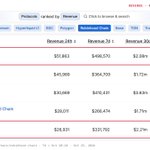




if you farm Variational points, each trade still costs you something
@variational_io is a perp DEX with no trading fee, so the cost of a trade is the spread between the buy and sell prices of its own market maker, the OLP, which takes the other side of every trade
on oct 26 that spread was about $32 to open and close a $100,000 $BTC position, or $13 on $ETH
on Hyperliquid the same trade costs about $90 in fees at the base taker rate, while limit orders there cost about $30
20% of Variational's spread goes to a treasury that now holds about $11.7M in $USDC, and the team plans to use all treasury revenue to buy and burn $VAR once the token launches in Q4
the other 80% stays with the OLP, which uses it to cover the cost of hedging on other exchanges
the OLP is also the main risk, because it pays every winning trader, and the docs say that if it ever ran out of money, their unpaid profit would become bad debt
Variational suits traders who mostly use market orders on $BTC and $ETH, though a $BTC trader who uses limit orders pays about the same on Hyperliquid
for a points farmer, that $32 per $100,000 is the price to compare with what the points are worth in the end

last week in DeFi in 5 numbers ↓
here's what changed during oct 19-25:
- $2.05B left stablecoins, the biggest weekly drop since early august and the third in a row
- DEX volume was about 13% lower than the week before, so LPs earned fees on less trading
- @aeroxyz's new pools reached $94M three days after launch, while the old Aerodrome Slipstream pools lost almost half their money
- @papertrade_xyz's TVL fell by half to $32M, which is less than a third of what it had at launch
- @Polymarket's open interest rose 12% to $391M in the week of Brazil's runoff
so Polymarket was the only one of the five that grew, since even with its new pools Aero as a whole ended the week 9% smaller

Brazil's market was closed when Lula won, but a Hyperliquid perp wasn't
as the runoff count showed president Lula ahead, @Kalshi odds of a Bolsonaro win fell from 80% to 10%, and the @tradexyz perp on @HyperliquidX that tracks the Brazil ETF EWZ fell with them
then it stopped at $40.46, exactly 5% below Friday's close, because the perp can't move more than 5% from a reference price while the real EWZ is closed, with the limit no longer moving after one reset
it stayed at that floor for about 50 minutes, until the real EWZ started overnight trading at 8:05 PM ET and the perp dropped as much as 19% further within five minutes
so over the weekend the perp repriced only the part of the move that the limit allowed
if you trade weekend news with stock perps, check that limit first, since a liquidation below it has to wait until the real market trades again


🇧🇷Brazil runoff night, and the perp is trading the odds in real time.
Since 4pm ET, @Kalshi's Bolsonaro contract went 80% → 10%, and the @HyperliquidX Brazil ETF perpetual went 46.30 → 40.46, down 12.6% from its high and now 5% below EWZ's Friday close of 42.59.
The last leg, 42.58 to 40.46, took about a minute. EWZ opens Monday into a market that already repriced it.
Track live on @TheTerminal

a week later $UNI holders got even less from Robinhood Chain
Uniswap's fee switch there brought them about $330K over oct 18-24, after about $425K the week before and $3.5M in its best week, at the start of september
on the same chain @Lighter_xyz kept about $500K in fees from its perps that week, a bit less than the week before and about twice its early september level
so Lighter now keeps more on Robinhood Chain than Uniswap's fee switch takes there for $UNI holders


the Uniswap fees that go to $UNI holders fell 43% in a month, and one chain explains 86% of the drop
by chain:
- Robinhood Chain: $9.0M → $3.1M
- all other chains together: $7.1M → $6.1M
in september Robinhood Chain brought in 56% of the month's total, about $3.5M a week at the peak and $0.4M last week
without Robinhood Chain $UNI holders get about $6M a month, and anything above that depends on trading on one chain that launched in july

Jupiter Lend's lead over Kamino in loans grew from $17M to $117M
Jupiter Lend first passed Kamino in active loans on oct 6, and borrowers now owe $971M on @JupiterExchange's lending app against $854M on Kamino
the gap grew because Kamino's loans went down 20% from $1,066M a month ago, while Jupiter Lend's are about where they were
Kamino still has more TVL, $1.27B against $1.01B, and over the last 30 days users paid almost equal fees on both, $4.7M on Kamino and $4.5M on Jupiter Lend

Circle makes about $29 a month from $10,000 of $USDC in your wallet
behind every $USDC there's a dollar that Circle holds in cash and short-term US government debt, and the interest on it goes to Circle
by DefiLlama's estimate, those reserves earned about $211M over the last 30 days, the highest 30-day total it has recorded
Circle said this month that 59% of its revenue in the first half of 2026 went to distribution partners and transaction costs, while you get nothing for holding it
Tether's reserves made about $524M in those 30 days, also the highest in DefiLlama's data, which is about $29 a month for every $10,000 of $USDT
deposited on Aave, the same $10,000 of $USDC pays about $32 a month right now to anyone who accepts the smart contract risk

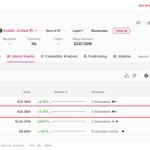
the first monthly $XPL unlock for the team and investors is today
adding the ecosystem fund's usual monthly share makes it about 228M $XPL, worth roughly $16M after a 40% price drop over the past month
meanwhile @Plasma, where simple $USDT transfers are free by design, burned about $13.6K worth of $XPL in gas over the last 30 days
so this one unlock adds more than 1,000 times as much $XPL as the chain burned in those 30 days
at this pace the burn will barely slow the ~60% supply growth the unlocks bring over the next year

about 60% more $XPL will be in circulation a year from now, and it starts with the oct 25 unlock
that day the team and investors behind @Plasma start their monthly vesting, 139M $XPL a month for 24 months
together with the 89M the ecosystem fund has been unlocking every month since oct 2025, that's about 228M $XPL on the 25th of each month
over the next 12 months it adds up to about 2.7B $XPL, on top of the 4.5B in circulation today
at today's ~$0.078 every 25th brings about $18M of new supply, on a token that is down 95% from its $1.68 high in sept 2025
the same amount keeps coming every month until sept 2028, when all 10B $XPL of the initial supply are unlocked

useful, but it can't decode the oracle on the two biggest $USDe markets
together they hold about $660M of loans against $USDe on Base and Robinhood Chain, yet both pages say "This oracle has not been decoded"
i checked both oracles on-chain, and they price 1 $USDe at exactly $1
when $USDe is more than 0.5% away from $1, anyone can start a 16-hour timer, then the oracle switches to Chainlink's market price if the gap is still there and someone confirms the switch
so a short $USDe depeg on its own can't trigger liquidations there, while in a longer one lenders wait at least 16 hours before the oracle uses the market price


Just saw now that @Morpho started showing the oracle type on its UI:
Its new oracle section shows "Price" for market price oracles and "Fundamental" for NAV oracles, making it very easy to check the oracle type.
Very glad to finally see this change live.

$10,000 in the $AUTO loop on @kamino makes about $234 a month
about $82M of $AUTO already sits in these loops, so i ran the numbers to see how the loop gets there and what it costs in risk
$AUTO itself is a token backed by near-prime US car loans that pays 10.9% a year today
how the loop works:
- deposit $AUTO in Kamino Multiply
- borrow $wYLDS at a fixed ~6% for 30 days
- the app buys more $AUTO with the loan, up to 4.5x
at the full 4.5x, $10,000 becomes about $45,000 of $AUTO with a $35,000 loan, which pays about $234 a month after interest, while the same $10,000 without the loop pays about $91 a month
right now you can't open a new one, since every pool it borrows from showed less than $0.01 left when i checked today
what can change that $234:
- $AUTO's rate moved between 8.4% and 11.5% over the last 30 days, which puts the loop anywhere from about 17% to 31% a year, and below the ~6% loan rate it earns less than just holding $AUTO
- the ~6% is locked for 30 days, and keeping it after that depends on the loan rolling over while the pool still has money to lend
- the loan is already 77.8% of the position and Kamino starts liquidating at 80%, meaning a drop of about 2.8% in $AUTO's price against the loan is enough
so at full leverage the extra ~$143 a month over just holding comes with a position about 2.8% away from liquidation, while the average loop there runs at about 3.65x with roughly 9% of room

the reason Solana came first in this test is who ends up buying the BTC
i ran the same 1 BTC sale on Jupiter just now, and the whole order went through JupiterZ, where trading firms send their own quotes, with no liquidity pool in the route
Jupiter's regular router sends the same order to prop AMMs, pools where a trading firm sets the price itself, and those now handle about 40% of all DEX trading on Solana
so whether crypto has a liquidity problem depends a lot on whether trading firms bother to quote on that chain


Does crypto have a liquidity problem?
Yes and no
I tested what happens if you sell 1 full BTC on different chains:
1. Solana: $80,559
2. Ethereum: $80,510
3. BNB: $80,502
4. Base: $80,412
5. HyperEVM: $80,398
6. Robinhood: $80,269
7. Monad: $80,230
8. Berachain: $78,444
Even Robinhood is already 0.36% below Solana
And this is just 1 BTC, the most liquid asset in crypto.
With memecoins, it's a whole different story

Pump really is a great business, and since july 2025 @Pumpfun has spent about $456M buying back $PUMP
yet $PUMP trades at $0.0041, almost exactly what ICO buyers paid in july 2025
over the past year the buybacks averaged about $22–26M a month, both while the price fell 71% into june and while it rallied 5x into early october
so funny enough, the buybacks on their own don't decide where $PUMP goes, even with the business doing this well


$AUTO deposits on @kamino grew 10x in a month, mostly because the token pays about 10% a year while a fixed-rate loan against it costs about 6%
people deposit $AUTO, borrow against it at the fixed rate, buy more $AUTO with the loan and repeat, which is why $77M of the $98M sitting on Kamino is now looped
the 10% itself comes from near-prime US car loans, so the whole setup works only as long as those drivers keep making their payments

most of the wallets that voted on @PancakeSwap's plan to give LPs 88% of swap fees were against it, but the plan passed anyway
for two days the against side was clearly ahead, until one wallet that held 70% of all the voting power voted for it on oct 23 and decided the outcome on its own
which means that from november, LPs on v3 will start keeping 88% of the fees they earn instead of 66-68%, while the remaining 12% will go to the treasury
personally, i'd rather see that 12% used to burn $CAKE than left sitting in the treasury

PancakeSwap wants v3 LPs to keep 88% of swap fees, up from 66–68% today
for comparison, here's how much of each swap fee LPs keep on other big DEXs:
- 95% Meteora DLMM
- 87% Orca
- ~86% Uniswap v4 on a 0.3% pool, where the protocol fee is added on top
- 84% Raydium CLMM and CPMM, 12% buys back $RAY
- 75–83% Uniswap v3 with the fee switch on, the rest burns $UNI
- 50% Curve, the other half goes to veCRV holders
- 0% Aerodrome for staked LPs, their fees go to veAERO voters
under the Flip the 15–23% that burns $CAKE today goes to LPs, and the treasury keeps about 12%
Curve and Aerodrome sit low because their LPs also earn $CRV and $AERO emissions, and the Flip moves PancakeSwap up this list while cutting $CAKE emissions 69%

most of what Pendle lost was Ethena money
at its peak last year, about 70% of the money in @pendle_fi was @ethena's $USDe
since then $USDe has shrunk by about two thirds, and the $USDe in Pendle went from $9.6B to about $80M
so the 93% drop mostly comes down to one stablecoin leaving, the rest of Pendle shrank too, by about three quarters

➥ $PENDLE has lost 93% of its TVL from ATH
for context, @pendle_fi's TVL peaked at $13.39B in Sept 2025
as of October 24, DeFiLlama reports:
- $958M TVL, -20% / 30D
- $815.6M DEX volume / 30D
- $452K protocol revenue / 30D
- $129.8M Boros open interest
but its new derivatives product has already processed over $7B in trading volume
Pendle's official investor dashboard shows:
→ $94.4B+ cumulative Pendle V2 trading volume
→ $7.1B cumulative Boros trading volume
→ $152M Boros volume / 7D
@boros_fi has now processed ~7.5% of Pendle V2's lifetime trading volume, despite being a much younger product
i think this is where the next part of the $PENDLE thesis gets interesting
- Pendle V2 built its business around splitting yield-bearing assets into principal and yield exposure
- Boros takes that model into perpetual funding rates
instead of simply earning floating funding, traders can hedge or speculate on where those rates are heading
and that's a market that exists regardless of which stablecoin or yield-farming strategy is popular
there's also an important difference in monetization
Pendle's investor dashboard currently shows $15.9M annualized revenue for V2, compared with only $800K for Boros
so Boros has meaningful trading activity, but it remains a much smaller revenue contributor
its revenue is also retained internally rather than distributed to token holders
i'm interested in $PENDLE as an onchain interest-rate infra play
the combination of fixed-yield markets and funding-rate derivatives gives Pendle exposure to 2 different sources of demand
but I'm not ignoring the declining TVL or the relatively modest revenue coming from Boros
i hope Boros growing beyond $130M OI while turning more of its trading activity into sustainable protocol revenue
if that happens alongside a recovery in V2 deposits, the investment case becomes much more interesting
for now, I'm keeping $PENDLE on my watchlist

Arthur Hayes sold everything in Maelstrom's directional book, about $22M of $ETH, $ENA, $UNI and other alts
he says macro and geopolitics look dicey
the last big geopolitical shock for crypto was oct 10 2025, when Trump's tariff threat on China set off about $19B of liquidations in one day, so i compared today's onchain numbers with the day before:
- open interest on perp DEXs is back at $13.5B, where it was right before the crash cut it almost in half
- stablecoin supply fell by about $2B this week, while in the week before that crash it grew by $4.3B
- borrowing on Aave is about $12B against $18B of TVL, the same share as back then, when it was $30B against $45B
- Hyperliquid has about 10% more deposits per dollar of open interest than it did then
so of these four, only stablecoin supply and Hyperliquid's deposits look different from right before that crash


Extended announced $XTEN a day after leaving Starknet for @arc, and the airdrop will be sent to Arc wallets too
the move took about $114M with it, Starknet went from about $158M to $42M overnight per DefiLlama
30% of the supply goes to people in Extended's points program, the token comes in november with full tokenomics from oct 31
i think the timing hurts Starknet more than the TVL number, an airdrop is when a chain usually gets its new users, and this one will onboard them to Arc

The ticker is $XTEN.
Coming November 2026. Tokenomics to follow from 31 October.
This communication is not an offer to claim XTEN.
five weeks after going live, @arc holds about a fifth of all @aave V4 deposits
V4 deposits are at a record $1.47B across all its networks, and $289M of that sits on Arc
the loans in this post kept growing too, Arc is at about $112M borrowed now
Arc's deposits have stayed near $290M since mid-october though, the newest money went to V4's other networks


the main $AERO/$USDC pool on @aeroxyz paid about 100% in $AERO when i posted this, now it pays about 27%
the pool grew from $10.7M to $25.6M as money moved over, about $50M has left the old Aerodrome and Velodrome pools since this post
the old pools still hold about $260M per DefiLlama, two thirds of all the liquidity
my guess is a lot of that stays there for weeks, anyone who didn't move while the new pool paid 100% probably isn't watching it

11 hours after Aero went live, most of the liquidity is still in the old pools
about $310M is still in Aerodrome and Velodrome pools, which stopped paying rewards at 00:00 UTC, per DefiLlama
about $75M has moved to the new @aeroxyz pools so far, per the Aero app
that's why the new pools pay so much $AERO right now, the main $AERO/$USDC pool shows about 100% and $AERO/$WETH about 340%
those rates will fall as the rest moves over, and Autopilot's first allocation at 16:00 UTC will change them too
if you still have an LP on Aerodrome, it hasn't earned any $AERO since midnight

same $USDC, same @aave, but $10,000 pays anywhere from $19 to $47 a month depending on the chain ↓
Aave sets each rate by how much of that chain's pool is borrowed, so the chains where people borrow more pay more
from the lowest to the highest, 7-day median with rewards:
- Arbitrum: 2.3%, about $19 a month
- Polygon: 3.2%, about $27
- Ethereum: 3.8%, about $32
- Avalanche: 5.4%, about $45, it swung between 4.2% and 8.5% this week
- Monad: 4.1% + 1.4% in rewards, about $46
- Base: 4.0% + 1.6% in rewards, about $47
Linea shows 11% right now because almost all of its $USDC is borrowed, so withdrawing there may have to wait until someone repays

Nvidia fell about 4% yesterday, nearly enough to liquidate a max-leverage Nvidia loop on PendleLoop
PendleLoop turns a leveraged loop on tokenized stocks into one click, it deposits the stock token on @aave, borrows $USDC against it and buys more of the stock
how much room you have depends on how much Aave lends against each stock, 65% to 79%
how far each stock can fall from your entry at max leverage:
- Alphabet at 3.8x: 3.0%
- Apple at 4.1x: 3.1%
- Amazon at 3.4x: 3.3%
- Microsoft at 4.2x: 3.6%
- Nvidia at 3x: 4.8%
- Tesla and Meta at 2.6x: 5.3%
at 2x the same Nvidia loop survives a drop of about 29%
on weekends Chainlink holds Friday's price until sunday 8pm ET, so a weekend move reaches every loop at the same moment


PendleLoop is now live, letting users Loop to Long @Base tokenized stocks onchain, powered by @Aave markets.
Enjoy incentives when you Loop to Long these stocks, claimable on @Merkl_xyz
