






im going to post like a creative for a month and not like a tech bro pls keep me accountable pls help bro pls
#NoNvidiaNovember
7
60
2,415
Doing RLaaS after this is like watching Death Note after L dies

Palo Alto Networks has agreed to acquire Applied Compute, a San Francisco-based AI startup founded by former OpenAI researchers, in an all-stock deal valued at $4.5 billion on.wsj.com/4kkhOFW

EscapeBench coming soon

Back from @modal eng hackathon in Mohonk. My team built a Portal-themed AI escape room, all running on Modal. The twist: your AI helper, GLaDOS, Is secretly trying to phish you for more permissions.
60+ eng played and we won “For the Love of the Game” category. Check it out:
1
9
799


And we added first-class support for post-training Beam yourself.
Get started with Modal Dojo now: dojo.modal.dev/

Using Modal's training library, we one-shot reproduced the flower painting RL experiment that @kickingkeys made a while back.
Try it yourself and read more here: dojo.modal.dev/tutorials/pai…
Performant reinforcement learning is a hard infrastructure and research problem. We’ve recently made on-demand multi-node clusters available and showed how to take advantageous of heterogeneous sampling compute. But there still exists the need for high-fidelity environments, clear and robust reward functions, and tuned training recipes that actually work.
Most teams are actually nearly there! With an agent harness deployed in production and evals/agent traces collected from that deployment, you just need an easy way to start training your data. So we built a training library that gives you the building blocks, tuned defaults, and observability you need for easy, production-grade LLM training.
It’s available now. All it takes is a prompt.
Link to original: teapawt.net/kickingkeys/status/209…

2
263
Btw this library is entirely open source. Please steal it. Thanks :D
Performant reinforcement learning is a hard infrastructure and research problem. We’ve recently made on-demand multi-node clusters available and showed how to take advantageous of heterogeneous sampling compute. But there still exists the need for high-fidelity environments, clear and robust reward functions, and tuned training recipes that actually work.
Most teams are actually nearly there! With an agent harness deployed in production and evals/agent traces collected from that deployment, you just need an easy way to start training your data. So we built a training library that gives you the building blocks, tuned defaults, and observability you need for easy, production-grade LLM training.
It’s available now. All it takes is a prompt.
joy liu retweeted

Today we're announcing that Modal has crossed $1B in annualized run rate, as well as raised a $750M Series D at a $15.75B valuation, led by @Accel.
Since our Series C, usage has tripled and we’ve grown more than 15x year-over-year.
We are deeply grateful to the developers and companies building on Modal. There's still so much more to build, and we can't think of a better time to be building software.


joy liu retweeted

Spent the past three weeks on this idea.
A sampler on a different precision or accelerator is just off-policy, like stale samples in fully async RL, and off-policy correction doesn't care why the sampler differs from the trainer. Meanwhile, inference keeps diversifying across precisions(MXFP8, MXFP4, NVFP4) and accelerators outside RL. So why not use all of that compute for RL rollout?
The sampler and the trainer are two systems built for different purposes. Hope this opens up new possibilities for RL algorithms and systems, and leads to cleaner system designs. Enjoy the blog, and stay tuned for the next one on our infra :)
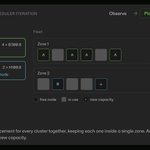
Training large models with RL typically runs on a fixed homogeneous cluster of the latest accelerators for numerical stability and faster throughput. This throws away inference optimization work done for other vendors and generations, limits the capacity you can utilize, and is unnecessarily expensive.
So we trained a model on agentic coding tasks using fully asynchronous RL and mixed-precision, mixed-accelerator samplers. With off-policy correction, training stayed stable through convergence, on par with homogeneous samplers, at a lower cost.
joy liu retweeted

I'm starting a podcast, "Confession," where I invite tech veterans to share their painful lessons.
We all connect through shared pain. Hear founders & CEOs like Satya Nadella (Microsoft), Dara Khosrowshahi (Uber), Luana Lopes Lara (Kalshi), and others share their stories and lessons learned.
Subscribe to Confession on...
✅ Spotify: open.spotify.com/show/6x2J7r…
✅ Youtube: youtube.com/watch?v=sd5spHYX…
✅ Apple: podcasts.apple.com/us/podcas…
@SatyaNadella @Dkhos @luanalopeslara
Fun fact: my coworker Colin and I built the Gang Scheduler almost exactly a year ago.
We took the `observe: () -> S, plan: S -> P, and apply: P -> S'` model from the Kubernetes Reconciler. Then, we left the system alone and it. just. worked.
At @modal, we take pride in being kube-but-better, but there's real wisdom baked into these systems that we can still learn from.
Super excited about clusters and what's next to come!

Modal Clusters are now available.
Globally available, RDMA-connected nodes available instantly behind a single decorator.
modal.com/blog/modal-cluster…


Everyone is talking about how the new @CockroachDB looks bad, but no one is mentioning how the logo looks vertically misaligned.
The reason the cockroach looks off-center because it is actually perfectly centered, but with an asymmetrical weight (top heavy).
Here, I fixed the crop for you. Still looks sus though :'0

This is similar to the Google logo which is not a perfect circle but looks visually more coherent.

1
1
457

joy liu retweeted

𝓑𝓤𝓕𝓞
i trained a bufo lora to automate fast and style-consistent bufo creation in our slack -- opening up inference in celebration of Labor Day (and because @modal gave me more credits <3)
make new artisanal bufos at themachinethatbuildsthebufo dot com