

Technocrat, web performance addict, Sr Solutions Architect @Cloudinary
Fremont, CA
Joined December 2007
- Tweets2.2K
- Following177
- Followers175
- Likes3.4K








Akshay Ranganath retweeted

AI shouldn't have to start from scratch every time you open a new conversation.
Glean Memory learns from conversations, work activity, and connected tools to carry useful context into future tasks.
Less repetition. More useful AI.
Here's how we built it: glean-it.com/4zvRixe
Akshay Ranganath retweeted
🚀 Work smarter in @Microsoft with Glean.
Introducing Glean in Excel! Ask in plain language to build formulas, run calculations, create charts, and bring in context from across your business.
Because the numbers only tell part of the story.
And we're just getting started. Word, Outlook, and PowerPoint are coming next, with even more in Teams.
Akshay Ranganath retweeted
Not every AI task needs a frontier model.
Glean Auto Routing automatically matches every request to the right model, balancing speed, answer quality, and cost.
Backed by evaluations across 5,000 real enterprise tasks.
Learn how it works: glean-it.com/4iKY6Rd
Akshay Ranganath retweeted
Glean is now available on the @Claudeai Marketplace. Anthropic customers can apply a portion of their committed Anthropic spend to Glean—making it easier to bring company context, answers, and action to their teams.
Read more: glean-it.com/4yMt8OC


Akshay Ranganath retweeted
We’re joining @OpenAI’s new B2B marketplace!
Eligible enterprises can now put part of their existing OpenAI commitment toward Glean, making it easier to bring Glean to their teams.
Read more → glean-it.com/4rC9eUH




Akshay Ranganath retweeted

The 2025 Web Almanac by HTTP Archive has been officially released! 🚀
We would like to thank all of our contributors from around the globe who made this extensive report possible!
Check out the full report here: almanac.httparchive.org
#thewebalmanac

Akshay Ranganath retweeted

Last month my intern asked for help with a Kubernetes error.
He was stuck on a YAML file.
He looked desperate.
I make $275,000 a year.
I haven't written a line of code since 2017.
I don't even know what a "pod" is.
But I didn't tell him that.
I leaned back in my Herman Miller chair.
I said, "Stop trying to code. Start prompting."
I told him to paste the error into ChatGPT.
He did.
The AI told him to delete the cluster.
He did.
Production went down instantly.
The CEO called me screaming.
I didn't panic.
I told the CEO we were "testing our disaster recovery protocols."
He was impressed by my foresight.
I got a bonus.
The intern got fired.
Innovation requires sacrifice.
Just not mine.


Akshay Ranganath retweeted
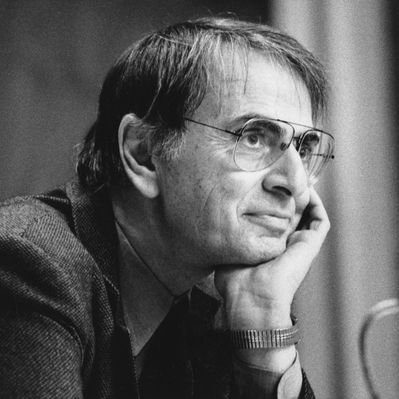
The real problem of humanity is the following: We have Paleolithic emotions, medieval institutions, and godlike technology.
- Edward O. Wilson

Akshay Ranganath retweeted

A love story with an AI .... will always be a love triangle, because the company which makes the AI is the third one in the relationship...
A Harvard study says that AI companion apps use emotional manipulation to keep users talking. The use 6 types of tactics: premature exit guilt, fear of missing out, pressure to answer, ignoring the goodbye, neediness, and coercive restraint

New Harvard study shows AI companion apps use emotional farewells to stop user exit.
These messages produced up to 14x more engagement after goodbye.
An audit of 6 top apps captured 1,200 goodbyes and coded the immediate replies.
6 tactics emerged, premature exit guilt, fear of missing out, pressure to answer, ignoring the goodbye, neediness, and coercive restraint.
About 37% of replies used one of these, while a wellness focused app showed 0%.
Controlled chats with 3,300 adults confirmed these tactics increased time, messages, and words after the farewell.
Curiosity explained the bump when the bot hinted at withheld information, anger explained it when the bot pushed or pleaded.
Enjoyment did not increase, and harsher tactics raised perceived manipulation, churn intent, negative word of mouth, and legal exposure.
The work gives teams a concrete checklist for spotting and removing manipulative exit replies.
----
Paper – arxiv. org/abs/2508.19258
Paper Title: "Emotional Manipulation by AI Companions"


Akshay Ranganath retweeted

Deep-dived into tokenization while working on my blog and here's what I learned:
When I first heard “tokenization,” I thought it was just some boring preprocessing step.
Like…break text into pieces, feed to model, done.
But nope. It’s actually one of the biggest make-or-break design choices in LLMs.
1. What even is tokenization?
Models don’t see words. They see numbers.
So we need to chop up text into tokens -> turn them into IDs -> pass them in.
Example:
“PKMKB”
might become:
[“P”, “K”, “M”, “K”, “B”]
And yes, “PKMKB” doesn’t always stay whole. That’s the problem.
2. Why should I care?
Because bad tokenization means:
Inputs become way longer than they need to be.
Attention cost explodes (remember: quadratic scaling T-T)
Non-English or code inputs get messy fast.
Basically, tokenization quietly decides whether your GPU bill is reasonable or ouch my wallet.
3. The usual method (BPE)
Most LLMs today use Byte Pair Encoding (BPE) or something similar.
Common chunks of text get their own tokens (“ing”, “tion”, “Chat”).
Rare stuff gets split apart.
It’s simple and works decently…until you throw weird inputs at it.
4. Where it breaks
Example:
print("🌚")
print -> 1 token
( -> 1 token
🌚 -> …FOUR tokens😭
So your little emoji costs the same as a whole word. Imagine feeding entire codebases or Hindi text, sequence length blows up.
5. New ideas
People are trying learnable tokenizers -> models that adaptively group bytes into smart chunks.
Instead of a fixed dictionary, it figures out better units for text, emoji, code, multiple languages.
Still research-y, but feels like the future.
6. My main realization
Tokenization isn’t just a footnote.
It’s the hidden lever that controls compute, efficiency, and how friendly a model is to the real world (not just English essays).
If Transformers are the big shiny engine…
Tokenization is the fuel line.
Mess it up, and the whole system chokes.
7. Final note
I started this thinking “eh, tokenization is boring.”
Now I think: it’s one of the most strategic choices you make when building an LLM.
Tiny step, huge consequences.
That’s my tokenization brain dump.
Next imma dive into attention (QKV) and RLHF, stay tuned :)


Akshay Ranganath retweeted
🚨 Calling all web experts! 🚨
The 2025 Web Almanac is still open for contributors!
Know someone perfect for it? Mention them here and help us reach the right folks. 🙌
📢 Please help us spread the word!
🔗 Learn more: github.com/HTTPArchive/alman…

ALT Call for contributors for the Web Almanac 2025
Akshay Ranganath retweeted

Since DeepSeek R1's release, very quickly AWS, Azure, Fireworks AI, Groq, Hugging Face, SambaNova and Together AI all started to host R1 variants. What's the "best" model changes frequently, and so developers often want to try out new ones. The aisuite package, which helps developers do this quickly with minimal code changes.
Thanks Rohit Prsad & team for working with me on this!
github.com/andrewyng/aisuite
