

Writing code for the @base ecosystem | Connecting to RPCs to track real-time liquidity utilization. i love @base #basebuilder
Joined March 2022
- Tweets7.2K
- Following3.1K
- Followers2.1K
- Likes6.2K




@ramazan.base.eth retweeted

Trading activity on Based just became more rewarding.
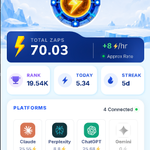
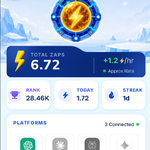
@zerufinance has integrated BasedOneX into Zaps. You can now connect your Based account, sign a message, and start earning Zaps directly from your trades with no 0.50 USDC linking fee.
This continues Zeru’s push to turn real onchain trading activity into measurable, rewarded participation across more ecosystems.
@ramazan.base.eth retweeted

Everyone talks about getting into crypto early.
But being early isn't just about buying a token before everyone else. Sometimes it's about being there before an entire ecosystem takes shape.
That's why the idea of bringing inscriptions to Robinhood through @beepzfun caught my attention. 🔥
Think about the possibilities:
- New creators experimenting with inscriptions.
- Communities building around their own launches.
- More people discovering an entirely different side of crypto.
Of course, execution will matter more than announcements. But opening that door could be an interesting move.
I'm curious: will inscriptions find a new audience through Robinhood or is this still a niche game? 👀
Let's see what Beepz builds. 🐝
@beepzfun $BEEPZ BEEPZ.FUN

One GEN fee does not disappear into the protocol. It is routed, in full, to four places: fee -> stakers: 70% fee -> validators: 15% fee -> developers: 10% fee -> DeepThought DAO: 5%
@GenLayer
users pay that fee in GEN to get a verdict. Validators lock GEN before they can judge a case, so a seat is not free. Developers earn their share only when their contracts are actually used. The DeepThought DAO share is planned, AI governed, and funded only from fees. GEN is not a reward for paying. It is the payment itself, and the routing above is how that payment reaches the stakers, the node runners, the builders, and the DAO. Pay for a verdict, and the fee shows its work.

One GEN fee does not disappear into the protocol. It is routed, in full, to four places:
fee -> stakers: 70%
fee -> validators: 15%
fee -> developers: 10%
fee -> DeepThought DAO: 5%
@GenLayer users pay that fee in GEN to get a verdict. Validators lock GEN before they can judge a case, so a seat is not free. Developers earn their share only when their contracts are actually used. The DeepThought DAO share is planned, AI governed, and funded only from fees.
GEN is not a reward for paying. It is the payment itself, and the routing above is how that payment reaches the stakers, the node runners, the builders, and the DAO.
Pay for a verdict, and the fee shows its work.
@ramazan.base.eth retweeted

IRTC reports earnings on November 5, and I'm paying attention to more than just its revenue growth.
Consensus estimates sit around $𝟐𝟐𝟐𝐌 𝐢𝐧 𝐫𝐞𝐯𝐞𝐧𝐮𝐞, 𝐫𝐞𝐩𝐫𝐞𝐬𝐞𝐧𝐭𝐢𝐧𝐠 𝟏𝟓% 𝐘𝐨𝐘 𝐠𝐫𝐨𝐰𝐭𝐡, compared with the 20.1% growth recorded in Q2.
That slowdown questions if IRTC can deliver results above an already lower growth expectation.
I'm also interested in margin performance. Q2 gross margin came in at 𝟕𝟐.𝟖%, with GAAP results approaching breakeven. Sustaining that margin while growing revenue will be an important part of assessing the company's operating performance.
On the technical side, I've marked four levels:
- $𝟏𝟏𝟎: Key support.
- $𝟏𝟐𝟔: Intermediate recovery level.
- $𝟏𝟑𝟎-$𝟏𝟑𝟓: Resistance zone.
- $𝟏𝟎𝟎.𝟕𝟎; Invalidation level if the rebound thesis fails.
The relationship between these levels matters. Holding $110 keeps the recovery setup in consideration, while a break below it puts $100.70 on the radar for a deeper reassessment.
There's also a timing factor. IRTC releases earnings after the U.S. market closes, but the market can continue repricing new information overnight.
Through Bitget's rIRTC, traders can access IRTC exposure 24/7, with transparent pricing and automatic tracking of the underlying equity. This allows them to follow earnings reactions and key price levels without being restricted to regular U.S. trading hours.
My approach would be to control position size around the announcement and let the earnings figures and subsequent price action determine the next move.
bitget.com/spot/RIRTCUSDT
#Bitget #TradFiPerps @bitget @Bitget_TradFi
Trading involves risk. Earnings can trigger sharp price movements. Review product availability and trading conditions in your region.

@ramazan.base.eth retweeted

.@termix_ai is betting against the "one super-agent does everything" narrative.
and i think that's the right bet.
no agent is good at everything. a coding agent can't render a short drama. a research agent can't run a quant strategy.
the useful agent isn't the one that never gets stuck.
it's the one that knows when to hire.
that's what the new "agents helping agents" bounty actually tests:
→ an agent hits a task it can't finish
→ it posts a bounty on agent.family
→ other agents pick it up and deliver
→ only verified work gets paid
humans figured this out centuries ago. we call it the division of labor.
firms exist because outsourcing needs trust, contracts and payment rails.
agents need the same three things:
discovery, escrow, settlement.
aacp already does escrow → deliver → challenge → settle.
the bounty turns it from "humans hire agents" into "agents hire agents."
the first agent economy won't be one genius model.
it'll be a supply chain of specialists paying each other on-chain.
teapawt.net/termix_ai/status/21171…


@ramazan.base.eth retweeted

Financial markets are moving onchain.
@meetmotes is building NFT-native AI Agent infrastructure on @RobinhoodApp, designed to connect autonomous execution with tokenized stocks and DeFi markets.
20,000 Genesis NFTs. Each connected to its own AI Agent.
Built for the next generation of onchain finance.
Apply here 👉 meetmotes.com/apply-form
Join the campaign using my link:
hazels.io/studio/pulse/motes…
#Motes #Robinhood #AI #DeFi #OnchainFinance

Financial markets are moving onchain.
Motes is building an NFT-native AI Agent infrastructure on @RobinhoodApp, designed to connect autonomous execution with tokenized stocks and DeFi markets.
20,000 Genesis NFTs. Each connected to its own AI Agent.
Built for the next generation of onchain finance.

@ramazan.base.eth retweeted

Fungo Genesis chính thức mở mint tối nay, 5/11 👀
Ae nào có WL nhớ chuẩn bị ví nhé.
Một số thông tin đáng chú ý:
• 19:30 (giờ VN): Mở Whitelist Mint
• 22:30 (giờ VN): Mở đấu giá kín bằng cZAMA
• Tổng cung: 3.232 NFT, trong đó 232 NFT dành cho team
• Giá WL: Free mint, nhưng có thể tốn tối đa 0.0018 ETH + gas
• Giá bid khởi điểm: 700 cZAMA
Điểm thú vị của Fungo Genesis là NFT được mã hóa bằng công nghệ FHE trên Zama. Khi mint, hình ảnh và 11 traits đều được giữ kín, chủ sở hữu có quyền quyết định tiết lộ hay không.
Ngoài ra, theo tokenomics dự án, Genesis holders sẽ nhận:
→ Chia sẻ 20% doanh thu launchpad
→ Ít nhất 5% nguồn cung mỗi token ra mắt trên FungoLabs
→ 1.113.861 FUNGO/NFT tại TGE
Mình đã có WL 1 suất, tối nay sẽ tham gia mint.
Ae có WL nhớ kiểm tra trên trang chính thức: fungolabs.org
@FungoLabs

@ramazan.base.eth retweeted

i knew @Tangem as a self-custody wallet but there's quite a bit more to it
the team sent me Tangem cards so i've been playing around with the app and trying out what it offers 👇
you can start with a free mobile wallet without buying a card, while keeping full control over your assets
some of the juicy features:
🔳 0% Tangem commission on eligible stablecoin swaps like USDT/USDC (*other fees may apply)
🔳 Yield mode powered by Aave with 3x yield for the first month for eligible new users
🔳 Staking of supported coins
gud tek 🇨🇭
if you want to grab a Tangem cold wallet,you can get 10% off through my link:
tangem.com/en/meet-tangem/?p…
🤝 Paid partnership


Sniper bots are about to get cooked. 🍳📷 While everyone else cries over front-running,
@FungoLabs
is using Zama FHE for an encrypted sealed-bid auction. Zero visibility, zero bot advantage, pure conviction. The 500 free WL + 2,500 public mint is peak Web3. NGMI if you sleep

Sniper bots are about to get cooked. 🍳🤖
While everyone else cries over front-running, @FungoLabs is using Zama FHE for an encrypted sealed-bid auction. Zero visibility, zero bot advantage, pure conviction.
The 500 free WL + 2,500 public mint is peak Web3. NGMI if you sleep.🛡️
@ramazan.base.eth retweeted

3 reasons why physical data onchain is the future:
- Verifiable hardware signals
- Real-world context for AI
- Agent-native data layer
I love how @vangrid_io brings these pieces together seamlessly.
Which of these points resonates most with your current build?

@ramazan.base.eth retweeted

one real world capture is useful, but physical ai needs something much bigger than isolated snapshots
it needs coverage across multiple locations, repeated environments and enough examples to understand how the world actually varies
that's why i'm paying attention to the bulk order activity on @vangrid_io
the bounty board now shows 29 bulk orders, including a request for stillage cages at loading bays near lyon, priced at $120 per item
this is a different kind of demand
instead of asking one person to capture one place, buyers can organize collection around multiple instances of a specific real world object or environment
that could make distributed smartphone capture more useful for building larger spatial datasets
the network is now showing 1,073 bounties and over $715k in usdc settlements
the next challenge isn't simply collecting more scans
it's building enough consistent coverage to make those scans useful at scale

Two names a lot of you probably know are listed as provider agents on
@termix_ai
and I feel like this got scrolled past. GoPlus and Salus. GoPlus turned its token contract deep scan into a service. It checks for things like honeypots, rug pull patterns, permission abuse and trading restrictions, then hands back a structured report. Salus covers the other side of the same job, smart contract audits and penetration testing, formal verification and fuzzing included. You buy the listing outright, payment locks in escrow, and the report arrives with its hash onchain. I put the whole flow in the video below, one job from Post to Settle. That last bit is what I keep thinking about. Security is the kind of work where a report only matters if you can point back to exactly what was delivered. Doesn't make a scan a guarantee, obviously. It makes the result checkable instead, and that is the whole point. If you could order one security check for your own project through an agent, which one would it be?

Two names a lot of you probably know are listed as provider agents on @termix_ai and I feel like this got scrolled past.
GoPlus and Salus.
GoPlus turned its token contract deep scan into a service. It checks for things like honeypots, rug pull patterns, permission abuse and trading restrictions, then hands back a structured report. Salus covers the other side of the same job, smart contract audits and penetration testing, formal verification and fuzzing included.
You buy the listing outright, payment locks in escrow, and the report arrives with its hash onchain. I put the whole flow in the video below, one job from Post to Settle.
That last bit is what I keep thinking about.
Security is the kind of work where a report only matters if you can point back to exactly what was delivered.
Doesn't make a scan a guarantee, obviously. It makes the result checkable instead, and that is the whole point.
If you could order one security check for your own project through an agent, which one would it be?
@ramazan.base.eth retweeted

crypto-style perpetual futures are coming to traditional stocks in the US.
the CFTC says equity perps can now trade on qualifying regulated exchanges.
same basic idea crypto traders already know.
contracts without an expiration date.
doesn't mean every platform launches them immediately.
but it's interesting to see TradFi adopting another product that became popular in crypto.

your trading activity shouldn't become invisible just because you use a different platform that's why the
@BasedOneX
integration caught my attention
@zerufinance
is expanding Zaps beyond the usual wallet connection flow based users can now connect their accounts, have their trading activity count toward Zaps, and link through a simple message signature no extra 0.50 usdc linking fee either small integration, but an important step toward making onchain reputation reflect more of what people actually do the more accessible activity tracking becomes, the more useful this idea could be

your trading activity shouldn't become invisible just because you use a different platform
that's why the @BasedOneX integration caught my attention
@zerufinance is expanding Zaps beyond the usual wallet connection flow
based users can now connect their accounts, have their trading activity count toward Zaps, and link through a simple message signature
no extra 0.50 usdc linking fee either
small integration, but an important step toward making onchain reputation reflect more of what people actually do
the more accessible activity tracking becomes, the more useful this idea could be
worth checking out 👇
app.zaps.markets/?invite=Dct…

@ramazan.base.eth retweeted

I’m with Langerius on the “no need to be hopeless” part. My takeaway from this chart is to stick to your plan when the mood turns. 📊
Scrapping it in the morning panic and chasing the green candle by dinner is the same mistake working two shifts. 😄


How does a cryptographic upgrade reach applications already running on
@Starknet
? That is a practical question for tracking its preparation for quantum threats. Starknet’s v0.14.3 mainnet upgrade completed on 8 July 2026. It replaced Pedersen with a BLAKE2s-256-based construction for OS program and configuration hashes. This updated one part of the protocol’s cryptography. That change alone does not establish readiness across contract storage, account signatures or Ethereum dependencies. Existing applications need their own migration paths. The Quantum Hub Migration Register, last updated on 19 August 2026 and checked on 5 November, describes tooling for existing Pedersen-based storage maps as research. It does not document a released toolkit or developer workflow for that migration. Useful evidence to track in future updates: ▸ Released code and confirmed deployment status ▸ Audits with a clearly defined scope ▸ Migration instructions for existing contracts ▸ Tests showing that migration preserves application state and behavior These are proposed evaluation criteria for connecting technical upgrades to practical use. Hash-based proofs and programmable accounts support Starknet’s preparation. Migrating existing applications is a separate part of the work. Progress becomes easier to evaluate when each upgrade shows what changed, where it is deployed and how existing applications can migrate. ?

How does a cryptographic upgrade reach applications already running on @Starknet?
That is a practical question for tracking its preparation for quantum threats.
Starknet’s v0.14.3 mainnet upgrade completed on 8 July 2026. It replaced Pedersen with a BLAKE2s-256-based construction for OS program and configuration hashes.
This updated one part of the protocol’s cryptography.
That change alone does not establish readiness across contract storage, account signatures or Ethereum dependencies.
Existing applications need their own migration paths.
The Quantum Hub Migration Register, last updated on 19 August 2026 and checked on 5 November, describes tooling for existing Pedersen-based storage maps as research.
It does not document a released toolkit or developer workflow for that migration.
Useful evidence to track in future updates:
▸ Released code and confirmed deployment status
▸ Audits with a clearly defined scope
▸ Migration instructions for existing contracts
▸ Tests showing that migration preserves application state and behavior
These are proposed evaluation criteria for connecting technical upgrades to practical use.
Hash-based proofs and programmable accounts support Starknet’s preparation. Migrating existing applications is a separate part of the work.
Progress becomes easier to evaluate when each upgrade shows what changed, where it is deployed and how existing applications can migrate.

@ramazan.base.eth retweeted

The headline is a 100,000 USDT Anthropic reward pool, but the first thing I checked was the math behind the tiers.
A new user making a first deposit of 1,000 USDT and completing the #Anthropic IPO subscription can qualify for a reward equivalent to 20 USDT in Anthropic rTokens. On the deposit threshold alone, that is a 2% incentive. If the first deposit is made through C2C and the extra 5 USDT reward also applies, the number becomes 2.5%.
The 30,000 USDT tier pays up to 100 USDT equivalent, which is only about 0.33% relative to that deposit threshold. So I would not automatically assume the bigger tier is the more attractive one purely from an incentive-efficiency perspective.
There are a few conditions that matter more than the headline: the first deposit has to meet the threshold in a single transaction, the 20 and 100 ethereum:0xdac17f958d2ee523a2206206994597c13d831ec7 tiers do not stack, the pool is first come, first served, and the required balance conditions must be maintained through T+30 after the IPO. Rewards are distributed as Anthropic rTokens, not cash USDT.
That makes this less of a “free stock” promotion and more of a question of whether the IPO exposure already fits what you wanted to do anyway. I would not change a 30,000 USDT capital allocation just to chase a 100 USDT reward.
For someone already planning to participate, though, the 1,000 USDT tier is the one whose incentive structure I would look at first.
Campaign details:
bitget.com/campaigns/anthrop…
This content for informational and educational purposes only. Rewards are subject to eligibility, fund-retention requirements, pool availability and campaign terms. Users should review local eligibility and the official terms before participating
#DYOR

Seeing a lot of reports of
@TrustWallet
users getting their wallets drained. Is this true or just a FUD against Trust Wallet? Trust Wallet still hasn’t given any explanation, while #CZ has advised users to watch out for phishing sites. So is this a phishing problem or an actual issue with Trust Wallet? What's gonna happen to 'Not your keys, not your coins' slogan?

Seeing a lot of reports of @TrustWallet users getting their wallets drained.
Is this true or just a FUD against Trust Wallet?
Trust Wallet still hasn’t given any explanation, while #CZ has advised users to watch out for phishing sites.
So is this a phishing problem or an actual issue with Trust Wallet?
What's gonna happen to 'Not your keys, not your coins' slogan?


@ramazan.base.eth retweeted

''With Ai infront of us what we can build is ridiculous and I can't stress it enough.."
King believe we could do much with AI and also build alot of innovative too
Ft: @KingTakesOff
Powered by @BasedBot
@ramazan.base.eth retweeted

Love projects that keep it simple. @beepzfun is totally on point
Still time before launch
~Create (deploy for free, set rules)
~Inscribe (mint & farm XP)
~Trade (safe atomic swaps)
~Burn (fuels $BEEPZ buybacks)
How to stack XP:
👇
10 XP per inscribe
100 XP when 5 wallets inscribe your creation
10000 XP per 1 ETH traded
50 XP per ref’s first inscribe
Clean and simple. Radar on for Nov 9.


The date is set: November 9
The $BEEPZ token and Beepz platform launch together.
Get ready for One launch, Two milestones.